Mid Year Report

The Summer Solstice has passed which means the days will start getting shorter and we’re about to enter the second half of the year. It seems like a good time to look back over the last six months and remember how many great films there have been. The Guardian have already published an alphabetical list of their highest rated films including Arabian Nights, Dheepan, Hail, Caesar! and Our Little Sister. Over on Twitter Little White Lies counted down their top 30 films of #2016SoFar with Richard Linklater’s Everybody Wants Some!! coming out on top and also mentioning Court, The Pearl Button and Mustang.

We’ve put together a list of all the films shown at the Picture House this year and would like to know what your highlights have been so far. The films from the first half of the year are often forgotten at the end of the year when award season madness takes over so it would be good to hear what people think at this point. Tell us what you’ve liked (or disliked) in the comments below.

My personal favourite so far is still Room which I saw the first half of at the film festival and had to wait until it was shown at the Picture House to see the ending. Bone Tomahawk was another festival film that I only saw on general release but shocked and delighted in equal measure and I rated it much higher than The Hateful Eight or The Revenant which received far more attention at the time. Chicken is a really impressive debut film and it was great to hear director Joe Stephenson talk about the film in the Q&A when he visited Hyde Park. I’m disappointed that I haven’t seen any foreign language films that have made my list yet, perhaps Mustang would’ve made it but I didn’t get chance to see it. And yes I really did like Joy that much although I doubt it will stay at number 2 on my list when I come to reshuffle it.

So, over to you, comment below and tell us what you make of 2016 so far.

Refugee Films

June 20th until June 26th is Refugee Week. There are now frequent filmic essays on the large numbers of people fleeing violence and/or seeking a better life. Only a select few actually enjoy distribution and exhibition in the UK. Have a look on YouTube for an idea of the rich variety. But the Hyde Park Picture House has regularly featured important and often moving films about this major and controversial issue. And we have three coming up over the next couple of weeks.

On 21st June – 6.30 PM

A-Syrian-Love-Story

(UK France, Lebanon, Syria 2016 – in English, Arabic and French) is a film by British documentaries Sean McAllister. It follows the story an journey of two Syrian refugees, Raghda and Amer, from their war-torn country to Europe. The travails of their journey are followed by the travails on arrival. The screening also includes is the short animated film Miniyamba (2012, in Bambara and French) featuring indigenous music. This is a film from the Danish Film Institute following a young man from Mali as he attempts to journey to Europe.

From Friday 24th June:

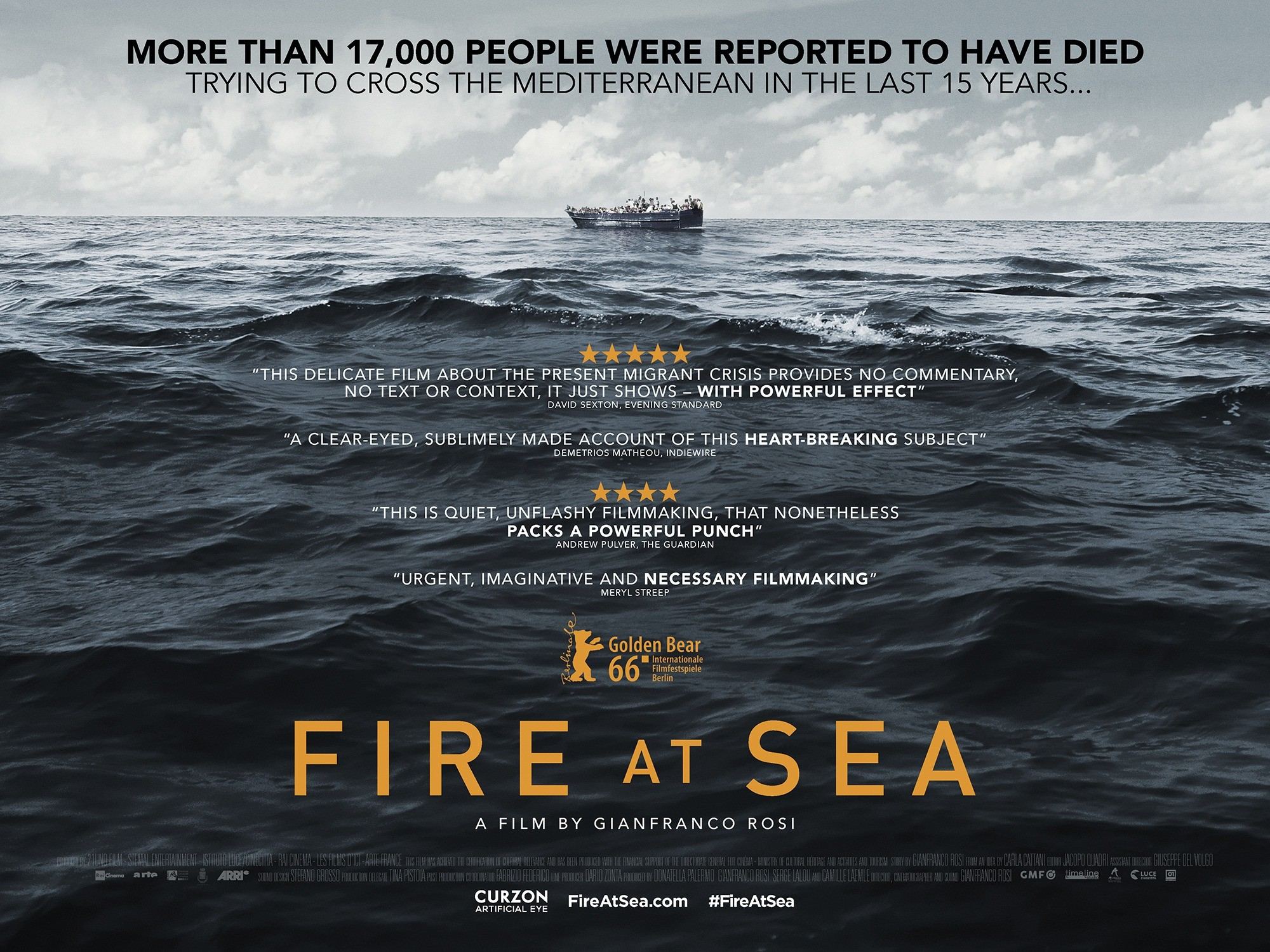
fire-at-sea-poster01

Fuocoammare (Italy / France 2016 – in Italian and English) directed by Gianfranco Rosi is set on the now well-known island of Lampedusa. The film uses 12 year old local lad Samuele to explore the situation of a small community and the hundreds of migrants who have landed there. The situation is explored with little comment or commentary: the picture presents itself.

From Friday July 1st:

where-to-invade-next(USA 2016 – in English, seven European languages and Arabic) is full of comment, by veteran filmmaker and polemicist Michael Moore. Moore does not fit most definitions of refugee. However his home USA bears much responsibility for the many concurrent crises of refugees. So Moore ‘flees’ his homeland to offer a somewhat idealised representation of continental Europe and virtues that the USA might copy. However, he does not offer any to be found in the UK, the junior partner in so many US imperial adventures. That absence speaks volumes.

Makiko Futaki

Jordan Scott remembers Studio Ghibli artist Makiko Futaki, who passed away last month at 57 years old.
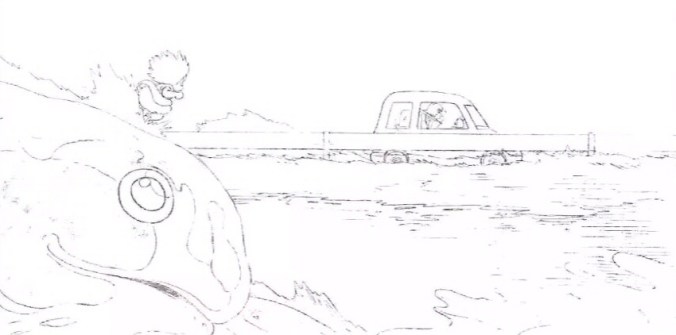
ponyo

View animation at sakuga.yshi.org 

A few weeks ago I learnt belatedly, and from the surprising source of a relative’s Twitter feed, of the extremely sad news of the death of animator and illustrator FUTAKI Makiko (二木真希子), which was announced on the 16th of May.

An independent, amateur filmmaker in her own right before being recruited by Telecom Animation Film (where she first worked with TAKAHATA Isao, MIYAZAKI Hayao and such other future Ghibli regulars as TANAKA Atsuko), her subsequent freelance career has encompassed such films as Sugii’s Night on the Galactic Railroad, Oshii’s Angel’s Egg and Ōtomo’s AKIRA but I’m sure will be forever defined by her work on Studio Ghibli’s productions – and them by it.

She became their go-to person for sequences in which the human characters take a back seat to foliage, birds, minibeasts, water and wind – and the impact of that last one on all the previous, the studio’s only feature-length theatrical releases without her distinctive rendering of these (Grave of the Fireflies, The Cat Returns, The Tale of The Princess Kaguya) being from when she was particularly heavily involved in a simultaneously-produced Miyazaki project (My Neighbour Totoro, Mei and the Kitten Bus, The Wind Rises).

Extremely sad that there will be no further sequences from the mind and hands that wrought some of the most iconic (most of all probably being a draw between inside the camphor tree and the tree-growing in Totoro) and some personal favourites (my top single moment being the wild geese catching a gust of wind in Kiki) of the last 30 plus years of cinema. Very heartening news, considering those outside the industry have to glean what they can from mentions in books and production blogs to identify animators’ work, that this is being reported on beyond the rarified confines of animator-reverence.

Sources and further reading and viewing

Versus: The Life and Films of Ken Loach UK 2016

Screening On 11th June – 6.45 PM : On 12th June – 3.30 PM Wednesday 15th June 8.50 p.m. 

ken-loach-cannes

This new biopic comes out at a propitious time. Ken Loach has won his second Palme’ d’Or at the Cannes Film Festival for I, Daniel Blake. He joins an elect group of filmmakers, Bille August, Emir Kusterica and Shohei Imamura, who have also won this prestigious award twice since its inception in the current form in 1975. The award confirms Loach’s status as one of the most important of contemporary European filmmakers: though one who has been honoured more on the continent than in his home territory.

The documentary has been produced by Loach regular Rebecca O’Brien, scripted by his colleague Paul Laverty, and directed by Louise Osmond. It also includes many of the people who have worked with Loach, including Tony Garnett, whose output at the BBC is also seminal. My main reservation is that Osmond’s previous film, Dark Horse (2015), was made like a typical television documentary and utilised archive and found footage of rather low quality. But its focus was ordinary working people who are the recurring centre of Loach’s own films.

It was shot in 2.35:1 and that ratio does allow some striking shots by cinematographer Roger Chapman. But it also means that the extracts from Loach’s own films have been re-framed to fit this format. This does not do them any favours, in some frames heads are cut off. The footage of Loach working on I, Daniel Blake is in the same ratio. Some of this is interesting, but often it feels like a ‘making of ….’ treatment.

Where the films scores are the interviews with Ken Loach and Tony Garnett. Loach is unassuming but rigorous in his comments. And Tony Garnett is both intelligent and stimulating. We also get a brief interveiw with Nell Dunn [Up the Junction] and recordings of Jim Allen. The latter was an important collaborator and influence on Loach. And there is an excellent comment by Gabriel Byrne on the suppression of the production of Perdition. It would have been good to have more from other important collaborators like Rebecca O’Brien and Paul Laverty.

The documentary is also strong on the frequently myopic and predjudiced treatment of Loach’s film among British critics. As Derek Malcom remarks, he is much more honoured on the continent. Whilst he has won many awards at the Cannes Film Festival, The Berlin Film Festival and even a French César. None of his films has ever been awarded a BAFTA!

Certainly Loach’s film and television output has deserved this. From the pioneering work in the 1960s, notably Cathy Come Home, made for the BBC with Tony Garnett, to the recent series of annual film releases, his work has been among the best and most interesting produced in the UK. And this film does pay due attention to his early work for the BBC. Whatever its limitations this documentary is worth seeing as a deserved retrospective of his contribution.

Cathy come home

Continue reading

May Poll

As May comes to a close we’ve added a new poll to ask about the films you enjoyed the most this month. Just selecting which films to have as options is hard enough (you can use the “other” option to vote for something else) so it will be interesting to see what comes out on top. Last month there were only a few votes separating Dheepan and Son Of Saul.

Are there better ways to spend a Bank Holiday than voting in an online poll? Actually there are because you could treat yourself to The Jungle Book and/or Love & Friendship this afternoon, perhaps two of the most enjoyable films of the year.

Johnny Guitar USA 1954

Sunday 29th May at 1 p.m.

85Johnny_Guitar_Johnny_Guitar_1954_Nicholas_Ray_ingl

This classic western has been re-released in a digital format by the BFI. You can read about it in the May edition of Sight and Sound under ‘The Psychological Western’ and ‘Westward the Women’. Both suggest why this film is now a cult classic, but there are other good reasons as well.

The director Nicholas Ray is a celebrated ‘auteur’ from the last stages of classic Hollywood, [i.e. the studio system]. His films are full of interest and he has a particular facility with colour: the best example being Rebel Without a Cause (1955). The screenplay is by Philip Jordan, whose other work includes Anthony Mann’s fine western The Man From Laramie (1955). The cinematography is by Harry Stradling who won two Academy Awards and received another 12 nominations. And the music is by Victor Young, who also won an Oscar and received another eleven nominations. Charlton Heston always maintained the nominations were what really counted as they were from one’s own peers in the Academy.

The film also has a stellar cast. Joan Crawford, in one of her outstanding roles, is saloon owner Vienna. She is the central character in the film despite being listed third in some publicity. Her support in the film is Sterling Hayden as drifting Johnny ‘Guitar’ Logan. Hayden’s laconic persona, with ample gravitas, led to Bernardo Bertolucci casting him in his epic 1900 (Novecento, 1976).  The opposition is led by Mercedes McCambridge as Emma Small; she almost liberally spits fire in the film. And the ever dependable Ward Bond is her sidekick John McIvers.

The film takes one of the central themes of the western genre – revenge – and treats it in an entirely unconventional manner. The film crosses over with the small-town melodrama, a genre that Ray used in his Bigger than Life (1956). This is a film that especially reflects on the social and film industry ‘witch-hunts’ of the period. The HUAC ‘witch-hunt’ is featured in two recent releases, Trumbo (2015) and Hail, Caesar (2016). Even if you are not a fan of westerns I would reckon this is a 110 minutes of completely engaging drama. The film was produced in the early days of modern widescreen formats and is in the 1.66:1 aspect ratio and was filmed in Trucolor for Republic Pictures.


Proposed Constitution Changes

Our Annual General Meeting in May 2014 agreed, without any objections, a new Constitution. That meeting also agreed that the Friends of the Hyde Park Picture House should start the formal process of registering as a charity.

The previous Constitution which dated from 1997 was no longer appropriate. Our present Constitution closely follows a Charity Commission model constitution.

Our present Objects (which also feature in our accounts) are

1. To promote, support and participate in the cultural landscape of Hyde Park, Leeds and Yorkshire, particularly through an appreciation and understanding of the art of cinema
2. To celebrate the heritage of the Hyde Park Picture House and ensure its preservation and continued use for cinema and related arts by and for all sections of the community.

The Charity Commission advised us that to comply with the current Charities Act, the wording should be:

To advance the arts, in particular film and associated arts for the benefit of the public, in particular but not exclusively by supporting the Hyde Park Picture House as part of the Leeds Grand Theatre and Opera House Ltd by such means as the trustees think fit including by:

– promoting, supporting and participating in the cultural landscape of Hyde Park, Leeds and Yorkshire, particularly through an appreciation and understanding of the art of cinema

– celebrating the heritage of the Hyde Park Picture House and ensuring its preservation and continued use for cinema and related arts.

The Committee accepts this advice from the Charity Commission. The Committee’s plan is that, when we have confirmation that the Charity Commission is happy with the whole of the Constitution, we will take this new draft to the next Members’ meeting for approval and then with your agreement formally register as a Charity.

To find out more about these changes please come along to our AGM on Sunday 22nd May from 1pm where members can also enjoy a free buffet and screening of Our Man In Havana.

Review: Arabian Nights Trilogy

Arabian Nights Trilogy

Filipino director, Lav Diaz, once said of his epic, sometime 10+ hr films, is that he likes the idea that audiences could leave the cinema, go to work, then return and carry on watching. That his films just breathe, exist, like we do. Parts of Miguel Gomes’ 6.5 hour Arabian Nights felt like that to me; These ambling, slice of life portraits of modern day Portugal, structured in a style inspired by One Thousand and One Nights, as told by Scheherazade. They show a Portugal in the shadow of austerity, yet plugging on. Breathing, Existing.

For example, the final 90 or so minutes, entitled “The Inebriating Chorus of the Chaffinches”, is about a group of disparate men, some of whom we’ve met already, who engage in the hobby of trapping and training chaffinches for singing competitions. The section, much like the rest of the trilogy, is at once sublime and ridiculous; weaving together their everyday existences, with Scheherazade’s anecdotal, at times bizarre narration, shedding light on their insular world whilst birds tweet and trill constantly in the background.

I hope plenty of people, like the audience at the Picture House today, get to watch the Arabian Nights films as a whole. I think they benefit from being in close proximity with each other, especially the final volume. I also hope audiences go home and watch Gomes’ previous films; The Face You Deserve (which is on Mubi until the 22nd ), the critically lauded Tabu (2012), and the (in my opinion) masterpiece, Our Beloved Month of August (2008), both of which screened at LIFF 26.

This Week At The Picture House

Hyde Park

Some weeks are dominated by one big release and others offer a variety of films. In the next seven days there are ten different films at the Picture House including the latest from directors Jeff Nichols, Jean-Marc Vallée, Miguel Gomes and Richard Linklater.

First up is Jeff Nichols’ long anticipated Midnight Special (Fri 6:20pm with a Meetup and Wed 8:50pm, also 11am BYOB), a science fiction mystery from the director of Mud (2012) and Take Shelter (2010) with a Spielbergian feel, even if that’s not what Nichols was planning.

On Sunday afternoon there’s a rare chance to see all three of Miguel Gomes’ Arabian Nights films (1pm special ticket price: £15 full, £13 conc, £12 members plus another MeetUp). “A glowing love song to Portugal performed by a man who has mastered a range of exotic instruments” says David Jenkins in Little White Lies and a “passionately investigative, floridly imaginative triptych” according to Richard Brody of The New Yorker.

Jean-Marc Vallée has received a lot of attention in the last few years for directing Dallas Buyers Club (2013) and The Wild (2014) but it was C.R.A.Z.Y (2005) that makes him a director to keep an eye on. Unfortunately his latest film Demolition (showing daily) is getting mixed reviews but it’s an interesting premise and a great cast so may be worth checking out.

Continue reading

Our Little Sister / Umimachi Diary Japan 2015

On 7th May – 5.40 PM / On 11th May – 3.40 PM

our_little_sister_edit_xlarge

This film was screened in the 29th Leeds International Film Festival and I thought it the pick of a strong programme. The film is adapted from a popular manga title by Koreeda Hirokazu, who also edited the film. It is the most recent in a line of family dramas in the tradition of the Japanese film genre, shomin-geki [shōshimin-eiga, the lives of ordinary working people]. These include Like Father / Soshite chichi ni naru (2013) involving parentage and children: I Wish / Kiseki (2011) about separated siblings: and Still Walking / Aruitemo aruitemo (2008) about adults and their ageing parents. Our Little Sister combines aspects of the earlier films with its main focus on four sisters. Three of these are the adult Koda sisters, Ayase Haruka as Sachi, Nagasawa Masami as Yoshino and Kaho as Chika. The ‘little sister’ has Hirose Suzu as Asano Suzu, their step-sister. They and the supporting cast are very fine.

The film is set in Kamakura on the Yokohama peninsula; not that far away from Tokyo. But this is a small coastal town. The settings include the family home, urban and rural sites and the seashore. Koreeda and his team, notably cinematographer Takimoto Mikiya, offer fairly slow and detailed observation. Critics have made comparisons with the films of the great Ozu Yasijurō, but thematically this film is closer to the equally fine work of Naruse Mikio. There is loss but also resilience and the importance of memory and tradition. The film is a delicate study with moments of humour and irony. As with the earlier films food and meals are an important aspect of the lives and their study.

If you have not seen Koreeda’s films before this would make an excellent start. If you have you will know just how rewarding are his studies of family life. If we see half-a dozen equally fine films this year then 2016 will be a classic.