Ivan’s Childhood / Ivanovo detstvo , USSR 1962

Tuesday 23rd August at 6.30 p.m.

ivanschildhood

This is a part of the ‘Sculpting Time’ Andrei Tarkovsky retrospective. It was his first feature, shot in black and white and in Academy ratio. The film is set in the Ukraine, on the front line between the Soviet and German armies in World War II. Ivan (Nikolay Burlyaev) is a young boy acting as scout for the Soviet army, frequently working behind the German lines. An important aspect of the film is his strong relationship with the Soviet officers who run the post from which he works. He also carries the scars of past events.

Whilst the film belongs to a recognisable Soviet genre, as in all of Tarkovsky’s films, the plot is less important than the characters and the settings: the latter are as important as some of the characters. It is also full of the motifs and imagery that would become familiar in later works. Time Out, in praising this impressive film, noted:

“Ivan silently wading through still water, eerily immanent forestscapes, the poetry of forbidden zones, and life-and-death struggles played in slow motion.”

I would argue that this, along with Andrei Rublev (1966), is the filmmaker’s finest work. Certainly the film is beautifully produced and one should note the important contributions of the film’s craft people: the script was written by Vladimir Bogomolov, Production Design by Evgeniy Chernyaev, Cinematography by Vadim Yusov, Film Editing by Lyudmila Feyginova, Music by Vyacheslav Ovchinnikov. It runs for the original 95 minutes and has English subtitles.

And you can still collect the sets of well designed lobby cards from Curzon / Artificial Eye.

Thelma and Louise 25th Anniversary Screening

Saturday 20th August 5:30pm – Creatures of The Early Evening

 The early evening slot for Creatures of The Night continues with Ridley Scott’s Thelma and Louise, Bill Walton takes a look at the film on its 25th anniversary.
Thelma: “You said you ’n’ me was gonna get out of town and for once just really let our hair down. Well darlin’, look out ‘cause my hair is comin’ down!”

No shit, as they say.

Released to great controversy in 1991. Revolutionary? YES. Dated? NO, still fresh, sharp and funny. Not just that, it smashed through the Bechdel Test (2 women who talk to each about something besides a man). And a woman writer too (Callie Khouri).

Susan Sarandon and Geena Davis are hot. The waitress and the housewife are takin’ to the road … crude truck drivers, mean cops, and rapists look out!! The sisterhood is gloriously defiant… Harvey Keitel, Michael Masden, Brad Pitt and the rest will not be untouched. The personal and political intertwine.

Great soundtrack (blues and reggae). Director, Ridley Scott. Enjoy it on the big screen, darlin’s.

Greta Gerwig

Maggie’s Plan – Thursday 11th August 8:45pm
Wiener-Dog – Multiple screenings from Friday

Wiener Dog
Actress and screenwriter, Greta Gerwig is a busy woman! Last year, Gerwig showed up in not one, but two great UK releases. In Mia Hansen-Love’s Eden (2014), she had a scene stealing role as Julia, the former girlfriend of protagonist, Paul. Then later in the year, she co-wrote and starred in Mistress America (2015), a brilliant comedy about the developing friendship between stepsisters-to-be, Brooke and Tracy.

This week, once again, Greta stars in two films; An extra screening of Rebecca Miller’s Screwball-esque comedy of remarriage, Maggie’s Plan, is on Thursday at 8:45pm. Then on Friday Hyde Park Picture House are starting their run of Todd Solondz’s new film Weiner-Dog, where Greta plays a reincarnation of Dawn Weiner, the iconic character from Solondz’s debut, Welcome to the Dollhouse (1995).

After her early collaborations with filmmakers like the Duplass brothers, Joe Swanberg and Mary Bronstein, she decided the Dogme style aesthetic wasn’t for her (“shaky cameras make me sick. I get motion sickness when I look at them. There are some film-makers I love and yet I cannot watch their movies. I threw up during the first half of [Lars von Trier’s] Melancholia.”), and has since really come into her own as a screen presence. She is, in my opinion, responsible for two of Noah Baumbach’s better films, 2013’s Frances-Ha, and the aforementioned Mistress America, and is set to make her solo writing-directing debut next year with Lady Bird. I’m always intrigued about her upcoming projects. Keep them coming, Greta.

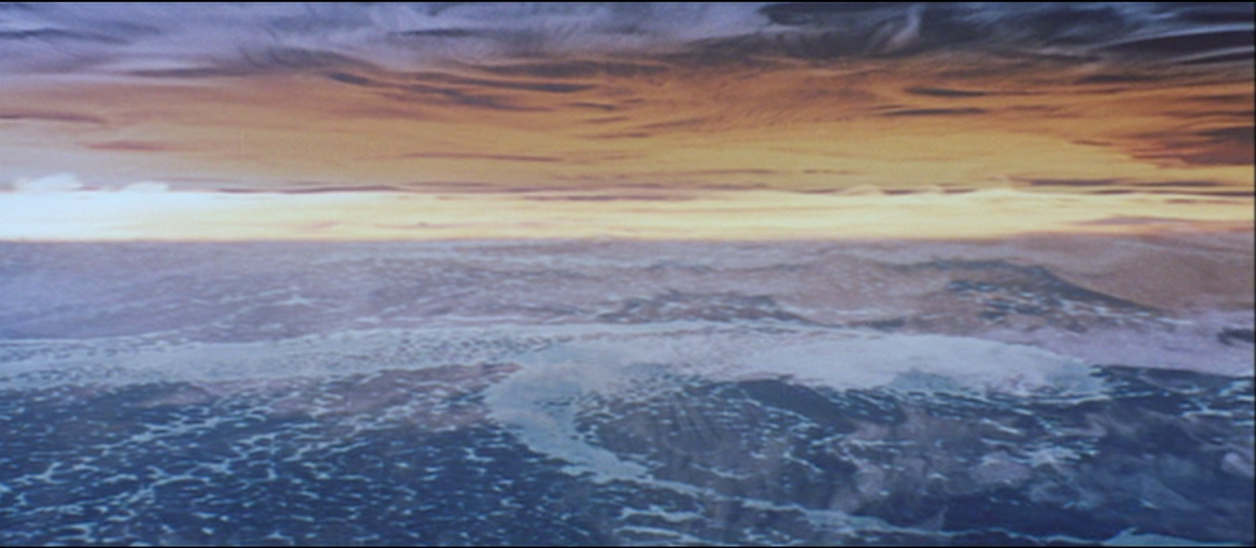
Solaris USSR 1972

Saturday August 6th at 5.00 p.m.

solaris-bild5

This is a film by Andrei Tarkovsky which is circulating as part of a package of his films Sculpting Time. If you are in time you can pick up a set of Lobby Cards on the package distributed by Curzon Artificial Eye. The card for this film quotes Philip Horne in The Telegraph,

“a hallucinatory, richly sensuous masterpiece.”

The film was produced in 1972 and there is a Hollywood remake (2002) directed by Steven Soderberg: this original is better. The film  is adapted from a science-fiction novel by Stanislaw Lem. The book, and the film, are what is known as SF, ‘hard’ science fiction. The film has parallels with Kubrick’s earlier 2001 (1968), but this is a richer and more ambiguous work.

Continue reading

South Riding UK 1938

8.30 p.m. Monday August 1st
Free for members – preceded by a Special General Meeting at 7.30pm

Richardson, Best and Clements.

Richardson, Best and Clements.

This is a fine adaptation of Winifred Holtby’ s 1936 novel with a screenplay by Ian Dalrymple and directed by Victor Saville. This was

“A novel of Yorkshire life between the two wars.”

The author dedicated the book to her mother, an Alderman in the County Council. Here she wrote,

“I have laid my scene in the South East part of Yorkshire, because that is the district which I happen to know best: … [and] … when I came to consider local government, I began to see how it was in essence the first-line defence thrown up by the community against common enemies – poverty sickness, ignorance, mental derangement and social maladjustment.”

The film preserves much of the social consciousness of the novel, but one relationship takes centre stage. This is between the two stars of the film, Ralph Richardson as landowner Robert Carne and Edna Best as the modern headmistress Sarah Barton. The film even retains an extremely unconventional [for the period] dramatic scene between them. The drama concerning local government is especially filled out by Edmund Gwenn as a businessman cum councillor Alfred Huggins and John Clements as ‘socialist’ councillor Joe Astell. Both the latter parts are fairly conventional for the period.

The film was also produced by Victor Saville who was one of the outstanding talents in British film in the 1930s. It was filmed at and around the Denham Studio and features some excellent location sequences. Unfortunately, I do not think that there are any Yorkshire locations in the film, but you may spot some. The production is very well done, particularly the cinematography of Harry Stradling and the production designs of Lazarre Meerson. And there is an excellent score by Richard Addinsell.

This is a good example of a first class drama of the period.  Marcia Landy, in her study of British genres, notes that the film is one of the most successful examples of a ‘melodrama of conversion and initiation’.  There is more compromise in the film than in the novel but it remains a fine portrait of 1930s Yorkshire life. And on this year’s Yorkshire Day it is screening in its original format of 35mm black and white academy.

The Man Who Filmed the Somme BBC 2016

The Hawthorn Ridge Redoubt mine

The Hawthorn Ridge Redoubt mine

This is a short programme about a key First World War documentary film shot mainly during the battle whose centenary occurs this year. The programme was shown on the BBC News Channel and is currently available on the BBC I-Player, [till the end of July]. Apart from the relevance of the topic itself there are some interesting shots of the Hyde Park Picture House. The cinema was the venue for a screening of the original film to an invited audience.

The Battle of the Somme was a filmed and released in 1916. It was five reels in length and ran for around 70 minutes. The film footage was shot by Geoffrey H. Malins and J. B. McDowell. Both were employed by the Cinematograph Trade Topical Committee, a number of production companies involved in early newsreels, who negotiated with the military authorities for cameramen to film on the front line. The military were initially against letting filmmakers into combat areas, but the needs of wartime propaganda [at which the Germans were especially effective] overrode this. [Effectively these cameramen were official cinematographers and ’embedded’ as the phrase goes].

Malins was to become the most famous wartime cameraman, partly through the success of the Somme film and partly through his book How I Filmed the War (1920). He was already involved in Newsreel filmmaking, having started out in still photography. J. B. McDowell had worked in the film industry in production prior to the war and joined Malins on the Western front. When the film footage was returned to Britain it was edited under the supervision of Charles Urban [an important pioneer producer and filmmaker] with Malins. It seems that it was Urban who proposed that the footage be turned into a feature length film, an unusual event at the time. This feature was released in August 1916, whilst the Battle of the Somme continued. Continue reading

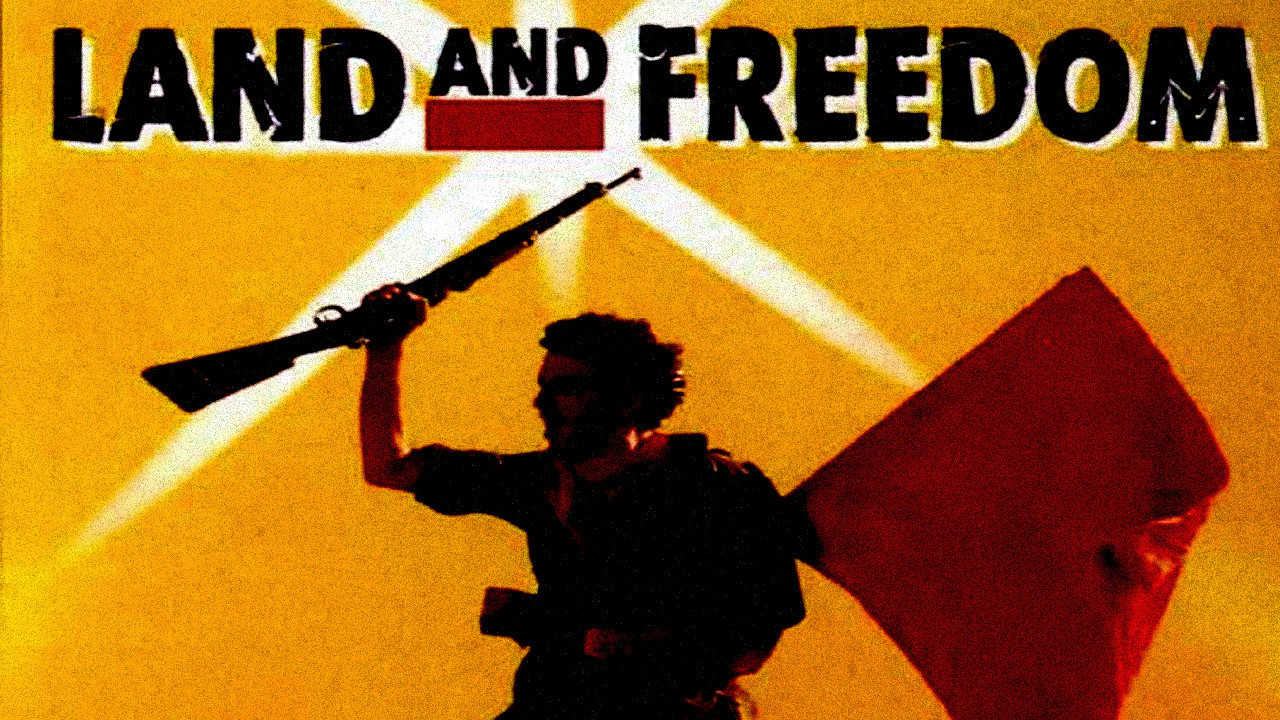
Land and Freedom / Tierra y Libertad UK, Spain, Germany, Italy 1995.

Sunday July 10th at 3 p.m.

Land and Freedom poster

This film was an earlier success for Ken Loach and his team. It won a number of European Awards including the FIPRESCI International Critics Prize and the Prize of the Ecumenical Jury at the 1995 Cannes Film Festival. It did not win any awards in the UK or USA. In fact, as has often been the case with films directed by Ken Loach, the film performed better on the Continent, especially in Spain and France, than in the two major English Language territories. There are ironies in the producing countries, since the Spanish, German and Italian regimes were all involved in the Civil War depicted in the film, whilst Britain [like the USA] stood on the side-lines, essentially supporting the force who are enemy in the film.

The Civil War was that between the Fascist regime that staged a coup d’état against the elected Spanish government in 1936 and the coalition of left and liberal forces of the Spanish Republic defending the land and the freedom of the Spanish people. This was the great cause in the 1930s and many politically committed British men and women went to Spain to fight and often die in the defence of the Republic.

One of these was the writer George Orwell and the film is clearly strongly influenced by his account in Homage to Catalonia (1938). In the film Liverpudlian David Carr [Ian Hart] goes, like Orwell, to Spain and joins the left-wing Partido Obrero de Unificación Marxista (Workers’ Party of Marxist Unification. The film features battles between the Fascists and the Republicans, but it also features political confrontations and debates. As in Orwell’s book the film takes the side of the combined Marxist/Anarchist POUM against the dominant republican factions led by the Partido Communista de Spain (Communist Party of Spain). The film is rather simplistic about the political conflict among the republicans. As the film essays the Communist Party was dominated by the rather reactionary political line of the ‘United Front’. However, the opposition, embodied in POUM,  had serious political problems as well. Continue reading

Yorkshire Silent Film Festival

The first ever Yorkshire Silent Film Festival is taking place throughout July at various venues across the region. On Sunday there are four events at the Picture House with a day pass available for members for £15 (passes for non-members are £19/£17).

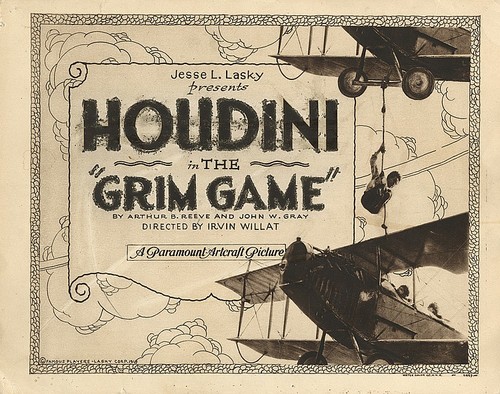
Harry Houdini Stars in The Grim Game (1919)

houdini

Showing at 12:40pm

Escapologist and illusionist Harry Houdini plays a man framed and imprisoned who escapes his cell and ruthlessly pursues the criminals who set him up. Lost for many years, this film was rediscovered in 2014 in the Brooklyn apartment of a retired juggler. It’s full of outlandish, breathtaking sequences, including Houdini’s world famous escape from a straitjacket while suspended from a skyscraper and a real-life mid-air plane collision which was later incorporated into the plot.

Live musical accompaniment by Jonathan Best Continue reading

Refugee Films

June 20th until June 26th is Refugee Week. There are now frequent filmic essays on the large numbers of people fleeing violence and/or seeking a better life. Only a select few actually enjoy distribution and exhibition in the UK. Have a look on YouTube for an idea of the rich variety. But the Hyde Park Picture House has regularly featured important and often moving films about this major and controversial issue. And we have three coming up over the next couple of weeks.

On 21st June – 6.30 PM

A-Syrian-Love-Story

(UK France, Lebanon, Syria 2016 – in English, Arabic and French) is a film by British documentaries Sean McAllister. It follows the story an journey of two Syrian refugees, Raghda and Amer, from their war-torn country to Europe. The travails of their journey are followed by the travails on arrival. The screening also includes is the short animated film Miniyamba (2012, in Bambara and French) featuring indigenous music. This is a film from the Danish Film Institute following a young man from Mali as he attempts to journey to Europe.

From Friday 24th June:

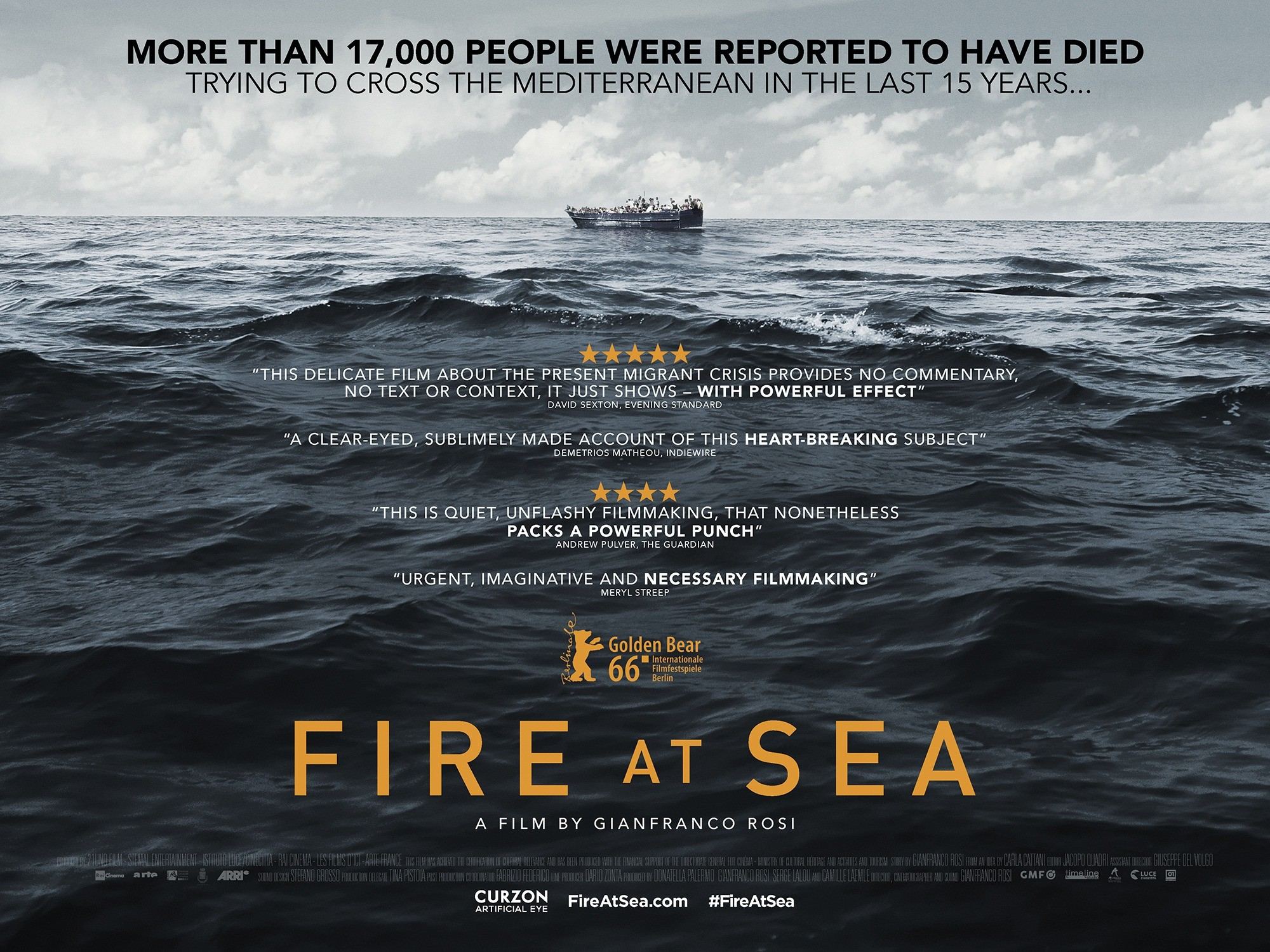
fire-at-sea-poster01

Fuocoammare (Italy / France 2016 – in Italian and English) directed by Gianfranco Rosi is set on the now well-known island of Lampedusa. The film uses 12 year old local lad Samuele to explore the situation of a small community and the hundreds of migrants who have landed there. The situation is explored with little comment or commentary: the picture presents itself.

From Friday July 1st:

where-to-invade-next(USA 2016 – in English, seven European languages and Arabic) is full of comment, by veteran filmmaker and polemicist Michael Moore. Moore does not fit most definitions of refugee. However his home USA bears much responsibility for the many concurrent crises of refugees. So Moore ‘flees’ his homeland to offer a somewhat idealised representation of continental Europe and virtues that the USA might copy. However, he does not offer any to be found in the UK, the junior partner in so many US imperial adventures. That absence speaks volumes.

Versus: The Life and Films of Ken Loach UK 2016

Screening On 11th June – 6.45 PM : On 12th June – 3.30 PM Wednesday 15th June 8.50 p.m. 

ken-loach-cannes

This new biopic comes out at a propitious time. Ken Loach has won his second Palme’ d’Or at the Cannes Film Festival for I, Daniel Blake. He joins an elect group of filmmakers, Bille August, Emir Kusterica and Shohei Imamura, who have also won this prestigious award twice since its inception in the current form in 1975. The award confirms Loach’s status as one of the most important of contemporary European filmmakers: though one who has been honoured more on the continent than in his home territory.

The documentary has been produced by Loach regular Rebecca O’Brien, scripted by his colleague Paul Laverty, and directed by Louise Osmond. It also includes many of the people who have worked with Loach, including Tony Garnett, whose output at the BBC is also seminal. My main reservation is that Osmond’s previous film, Dark Horse (2015), was made like a typical television documentary and utilised archive and found footage of rather low quality. But its focus was ordinary working people who are the recurring centre of Loach’s own films.

It was shot in 2.35:1 and that ratio does allow some striking shots by cinematographer Roger Chapman. But it also means that the extracts from Loach’s own films have been re-framed to fit this format. This does not do them any favours, in some frames heads are cut off. The footage of Loach working on I, Daniel Blake is in the same ratio. Some of this is interesting, but often it feels like a ‘making of ….’ treatment.

Where the films scores are the interviews with Ken Loach and Tony Garnett. Loach is unassuming but rigorous in his comments. And Tony Garnett is both intelligent and stimulating. We also get a brief interveiw with Nell Dunn [Up the Junction] and recordings of Jim Allen. The latter was an important collaborator and influence on Loach. And there is an excellent comment by Gabriel Byrne on the suppression of the production of Perdition. It would have been good to have more from other important collaborators like Rebecca O’Brien and Paul Laverty.

The documentary is also strong on the frequently myopic and predjudiced treatment of Loach’s film among British critics. As Derek Malcom remarks, he is much more honoured on the continent. Whilst he has won many awards at the Cannes Film Festival, The Berlin Film Festival and even a French César. None of his films has ever been awarded a BAFTA!

Certainly Loach’s film and television output has deserved this. From the pioneering work in the 1960s, notably Cathy Come Home, made for the BBC with Tony Garnett, to the recent series of annual film releases, his work has been among the best and most interesting produced in the UK. And this film does pay due attention to his early work for the BBC. Whatever its limitations this documentary is worth seeing as a deserved retrospective of his contribution.

Cathy come home

Continue reading