Changing the World One Film at a Time

Friends committee member Bill Walton picks out some highlights from the first week of the 29th Leeds International Film Festival.

What I really like about the Leeds International Film Festival is the sheer variety of  subjects, styles, genres, formats, and cultures. Thus the Festival gives me a glimpse of the world seen through other eyes.

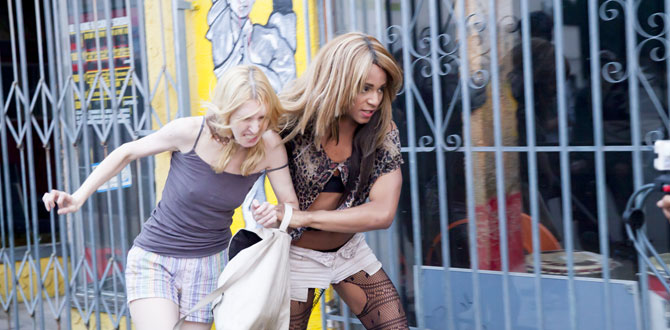
A few examples of films that were both entertaining and thought-provoking are Tangerine (2015): a lively, low budget film set in Los Angeles, which gives food for thought about sexual identity.

Tangerine

Continue reading

LIFF preview – Łódź Film School Shorts

Monday November 16th at 1300 and 1500

untitled

The Leeds International Film Festival offers a rich variety from the short film form. One programme that promises real quality is this selection made at the Polish National Film School. Friends who have seen the features in the Martin Scorsese Masterpieces of Polish Cinema will know that the school has been [and remains] a really fine training ground for young filmmakers.

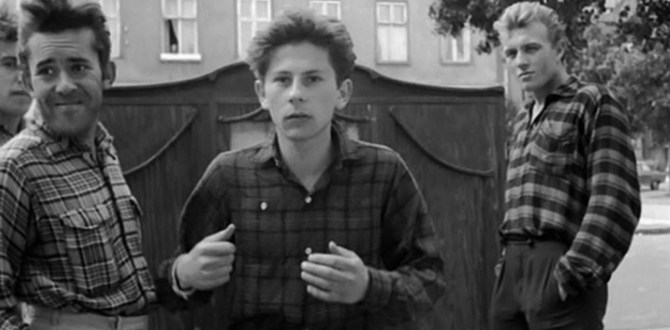
There are two programmes of film, running for one hundred minutes each. The first includes the young filmmaker seen above, Roman Polanski. There is also an early film by Krzysztof Kieślowski. The first programme covers the 1960s until 1980s. The second programme offers current films and filmmakers.

Definitely worth getting along for on Monday afternoon. And going on past years all of the short film programmes should offer at least some distinctive and enjoyable filmmaking.


LIFF preview – Abandoned Goods, UK 2015

Sunday 8th November 2.30 p.m.

AbandonedGoods3web

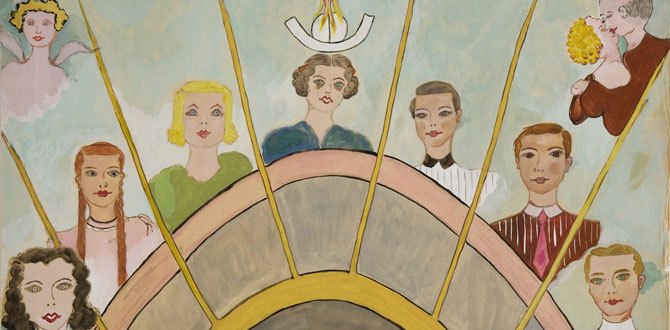
Only an hour with the accompany short film, Exquisite Corpus. However, an extremely interesting hour as the main film explores a cache of art works created by patients in a long-stay hospital for people with mental illness. The film is extremely well done and some of the art work would grace any gallery.

The accompanying short is experimental and explicit, an 18 Certificate.

[See review].

LIFF preview – Pyaasa, India 1957.

LIFF screening Saturday November 7th 1400.

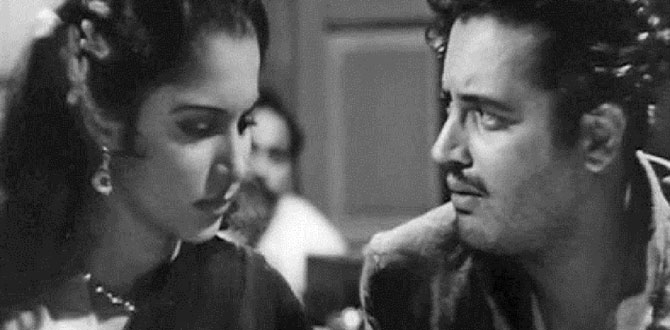
A memorable film from the 1950s Hindi Cinema. “Producer and director Guru Dutt’s intensely original film [The Thirsty One] is widely considered one of India’s unquestionable classics, striking a chord with its  vision of the romantic artist in conflict with an unfeeling materialistic world.” (Cinema Ritrovato Catalogue, 2014).

Gulab and Vijay

Gulab and Vijay

Guru Dutt also appears in the film as the poet Vijay, opposite Mala Sinha as Meena and Waheeda Rehman as Gulab. The film has a distinctive use of music and songs and exemplary black and white cinematography with fine use of crane shots. The music is by Y. G. Chawhan and the cinematography by V. K. Murthy. Dutt’s collaboration with these two artists and with the cast and production team offers a control of sound and image that stands out in the period.

Pyaasa is among a number of films from The Golden Age of Indian cinema, [late 1940s and 1950s] which have been restored and made available in either 35mm or digital versions by the recently established Film Heritage Foundation. The films offer the pleasures of the distinctive Indian musical film form. They combine melodrama and emotion with great dance and musical sequences. Pyaasa is in Academy ratio and runs 143 minutes. So this is a rare opportunity to see not just an Indian classic but an outstanding film of World Cinema.

Hyde Park Picture House, 101 years old.

Screen-Shot-2014-10-31-at-13-06-51

This Monday, 2nd November, exactly one hundred years ago, the Picture House opened for its second year of business. Already in the first twelve months of film entertainment it had successfully established itself. The log books, donated to the West Yorkshire Archive Service in 2015, record the box office takings. Weekly attendances were now regularly over 2,000. At a Bank Holiday they could exceed 3,000. And the same happened when there was a really popular film. So the log books record key titles, and show that Charlie Chaplin had already registered with his amazingly fast rise to fame and stardom.

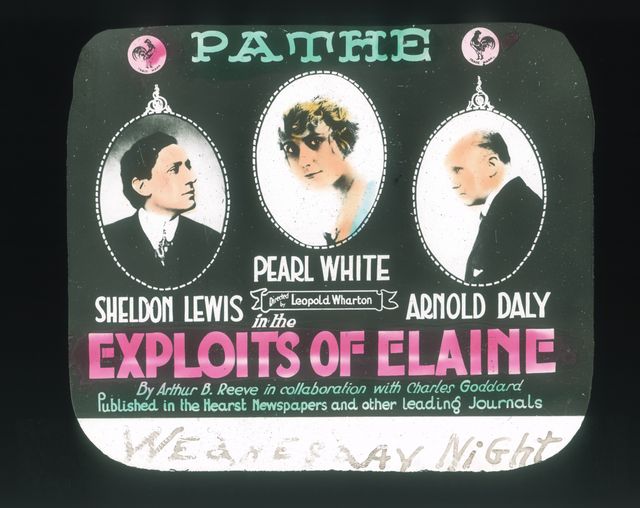
On the Thursday of that week another popular title opened at the cinema: The Exploits of Elaine (Pathé USA, 1915). The Exploits of Elaine was a serial, with fourteens separate episodes. The Hyde Park appears to have screened the separate episodes weekly, as part of the Thursday programme, as the box office increased towards the weekend.

Elaine poster

Continue reading

Make More Noise! Suffragettes in Silent Film, BFI 2015.

Sunday November 1st at 1.30 p.m.

1442414331-d0bdd242ecd22cbea030a917aa71f1c8-600x449

This is a compilation of early films about the early C20th British Suffragette Movement. The selected titles are relatively short and are predominately newsreel footage or equivalent. There is the famous action by Emily Davison at the 1913 Derby. There is also coverage of her funeral. This latter film was used behind the closing credits of the feature Suffragettes: though unfortunately in the increasing contemporary habit of re-sizing it into a widescreen frame. Film of an action in Trafalgar Square features Sylvia Pankhurst, inexplicably missing from Suffragette.

The selection carries on into World War I when the Pankhurst’s and the movement split over whether to support the imperialist war or not. Sylvia Pankhurst was among those socialists who opposed the conflict.

There are also some short fictional films, mainly in the comic mode. There are shorts that send up the movement and ridicule it. But there are also several films by Cecil Hepworth which take a less hostile view. Two of these feature a popular female character of the period, Tilly, a tomboy who was constantly getting involved in and surviving scrapes.

Continue reading

Horse Money, Portugal 2014.

Jake Baldwinson takes a look at Horse Money, this week’s Tuesday Wonder on October 27th at 6.30 p.m.

Horse Money

The last feature length fiction film by Portugal’s Pedro Costa, Juventude em Marcha (Youth on the March/Colossal Youth 2010) looked, in part, at the destruction of the Fontainhas district of Lisbon and the rehoming of it’s residents. Fontainhas had been Costa’s filmmaking home since Ossos in 1997, and with his familiar surroundings empty, Pedro looked further afield for inspiration. Whilst promoting his concert film Ne Change Rien (Change Nothing 2009) in New York, and looking at music history there, Costa was struck by physical similarities between legendary New York poet and musician, Gil Scott-Heron, and star of Colossal Youth, Ventura. This led to talks between Costa and Scott-Heron on a possible film, which were sadly halted by the poet’s death in 2011.

With fragments of film ideas, and with the project in limbo, Costa moved his thoughts back to the former residents of Fontainhas, including Ventura, and started to develop a new film imbued with the spirit of Scott-Heron’s work, and possibly with the shared history of poverty and social unrest in Lisbon and New York. Going as far as opening with a series of photographs by Jacob Riis, a photographer documenting the New York slums at the turn of the 20th century.

Pedro Costa’s films, especially the ones set in Fontainhas, are recognisable as intersections between fiction and documentary; fusing the personal recollections of Costa’s non-professional actors, with his interest in film history, of expressionism and the ‘dark cinema’ of Hollywood in the 1940’s and 50’s. That hasn’t been more noticeable than it is in Horse Money, where our characters stalk the halls of shadowy hospital, reliving their lives, their uprooting from Cape Verde, and connection to the Portuguese revolution in the mid-70’s. This haunting, poetic, musically-minded film is in my opinion, Pedro Costa’s most accomplished, and possibly my favourite of this year. I can’t wait to see it again.

London and Leeds Film Festivals

Jake Baldwinson reports back from the London Film Festival and looks forward to Leeds annual film festival next month.

London Film Festival

Last Friday saw the launch of the Leeds International Film Festival programme. Now, I would normally spend the following weekend poring over the free guide, working out a schedule for my filmgoing highlight of the year. This time around, however, I was attending part of  the BFI London Film Festival. I ended up packing in 7 films over a hectic couple of days, including two that have been selected for the Leeds Film Festival this year.

What I find exciting about attending a film festival, even if just for a day or two, is experiencing a melting pot of different narrative voices in a short period of time. On my Saturday in London, I went to 4 screenings; beginning with a fiction feature set in Mexico, shot in an eye-catching circular frame using innovative techniques by the filmmakers. I then finished with a documentary about a culture under threat in Thailand and Burma, filmed in a collage-style using several different formats underwater and on land. These are the complementary screenings (or ones that intriguingly clash) that you would only find at a film fest. The former, entitled Lucifer, is screening a total of three times in Leeds as part of the festival in November, and I would really recommend it. Another from LIFF’s Official Selection that I caught in London was Jafar Panahi’s extremely enjoyable, Taxi, also showing three times (including once at The Hyde Park Picture House.)

Continue reading

Black Orpheus| / Orfeu Negro, France 1959.

Screening on October 18th at 1.30 p.m.

blackorpheus_091

This is an early success from the burgeoning art cinema of the late 1950s. It won the Palme d’Or at the Cannes Film Festival and Best Foreign Language Film at the Academy Awards. Set during the Rio de Janeiro Carnival it transposes the classic tale of Orpheus and Eurydice to that setting. The idea of such a mythic tale in one of the most famous and colourful events in Latin America was brilliant. And the film is well served by the fine colour cinematography of Jean Bourgoin. The film opts for a very simple depiction in terms of characters but the excitement of the masquerades, dance and music in the Carnival make it visually and orally compelling. There is though more than a trace of ‘exoticism’ in the representations.

The film is screening in its original format of 35mm, which should do proper justice to the stunning colour palette in which the drama is set. It was filmed in Eastmancolor, which sometimes suffers the ravages of time. Intriguingly for the date it was also filmed in the old Academy ratio, i.e. a nearly square frame. The language is Portuguese, though I think there was also some patois in there: it will have English sub-titles. On its original release in the UK it was certified as an A: now it is PG: ‘mild violence and sex references’ according to the BBFC. Note, two important characters are children and I thought they were very good.

LIFF29 Planning

The 29th Leeds International Film Festival programme has now been out for nearly a week and no doubt many of you are making plans about what to see. With over 300 screenings and events, there’s an awful lot to choose from and the selection of trailers shown on Light Night made everything looks so great, or terrifying, or weird and often all of those things.

The Leeds Movie Fans Meetup Group have already started picking out some events to attend, you can find out more about these on their page.

I think I’ve just about worked out my own plan, you can find it over on Letterboxd (a wonderful website for film lovers) which is where you can also find a list of most of the LIFF29 films. I’ve also made a Google spreadsheet and Calendar which you may help your planning (please note these don’t contain accurate end times).

We were hoping to provide some previews and recommendations but we’ve been too busy poring over the programme, eliminating clashes and trying to come up with our own plans. If you have any recommendations or would just like to share your thoughts on the festival then please do get in touch and we’ll happily share them.