Spotlight USA 2015

Wednesday March 16th at 3.40 p.m.

spotlight-movie-poster

There is a final opportunity to see this Oscar winning film. I suspect that the members of the Academy voted for the film partly to demonstrate their social awareness in a year when they need good publicity. And then probably partly because it a traditional genre film with a well-written script, good production values and an impressive roster of actors/characters.

The film falls into a cycle of journalist movies. The most famous of these is probably All the President’s Men (1976) and that is clearly an influence on this film. There are several scenes where there are visual crossovers, including in the offices of the newspaper and then one with Sacha Pfeiffer (Rachel McAdams) researching the story in a public records library. Pfeiffer also interviews the surviving victims of the abuse that is the focus of the story. These are a distinctive feature and extremely well done. And the mise en scène constantly reminds us of the guilty party – the Roman Catholic Church in Boston. In an engaging actual parallel – Ben Bradlee edited the Washington Post during the Watergate investigation: his son Ben Bradlee Jnr. was Assistant Managing Editor at the Boston Globe during the Spotlight investigation.

In other ways the genre influence is not always for the best. There is a fairly long sequence as Mike Rezendes (Mark Ruffalo) waits to access legal records that are key to the completion of the story. This is played for suspense but the plot does not really justify this.

The film also fit into a cycle of films set in the city of Boston. Criminality and noir seem to be something of a constant. But the religious presence in the city is also a constant. The other earlier film that I was reminded of was The Verdict (1982 ). In that film Frank Galvin (Paul Newman) is fighting the church in a legal battle over medical incompetence. Apart from visual moments there is also a parallel with Walter Robinson (Michael Keaton) of the Spotlight team: both have to come terms to mistakes in their past.


Mavis!, USA 2015

Showing Sunday 13th March 4pm
Mavis

Committee member, Bill Walton, urges you to go and see Mavis! this Sunday.

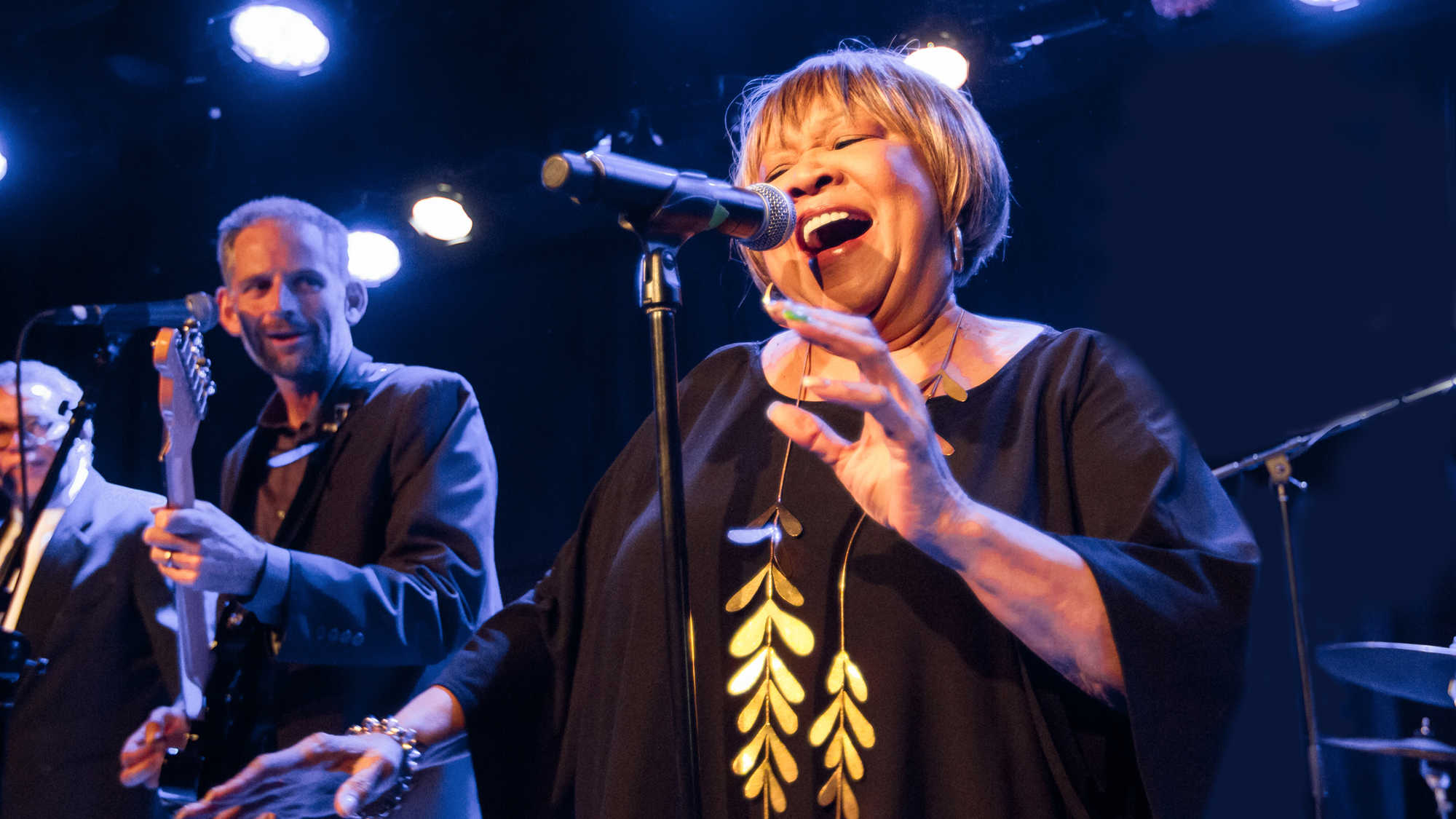
I haven’t seen the film Mavis! yet, but I have seen the trailer and, even better, I saw Mavis Staples performing live at Glastonbury last year. Loads of charisma, great songs, a sensational voice, an excellent backing band, and a powerful advocate of Black Lives Matter. If you like gospel and soul music, and want to learn more about the part the Staples Singers played in the Civil Rights movement, make sure that you catch Mavis!

We don’t normally share trailers on this blog but this one is a great taster of what to expect from the film featuring Prince, Bob Dylan and Chuck D.

The Assassin / Nie yin niang, France-Taiwan-China-Hong Kong 2015

Five screenings starting on Friday February 26th at 9.00 p.m.

The-Assassin-2015-Full-Movie-Watch-Online-Download

This film was screened several times in the Official Section at Leeds International Film Festival. The director, Hou Hsiao-hsien won the Best Director Award at the 2015 Cannes Film Festival. This is a stunningly beautiful film. However, many people have remarked that the presentation of the plot is opaque.

The UK marketing uses the martial arts genre in the publicity, which is a mistake. This is a slow, artful film: it has parallels in terms of plot with Hero (Ying xiong 2002). Moreover, for a western audience, I think it takes some time to identify the separate characters, especially when for much of the time they wear the formal clothing of the period. In addition the film moves around in different time periods, but without the usual signalling of flashbacks.

How well you manage depends on the manner in which you view films. One friend managed most of the characters and plot at his first screening: impressive. I managed the basic characters and plot at my first screening but it was only the second time round that I followed the whole coherently.

Rather than describe the plot, the main point of which is relatively simple, it may help to describe those I believe to be the main characters:

Shu Qi as Nie Yinniang, the eponymous assassin, dressed in black when we meet her.

Fang-Yi Sheu as Princess Jiacheng and her twin sister, the princess Jiaxin turned Taoist nun

We meet Jiaxin along with Nie Yinniang in the opening sequence. Jiacheng only appears in flashback,

Chang Chen as Tian Ji’an, cousin to Nie Yinniang, formerly betrothed to her, and military governor (Jiedushi), ruling Weibo Circuit.

Zhou Yun as Lady Tian, Tian Ji’an’s wife. (Belongs to family of a separate Provincial ruler.) It seems that she is also a masked figure who duels with Nie Yinniang.

Satoshi Tsumabuki as the mirror polisher. Unidentified by name, the character’s title action is easy to miss: he appears late in the film when there is an attack in woods and he comes to the rescue. It seems that he has more scenes in the Japanese release version.

Ethan Juan as Xia Jing, Tian Ji’an’s bodyguard

Hsieh Hsin-Ying as Huji ( her name means ‘orchid’), Tian Ji’an’s concubine and a dancer

Ni Dahong as Nie Feng, Nie Yinniang’s father and Tian Ji’an’s provost.

And there is an older whiskered character who I believe is Jacques Picoux as Lady Tian’s teacher: he appears twice sitting in his study.

Note it opens in black and white and then changes to colour. And whilst the bulk of the film is in Academy ratio [1.37:1], there are two sequences (of only two shots each) in widescreen ratio [1.85:1] . For more …

Keswick Film Festival

2

Long before I joined the Friends of Hyde Park Picture House committee I got involved with Keswick Film Club and their annual film festival. I grew up near Keswick in the Lake District and the film club played a big part in enlightening me on the wonders of art house cinema.

Now in it’s 17th year Keswick Film Festival starts on Thursday and runs through until Sunday. There are 29 films spread across themes such as Best Of The Fests, highlighting popular films from other festivals such as The Assassin (2015), The Wolfpack (2015) and A Girl Walks Home Alone At Night (2015). The Jazz theme includes a 35mm screening of Round Midnight (1986), one of the more authentic and affectionate presentations of the jazz world on the silver screen. Four films look at Memory in different ways including Imaginaerium (2015), a gothic fantasy based on the music Finnish symphonic metal band Nightwish and described as a visual and aural spectacle. Another film dealing with Memory is Karen Guthrie’s The Closer We Get (also showing at the Picture House on Tuesday 1st March). Described by Mark Kermode as “a poignant examination of the bonds of family love”, Karen will be at Keswick to introduce and talk about her personal film.

Two other female directors will also be at the festival with their films. On Friday, British novelist Helen Walsh’s The Violators (2015) is “an intriguing directorial debut with a class-crossing tale of teen ennui” (Variety). Lapse Of Honour (2015) from Rayna Campbell is a gritty urban drama based in Manchester’s Moss Side and sees MOBO nominated rapper Lady Leshurr makes a seamless move into film. There are 13 other films at the festival directed by women and many more F-Rated films featuring significant roles for women both behind and in front of the camera.

Continue reading

Wild Tales / Relatos salvajes Argentinian 2014

Sunday 21st February 3.30 p.m.

Wild-Tales-Movie-600x300

Writer and director Damián Szifrón has produced a wildly funny portmanteau film [several stories, frequently with thematic connections] that has already scored at this year’s BAFTA Awards: not exactly a great compliment given some of the other winners. However this is two hours of often extremely funny but macabre humour. As my colleague Roy Stafford writes the six tales are essentially about ‘getting even’.

Pasternak is set on a plane and is the most notorious of the tales: unintentionally mimicking real life. I laughed like a drain but a friend who saw it with a different and ‘stony-faced’ audience admitted she did not dare laugh out loud there.

The Rats is set in a cheap restaurant. I recognised the plot and could see what was coming: possibly the weakest of the tales.

The Strongest looks like a variation of Steven Spielberg’s Duel (1971). But this is a very dark comedy rather than a thriller.

Little Bomb gives voice to all those occasions when some bureaucratic rule drives one mad. My favourite of the six.

The Proposal is less of a comedy and more of a moral drama, with a very sardonic tone. [Think Nure Bilge Ceylan].

Until Death Do Us Part is the hilarious conclusion to the six tales. If you are going to venture into marriage this is the wedding to have. I shall save it to revisit when there is another royal or celebrity wedding on the box.

The film is in excellent colour and scope frame. All the stories have English subtitles.


Le Mépris France / Italy 1963

Sunday 14th February – 3.00 PM

le-mepris

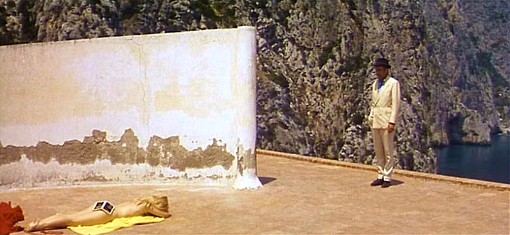
A film by Jean-Luc Godard is always an occasion. Readers may not think that he is necessarily one of the cinema greats: but he is certainly one of the most fascinating filmmakers working in World Cinema. This film hails from the 1960s, the period when he delighted, confounded and upset audiences and critics alike. The starry cast, Brigitte Bardot, Jack Palance and Michel Piccoli, may suggest a relatively mainstream story, but, as ever, Godard both subverts and innovates.

Importantly the cast also includes the veteran filmmaker Fritz Lang. This is a film about cinema set in the world of filmmaking. Lang is directing a version of The Odyssey. Whilst the film does not literally transpose the plot of Homer’s epic poem, there are intriguing parallels with the triangle at the centre of this film.

The Aegean locations were filmed by the talented Cinematographer Raoul Coutard and they look great. Watch for the beautifully executed tracking shots. There is excellent mise en scène and editing: the latter by Agnès Guillemot   and Lila Lakshmanan. There are a series of exemplary shot / reverse shot that have been much copied, including I would think by Michael Mann in Heat (1995).

The film has been restored and transferred to digital. One would expect it to look good and it has the original 103 minutes running time and the French release soundtrack [with subtitles]. It was filmed in Technicolor and on Franscope, 2.35:1. The last time I saw it I loved the sound and visuals and was fascinated as the cast presented this tragic tale.

January Poll

We’ve added a Poll section to the website, you’ll see it in the sidebar (or at the bottom of the page if you’re looking on your mobile). For the first question we’re asking you to look back at January and pick your highlight. Was it one of the award season contenders such as The RevenantRoom and Joy or catching up with Sunset Song or The Lady In The Van or the sold out screenings of Labyrinth made even more poignant by the sad death of Bowie. You can also vote “Other” for anything else such as one of the great Tuesday Wonders (Forbidden Room, Taxi Tehran, Güeros).

Carol on 35mm

Saturday February 6th at 5.30 p.m. and Sunday February 7th at 4.30 p.m.

Carol hotel

This film has received much critical praise and a number of award nominations. The main focus has been the acting of the leads, Cate Blanchett and Rooney Mara. But the supporting cast are excellent. Edward Lachman’s cinematography [shot on Kodak Super 16 stock] should really benefit from the definition and luminosity of 35mm. There is splendid production design by Judy Becker and fine editing by Affonso Gonçalves. And in an age when music scores are often overdone Carter Burwell strikes the right balance between drama and underscoring. This is director Todd Haynes’ best film since Far from Heaven (2002). That was a fine revisiting of a film classic: this is a really intelligent adaptation of a great novel.

The film follows the book fairly closely but also introduces significant variations. These seem to me to be well judged additions that suit the cinematic treatment. If you are seeing the film again then you can enjoy the very fine sequence that opens the film and which is then revisited near the end. It has great mise en scène but the beautifully judged camerawork and editing adds to the characters and dramatisation. It also seems to be a homage to a classic British film drama.

Carol is screening as part of a series of lesbian, gay, bisexual, transgender and queer cinema. Also check out Tangerine (USA 2015) showing on Thursday 11th at 9pm.

Taxi (Tehran) Iran 2015.

Thursday February 4th at 6.30 p.m.

Taxi-tehran

A welcome innovation, a ‘Tuesday Wonder’ being repeated on a Thursday. And this is a film to see or see again. This is a distinctive film in so many ways; for starters the entire production crew consists the Iranian filmmaker Jafar Panahi: with the exception of Massoumeh Lahidji, who prepared the French sub-titled version: [the alternative title appears to be to avoid confusion with the earlier films of that title] .

The film, like at least two earlier Iranian films, is set in a taxi circling Teheran. The driver is Jafar Panahi and sited on the dashboard is a Blackmagic Pocket Cinema Camera. There is a some additional footage shot on cell phones. The rest of the cast are non-professionals, unidentified to protect the innocent. The car, a friend informed me, is a Peugeot 405, built under licence in Iran.

What we see and hear, along with Panahi, are a man who works as a free lancer [fairly conservative] and a woman teacher [liberal]: a man injured in an accident and his wife: there is a man who distribute videos, some at least illegal: two women carrying a gold fish to a well/shrine: Panahi’s niece, who is also making a film: an old school friend who has a story of his troubles: and a lady with flowers who is a suspended lawyer. Some of them recognise Panahi, some apparently do not. There are also, outside the car, a fruit seller, a CD seller, various passers-by, medical staff, and [finally] two black clad men on a motorcycle. Most of the characters in the car talk as only Iranians can talk.

The film is fascinating, witty and deeply subversive. It offers a rich mine of stories, observations, complaints and the varied tapestry of Iranian urban life. The ending, following the appearance of the motorcycle, is very smart.

Of course, Panahi has form. He is currently suspended from filmmaking, but managed the equally impressive This is Not a Film (2011). This time his latest film won the Golden Bear at the Berlin Film Festival: few film awards carry greater kudos.

Panahi has had a long and productive career. This film references a number of his earlier films. The ones I picked up were Offside (2006), Crimson Gold (2003), The Circle (2002) and The White Balloon (1995). The latter includes another recurring Iranian motif, gold fish.

Reviews tend to pick up on the way that Panahi has subverted the repressive and very conservative regime in Iran. But equally the film gives testimony to the rich variety of Iranian culture, including a long tradition of quality films. It says something about the dynamic qualities of this society [usually ignored by the West] that it can produce so many fine art works.