Happy #LIFF30 Day

cwue3ilw8aaetpy

As you probably know the 30th Leeds International Film Festival starts tonight with a screening of Jim Jarmusch’s Paterson at the Town Hall (it’s also showing at the Picture House on Saturday 5th at 8:30pm).

We were hoping to post more about the festival but it’s going to be busy few weeks so that might be difficult but don’t forget about our Twitter and Facebook pages. You can find all of our #LIFF30 posts here including a fascinating look at how the Friends started the festival 30 years ago. On Friday we’ll be highlighting some of the films in the Fanomenon strand showing at the Picture House. The Leeds Movie Fans Meetup Group also have a number of meetings planned during the festival, check out their webpages for more details.

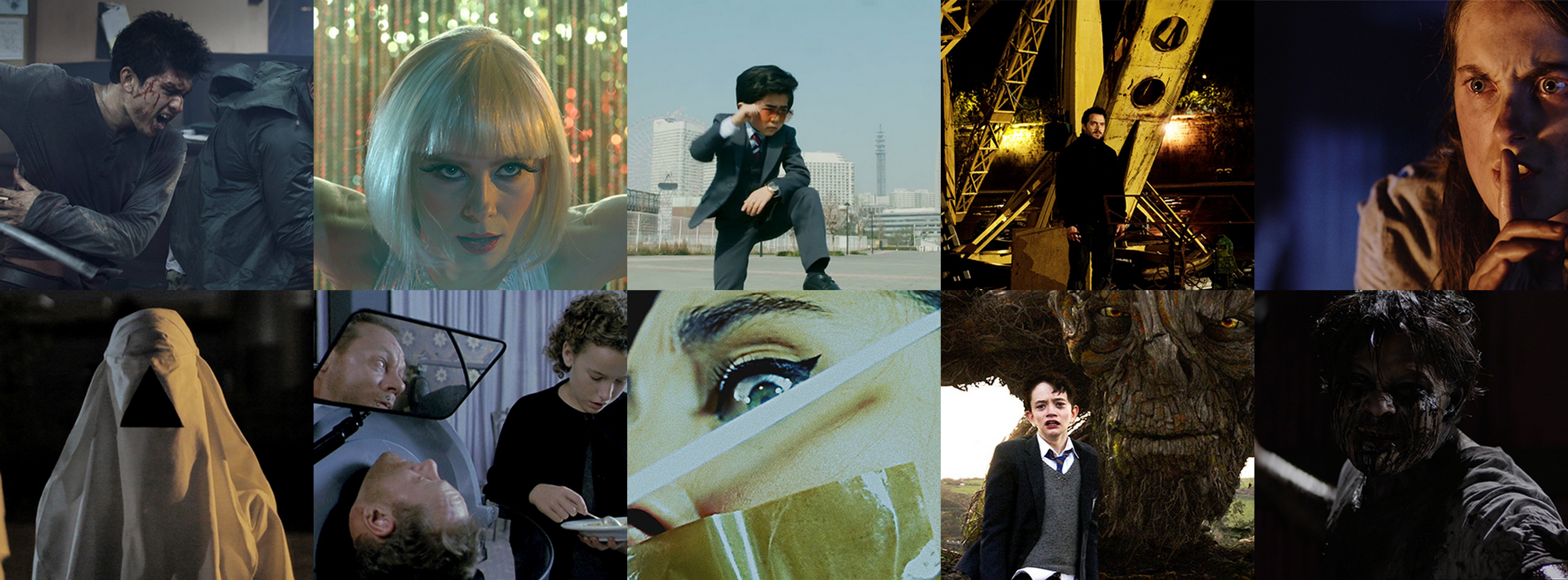
There are nearly 150 films on offer over the next few weeks so there’s bound to be something for everyone. If you’re still planning what to see you might find this clashfinder useful. There really seems to be a lot of great films this year. I’m planning on seeing 45 films over the next two weeks (you can follow my progress on Letterboxd and Twitter) and I still feel like I’m missing out. Here’s a list of ten films I really wanted to see but couldn’t fit in (and that doesn’t include any of the classic films in the soundtrack retrospective which I’d love to have seen again!)

  1. A Divorce Before Marriage
  2. Dougal And The Blue Cat
  3. As I Open My Eyes
  4. Cameraperson
  5. Greetings From Fukushima
  6. Graduation
  7. Lady Macbeth
  8. November
  9. Napoleon
  10. A Silent Voice

We hope you enjoy the festival and would love to hear your thoughts about any of the films in the comments (or contact us if you’d like to write a longer post for the blog).

Woman of the Dunes/Suna no onna, Japan 1964

Friday November 4th at 4.30 p.m. and Wednesday November 9th at 1.00 p.m.

woman-in-the-dunes

This is one of the classic films screening at the Leeds International Film festival and one of the few in the original format of 35mm. It is part of a retrospective ‘Soundtracks’ and the film has a minimalist and modernist electronic score by Japanese composer Takemitsu Toru. He was a regular collaborator with the film director Teshigahara Hiroshi and this is the latter’s most notable film. It won the Special Jury Prize at the Cannes International Film Festival and was nominated for an Academy Award in the Best Foreign-Language Film category.

It is an example of the modernist film-making found in the Japanese New Wave of the 1960s. It is a film of ambiguities but with a fascinating narrative and characters. An etymologist goes to the beach collect specimens for the day but events prevent his return to the city in the evening. The story develops in beautifully unexpected ways.  Visually the film is a tour de force, especially in the black and white deep focus cinematography of Segawa Hiroshi. The imagery at times is abstract and the music of Takemitsu adds to the unconventional feel of the film.

The film also has a strong set of social themes running through it. These receive extra emphasis from the opening and closing credits which offer an added dimension to the allegory. The film runs for just over two hours and exercises at time a hypnotic feel. Not to be missed on the big screen.

A History of Leeds Film Festival

LIFF30

It is the 30th edition of the Leeds International Film Festival this November. From its instigation in 1987 by members of the Friends of Hyde Park Picture House the festival has consistently presented a wide-ranging programme of films and film based events annually, across a shifting landscape of city venues.

Laura Ager, a volunteer at the Hyde Park Picture House who has worked with the film festival in various roles over the last 10 years, recalls how she first became interested in the history of the festival and, in the course of her research, has tracked down some of its former directors and supporters to ask them what the festival meant to them.

Two typed documents, discovered by chance in the office of the Leeds International Film Festival at Leeds Town Hall, announced the coming of The Leeds International Film Festival.

In November 1987, the Leisure Services department at Leeds City Council proclaimed that in 1988:

Leeds, the birthplace of the film industry, will celebrate the centenary of the moving image by holding a major international film festival.[1]

This film festival would celebrate 100 years since Louis le Prince filmed the people and traffic in ‘Leeds Bridge Scene’ at a spot now marked with a Leeds Civic Trust blue plaque.

The Leeds International Film Festival took place from 13th – 29th October 1988. On the first day, the famous traffic scene was reconstructed on Leeds Bridge at 2pm, later on that day a ‘black & white ball’ was held in the Town Hall. The film programme addressed eight themes that year: comedy, horror, war, music in films, images of England, animation, women and film and documentary[2]. Continue reading

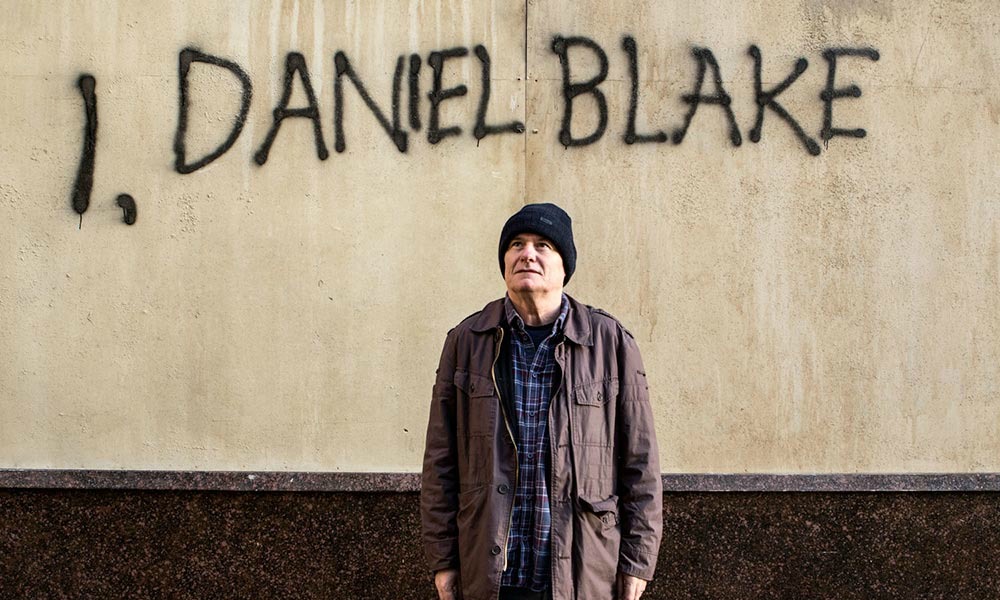
I, Daniel Blake UK/France/Belgium 2016

Screening daily from Friday October 21st until Thursday November 3rd               [excepting Sunday October 30th]

20160418140729-i_danielblake_01

The new film directed by Ken Loach comes garlanded with the Palme d’Or from the Cannes Film Festival. As usual it is scripted by Paul Laverty and has been part-funded by the BBC, the BFI and European companies. The film is set in Newcastle-upon-Tyne among the northern English working class. And the plot revolves round the travails of ordinary working people attempting to cope with an unsympathetic and exploitative state system. Thus it combines situations and themes that have dominated Loach’s films since the seminal Cathy Come Home (1966).

Ken Loach’s long and illustrious career makes him one of the most productive of contemporary British film-makers and the oldest recipient of the Cannes Festival’s premier award. Yet his work has a continuity and repetition that makes all his films easily recognisable. We are told that, as is his wont, the film was shot chronologically. It uses both experienced and non-professional performers. And it relies to a degree on the long shot and the long take, giving it an observational style. Note, despite the clips in the Versus… documentary this film screens in standard widescreen, 1.85:1 and is in colour. It was shot on Kodak film stock but is being distributed on a DCP.

In an interview this week Loach took the BBC and television generally to task for their failings in representing the working class of Britain in any meaningful manner. So his continuing engagement with this world and with the politics of resistance makes the film essential viewing.

Bob Dylan – poet, song-writer and occasional performer.

dylandontlookback-725916

So, as we celebrate the Nobel Literature Award can we look forward to hearing Dylan in the auditorium before the screenings. Perhaps ‘Like a Rolling Stone’ before American Honey (2016).

But we could possibly also enjoy Dylan on film. There is Don’t Look Back (1967), a classic music documentary of the 1966 UK tour: a genre that features in the 2016 LIFF. There is Martin Scorsese’s The Last Waltz (1978), another very fine documentary, this time of a single concert. There is Wonder Boys (2000), for which Dylan won an Academy Award for Best Song, ”Things Have Changed’. And then there is I’m Not There (2007) with several different Dylan’s, including an intriguing one by Cate Blanchett.

My favourite Dylan moment on film is unlikely to be available in a print now: the sequence in the original release version of Pat Garrett and Billy the Kid (1973) where Dylan’s ‘Knocking on Heaven’s Door’ plays over the final moments of Sherriff Baker (Slim Pickens). A song that will [eventually] make a fine elegy for Dylan himself.

moviemoments2014-patgarrettandbillythekid


LIFF30

It was great to have the launch of the 30th Leeds International Film Festival at the Picture House last week. There was a wonderful atmosphere and sense of anticipation as 50ish trailers and clips were shown. I left wanting to see more of everything that had been showcased.

If you haven’t picked up a guide yet, it’s now also available in digital form.

There’s a new layout for the guide this year including a more compact pull out calendar which may be prove to be useful during the festival but for lots of people has made planning a little harder. If you are struggling to see the overlaps you may find this Clashfinder website useful. It shows everything in a grid format so you can plan your dashes between venues. You can also highlight films to create your own itinerary and this allows us to see what’s popular, earlier today the top 20 was as follows:

  1. LIFF30 Opening Gala: Paterson + Timecode
  2. The Handmaiden
  3. Jurassic Park
  4. Schneider vs. Bax
  5. A Monster Calls
  6. Train to Busan
  7. Hacksaw Ridge
  8. I Am Not a Serial Killer
  9. Under the Shadow
  10. Jaws
  11. The Wailing
  12. The Master Cleanse
  13. Toni Erdmann
  14. Belladonna of Sadness
  15. Kids Police
  16. The First, the Last
  17. Psychonauts, the Forgotten Children
  18. Elling
  19. The Red Turtle + Father and Daughter
  20. Ambulance

Over the next few weeks we’re hoping to preview some of the festival films and it would be great to hear your plans and what you are looking forward to seeing in the comments (or get in touch if you’d like to write a full post for the blog).

Soundtracks

Part of this year’s film festival focuses on soundtracks so it seemed like a good idea to talk about music. Over the last few years I’ve found myself paying much more attention to what I’m hearing in the cinema as well as seeing. One of my  favourite recent soundtracks is Disasterpeace’s work for It Follows (2015) and it’s great to get the opportunity to hear it performed live at the Picture House at the end of the month (limited tickets available here).  There’s a similar electronic ambient sound to Cliff Martinez’s score for The Neon Demon (2016). Both soundtracks are influenced by John Carpenter’s music and I was hoping we might get a gig from the horror master at this year’s festival, alas it doesn’t look like we will.

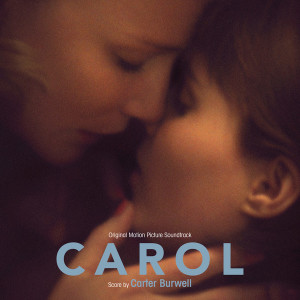
A completely different sound can be heard in Carter Burwell’s score for Carol (2015), it’s such a beautiful piece of work and for me it may even be better than the already great film.

Print

If you are interested in film music it’s worth listening to Saturday Night At The Movies on Classic FM (5pm Saturdays), presented by Radio Times film critic Andrew Collins each week they play two hours of music around a certain theme. It was a TV special this week but recently they’ve focussed on Hitchcock, animation and westerns. It’s available to listen to for 7 days online and is also on Freeview 731.

BBC Radio 3 also have a weekly film music programme Sound Of The Cinema (3pm Saturdays, also on iPlayer and available as a podcast) which centres each week around a current new release but play music from a wide range of films. Soundtracking is another podcast but slightly different because each week Edith Bowman talks to a film director about how they use music in film.

Back to the festival, focussing on soundtracks is an interesting idea and it has thrown up some great opportunities to revisit some films with wonderful soundtracks: Jurassic Park, Jaws, Drive, Pulp Fiction, Under The Skin, Blue Velvet, Breakfast At Tiffany’s, Lost In Translation, The Virgin Suicides are all favourites of mine and there are many more featured in the retrospective.

Ousmane Sembène ‘Father of African Film’

Sunday October 9th 2.30 p.m.

thhzl01o2x

The Senegalese filmmaker Ousmane Sembène was a key pioneer in the development of an indigenous African cinema. Now a new documentary by Samba Gadjigo, SEMBÈNE! (2015), is screening along with a Q&A with the director. Also there will be a screening of La Noire de… / Black Girl, (1966). And later, on October 18th, there will be a screening of his final film Moolaadé (2004).

Sembène’s films are rarely seen in the UK but they are powerful, emotionally involving but also politically incisive. Both screenings are well worth the visit to the cinema: they are few such opportunities and the quality of Sembène and his colleagues work deserves the big screen.

3 Reasons To See…The Girl With All The Gifts

the-girl-with-all-the-gifts-trailer

1. The cast: Gemma Arterton, Glenn Close and newcomer Sennia Nanua make up a strong female cast. Paddy Considine also stars; remember when he came to the Picture House to show Tyrannosaur?

2. Mark Kermode is another Hyde Park visitor who loves the film:

3. Director Colm McCarthy previously directed the entire second series of BBC’s Peaky Blinders

The Girl With All The Gifts is showing daily at Hyde Park Picture House from Friday 30th September.


3 Reasons To See…Hunt For The Wilderpeople

hunt-for-the-wilderpeople-still

  1. What We Do In The Shadows was writer/director Taika Waititi’s previous film and the winner of the Audience Award at LIFF28. Unusually for me, it was a film I saw three times in the cinema and thought it got better each time.
  2. Everybody loves it. Until very recently Wilderpeople had 100% on Rotten Tomatoes, meaning it hadn’t received a negative review from any critics. It’s now dropped to 98% but that’s still ‘Certified Fresh‘.  On Letterboxd (“a social network for sharing your taste in film”) it has been one of the highest rated films of the year.
  3. Taika Waititi is also directing Thor: Ragnarok (2017) and found time to make this short film, possibly the best entry in the Marvel Cinematic Universe yet:

Hunt For The Wilderpeople is screening daily at Hyde Park Picture House from Friday 23rd September.