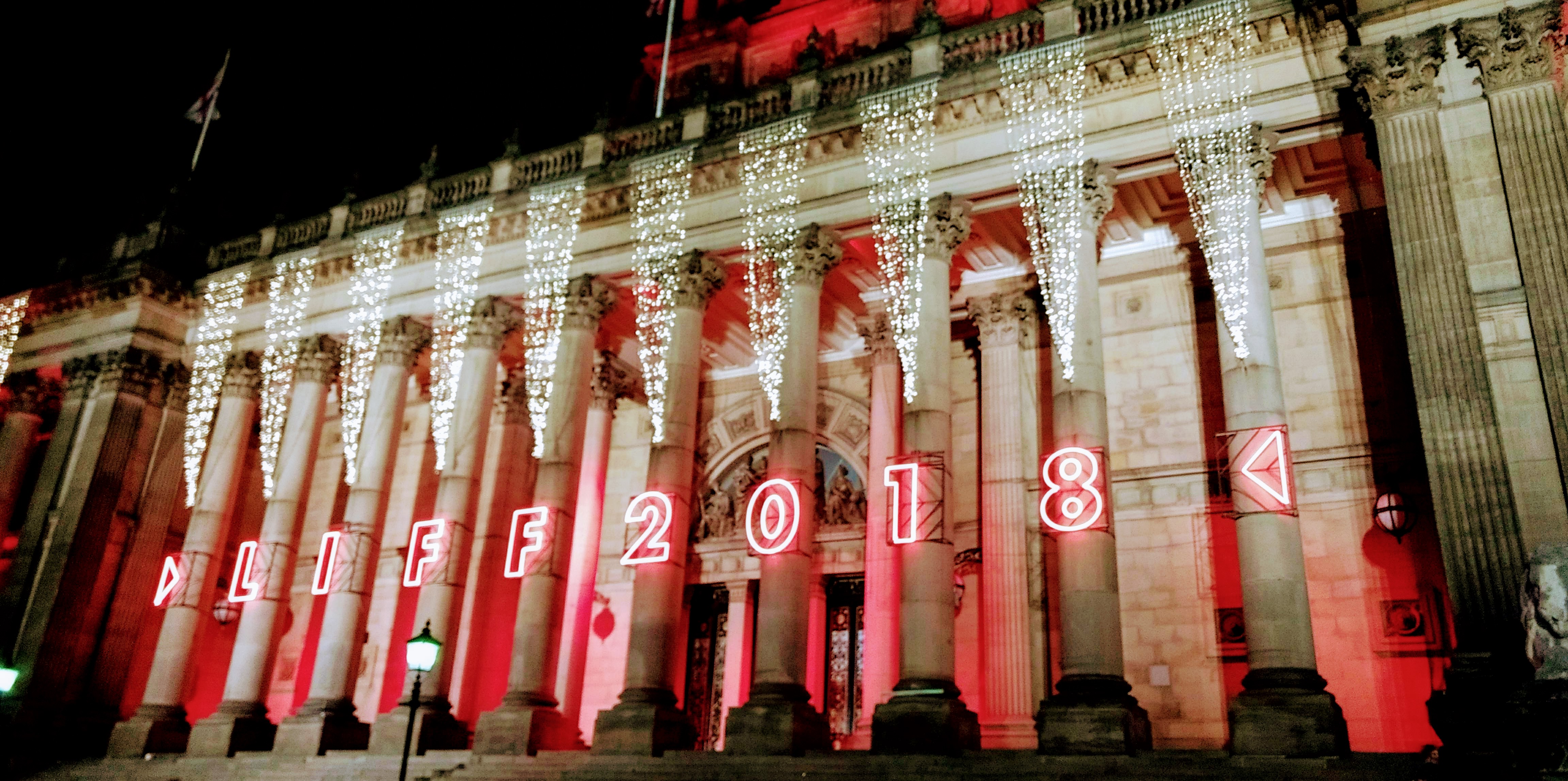
Bill’s Highlights From #LIFF2018

Bill Walton looks back at his highlights of Leeds International Film Festival 2018:

This year I got to 32 screenings, the majority at the Hyde Park Picture House. My choices were nearly all booked in advance from the programme, often with little background knowledge. This can mean missing out on some films that turn out to be very popular, but also means a lot of delightful surprises. Now that the experience has had time to settle, here are the films that stuck in my mind.
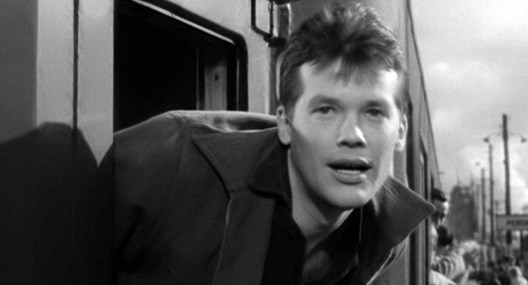
Night Train

A lot of my highlights were in the Time Frames section, and were in black and white: Night Train (1959), 12 Angry Men (1957), Odd Man Out (1947), The Docks of New York (1928) with live musical accompaniment, and my festival favourite La Notte (1961) which is just beautiful. I also enjoyed comedies like After Hours (1985) and Happy New Year, Colin Burstead (2018).

Capernaum

One of the things I like about the Festival is the rare chance to see films made in areas of conflict, often in the face of physical danger and on a financial shoestring. I would highlight Capernaum (2018) set in Beirut, The Journey (2017) set in Baghdad, and The Reports on Sarah and Saleem (2018) set in West and East Jerusalem. They were nicely complemented by the thoughtful documentary What is Democracy? (2018).

Tampopo

Then there were delightful films like The Kindergarten Teacher (2018) – another top film for me -; a very funny Japanese food-based comedy Tampopo (1985); In The Aisles (2018) set in a huge German supermarket; and highly original Belgian animations This Magnificent Cake + Oh Willy (2018).

I avoided headline films like Peterloo (2018) and Suspiria (2018) because I know that I’ll soon be able to catch them when they are released more widely. A big thank you to everyone who made LIFF 2018 possible.


Bill Walton

1945, Hungary 2017

Tuesday December 4th at 6.20 p.m.

This new title has a very limited release in Britain so this is a rare opportunity to see a very fine film. It is set on August 12th 1945, commencing precisely at 11 a.m.  as a train arrives at the railway station in an unnamed Hungarian village. The location seems to be south of Budapest not far from the Danube river.

The train deposits two figures dressed in black and accompanied by two large boxes. Over the next 85 minutes we watch as their boxes are carted into the village. We also watch the responses of the inhabitants, and occasionally Soviet soldiers, part of the liberating armies in Europe. What gradually emerges is a secret guilt over events that occurred under the Nazi occupation.

The film is happy to only gradually reveal the nature of the events and the rather differing responses of the inhabitants. Unlike in some westerns with similar plots the two visiting protagonists do little and, apart from one scene, do not address the villagers. The resulting slow pace and series of ambiguities contribute to the drama and tension developed in this film.

Beautifully shot in black and white with a minimal but effective accompaniment this production offers excellent characterisations from the cast and a convincing representation of place and period.

This will be a fine screening and possibly the only opportunity to see the film in its proper theatrical form. [A longer review is here].

My #LIFF2018 roundup

The film festival is over for another year and what an amazing two weeks it was. I managed to fit in 47 films with a total running time of 82 hours which I thought was a lot until I saw somebody had made it to 70-something screenings. I think it’s an incredible achievement by everybody involved that it’s possible for somebody to see so many films and find something to like about all of them. There were some films I struggled with (Happy As Lazzaro and Birds of Passage) but I think this was more down to my own tiredness (one of the problems of seeing so many films). Other films such as Genesis 2.0, Killing God, Await Further Instructions and I Feel Good all had great ideas that got a bit lost in the final film.

My favourite films this year were all retrospectives from the brilliant Time Frames series. I’ve always loved the Before films and it was relief to find Before Sunrise was as good as I remembered. I finally got to see 12 Angry Men for the first time and it was every bit as good as I had expected. 12 Angry Men was one of many films that seemed surprisingly relevant for 2018, as was Sidney Lumet’s other film,  Fail-Safe, another first viewing for me and made even more tense by the shadow of Trump hanging over it.

Of the new films it was Anna and The Apocalypse that I enjoyed the most. It’s the best Scottish zombie high school Christmas musical you’re going to see for some time and the soundtrack (out now) is brilliant. The audience for Pond Life seemed to be made up mostly of cast, crew and their friends and I’m not sure how many festival goers saw it or what people not involved with the film thought of it. It’s far from a perfect film but there was something about it that I really loved and I do hope that when it’s released next summer it finds an audience that appreciated it as much as I did.  In Fabric was another new film that completely pulled me in;I can’t begin to explain what it was about but I absolutely loved it.

This year I was also pleasantly surprised by a lot of the more ‘mainstream’ films. One of my few 5 star ratings was for Beautiful Boy and Can You Ever Forgive Me?, Widows, The Kindergarten Teacher and Colette were all much better than I was expecting.

I’ve tried to put all the films I saw in some order over on Letterboxd where you can also find my brief thoughts hastily written between films or at the end of a long day.

It would be great to hear your thoughts on the festival in the comments or if you would like to write a longer blog post (on the festival or anything else) get in touch.

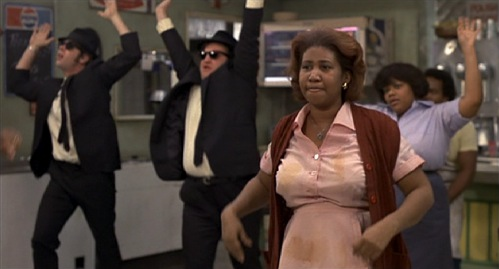
The Blues Brothers

Showing Saturday 24th November 10:30pm


Sister Mary Stigmata (Kathleen Freeman) to the Blues Brothers: “You are such a disappointing pair. I prayed so hard for you. It saddens and hurts me that the two young men whom I raised to believe in the Ten Commandments have returned to me as two thieves, with filthy mouths and bad attitudes.
Get out, and don’t come back until you’ve redeemed yourselves.”

‘Joliet’ Jake Blues (John Belushi): “We’ll put the band back together, do a few gigs, we get some bread. Bang! Five thousand bucks.”

Elwood Blues (Dan Aykroyd): “We’re on a mission from God”.

The Blues Brothers takes us into the world of Joliet Correctional Center, honky-tonks and sleazy backstreets, the “L” train, shopping malls, the Chicago Cubs, gas stations, Bob’s Country Bunker, the Palace Hotel Ballroom, and Chicago City Hall; a world of music, carnage and mayhem,  not to mention a varied diet of soul food, prawn cocktails, beer, dry white toast, cocaine, and Cheez Whiz.

Theirs is a world populated by nuns, gospel choirs, Holiday Inn resident musicians, Illinois Nazis, Good Ol’ Boys, and jilted sweethearts. The music and dance numbers are fabulous and fun. Get rocking with the Blues Brothers band, James Brown, Cab Calloway, Aretha Franklin, Ray Charles, and John Lee Hooker, amongst others. There’s country and western too (“We got both kinds”).

But Elwood has run up 116 outstanding parking fines and 56 other traffic violations. The authorities are after them. Use of unnecessary violence in the apprehension of the Blues Brothers HAS been approved. But the cops haven’t reckoned with the Bluesmobile (an ex-police Dodge Monaco).

Elwood: Our Lady of Blessed Acceleration, don’t fail me now.

The car chases involved more than 40 stunt drivers, plus many stunt pedestrians. 103 cars were wrecked during filming (a world record at the time).

Bill with the Bluesmobile in Illinois

So can Jake and Elwood outwit the cops, the SWAT teams, Sherman tanks, helicopters, the Nazis, the mystery woman (Carrie Fisher), and the Good Ol’ Boys and accomplish their mission?

The Lord moves in mysterious ways!

This cult film was made for the big screen. So dig out your trilby fedoras and  Ray-Ban Wayfarers, and get yourself down to the late night screening of The Blues Brothers at 10.30 pm on Saturday November 24th.


Bill Walton

Wajib (Palestine, France, Germany, UAE 2017)

Tuesday November 20th at 6.30 p.m.

This is the second title in the Leeds Palestinian Film Festival following on from the very fine Reports on Sarah and Saleem in the Leeds International Film Festival. It testifies to the variety of Palestinian film that whilst the latter film was in part a thriller this is essentially a road movie. The journeys involve delivering invitations for a forthcoming Palestinian wedding in Nazareth [the meaning of the Palestinian title is ‘duty’]. This event is both an important traditional occasion in Palestinian culture and a regular feature in Palestinian films; notably in the pioneer feature A Wedding in Galilee (Urs al-jalil, 1987).

This new film is written and directed by Annemarie Jacir. She has written and directed a number of films; the earlier When I saw You / Lamma shoftak (2014) was set in 1967 amongst Palestinian refugees in Jordan. This was a splendid drama that I saw at a screening organised by Reel Solutions in Bradford. Her new release has already won awards including being selected as ‘Best Picture’, ‘Best Screenplay’ and ‘Best Actor’ by the Arab Critics assembled in Cannes this year.

The film works partly as a family drama and partly as a ‘bitter-sweet comedy’. The treatment of the political situation is handled with subtlety. It was shot in colour and is in Arabic with English sub-titles. It has received very good reviews; you can check out one here.

Daughters of the Dust, (USA 1991) – Leeds Film Festival Screening

Tuesday November 12th at 1230 p.m. and Wednesday November 14th at 3. 15 p.m. at the Hyde Park Picture House.


The film is screening the ‘Time Frames’ series. It was directed by an Afro-American woman, Julie Dash. It is a seminal film for both the Afro-American and the USA Independent cinemas. The basic story-line follows the migration from a Georgia island by women from an isolated and creole speaking community, once enslaved on plantations, in the early 1900s. However, the film has an unconventional use of time and space and an unusual narrative voice. This enables Julie Dash and her team to provide a film that is full of vivid imagery, metaphors and symbolism. It also dramatises the clashes within Afro-American cultures between tradition and the modern.

The film is full of poetic mages whilst the dialogue is in a form of Creole. The cinematography by Arthur Jafa is particularly fine, offering sumptuous images to accompany the characters and story. It won the Cinematography Award at the Sundance Festival and the film has since been included in the Library of Congress National Film Register

The film was partly funded by PBS American Playhouse after being turned down by major studios. Unfortunately none of Dash’s subsequent productions have received proper distribution. It remains her only well-known title despite a considerable output for cinema and television.

The film could be challenging; apart from an unconventional narrative it eschews sub-titles for the Creole [mostly understandable]. But it is a rich and compelling work. The film was originally shot on 35mm in colour and standard wide screen. It has now been restored and is distributed in a digital format. Hopefully this will do justice to the original. For two decades after its initial release it was not seen at all in Britain, so this is a welcome return. The film runs 112 minutes.

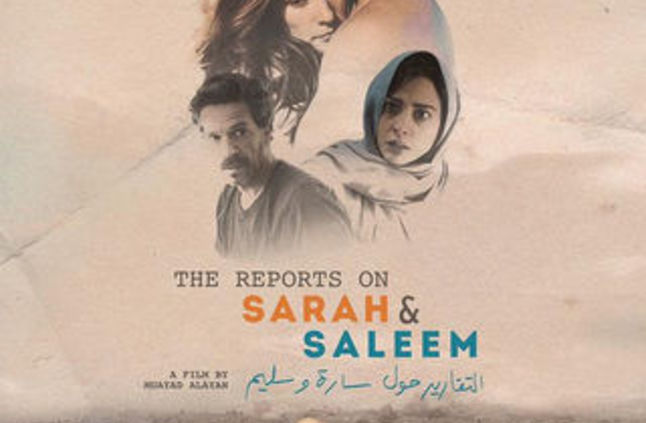
Reports on Sarah and Saleem (2018) Leeds Film Festival Screening

Screening at the Vue in the Light on  Saturday 10th November at 1030 a.m. And on Sunday 11th November at 3.30 p.m.

This is a new film from the developing Palestinian Film Industry and it is both a welcome feature in LIFF and [as in previous years] launches the Leeds Palestinian Film Festival which runs on until December.

The film deals with an affair between two married people, a Palestinian man and an Israeli woman. Affairs between Palestinians and Israeli’s have been a staple of the cinemas of both Palestine and Israel but adding marriage to the complications is rarer. The film combines the thriller genre with the romantic drama genre. The film is the work of director Muayad Alayan and [his brother] writer Rami Musa Alayan. They have worked together on both a feature and short films but I have not seen any of these. As is often the case the production relies on funding from a number of different countries, Netherlands, Palestine, Germany and Mexico.

The film was shot digitally in both East and West Jerusalem with their contrasting cityscapes and cultures. It is in colour and a 2.35:1 ratio with Arabic, Hebrew and English dialogue and sub-titles in English. It promises to be an engaging and thought provoking film. Palestinian film-makers have become expert at combining cinematic genres with political issues and characterisations.

NB. The Festival online pages do not seem to have an straight alphabetical listing,; I found the title under country [Palestine].

Monsters and Men, USA 2018 – Leeds Film Festival Screening

Vue Monday November 5th at 2 p.m. and Wednesday November 7th and 3.45 p.m.

I was very impressed with this new title. Set in New York it presents the responses of three different characters to a shooting of an African-American male by the New York City Police. Thus it addresses one of the most contentious issues in the USA today.

The shooting occurs at the start of the film and then we follow the three very different protagonists – John David Washington as Dennis Williams, Anthony Ramos as Manny Ortega and Kelvin Harrison Jr. as Zyrick – as they grapple with the event and the fallout both in the Department and in the local community. The setting is the 84th Precinct in Brooklyn. The plot follows each man in sequence, though they also appear in each other’s story, providing an underlying and binding narrative.

But we watch more than just these three men. An aspect of the film that I especially liked is the way that it represents the family and community lives of the protagonists. We see parents, partners, offsprings, friends, colleagues and the activists in the community. Whilst the action is the streets is often dramatic the domestic scenes have a different tone but are equally fascinating.

This is a fine socially conscious drama but also a drama that holds the interest all the way through. It is in colour and full widescreen, running 95 minutes. The cast, both leading and supporting players, are excellent. The cinematography by Patrick Scola and the editing by Justin Chan and Scott Cummings is very well done. The film relies very much on location shooting. There is an excellent and not over-intrusive music score by Kris Bowers.

The Festival catalogue lists the film as an 18 Certificate. There is not yet an entry on the BBFC web-pages; whilst there is violence and strong language at times I find this an overly unnecessary classification. The title is screening in 11 at Vue, a large auditorium with a large screen. The level of illumination during a feature is suitably low, not always the case at Vue. However, they do not mask ratios that differ from the 16:9 screen. And there is a central aisle, a design weakness as you get latecomers blocking views as they enter. In the case of this title we had a group wander in, climb up to the back, sit down, start talking, switch on a mobile phone and then get up and leave. Clearly the wrong feature for them: a recurring problem in multiplexes.

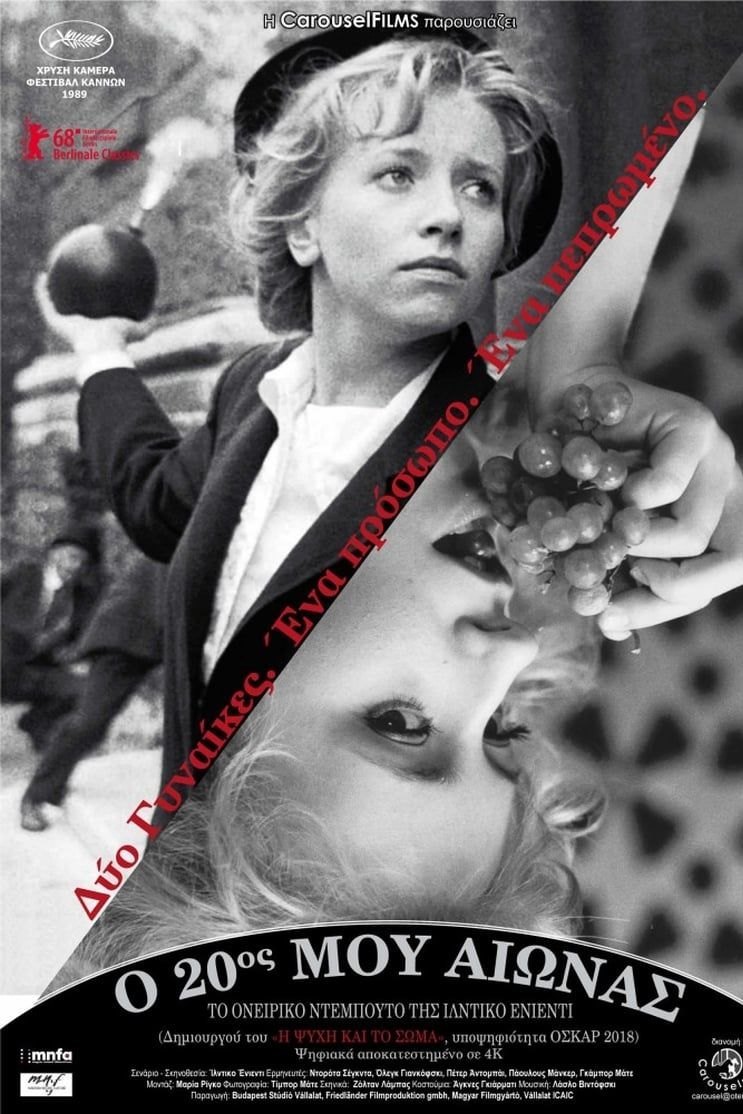
My 20th Century / Az én XX századom, Hungary, West Germany 1989

Tuesday  October 30th at 6.30 p.m.

This was the first feature directed by Ildikó Enyedi and won the Golden Camera at the Cannes Film Festival on its release. Ildikó’s more recent film, On Body and Soul, won the prestigious Golden Bear at the 2017 Berlinale. The 2018 Festival featured a digital restoration of this film in an excellent 4K format which retained the cinematic qualities of the original. The Hyde Park screening will only be 2K but I reckon the film will still look great.

It was an impressive feat for a first-time film-maker. Ildikó also scripted the film which combines, history, politics and surreal fantasy. Much of the pleasure is to be had from the beautiful black and white cinematography by Tibor Máthé. The images are really luminous and range from wonderful wintry landscapes to night-time chiaroscuro. The editing by Tibor Máthé ably follows the eccentric plot line as we switch between settings and dates.

The lead actor is Dorota Segda who plays identical twins, born in Budapest in 1879. Separated, their paths cross once more in 1899, making this also a New Year movie. The dates are significant in the film. 1879 takes in Thomas Edison’s first successful demonstration of the light bulb. And the film makes great play with the inventor and with cinematic references, both silent and sound. Indeed the film features tropes from the silent film era, homages to the film-maker’s predecessors.

The film takes great pleasure in presenting

“a romantic love story, a poetic fairy tale, an erotic riddle ..”

Note, it has a 15 Certificate in Britain. A real treat on offer for cineastes.


Film Festival Programme 2018

The full programme for the 32nd Leeds International Film Festival (LIFF2018) is out now. The film guide should be available to pick up in the usual places, including the Picture House (an online version doesn’t seem to be available yet). The programme is  on the Leeds Film City website,  a Clashfinder has been put together which is really useful tool to help plan your festival and there’s a Letterboxd list of all the films.

There are more than a hundred films to choose from as well as several programmes of short films and other events. The difficult process of deciding what to see begins and we’d love to hear what you think of the programme and are planning to see; let us know in the comments and we look forward to seeing you in November.