Oscar Micheaux: The Superhero of Black Filmmakers

This is a documentary screening on April 1st on Sky Arts at 2.40 a.m. This appears to be the only Sky channel available on Freeview, Channel 11. It offers a range of programmes on the arts including frequent studies of cinema, film and film-makers. The majority of these are rather lightweight; they tend to ‘talking heads’, which means the comments are spread across a series of interviewees and rarely have the space to develop complex comments. And the extracts from films tend to be short and not necessarily illustrative of the important points. Some, like the programmes on Buster Keaton or Josephine Baker, involve the European Media Company Arte and are more analytical. This documentary falls rather in the middle.

Oscar Micheaux was a pioneer film-maker in what was known in early C20th USA as ‘race cinema’. These were films produced specifically for black audiences and usually screened in segregated cinemas in the South and either in segregated auditorium or programming in the North. The earliest ‘race’ film dates from 1905 but the cinema took off around 1910 , mainly in Chicago. There were independent ‘race films’ production companies like The Lincoln Motion Picture Company [1916 to 1921] owned by black entrepreneurs. Most companies in this field were owned by white entrepreneurs. There were also black production crew and ‘stars’ like comedian Mantan Moreland, who actually appeared in a few mainstream Hollywood titles. The ‘race cinema’ died out at the end of the 1940s when Hollywood finally decided to attract the ‘black dollar’; and then the 1950s saw the appearance of black stars in Hollywood like Sidney Poitier.

Oscar Micheaux was possibly the most important producer and director in this field. His Micheaux Film Corporation was set up in Chicago in 1918 and he later also worked in New York. Between then and 1940 he made forty four movies; most, like much of the ‘race cinema’, are lost. But the surviving silent and sound films are key examples of that cinema and also are seminal film texts in the history of US film and black film-making. Continue reading

A Positive Start To 2022

Chair of the Friends, Bill Walton has started to get out more and take advantage of some of the many films on offer, here is a round up of some of the films he has seen so far this year.

The Picture House On The Road programme has screened some gems:

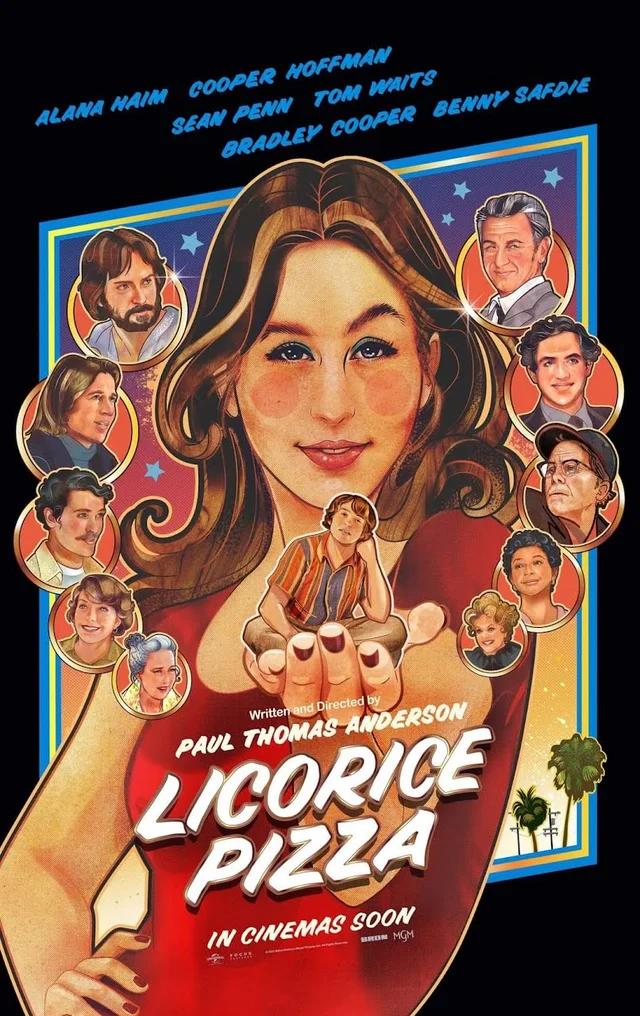
Licorice Pizza (2021) directed by Paul Thomas Anderson. A delightful romance between Alana Haim and Cooper Hoffman (talented son of the late Philip Seymour Hoffman) ably supported by actors including Sean Penn, Tom Waits and Bradley Cooper. A little over long at 133 minutes, but great entertainment.

Parallel Mothers (2021). Once again Pedro Almodóvar shows his talent for getting superlative performances out of a cast including Penélope Cruz and Milena Smit and some babies who certainly qualify as emerging talent. It includes important themes such as giving a decent burial to people killed in the Spanish Civil War (a conflict which seems more significant with today’s struggle for democracy in Ukraine); and the part women play in child rearing (Penelope Cruz puts on her ‘We Should All Be Feminists’ t-shirt to underline the point).

At the HEART Centre in Headingley I watched:

In the Heat of the Night (1967). A celebration of the contribution of Sidney Poitier to film, and to his confrontation of racism more generally. A great performance by Rod Steiger too. A film that retains its power over 50 years later.

Border (2018) an imaginative Swedish film about a customs officer who is not all she seems. Entertaining and thought provoking.

Honeyland (2019). A beautifully photographed story showing the vulnerability of living at subsistence level (in Macedonia), and the fragility of ecosystems plus a cast of many thousands (of bees).

Pan’s Labyrinth (2006), a ‘food and film’ event with this classic film, another reminder of war in Europe, accompanied by delicious paella.

So the word is that great film offerings are available and audiences are starting to return. Venues are going out of their way to keep everyone safe. What are your highlights of the year so far?

The reopening of our rejuvenated Picture House is now only about six months away. With our Annual General Meeting behind us, the Friends’ Committee is actively putting plans into place to give you new opportunities to become involved. 2022 is set to be an exciting year!


Bill Walton

Knives Out, USA 2019

If you are still unable to enjoy theatrical screenings you can at least enjoy a very smart movie on terrestrial television. It offers comedy with drama; a clever pastiche [celebration rather than the spoof] of a popular genres. This highly praised title plays with the ‘murder mystery-cum-detective’ story; in particular the variant that made Agatha Christie so successful. A mysterious death occurs in a family mansion of the patriarch who made his money in writing the sort of stories presented in this movie. A famous private detective is paid anonymously to investigate the death and solve the mystery. The family members fight over the money and the mystery; one aspect of the title.

The writer and director Rian Johnson had already made a teen neo-noir: an action movie: and an episode of the Star Wars franchise. He clearly has watched innumerable examples of the genre and one can spend time spotting the influences. The plot is labyrinthine and perhaps at times too clever. There re a number of red herrings, even an occasional Hitchcock ‘macguffin’. I suspect that very few viewers will unravel the plot in advance of the conclusion; a major surprise.

The production values are good and the tempo of the film is slick. But I felt that it was the cast in particular who made the movie so effective. Christopher Plummer plays patriarch Harlan Thrombey with ease and skill that have graced so many performances. Daniel Graig as detective Benoit Blanc reveals characterisation skills that have not been much seen in his  earlier roles. And I really liked Ana de Arnas as Harlan’s nurse Maria. But all the actors are really fine in their roles. There are several canine characters; and two of them race in an important sequence.

The title was shot on a combination of 35mm and digital formats. It is screening on Channel 4 at 9 p.m. this Saturday. – 130 minutes in colour and standard wide-screen. On the HD channel it should look and sound fine. It did when screened at the Picture House.

Andy’s Look Back At 2021

Our newest committee member, Andy Smith, takes a look back at another unusual year in cinema.

Before we get to the nitty-gritty let me put some context around where my film preferences lie: Here are some of my favourite films, by which I mean films that I would happily watch over and over again, but not on a loop! (in no particular order): Casablanca (1942), Ex Machina (2014), Leon (1994), Dirty Harry (1971), Farmegeddon (2019), Wall-E (2008). I don’t mind a suspense film but I am not a fan of horror or ‘action’ movies. Although Tenet (2020) was simply brilliant… My wife and I always mark a film out of 10 as we leave the cinema – it has to be our instant impression, given without conferring which we then average and record. More that 8 is very good, less than 2 means we probably walked out if we could without disturbing people. 10s are like hen’s teeth.

The first half of 2021 was spent watching films on-line via a 12 inch laptop or DVDs via a projector on to the sitting room wall trying to replicate “The Experience” of the big screen – we even got ice creams in. It was a poor substitute.

From May we were back in cinemas and managed to rack up 20 films between then and the end of the year. Most of them were excellent – only one was poor. So a good strike rate.

The first film was Nomadland – pretty much a 10/10. What an interesting ‘storyline’ fantastic direction (Chloe Zhao), great characters (Frances McDormand, David Strathairn and members of the nomad community), cinematography (Joshua James Reynolds) and social comment.

Frances Mcdormand in Nomadland
Continue reading

Review: The Man Who Invented Christmas

Tara (Charles Dickens’ servant, played by Anna Murphy): Is Tiny Tim dead?
Scrooge: Well, of course he is, imbecile.
Charles Dickens: He was very ill.
Scrooge: You can’t save every child in London.
Charles Dickens: And the family has no money for a doctor.
Tara: Then Scrooge must save him!
Scrooge: ME?
Charles Dickens: He wouldn’t…
Tara: WHY?
Charles Dickens: Well, he’s too selfish.
Tara: He can change, there’s good in him, somewhere. I know it.
Scrooge: People don’t change.
Charles Dickens: He’s been this way, for a long time. I’m not sure he can change.
Tara: Of course he can, he’s not a monster.
Scrooge: I thought this was a ghost story, not a fairy tale.

Forty people joined us for the Friends’ screening of the 2017 film The Man Who Invented Christmas. It tells the story of how Charles Dickens (Dan Stevens) wrote and published “A Christmas Carol” during a frantic six weeks in the run up to Christmas 1843. Many thanks to Wendy the Picture House manager and her team for making the arrangements.

It is easy to underestimate the challenge of writing and publishing a book (or making a film for that matter) to a very tight deadline with a very limited budget. Dickens had written Oliver Twist in 1838 but that had been followed by three unsuccessful books. He often had writer’s block, was heavily in debt, and had a large family to support. He could easily have ended up in a debtors’ prison as his father did. Despite this A Christmas Carol became one of the best selling books of all time and went on to influence the way Christmas is celebrated across the world.

This film is not a documentary but does draw upon Dickens’ life experiences, including the ridicule he faced as a child while forced to work in a blacking (metal polish) factory. It’s worth watching for the locations, costumes and the photography, and especially for its portrayal of Dickens’ interactions with the characters which highlights the creative struggle at the moral core of the book, And I enjoyed spotting Christopher Plummer, Jonathan Pryce, Miriam Margolyes, Miles Jupp and Simon Callow among the cast.

However. the film treats lightly the deep flaws in Dickens’ personality, including his recklessness and instability and his ill treatment of his wife. In my view the film is a very interesting “one-watch” but too sentimental to become a regular feature of Christmas screenings,

Agree/disagree? We welcome your comments or reviews below.


Bill Walton

The Man Who Invented Christmas (2017): A Friends Festive Screening

Sunday 12th December 3.30 pm at Leeds University.
Members can claim up to 2 free tickets for this special festival screening

Film poster featuring Dan Stevens, Christopher Plummer, Jonathan Pryce in The Man Who Invented Christmas. How Charles Dickens wrote A Christmas Carol and created a tradition

The man in question is, of course, Charles Dickens; and his invention is his novella ‘A Christmas Carol’ (1843). This must be the most famous contribution to the festive season in modern times. There are likely two dozen adaptations of the book on film plus others on television, radio and in the theatre. And its influence can be seen in many other tales rolled out every year; it has always seemed to me that It’s a Wonderful Life works by inverting the earlier story. The smart variation offered in this movie is the portrait of Dickens writing his masterwork in the last weeks of 1843.

It is a dramatisation and whilst much of it is accurate it also includes invention and embroidering; check out ‘History vs Hollywood’ which examines some of these issues. The six week time period of the film is accurate; in that year Dickens was seeking an elusive popular novel and also worrying over financial problems. Meanwhile the Victorian Christmas was emerging; the 25th became a Bank Holiday in 1834; whilst Boxing Day and Bob Cratchit had to wait until 1871. The source for the movie was US writer Les Standiford who produces historical non-fiction and had the bright idea of presenting both how Dickens produced his famous work but also its influence on the increasing importance of this festival.

The film depicts Dickens drawing on his own life experiences to dramatise a tale of ‘light’ and shadow’; incorporating already existing practices such as the large fowl for dinner and the succulent pudding. He also added family get togethers and carol singing. The film tends to emphasise the sentimentality that was part of Dickens’ writing. There is less emphasis on the darker aspects of Victorian Britain; aspects written about vividly in the same period by Frederick Engels (‘The Condition of the Working Class in England’, 1845).

In the course of the film we see Dickens (Dan Stevens) tussling with the  characters he develops, including Ebenezer Scrooge (Christopher Plummer); receiving inspiration from those about him including an invented Irish maid Tara (Anna Murphy): and revisiting his past and family, including his father John (Jonathan Pryce). He also has to tussle with publishers, printers and illustrators as the novel takes shape and prepares for publication.

Continue reading

Review: Censor (2021)

 Niamh Algar in CENSOR, a Magnet release. © CPL/SSF. Photo credit: Maria Lax. Photo courtesy of Magnet Releasing.

Censor is Prano Bailey-Bond’s spine chilling debut feature. Set in the mid 80s against the backdrop of social unrest, Thatcherism and the rise of the video nasties. We follow Enid Baines (Niamh Algar) who is a film censor. She lives a nocturnal existence watching a plethora of gore and sin in the films she is charged with watching. One day she views a film that reminds her of a tragedy from her childhood. Triggered by this, she sets out on a journey in which her fiction and reality gets blurred.

The dark and depressive world that Bailey-Bond creates is heightened by Cinematographer Annika Summerson whose hellish visuals adds an expressionistic touch. It is notable that she uses 35mm which echoes the ambience of this bygone era.

The script which Bailey-Bond co-wrote with Anthony Fletcher, is razor sharp, with one scene in particular of suitably over the top gore mirroring the video nasties themselves. However amongst the blood shed there’s occasional moments of truly dark humour. The acting is chilling with Michael Smiley delivering a cool and calculated performance as sleazy film producer Doug Smart. However, the stand out is Niamh Algar who is magnetic on screen. Enid’s character’s arch is one of the film’s takeaways and Niamh plays her unravelling superbly.

The main criticism I have of the film is it’s running time. Although admittedly most horror films tend to be under two hours, you can’t help but feel a little cheated with a running time of one hour and twenty four minutes. You are left with a sense of events being rushed over and plot points not fully explained to get to the deliciously cynical Lynchian style ending.

Sam Judd

Censor is available as a premium rental (£10) from most online platforms including BFIPlayer and Curzon Home Cinema

Summer Of Soul

Showing at City Varieties on Tuesday 10th & Wednesday 11th August at 7:30pm

Summer of Soul (...Or, When The Revolution Could Not Be Televised)

This Sundance award-winner is an absolute joy, uncovering a treasure trove of pulse-racing, heart-stopping live music footage that has remained largely unseen for half a century.

Mark Kermode, Observer (18 July 2021)

Mark Kermode isn’t the only person to suggest this is one of the best concert films ever made and it’s hard to disagree with such claims. The music from Stevie Wonder, Nina Simone, Sly & the Family Stone, Gladys Knight & the Pips and more really is fantastic, not to mention incredibly moving at several points.

The film is more than just footage from 1969’s The Harlem Cultural Festival. The full title of the film is “Summer of Soul (…Or, When The Revolution Could Not Be Televised)” because, although everybody involved knew how important it was to film these concerts, the footage was never seen and largely forgotten about. Unfortunately we can guess at some of the reasons why it never made it to TV but it’s great that we now get to see it. It was surprising to me how much more contemporary it seems compared to the more widely seen coverage of Woodstock that also took place that summer. The film captures the time and place to great effect, highlighting how much had happened leading up to the end of the decade and how much there was a need, and drive, for change.

It’s another music documentary (see also The Sparks Brothers) that will really benefit from the cinema experience. Not only will it look and sound great but this is a film to be enjoyed and experienced with other people. If you can’t make it to City Varieties it is also available to watch at home on Disney+.

Review: Another Round (2020)

Mads Mikkelsen drinking from a bottle in front of a crowd of people.

First a little quiz:

  • At a party have you ever deliberately tried to knock back enough glasses of wine to bring you to the exact point of being neither drunk nor sober?
  • Have you taken part in the  “Otley Run”,  lurching from one Headingley pub to another? (Another Round features the “Lake Run”, a Danish counterpart)
  • Are you living through a mid-life crisis? Do you long to recover your zest for life?
  • Have you ever drunk so much that you pissed the bed?
  • Or do you despair of people who use alcohol to try and fill their inner emptiness?
  • Are you a Danish student of philosopher Søren Kierkegaard who asked “What is youth? A dream. What is love? The content of the dream”.

However you answered any of these questions, this film is sure to give you additional insights.

Another Round is an entertaining buddy movie about four teachers undertaking some pseudoscientific research. But it is a lot more than that. We learn some key things about their families and their emotional lives and maybe why they behave as they do. We see them drunk and sober (admittedly often quite drunk). We share their joys, grief and reckless abandon. The film does not glorify alcohol, but it does recognise its place in European culture.

Another Round won an Oscar for best international feature. Director Thomas Vinterberg (Festen, The Hunt) has brought together a great cast in this anarchic and life affirming film. Brilliant storytelling, excellent acting (a special shout out to Mads Mikkelsen) and engaging camerawork. The film is dedicated to Thomas Vinterberg’s daughter Ida whose 19 year old daughter died in a road accident just as production began.

I watched Another Round at the City Varieties as part of Hyde Park Picture House On the Road. The staff there were very helpful and have taken great care with social distancing arrangements. I’m sure that they will give us a warm welcome at our Yorkshire Day screening. Hope to see you there!


Bill Walton

The Father

Showing daily at City Varieties from Friday 18th June

UK poster for The Father featuring Olivia Coleman and Anthony Hopkins

Film has power, film can put you in the shoes of someone else and will make you see the world through their eyes. Florian Zeller’s The Father is an excellent example of this. The film centres on Anthony, played by Anthony Hopkins, who is dealing with his ever deteriorating mind and his descent into dementia. We see the strain it puts on his relationships, particularly the relationship with his daughter Anne, played by Olivia Colman.

Florian Zeller who adapted it from his own play Le Père, beautifully walks the line between both the tragedy and heartbreak that comes with dementia, and the rare comedy that also can be found in those sad situations. If you can’t laugh at yourself, who can?

The story is told almost entirely from Anthony’s perspective, meaning that the audience is confused nearly as much as him for the majority of the film. Although it is intentional and gives a glimpse into his world, at points the non-linear approach can feel overly abstract and detracts from the overall message.

The acting is superb with Anthony Hopkins deservingly walking away with the Oscar, making him the oldest winner for best leading actor. However, it is worth mentioning Olivia Colman who delivers a measured and understated performance as the loyal and grief-stricken Anne who we see trying to balance her own needs and her father’s. The supporting cast members such as Mark Gatiss, Imogen Poots and Rufus Sewell also give equally rich performances.

The artificial style does betray its conception in the theatre which sometimes makes it feel quite unapproachable, and unreal. However, it does at other points add an operatic nature and poignancy which you won’t necessarily get if it was more true to life.

Quite rarely do you see a film that deals with subject matter such as this, that takes such an experimental approach. However, what’s noteworthy is the incredible insight into what dementia patients must be going through. It is something quite unique and will make you think twice.

Sam Judd