Sunset / Napszállta (Hungary. France, 2018)

Sunday July 14th at 2.30 p.m.

This is the new film from director László Nemes. His previous film was Son of Saul / Saul fia (Hungary, 2015). This new film also enjoys the fine production work of many of the same team from the earlier film: music László Melis, cinematography Mátyás Erdély, Film Editing Matthieu Taponier and production design by László Rajk. And once again the film is screening at the Picture House in its original format of 35mm.

Son of Saul was a very subjective style narrative and the new film takes a similar approach. But is seems that there are even more ambiguities in the plotting this time. The film opens in Budapest in 1913 when a young woman comes to the city and encounters mysterious and threatening situations. The pre-World War I Austro-Hungarian empire offers a rich palette for such a story; witness the earlier Sunshine (1999) directed by István Szabó.

The film runs for 142 minutes in colour, widescreen with Hungarian and German dialogue with English subtitles. It promises to be less downbeat than the earlier film but likely will need close attention as the story unfolds. The effort should be repaid by the visual pleasure in the screening. The 35mm cinematography relies on random  silver halide grains in the stock that reflect the light and give excellent contrast. Digital copies of 35mm film transfer this to uniform pixels and only rarely reproduce the particular characteristics of film stock. So, the illustrative still at the top of this post does not really give a sense of what we should enjoy viewing.

Bill’s Films of 2019 (So far)

Five films that stick in my mind, in no particular order:

Loro (Them)

A very stylish Italian film directed by Paolo Sorrentino and starring Toni Servillo as Silvio Berlusconi. This is the ultimate cinema-goer’s guide to bunga-bunga parties, ostentation and (alleged … to protect me from the mafia 😎 ) corruption in Italian politics. It’s surely no coincidence that l’oro is Italian for gold.

Foxtrot

Director Samuel Moaz. A powerful anti war film set in a remote military outpost where four soldiers are spending their military service in the Israeli Defence Forces. The film won the Grand Jury Prize at the 2017 Venice Film Festival.

The Favourite

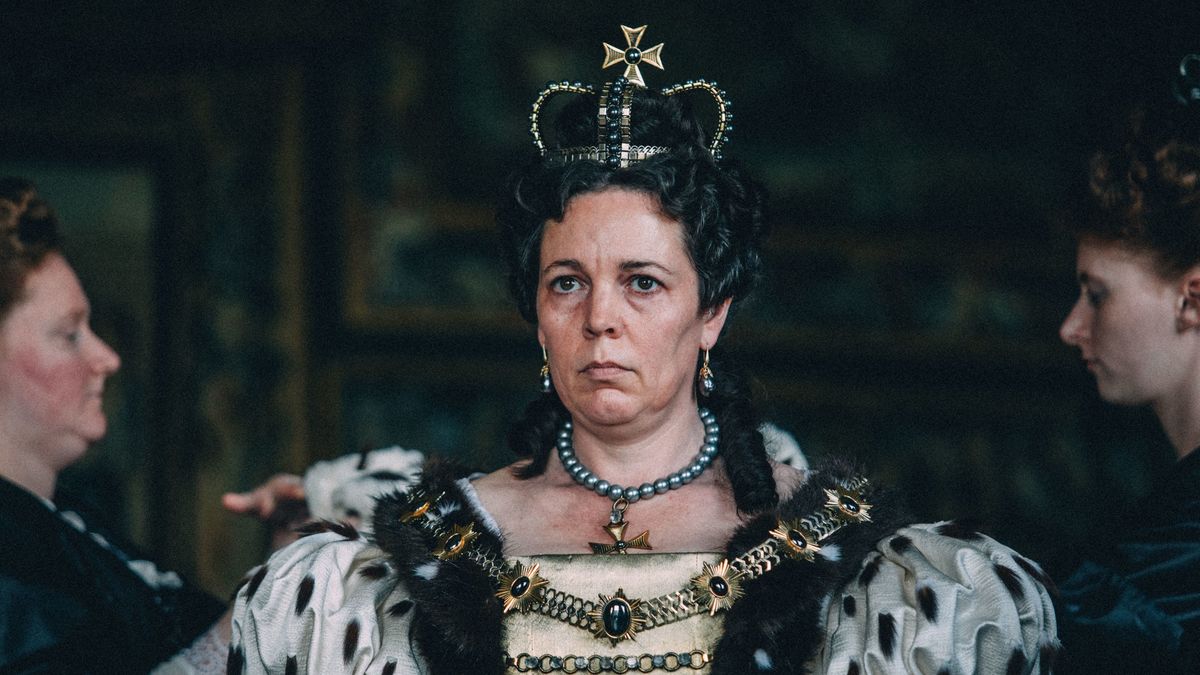
Director Yorgos Lanthimos. Great fun with Olivia Colman, Emma Stone and Rachel Weisz in C18 England. I doubt that Queen Anne would approve. A positive F-rating (highlighting what women contribute to film) for lead characters, and writer Deborah Davis (co-writer with Tony McNamara).

RBG

A documentary about American Supreme Court Justice, Ruth Bader Ginsburg. What a woman! What a career! Directors Betsy West and Julie Cohen also score highly on the F-rating.

If Beale Street Could Talk

Based on the James Baldwin novel, directed by Barry Jenkins. A well told struggle for life and a struggle for justice in 1970’s New York.


So once again the Picture House has offered us a great variety of films from around the world. And I didn’t even mention Burning (South Korea), or Happy as Lazzaro (Italy).


Bill Walton

Sans Soleil/Sunless, France 1983

Friday July 5th at 6.15 p.m.

This film was written, directed and edited by Chris Marker, who also provided the music. If you have not seen a Chris Marker film before it might help to write that two of his friends and cinematic collaborators were Alain Resnais and Agnes Varda. Associated with the nouvelle vague they were actually part of a distinct group of film-maker known as the ‘left-bank group’. Their films were more experimental, more political and more distinctive than the  famous ‘new wave’ films. Marker himself is known for works described as ‘essay films’ and this title is a good example of that approach. Not exactly documentary but addressing the actual world.  Wikipedia defines [informal] written essays as characterised by:

“the personal element (self-revelation, individual tastes and experiences, confidential manner), humour, graceful style, rambling structure, unconventionality or novelty of theme,”

Much of this will be found in the Marker film. As well as his personal involvement in so much of the production of the film Marker also appears in slightly fictionalised versions of himself.

The film’s written component is a series of letters both partly read with comments by a female character. The letters are from a cameraman visiting a variety of places: Japan, Guinea-Bissau, Cape Verde, Iceland, Paris, and San Francisco. The last includes locations used in Alfred Hitchcock’s highly regarded Vertigo (1958), a film that has pre-occupied Marker for years. I actually did the same homage to the film with a French guide and Marker fan.

The original French version of Sans Soleil opens with the following quotation by Jean Racine

“L’éloignement des pays répare en quelque sorte la trop grande proximité des temps.”

(The distance between the countries compensates somewhat for the excessive closeness of the times.)

The English version of the film opens with lines by T. S. Eliot:

“Because I know that time is always time

And place is always and only place”…

The screening today is of the English Language version. Marker shot the film on a 16mm camera in colour and standard European widescreen. There are film footage and stills in colour and black and white academy and some special effects. The film-makers quoted are given in the end credits as is the English language narrator, Alexandra Stewart. Marker recorded the soundtrack in asynchronous manner, thus the sound does not always match the imagery. So this is ‘montage’ in the full sense of the word. The film has been copied onto 35mm so we will enjoy a ‘reel’ film.

Sans Soleil is preceded by a short five minute film, also on 35mm and an introduction. The short film is Black by Anouk De Clercq (2015, Belgium). The double bill is the opening event in a weekend of screenings organised by the Pavilion, ‘Artists’ Moving Image Network Screening Weekend’. There are a series of screenings by artists working on film and moving images, including digital and 16mm projections. There are more events at the Hyde Park Picture House but also at a venue in New Briggate, number 42, sited between the entrances to the Grand Theatre and the Assembly Rooms [pre-booking is advised].

The artists include those based in Yorkshire and from farther afield; Alain Resnais has a title screening. This is an ambitious project which promises to be varied, fascinating and rewarding.

***************************************************************

Postscript: I apologise; like Rick I was misinformed. Last night we enjoyed the original French language version of Sans Soleil with the letters and comments read by Florence Delay.

Black turned out to be a cinematic meditation on Marker’s use of black leader early in his film. And this 35mm print is a unique artefact, so we were fortunate to see it.

2019 So Far…

As we enter the second half of the year it seems like a good time to look back over all the films shown at the Picture House so far. 2019 started strong for me with The Favourite and I confidently claimed it would be the best film of the year. I loved how it took something quite familiar but presented it in such a unique way by mixing together humour, tenderness and some ridiculousness.

The Favourite remained at the top of my favourites list until very recently when I caught up with Minding The Gap (unfortunately I didn’t get to see it in the cinema). This is one of those brilliant documentaries that starts telling one wonderfully engaging story but as events unfold becomes a film about something else completely. I found it incredibly moving and if you missed it it’s currently available on iPlayer.

Something I’ve noticed this year is that here in the UK we’re having to wait a long time to see some really acclaimed American  films. Minding The Gap was one of these but we had to wait the best part of a year to see Support The Girls (out this week and coming to Hyde Park later this month), Madeline’s Madeline and my third choice Eighth Grade. I’ve never been a teenage girl but I found Bo Burnham’s film so relatable. It manages to capture so much about hope and despair and all of life’s anxieties whilst being terrifying and funny in equal measures.

We didn’t have to wait quite as long to see If Beale Street Could Talk, a truly beautiful and moving film with an even better soundtrack and my fourth choice. Finally to keep this selection to only five films I’m going to include US. US didn’t quite live up to my expectations when I was watching it but it really hooked me in and it was a film I kept thinking about days later.

There we have it, my top 5 films shown at the Hyde Park Picture House so far this year are:

  1. Minding The Gap
  2. The Favourite
  3. Eighth Grade
  4. If Beale Street Could Talk
  5. Us

I should also mention there are quite a few other films that I really liked but saw them last year at film festivals before their 2019 release including: Pond Life, Colette, Can You Ever Forgive Me?, Beautiful Boy, Border, One Cut Of The Dead and probably others I’m forgetting about now.

Now it’s over to you, do share your highlights of the year in the comments or if you want to say a bit more we’re still looking for contributors so get in touch.


A Season in France/Une Saison en France (France, 2017)

Friday 28th June at 6.15 p.m. and Wednesday 3rd July at 6.15 p.m.

This is the new film by Mahamat-Saleh Haroun, a filmmaker from Chad who has lived and partially worked in France since 1982. His new film deals with the important issue of refugees and migrants and dramatizes the experience of an African widower and his children who  are forced to flee to France from Central African Republic.

Several of Haroun’s earlier films have screened at the Picture house. There was Bye Bye Africa (1999), an unconventional docu-drama in which a slightly fictionalized Haroun visits and films his native country of Chad. It is an ironic and occasionally bitter record of Neo-colonialism in Africa. His next film Abouna (France, Chad 2002) follows two young boys who seek their father across Chad, including in the desert regions. A powerful drama which was beautifully filmed by Abraham Haile Biru, it won the prize for cinematography at The Panafrican Film and Television Festival of Ouagadougou (Festival panafricain du cinéma et de la télévision de Ouagadougou or FESPACO). This Festival is a major forum for African film.

Daratt  (which translates as ‘Dry Season’, was funded by France, Belgium, Chad and Austria in 2006). The film follows a young boy who has suffered in the Civil War [2005 to 2010] but who finds a new life in a bakery. A Screaming Man  / Un homme qui crie  (France, Belgium, Chad 2010)was once again set in the period of the Civil War as a father and son struggle to cope with the adversities of their situation.  Grigris (Chad, France, Belgium 2013) only received a single screening at the London Film Festival but no British-wide distribution.

Haroun’s film dramatize the ill effects of Colonialism and Neo-colonialism in Africa, especially that region once termed ‘Francophone’. His stories also frequently revolve around fathers and sons, making for powerful and emotional dramas. And he has a fine sense of visual presentation and has worked with really talented craft teams. Now his new film is receiving the release [though limited] his work deserves. But the two screenings at the Picture House are likely to be rare opportunities to see the movie in its proper theatrical setting.

If you want a preview:

Sometimes Always Never (UK, 2018)

Showing 21st-23rd June and 26th JuneSometimes Always Never Poster

A quick recommendation for Sometimes Always Never, the debut feature film from Carl Hunter which is showing this weekend at the Picture House. Scripted by Frank Cottrell-Boyce who has previously collaborated with Danny Boyle (Millions, 2012 Olympics Opening Ceremony) and Michael Winterbottom (Welcome to Sarajevo, 24 Hour Party People). It tells the story of a father (Bill Nighy) who is preoccupied by the disappearance of his grown son who stormed out over a Scrabble disagreement years earlier.

When I saw the film at the Keswick Film Festival, Hunter said he wanted to make something that was British but uniquely so and he employs many different techniques to achieve this. It will remind you of other things, for me it was Wes Anderson, but as a whole it is unlike anything else. The strong cast and writing tell a heartfelt and charming story and some great cameos and funny moments provide lots of entertainment.

There’s a great soundtrack by Edwyn Collins as well.

Let the Right One In (Sweden, 2008)

Showing in memory of Peter Chandley as part of our 2019 AGM
Sunday 16th June: AGM 1pm,  Film 3:30pm
Let The Right One In

This work of art is a romance … a love story, but with vampires. The clue is in the title. Vampires must be invited in before they can safely enter someone’s home. But Let the Right One In is not simply a story of vampires, or a fresh take on serial killing. The film opens with Oskar (Kåre Hedebrant) exclaiming : “Squeal like a pig. So, squeal.” Our film tells a story of loneliness, of being picked on, of seeking revenge; and also of acceptance, loyalty and friendship.

Our backdrop is a snowy suburb of Stockholm in 1982. The locals cope with the desolation, freezing temperatures and the absence of sunshine through companionship, shots of alcohol, and Swedish humour. Lacke (Peter Carlberg): Thank you again for another evening steeped in merriment and friendship. Let the Right One In is a story told in pictures rather than words. You will discover that not everything is as it seems in the suburb of Blackeberg. Our film is also a story about identity, mortality, and sacrifice. The title’s English translation from the Swedish original is taken from lyrics to the song “Let the Right One Slip In” by Morrissey. And this sentiment applies to both love and dreams. While the film has a wintry backdrop a little red or orange colour creeps into most scenes. Expect surprises!

The central characters are Oskar and Eli (Lina Leandersson). Theirs is a beautifully acted, poignant relationship that seems to raise more questions than answers. We see humour and sensitivity. But underneath, is that a dark and dysfunctional friendship or a demonstration of love and interdependence? Are Oskar and Eli two sides of the same coin? Is there a barrier between them?

The end of Let the Right One In leaves us to ponder the future. Is anything resolved? Have we seen a happy ending? The film gives food for thought. Let the Right One In has won many awards for direction (director Tomas Alfredson), cinematography, acting and screenplay. John Ajvide Lindqvist wrote the screenplay which is adapted from his novel.

The Friends of the Hyde Park Picture House are screening this film in memory of Peter Chandley. Until his death late last year Peter was the Chair of the Friends, and we are indebted to him for the part he played in saving the cinema from closure in the 1980’s. Peter was an enthusiast for films like Let the Right One In. We hope you can join us.

The film forms part of the Annual General Meeting of the Friends of the Hyde Park Picture House on Sunday 16th June and both are free for members. It’s really important that we get at least 70 people to attend in order to be quorate so please try and make it along if you can.


Bill Walton

Red Joan, Britain 2018

Sun 2nd June 3.00 p.m., Wed 5th June 11.00am [BYOBaby] and 1.20pm

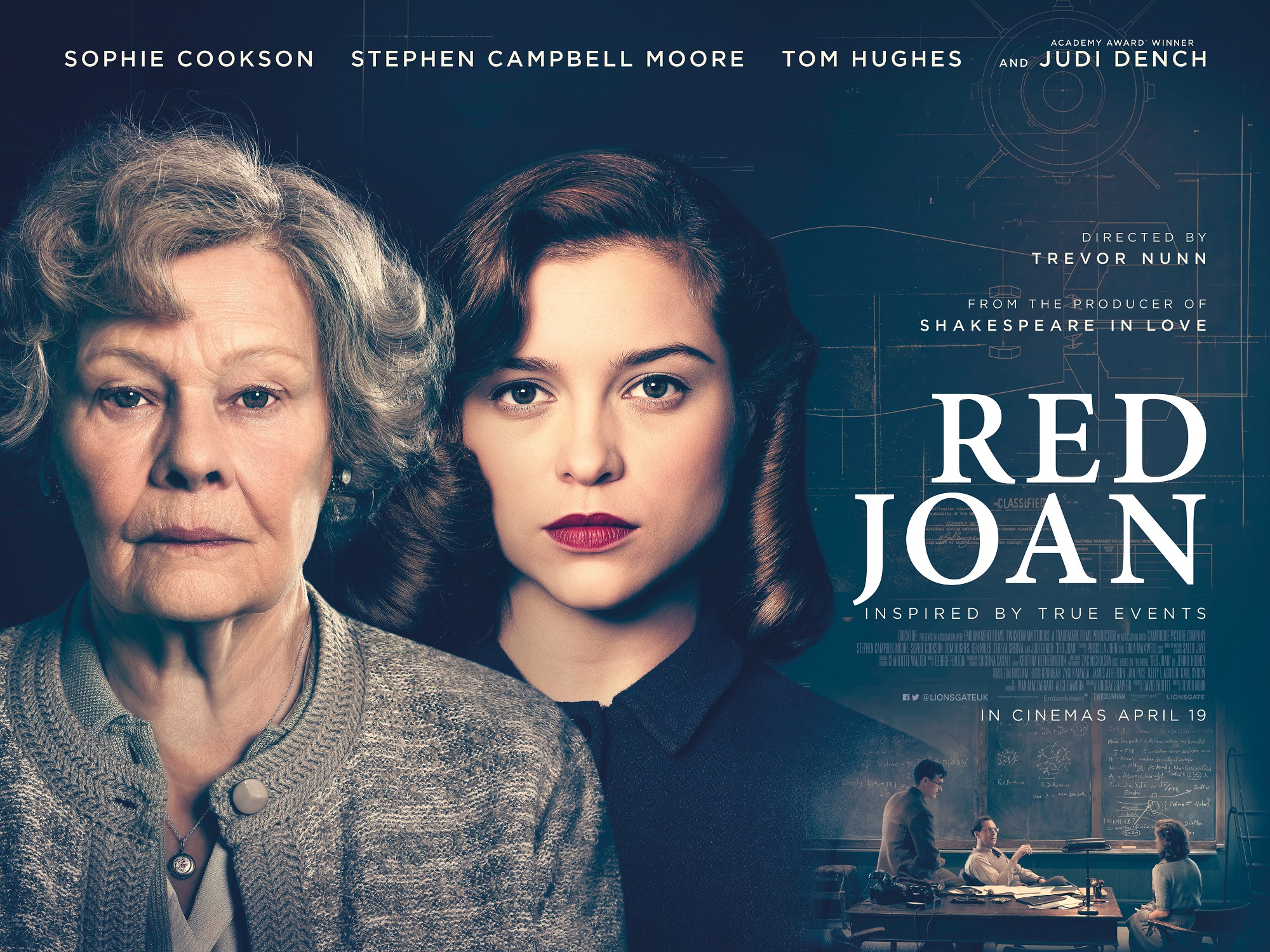
This is the story of a fictional character, Joan Stanley, who in the 1940s passed secret information to the Soviet Union. However, it and the novel from which it is adapted, are based on the life of a actual historical character, Melita Norwood. Norwood was exposed publicly in 1999 when information from an ex-Soviet agent and now-defector revealed her past activities.

The film version presents the story in a fairly conventional-style narrative [warning – plot spoilers]. The film opens with the arrest of Joan (Judi Dench) by Special Branch in 1999. Then we view a series of interrogations which are intercut with flashbacks by Joan to the 1930s and 1940s. The interrogations fill out the action in 1999 where information has led to the exposure of a senior Foreign Office official as well as Joan. The flashbacks presents Joan’s personal life and then her spy activities. At Cambridge ‘Young Joan’ (Sophie Cookson) meets glamorous European émigré Sonya Galich (Teresa Srbova) and cousin Leo Galich (Tom Hughes). Both are communist activists.

Continue reading

Review: Madeline’s Madeline

Madeline's Madeline

“What you are experiencing is just a metaphor”

Madeline’s Madeline is the third feature film from experimental filmmaker Josephine Decker, which follows teen actress Madeline (Helena Howard) as she attempts to bring to life the artistic vision of immersive theatre director Evangeline (Molly Parker) and negotiate her fraught relationship with her mother Regina (Miranda July) along the way.

Lovers of Terrence Malick’s unique brand of film-philosophy are likely to find a second home in Decker’s artistic approach to themes of mental health, race and the conflation of life with art. The above quote, spoken by an unidentified nurse bathed in a halo of light, feels like an appropriate opening to a film which continually challenges its audience to decipher a complex web of perspectives, dream sequences and relationships presented in frenetic and, at times, frustrating ways.

Madeline is a biracial teenager whom we learn is recovering from a psychotic episode which prompted a stay in a psychiatric ward, perhaps the reason for the dreamlike opening to the film – a POV shot of a nurse looking down and seemingly speaking to a patient whilst bathed in a halo of light. Her interactions with people her own age are sparse, and her mother (Regina) alludes to her being bullied at school.

Regina is a nervous, seemingly introverted woman with a propensity to dissolve into emotional outbursts. She has clear difficulty in connecting with and deciphering the behaviour of her daughter, often interpreting Madeline’s exuberant behaviour through the lens of her mental illness.

As a result, Madeline is drawn to the confidence of theatre group director Evangeline, who not only praises and encourages her artistic tendencies but also wades into morally murky territory; after Madeline admits to a having a dream in which she harms her mother, Evangeline reveals she dreamt Madeline was her daughter.

As the narrative develops, Evangeline places Madeline at the centre of the theatre groups project, weaving her problematic relationship with her mother into the performance, seemingly oblivious to the insensitivity of a wealthy white woman using a biracial teenager with mental health issues as the base for her own artistic aspirations.

The above might sound like a relatively middle-of-the-road drama, but it brings its subjects to life through incredibly distinct formal treatment. Characters are captured with a roaming handheld camera, which ducks and dives around sets, tilting on its axis and occasionally getting distracted and panning up to focus on the branch of a tree or swirling clouds in the sky above.

Shots open in deep focus before shifting to shallow focus, denying the audience an omniscient viewing experience whilst also feeling deeply present in the character’s interactions. This happens in reverse too, where shots open open in an unfocused state and gradually shift back to clarity. Extreme close-ups of mouths, hands, eyes and sometimes the backs of heads break bodies up into their constituent parts.

These stylistic choices occasionally feel infuriating, but in their totality they hang together with a certain beauty. Are we experiencing the world through the mind of Madeline? The perspective is never truly clear, and Decker seems at pains to offer no judgements on the behaviours of her characters who are all, at times, manipulative, angry, loving and deeply in tune with one another. Perhaps the fractured formal quality of this film seeks to do away with the tropes of ‘good’ and ‘bad’ people in film making and to simply present life as it often is – chaotic.

Evangeline captures this notion by quoting Carl Jung:

“In all chaos there is a cosmos, in all disorder a secret order, that the pendulum of the mind swings between sense and nonsense, not between right and wrong.”

Two Fine Art Movies

Screening daily from Friday May 17th till Thursday May 23rd.

This Friday the new film directed by Claire Denis, High Life (2018), opens at the Picture House. Claire Denis is undoubtedly one of the really talented and interesting film-makers working in contemporary cinema. In this title she has presented her first film in an English language form; thankfully she has done a better job than a number of her fellow European film-makers. This is a science fiction story that opens on an odd box-like space ship heading far away towards a black hole. Inside we find Monte (Robert Pattinson) whose only companion is a very young child. A series of flashbacks fill in the events prior to this; Monte’s companions have fallen foul of the internal conflicts among the crew. We learn how the baby came to be on the space ship and the unusual social rules that produced the situation. Stylistically the film recalls the Soviet director Andrei Tarkovsky, especially his films Solaris (1971) and Stalker (1979). The plot at times appears to be lifted from the pages of J. G. Ballard and is both violent and a little disturbing: the BBFC have given it an 18 Certificate. The cast, which includes Juliet Binoche, is good. The production, including special effects, is well done. And once more Denis shows her ability to explore social and personal contradictions. The June issue of Sight & Sound has an interview with Claire Denis.

Screening on Saturday, Sunday and Wednesday afternoon this coming week

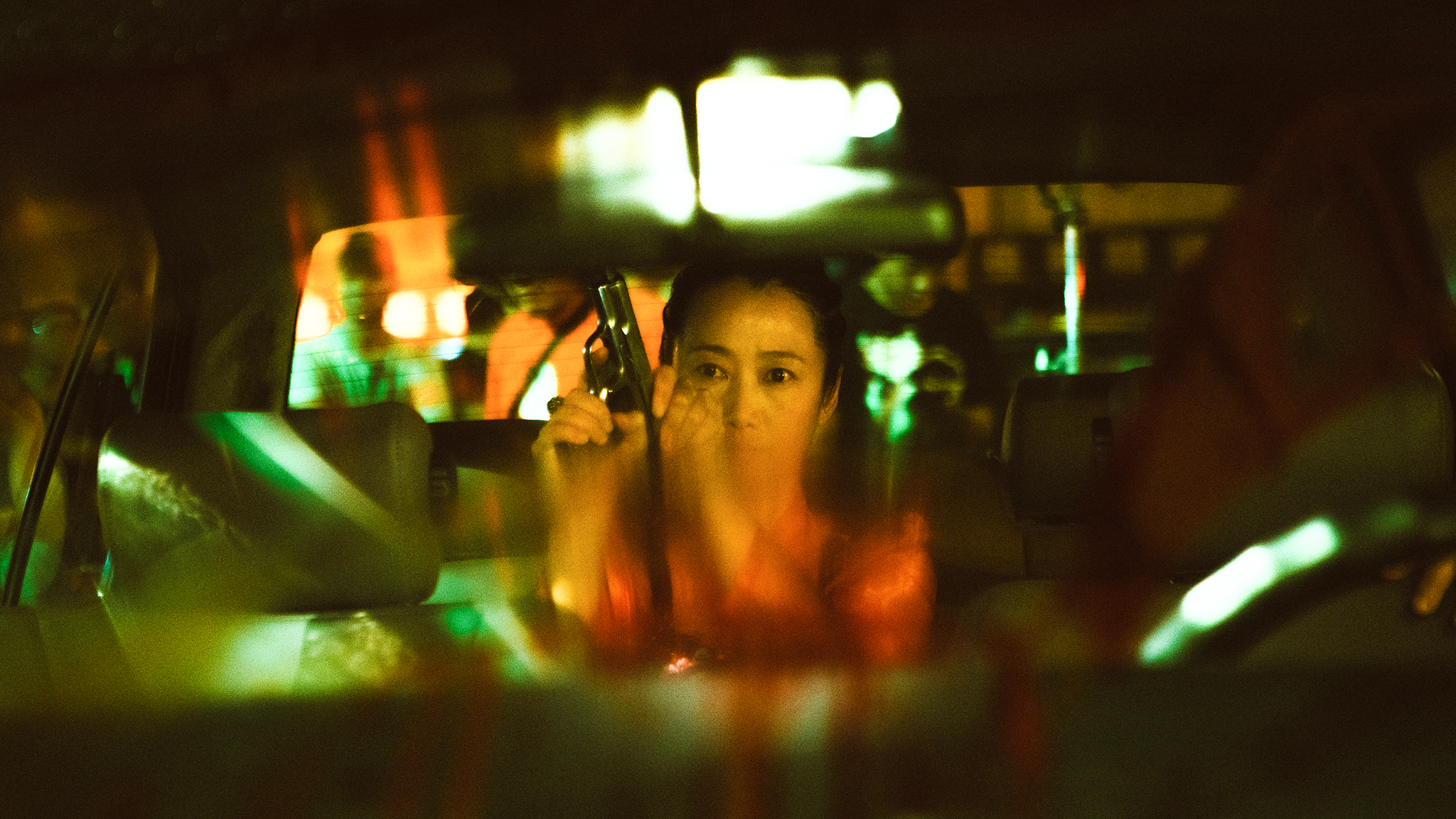
An equally fine film-maker, Zhangke Jia, has directed Ash Is Purest White / Jiang hu er nü (2018). The film covers several decades in the life of Qiao (Tao Zhao). Much of the film is set in Shanxi province in the north of China but at one point Qiao travels south to the Three Gorges in Hubei province [seen in earlier Jia films]. Qiao is involved with a “jianghu” gangster (Fan Liao). The effects of this relationship and the mob violence affect her life but throughout she remains cool and self-possessed. Tao Zhao is impressive as Qiao. She acts a muse for Zhangke Jia, having appeared in his earlier films including the very fine Mountains May Depart / Shan he gu ren (2015). This film has the same epic quality and it happily screens in Leeds, a city that missed out on the earlier title. The production values in all departments are excellent and both the action and the settings fully engage. The language in this title is Mandarin with English sub-titles.

The movie comments on recent and contemporary China; I thought one point referred back to the coup by capitalist-roaders following the death of Mao Zedong. Tony Rayns has an article in the May issue of Sight & Sound which includes comments by the director and explains some of the distinctive Chinese aspects, including the title rendered in English as ‘Sons and Daughters of the Jiangsu, a word appropriated by the underworld and originally referring to “the parallel world in which martial arts fictions is set.”