Johnny Guitar USA 1954

Sunday 29th May at 1 p.m.

85Johnny_Guitar_Johnny_Guitar_1954_Nicholas_Ray_ingl

This classic western has been re-released in a digital format by the BFI. You can read about it in the May edition of Sight and Sound under ‘The Psychological Western’ and ‘Westward the Women’. Both suggest why this film is now a cult classic, but there are other good reasons as well.

The director Nicholas Ray is a celebrated ‘auteur’ from the last stages of classic Hollywood, [i.e. the studio system]. His films are full of interest and he has a particular facility with colour: the best example being Rebel Without a Cause (1955). The screenplay is by Philip Jordan, whose other work includes Anthony Mann’s fine western The Man From Laramie (1955). The cinematography is by Harry Stradling who won two Academy Awards and received another 12 nominations. And the music is by Victor Young, who also won an Oscar and received another eleven nominations. Charlton Heston always maintained the nominations were what really counted as they were from one’s own peers in the Academy.

The film also has a stellar cast. Joan Crawford, in one of her outstanding roles, is saloon owner Vienna. She is the central character in the film despite being listed third in some publicity. Her support in the film is Sterling Hayden as drifting Johnny ‘Guitar’ Logan. Hayden’s laconic persona, with ample gravitas, led to Bernardo Bertolucci casting him in his epic 1900 (Novecento, 1976).  The opposition is led by Mercedes McCambridge as Emma Small; she almost liberally spits fire in the film. And the ever dependable Ward Bond is her sidekick John McIvers.

The film takes one of the central themes of the western genre – revenge – and treats it in an entirely unconventional manner. The film crosses over with the small-town melodrama, a genre that Ray used in his Bigger than Life (1956). This is a film that especially reflects on the social and film industry ‘witch-hunts’ of the period. The HUAC ‘witch-hunt’ is featured in two recent releases, Trumbo (2015) and Hail, Caesar (2016). Even if you are not a fan of westerns I would reckon this is a 110 minutes of completely engaging drama. The film was produced in the early days of modern widescreen formats and is in the 1.66:1 aspect ratio and was filmed in Trucolor for Republic Pictures.


Our Little Sister / Umimachi Diary Japan 2015

On 7th May – 5.40 PM / On 11th May – 3.40 PM

our_little_sister_edit_xlarge

This film was screened in the 29th Leeds International Film Festival and I thought it the pick of a strong programme. The film is adapted from a popular manga title by Koreeda Hirokazu, who also edited the film. It is the most recent in a line of family dramas in the tradition of the Japanese film genre, shomin-geki [shōshimin-eiga, the lives of ordinary working people]. These include Like Father / Soshite chichi ni naru (2013) involving parentage and children: I Wish / Kiseki (2011) about separated siblings: and Still Walking / Aruitemo aruitemo (2008) about adults and their ageing parents. Our Little Sister combines aspects of the earlier films with its main focus on four sisters. Three of these are the adult Koda sisters, Ayase Haruka as Sachi, Nagasawa Masami as Yoshino and Kaho as Chika. The ‘little sister’ has Hirose Suzu as Asano Suzu, their step-sister. They and the supporting cast are very fine.

The film is set in Kamakura on the Yokohama peninsula; not that far away from Tokyo. But this is a small coastal town. The settings include the family home, urban and rural sites and the seashore. Koreeda and his team, notably cinematographer Takimoto Mikiya, offer fairly slow and detailed observation. Critics have made comparisons with the films of the great Ozu Yasijurō, but thematically this film is closer to the equally fine work of Naruse Mikio. There is loss but also resilience and the importance of memory and tradition. The film is a delicate study with moments of humour and irony. As with the earlier films food and meals are an important aspect of the lives and their study.

If you have not seen Koreeda’s films before this would make an excellent start. If you have you will know just how rewarding are his studies of family life. If we see half-a dozen equally fine films this year then 2016 will be a classic.

Black Mountain Poets UK 2015

On 20th April – 11.00 AM [BYOB]On 20th April – 9.15 PM

BLACK_MOUNTAIN_POETS_6Strictly speaking this is a wry Welsh film comedy. It is uneven but engaging. If you have seen writer and director Jamie Adams’ early films [Benny & Jolene and Christmas Time, 2014)  you will know if it is your sort of comedy. The basic story is set on a weekend rural ‘Poet’s Poetry Society’ event. In fact there is only  a limited amount of poetry, with two complete poems, one in Welsh. The film is really interested in the characters. At the centre are sisters Lisa (Alice Lowe) and Claire (Dolly Wells). They are excellent, as are the supporting cast which includes another pair of sisters. The event and the attending poets are whimsical and slightly absurdist.

The film has an improvised quality, it was shot over five days. The continuity is not so much full of holes as coming and going as the whim takes the film. The editing has a fragmentary quality, it is as if the audience are listening in to the characters as they wander round. But there is a definite trajectory in the relationships over the four days. Bizarrely the poetry event includes camping on the Welsh hills. This provides innumerable settings for very fine widescreen cinematography by Ryan Owen Eddleston.

The film is unconventional and rarely formulaic. There is quite a lot of music on the soundtrack, sometimes unnecessarily so. But the film provides a warm and quietly humorous 85 minutes.

The Pearl Button / El botón de nácar Chile 2016

Wednesday 6th April at 4.00 p.m. and on Thursday 7th April at 6.15 p.m.

the-pearl-button

This is the new film by Patricio Guzman. His most famous work is The Battle of Chile. This epic documentary was made in exile in Cuba in three parts. These are La batalla de Chile: La lucha de un pueblo sin armas – Primera parte: La insurreción de la burguesía 1975: Segunda parte: El golpe de estado 1976: Tercera parte: El poder popular 1979. The last time it was shown locally was five or more years ago in one of the screenings ‘tween’ festivals and then I think only Part 1 and Part 2. There were 35mm prints in the UK [Metro Pictures], if they are still here it would be good to have a fresh opportunity to see what Time Out praised as “among the best documentaries ever made”.

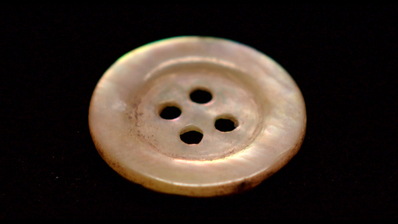
Guzman’s new film is a companion piece to the earlier Nostalgia for Light / Nostalgia de la luz 2010. Both films combine a sort of poetic essay with a documentary treatment. The earlier film was mainly set in Chile’s northern and arid Atacama desert. In part it followed widows and family members of the ‘disappeared’ under the Military Junta looking for traces of their lost ones. The new film is set in the southern Patagonian region and initially addresses the genocidal treatment of the indigenous Indians but then draws parallels with victims of the Junta who perished in the same region. The button of the title is one of the links between these groups.

In both films Guzman uses a physiological and cosmological metaphor to bind the issues together. In this film it is water: bought to earth originally by comets and one of the major features of the Patagonian region: the others are mountains and glaciers. Both films are full of impressive visuals and enjoy distinctive sound designs. I thought the metaphoric aspects worked better in this film. It also has a freer form which allows/demands that the audience think through the interaction.

The film is in standard widescreen and colour with English subtitles. It also uses black and white archival stills and film. My only reservation was that the film follows that increasing and problematic habit of reframing early film: not exactly respectful for the predecessors of today’s’ filmmakers.

The film is showing on Wednesday and Thursday. The Wednesday screening will also offer one of the short films from The Artist Cinema 2016: El Helicóptero, which turns out to have an intriguing link with the feature, [Thursday’s may also screen this short film]. Thursday’s screening is followed by a recording of a Q&A with the film director.

Spotlight USA 2015

Wednesday March 16th at 3.40 p.m.

spotlight-movie-poster

There is a final opportunity to see this Oscar winning film. I suspect that the members of the Academy voted for the film partly to demonstrate their social awareness in a year when they need good publicity. And then probably partly because it a traditional genre film with a well-written script, good production values and an impressive roster of actors/characters.

The film falls into a cycle of journalist movies. The most famous of these is probably All the President’s Men (1976) and that is clearly an influence on this film. There are several scenes where there are visual crossovers, including in the offices of the newspaper and then one with Sacha Pfeiffer (Rachel McAdams) researching the story in a public records library. Pfeiffer also interviews the surviving victims of the abuse that is the focus of the story. These are a distinctive feature and extremely well done. And the mise en scène constantly reminds us of the guilty party – the Roman Catholic Church in Boston. In an engaging actual parallel – Ben Bradlee edited the Washington Post during the Watergate investigation: his son Ben Bradlee Jnr. was Assistant Managing Editor at the Boston Globe during the Spotlight investigation.

In other ways the genre influence is not always for the best. There is a fairly long sequence as Mike Rezendes (Mark Ruffalo) waits to access legal records that are key to the completion of the story. This is played for suspense but the plot does not really justify this.

The film also fit into a cycle of films set in the city of Boston. Criminality and noir seem to be something of a constant. But the religious presence in the city is also a constant. The other earlier film that I was reminded of was The Verdict (1982 ). In that film Frank Galvin (Paul Newman) is fighting the church in a legal battle over medical incompetence. Apart from visual moments there is also a parallel with Walter Robinson (Michael Keaton) of the Spotlight team: both have to come terms to mistakes in their past.


The Assassin / Nie yin niang, France-Taiwan-China-Hong Kong 2015

Five screenings starting on Friday February 26th at 9.00 p.m.

The-Assassin-2015-Full-Movie-Watch-Online-Download

This film was screened several times in the Official Section at Leeds International Film Festival. The director, Hou Hsiao-hsien won the Best Director Award at the 2015 Cannes Film Festival. This is a stunningly beautiful film. However, many people have remarked that the presentation of the plot is opaque.

The UK marketing uses the martial arts genre in the publicity, which is a mistake. This is a slow, artful film: it has parallels in terms of plot with Hero (Ying xiong 2002). Moreover, for a western audience, I think it takes some time to identify the separate characters, especially when for much of the time they wear the formal clothing of the period. In addition the film moves around in different time periods, but without the usual signalling of flashbacks.

How well you manage depends on the manner in which you view films. One friend managed most of the characters and plot at his first screening: impressive. I managed the basic characters and plot at my first screening but it was only the second time round that I followed the whole coherently.

Rather than describe the plot, the main point of which is relatively simple, it may help to describe those I believe to be the main characters:

Shu Qi as Nie Yinniang, the eponymous assassin, dressed in black when we meet her.

Fang-Yi Sheu as Princess Jiacheng and her twin sister, the princess Jiaxin turned Taoist nun

We meet Jiaxin along with Nie Yinniang in the opening sequence. Jiacheng only appears in flashback,

Chang Chen as Tian Ji’an, cousin to Nie Yinniang, formerly betrothed to her, and military governor (Jiedushi), ruling Weibo Circuit.

Zhou Yun as Lady Tian, Tian Ji’an’s wife. (Belongs to family of a separate Provincial ruler.) It seems that she is also a masked figure who duels with Nie Yinniang.

Satoshi Tsumabuki as the mirror polisher. Unidentified by name, the character’s title action is easy to miss: he appears late in the film when there is an attack in woods and he comes to the rescue. It seems that he has more scenes in the Japanese release version.

Ethan Juan as Xia Jing, Tian Ji’an’s bodyguard

Hsieh Hsin-Ying as Huji ( her name means ‘orchid’), Tian Ji’an’s concubine and a dancer

Ni Dahong as Nie Feng, Nie Yinniang’s father and Tian Ji’an’s provost.

And there is an older whiskered character who I believe is Jacques Picoux as Lady Tian’s teacher: he appears twice sitting in his study.

Note it opens in black and white and then changes to colour. And whilst the bulk of the film is in Academy ratio [1.37:1], there are two sequences (of only two shots each) in widescreen ratio [1.85:1] . For more …

Wild Tales / Relatos salvajes Argentinian 2014

Sunday 21st February 3.30 p.m.

Wild-Tales-Movie-600x300

Writer and director Damián Szifrón has produced a wildly funny portmanteau film [several stories, frequently with thematic connections] that has already scored at this year’s BAFTA Awards: not exactly a great compliment given some of the other winners. However this is two hours of often extremely funny but macabre humour. As my colleague Roy Stafford writes the six tales are essentially about ‘getting even’.

Pasternak is set on a plane and is the most notorious of the tales: unintentionally mimicking real life. I laughed like a drain but a friend who saw it with a different and ‘stony-faced’ audience admitted she did not dare laugh out loud there.

The Rats is set in a cheap restaurant. I recognised the plot and could see what was coming: possibly the weakest of the tales.

The Strongest looks like a variation of Steven Spielberg’s Duel (1971). But this is a very dark comedy rather than a thriller.

Little Bomb gives voice to all those occasions when some bureaucratic rule drives one mad. My favourite of the six.

The Proposal is less of a comedy and more of a moral drama, with a very sardonic tone. [Think Nure Bilge Ceylan].

Until Death Do Us Part is the hilarious conclusion to the six tales. If you are going to venture into marriage this is the wedding to have. I shall save it to revisit when there is another royal or celebrity wedding on the box.

The film is in excellent colour and scope frame. All the stories have English subtitles.


Le Mépris France / Italy 1963

Sunday 14th February – 3.00 PM

le-mepris

A film by Jean-Luc Godard is always an occasion. Readers may not think that he is necessarily one of the cinema greats: but he is certainly one of the most fascinating filmmakers working in World Cinema. This film hails from the 1960s, the period when he delighted, confounded and upset audiences and critics alike. The starry cast, Brigitte Bardot, Jack Palance and Michel Piccoli, may suggest a relatively mainstream story, but, as ever, Godard both subverts and innovates.

Importantly the cast also includes the veteran filmmaker Fritz Lang. This is a film about cinema set in the world of filmmaking. Lang is directing a version of The Odyssey. Whilst the film does not literally transpose the plot of Homer’s epic poem, there are intriguing parallels with the triangle at the centre of this film.

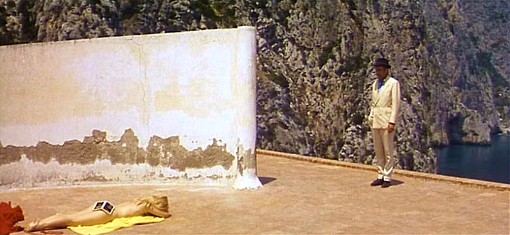
The Aegean locations were filmed by the talented Cinematographer Raoul Coutard and they look great. Watch for the beautifully executed tracking shots. There is excellent mise en scène and editing: the latter by Agnès Guillemot   and Lila Lakshmanan. There are a series of exemplary shot / reverse shot that have been much copied, including I would think by Michael Mann in Heat (1995).

The film has been restored and transferred to digital. One would expect it to look good and it has the original 103 minutes running time and the French release soundtrack [with subtitles]. It was filmed in Technicolor and on Franscope, 2.35:1. The last time I saw it I loved the sound and visuals and was fascinated as the cast presented this tragic tale.

Carol on 35mm

Saturday February 6th at 5.30 p.m. and Sunday February 7th at 4.30 p.m.

Carol hotel

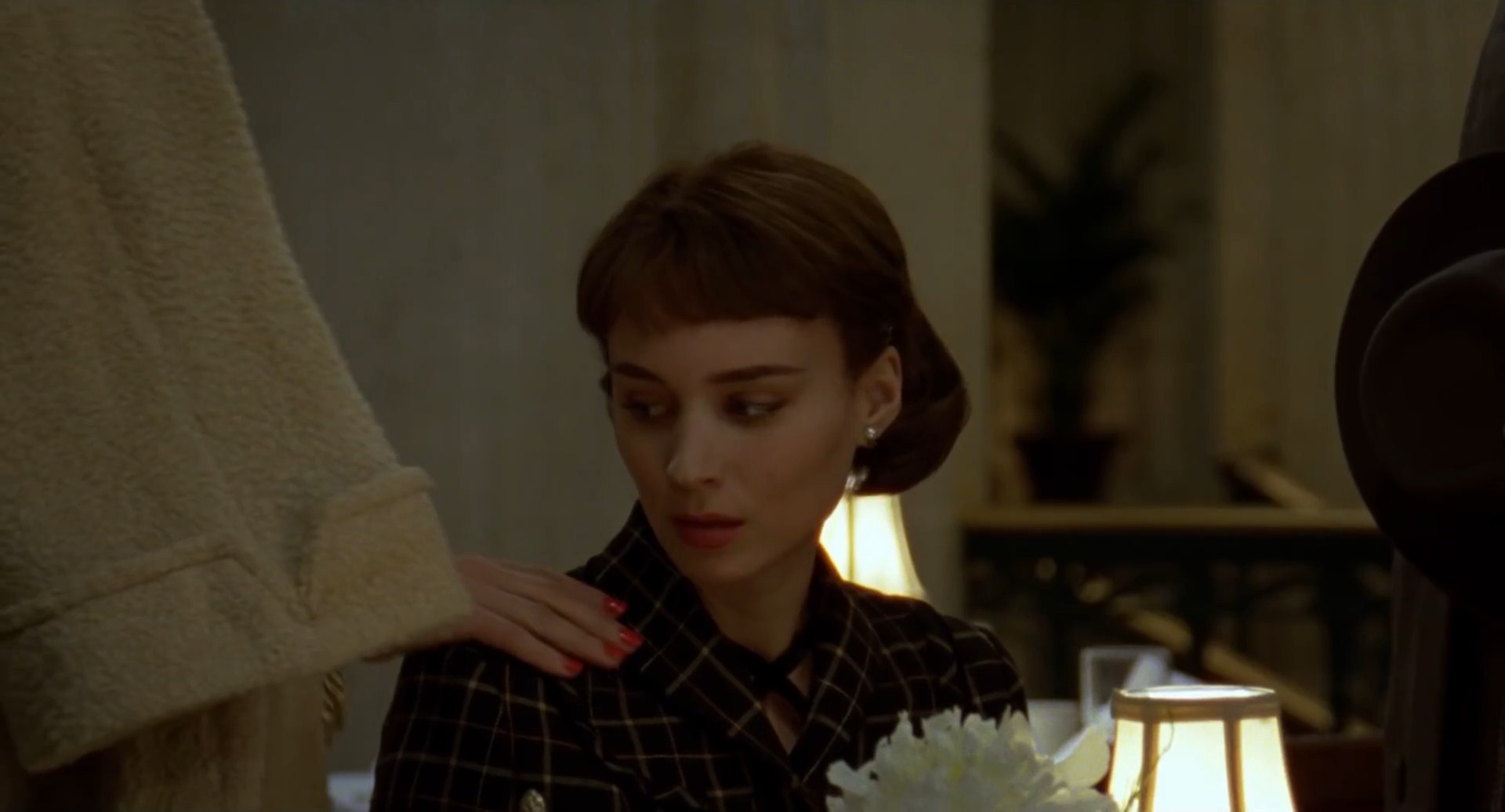
This film has received much critical praise and a number of award nominations. The main focus has been the acting of the leads, Cate Blanchett and Rooney Mara. But the supporting cast are excellent. Edward Lachman’s cinematography [shot on Kodak Super 16 stock] should really benefit from the definition and luminosity of 35mm. There is splendid production design by Judy Becker and fine editing by Affonso Gonçalves. And in an age when music scores are often overdone Carter Burwell strikes the right balance between drama and underscoring. This is director Todd Haynes’ best film since Far from Heaven (2002). That was a fine revisiting of a film classic: this is a really intelligent adaptation of a great novel.

The film follows the book fairly closely but also introduces significant variations. These seem to me to be well judged additions that suit the cinematic treatment. If you are seeing the film again then you can enjoy the very fine sequence that opens the film and which is then revisited near the end. It has great mise en scène but the beautifully judged camerawork and editing adds to the characters and dramatisation. It also seems to be a homage to a classic British film drama.

Carol is screening as part of a series of lesbian, gay, bisexual, transgender and queer cinema. Also check out Tangerine (USA 2015) showing on Thursday 11th at 9pm.

Taxi (Tehran) Iran 2015.

Thursday February 4th at 6.30 p.m.

Taxi-tehran

A welcome innovation, a ‘Tuesday Wonder’ being repeated on a Thursday. And this is a film to see or see again. This is a distinctive film in so many ways; for starters the entire production crew consists the Iranian filmmaker Jafar Panahi: with the exception of Massoumeh Lahidji, who prepared the French sub-titled version: [the alternative title appears to be to avoid confusion with the earlier films of that title] .

The film, like at least two earlier Iranian films, is set in a taxi circling Teheran. The driver is Jafar Panahi and sited on the dashboard is a Blackmagic Pocket Cinema Camera. There is a some additional footage shot on cell phones. The rest of the cast are non-professionals, unidentified to protect the innocent. The car, a friend informed me, is a Peugeot 405, built under licence in Iran.

What we see and hear, along with Panahi, are a man who works as a free lancer [fairly conservative] and a woman teacher [liberal]: a man injured in an accident and his wife: there is a man who distribute videos, some at least illegal: two women carrying a gold fish to a well/shrine: Panahi’s niece, who is also making a film: an old school friend who has a story of his troubles: and a lady with flowers who is a suspended lawyer. Some of them recognise Panahi, some apparently do not. There are also, outside the car, a fruit seller, a CD seller, various passers-by, medical staff, and [finally] two black clad men on a motorcycle. Most of the characters in the car talk as only Iranians can talk.

The film is fascinating, witty and deeply subversive. It offers a rich mine of stories, observations, complaints and the varied tapestry of Iranian urban life. The ending, following the appearance of the motorcycle, is very smart.

Of course, Panahi has form. He is currently suspended from filmmaking, but managed the equally impressive This is Not a Film (2011). This time his latest film won the Golden Bear at the Berlin Film Festival: few film awards carry greater kudos.

Panahi has had a long and productive career. This film references a number of his earlier films. The ones I picked up were Offside (2006), Crimson Gold (2003), The Circle (2002) and The White Balloon (1995). The latter includes another recurring Iranian motif, gold fish.

Reviews tend to pick up on the way that Panahi has subverted the repressive and very conservative regime in Iran. But equally the film gives testimony to the rich variety of Iranian culture, including a long tradition of quality films. It says something about the dynamic qualities of this society [usually ignored by the West] that it can produce so many fine art works.