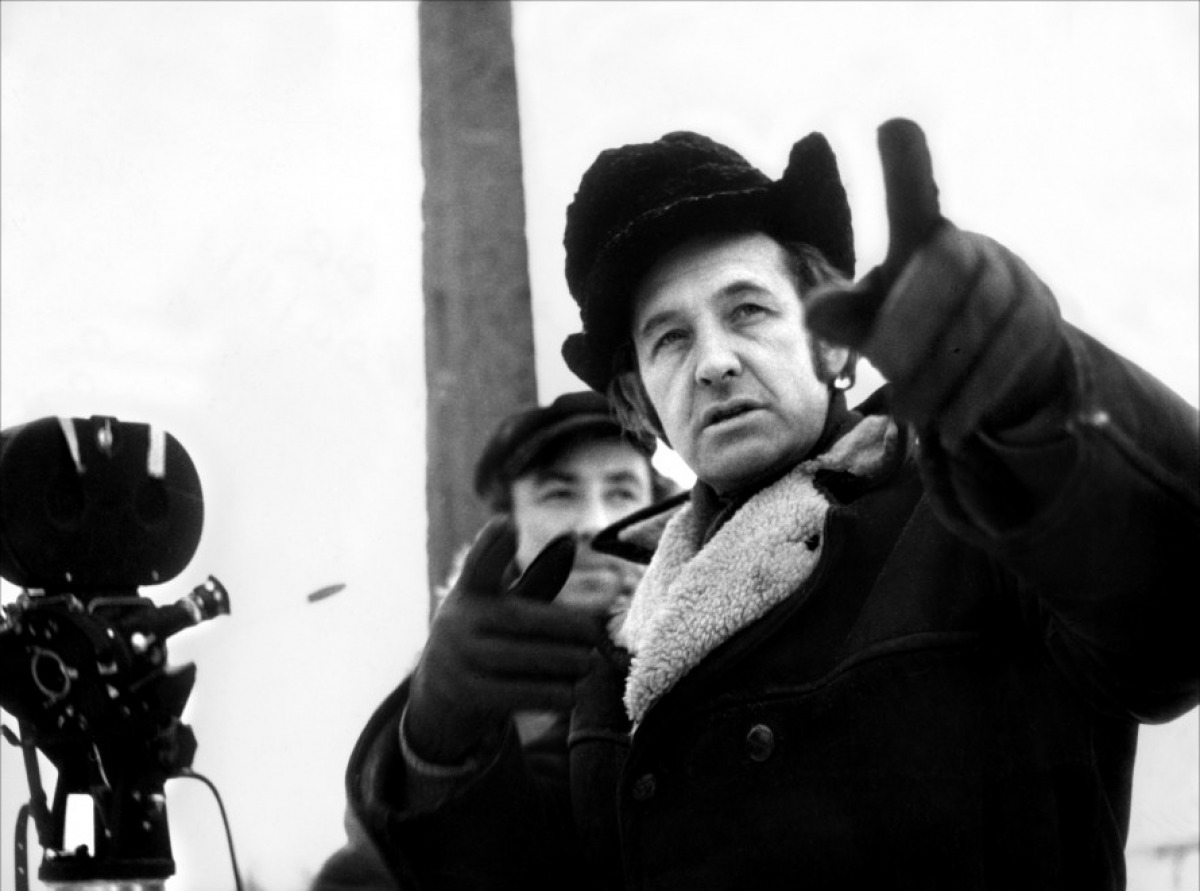
Andrzej Wajda 1926 to 2016

wajda-andrzej-03-g

World Cinema lost one of it luminaries in October this year when the iconic career of this filmmaker came to an end. Wajda was one of the celebrated graduates of the Łódź Film School, This training ground for film actors as well as crafts people had a deservedly outstanding reputation.

Wajda first drew attention with his trilogy A Generation (Pokolenie, 1954), Kanał (1956) and Ashes and Diamonds (Popiół i diament 1958). These were founding works in what developed into the European art cinema. I saw them, as did many at the time, in a Film Society in 16 mm prints. I have since been able to revisit them again in 35mm prints. All remaining outstanding but the key film is Ashes and Diamonds with the character of Maciek played by the young iconic Polish actor Zbigniew Cybulski. There is a terrific sequence with fireworks lighting up the sky and a sequence which I have seen copied a number of times with sheets billowing from a clothesline.

Wajda turned out fine films decade after decade, and I still have to see a number of them. One that stood out was Landscape After the Battle (Krajobraz po bitwie, 1970), a film that deals with a Holocaust survivor and which includes some stunning landscape sequences. Two films that stood out in addressing the repressive regime that ran Poland in the period are Man of Marble (Człowiek z marmuru, 1977) and Man of Iron (Człowiek z żelaza, 1981). I saw at least one of them at the Academy Cinema in London, a fine and now lost venue for quality film.

More recently Katyń (2007), dealing with the Soviet massacre of Polish Officers in 1941, was extremely well done. And we can look forward to his final film Afterimage ( Powidoki, 2016), yet to enjoy a UK release. There are a variety of fine films that would grace a screening tribute to this great filmmaker. My own choice would be The Promised Land (Ziemia obiecana), 1975) which chronicles the development of the C19th capitalist textile firms in Łódź. The film is a fascinating chronicle and has some terrific sequences including a factory fire. The film came round last year in the programme ‘Martin Scorsese Presents: Masterpieces of Polish Cinema’. It was screened at the Sheffield Showroom in a good quality 35mm print. However, I do not think it made in to West Yorkshire. Hopefully the print is still available in the UK.

promised-land-10

Fidel Castro, 1926 to 2016

Fidel Castro, Prime Minister of Cuba, smokes a cigar during his meeting with two U.S. senators, the first to visit Castro's Cuba, in Havana, Cuba, Sept. 29, 1974. (AP Photo)

Fidel Castro, Prime Minister of Cuba, smokes a cigar during his meeting with two U.S. senators, the first to visit Castro’s Cuba, in Havana, Cuba, Sept. 29, 1974. (AP Photo)

Apart from reactionaries in the USA most people will mourn the passing of this revolutionary leader. So a good way to celebrate his achievements and contributions would be to screen one of the  outstanding films that were produced by ICAIC. My preferred title would be Memories of Underdevelopment (Memorias del subdesarrollo, 1968) directed by Tomás Gutiérrez Alea which has been restored by the World Cinema Foundation. And Alea’s later The Last Supper (La última cena 1976) is likely to be available on 35mm . Another would be Lucía (1968) directed by Humberto Solás which should also still be available in a 35mm print.

Since either would now be in a 2017 programme this would also provide a harbinger for celebrations of the centenary of the 1917 Revolution as ICAIC were among the important heirs of Soviet Silent Montage.


Paterson France, Germany, USA 2016

Daily from Friday 25th November

paterson-quad

This new film from Jim Jarmusch was the opening film at the Leeds International Film Festival. Jarmusch also scripted the film and the Festival Catalogue quotes him:

“I love variation and repetition in poetry, in music and in art. Whether it’s in Bach or Andy Warhol. In the film I wanted to make this little structure to be a metaphor for life, that every day is a variation on the day before or the day coming up.”

What we get in the film is the slight variations in the life of Paterson (Adam Driver) who lives and works in the city of Paterson. The city is famous for the Great Falls situated on the Passaic River and as the subject an epic poem by William Carlos Williams, a member of the US modernist poetry movement.

Paterson is an amateur poet who works as a local bus driver. The variations in his life and work take place over seven days. We see him frequently writing poetry in his notebook. and there are occasional encounters including with a much younger would-be poet.

Mornings, evening and night-times are spent at his house which he shares with Laura (Golshifteh Farahani) and her dog Marvin (Nellie, playing in a cross-gender role). Laura seems mainly involved in domestic labour. Marvin, a ‘British Bulldog’, clearly is jealous of Paterson. But Paterson take shim for his regular evening walk when he visits a local bar where we see the more local inhabitants and some of the drama in their lives.

The film offers low-key humour. The observation of Paterson and his environs is absorbing. However, he is a slightly fey character and Laura is even more so. I did think that Farahani’s part was seriously underwritten. I thought that Marvin was more developed in character. It would seem though that this will be Nellie’s only film role as an end title is dedicated to her memory. She won the 2016 Palm Dog posthumously.

The production of the film is well done. The cinematography by Frederick Elmes is clear, direct and makes good use of settings like the Falls. And the editing, by Alfonso Gonçalves, works well and makes some of the humour in its cuts. The composer Carter Logan, who worked on Jarmusch’s last film Only Lovers Left Alive (2013), adds to the irony with judicious music.

I should note that the Sight & Sound review by Henry K. Miller thought this the best work by Jarmusch since Ghost Dog (1999). If your taste is in Jarmusch movies then you will likely enjoy this.

Napoleon France 1927

Sunday November 13th at 11.15 a.m. in The Victoria Hall

napoleon

This silent film epic is screening in The Victoria Hall with a pre-recorded musical accompaniment. The film itself, directed by Abel Gance, is one of the outstanding achievements of European silent cinema. Epic well describes the over five hours which only take in Napoleon’s youth and early career. Gance and his production team, especially the lead cinematographer Cinematography by Léonce-Henri Burel, were in the vanguard of film technique in this period. In an early scene the mobile camera brings out the dynamism of young Bonaparte: and these techniques are paralleled on many occasions especially in a dramatic sequence in the French Assembly. The film makes extensive use of tinting and toning, reproduced in this version. Finally the film ends with a precursor of the Cinerama format, as the entry of Napoleon’s army into Italy is presented on three screens in a magnificent panorama.

The film has been transferred to a digital format. So whether this will be equal to the thrill of 35mm presentations has to be seen. However, Kevin Brownlow, who painstakingly restored the film over many years, made the point that it will look better than on the 9.5 mm gauge in which he first viewed it. And it will certainly look better than on a Blu-Ray or DVD. On the large screen at the Town Hall, 12 metres across, the framing will be about 27 by 20 foot. And the final triptych has been folded into a 2.39:1 frame, stretching across the entire screen. Added to this, the score that Carl Davis composed to accompany  film screenings, based extensively on music contemporary to the time, will be in 7:1 Dolby Surround Sound, and the Town Hall has good acoustics for music.

The film falls into three parts, though this screening has three intervals, so I am unsure where they will fall. Still, if you have never seen Napoleon on the big screen then this is a cinema must.

Woman of the Dunes/Suna no onna, Japan 1964

Friday November 4th at 4.30 p.m. and Wednesday November 9th at 1.00 p.m.

woman-in-the-dunes

This is one of the classic films screening at the Leeds International Film festival and one of the few in the original format of 35mm. It is part of a retrospective ‘Soundtracks’ and the film has a minimalist and modernist electronic score by Japanese composer Takemitsu Toru. He was a regular collaborator with the film director Teshigahara Hiroshi and this is the latter’s most notable film. It won the Special Jury Prize at the Cannes International Film Festival and was nominated for an Academy Award in the Best Foreign-Language Film category.

It is an example of the modernist film-making found in the Japanese New Wave of the 1960s. It is a film of ambiguities but with a fascinating narrative and characters. An etymologist goes to the beach collect specimens for the day but events prevent his return to the city in the evening. The story develops in beautifully unexpected ways.  Visually the film is a tour de force, especially in the black and white deep focus cinematography of Segawa Hiroshi. The imagery at times is abstract and the music of Takemitsu adds to the unconventional feel of the film.

The film also has a strong set of social themes running through it. These receive extra emphasis from the opening and closing credits which offer an added dimension to the allegory. The film runs for just over two hours and exercises at time a hypnotic feel. Not to be missed on the big screen.

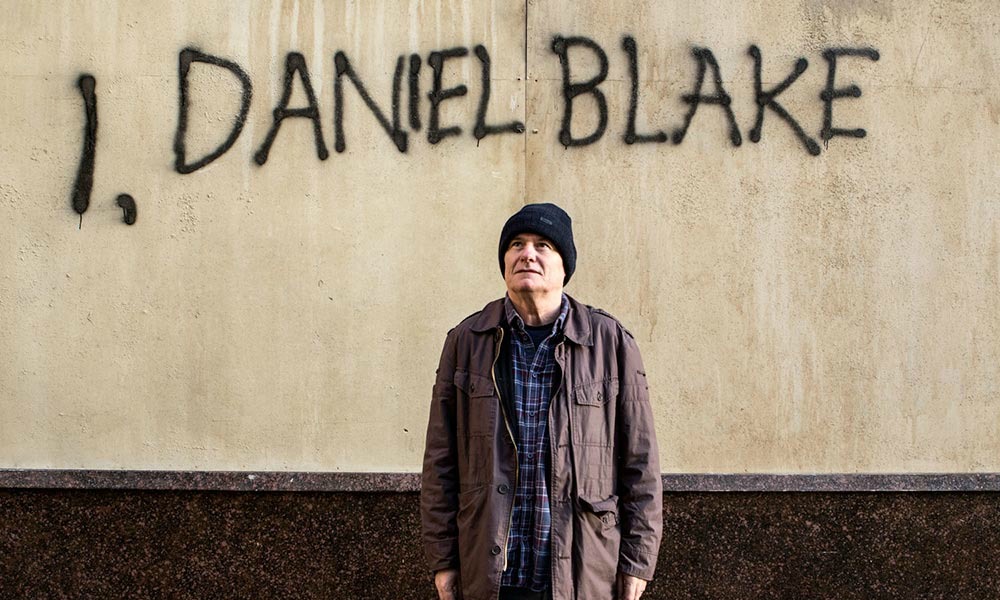
I, Daniel Blake UK/France/Belgium 2016

Screening daily from Friday October 21st until Thursday November 3rd               [excepting Sunday October 30th]

20160418140729-i_danielblake_01

The new film directed by Ken Loach comes garlanded with the Palme d’Or from the Cannes Film Festival. As usual it is scripted by Paul Laverty and has been part-funded by the BBC, the BFI and European companies. The film is set in Newcastle-upon-Tyne among the northern English working class. And the plot revolves round the travails of ordinary working people attempting to cope with an unsympathetic and exploitative state system. Thus it combines situations and themes that have dominated Loach’s films since the seminal Cathy Come Home (1966).

Ken Loach’s long and illustrious career makes him one of the most productive of contemporary British film-makers and the oldest recipient of the Cannes Festival’s premier award. Yet his work has a continuity and repetition that makes all his films easily recognisable. We are told that, as is his wont, the film was shot chronologically. It uses both experienced and non-professional performers. And it relies to a degree on the long shot and the long take, giving it an observational style. Note, despite the clips in the Versus… documentary this film screens in standard widescreen, 1.85:1 and is in colour. It was shot on Kodak film stock but is being distributed on a DCP.

In an interview this week Loach took the BBC and television generally to task for their failings in representing the working class of Britain in any meaningful manner. So his continuing engagement with this world and with the politics of resistance makes the film essential viewing.

Bob Dylan – poet, song-writer and occasional performer.

dylandontlookback-725916

So, as we celebrate the Nobel Literature Award can we look forward to hearing Dylan in the auditorium before the screenings. Perhaps ‘Like a Rolling Stone’ before American Honey (2016).

But we could possibly also enjoy Dylan on film. There is Don’t Look Back (1967), a classic music documentary of the 1966 UK tour: a genre that features in the 2016 LIFF. There is Martin Scorsese’s The Last Waltz (1978), another very fine documentary, this time of a single concert. There is Wonder Boys (2000), for which Dylan won an Academy Award for Best Song, ”Things Have Changed’. And then there is I’m Not There (2007) with several different Dylan’s, including an intriguing one by Cate Blanchett.

My favourite Dylan moment on film is unlikely to be available in a print now: the sequence in the original release version of Pat Garrett and Billy the Kid (1973) where Dylan’s ‘Knocking on Heaven’s Door’ plays over the final moments of Sherriff Baker (Slim Pickens). A song that will [eventually] make a fine elegy for Dylan himself.

moviemoments2014-patgarrettandbillythekid


Ousmane Sembène ‘Father of African Film’

Sunday October 9th 2.30 p.m.

thhzl01o2x

The Senegalese filmmaker Ousmane Sembène was a key pioneer in the development of an indigenous African cinema. Now a new documentary by Samba Gadjigo, SEMBÈNE! (2015), is screening along with a Q&A with the director. Also there will be a screening of La Noire de… / Black Girl, (1966). And later, on October 18th, there will be a screening of his final film Moolaadé (2004).

Sembène’s films are rarely seen in the UK but they are powerful, emotionally involving but also politically incisive. Both screenings are well worth the visit to the cinema: they are few such opportunities and the quality of Sembène and his colleagues work deserves the big screen.

Gene Wilder 1933 to 2016

Teri Garr, Gene Wilder and Marty Feldman, 'Young Frankenstein'

Teri Garr, Gene Wilder and Marty Feldman, ‘Young Frankenstein’

Recently deceased Gene Wilder was an impressive film actor, mainly in comic roles and best when playing some sort of likable eccentric. Wilder progressed from Broadway to films; opening his career with producer and director Mel Brooks. His best work was probably with Brooks: The Producers (1967), especially in the last 45 minutes, revels in bad taste, performed with marvellous aplomb by Wilder and one-time blacklisted Zero Mostel. Blazing Saddles (1974)  is one of the best send-ups of the western.  But the key film is one on which Wilder also had writing credits, Young Frankenstein (1974). His performance as the grandchild of the infamous innovator was splendid. And the film also enjoyed a host of excellent supporting characters, notably Marty Feldman as Igor.

Wilder also teamed up several times with Afro-American actor Richard Pryor, early on in Blazing Saddles. Then in Silver Streak (1976) and Stir Crazy (1980)  which were both very funny but also in advance of the times in their pairing of white and black protagonists. Pryor’s tutoring of Wilder in ‘street cred’ is great.

The coming Saturday the Hyde Park is screening Willy Wonka and the Chocolate Factory (1971), an accomplished musical adaptation from the Roald Dahl novel. It is also the centenary of the latter much-loved writer.

willy-wonka-and-the-chocolate-factory-20091006005120611_640w

There is one other of Wilder’s films that would pay revisiting. He has a small role, as an undertaker, in Bonnie and Clyde (1957), still one of the outstanding examples of the gangster genre. Wilder received an Oscar nomination for Best Supporting actor in The Producers  and as co-scriptwriter for Young Frankenstein.

Things to Come / L’avenir, France 2016

From 9th September – 15th September

Mia Hansen-Løve wins the Silver Bear at the Berlin Film Festival

Mia Hansen-Løve wins the Silver Bear at the Berlin Film Festival

French cinema seems better than either the British or the USA industries in bringing on the talents of women filmmakers. And this film which opens this week is a good example. It won the prestigious Silver Bear at the Berlin International Film Festival.

The director, Mia Hansen-Løve, is Parisian who has directed several fine films including Father of My Children (Le père de mes enfants 2009), Goodbye First Love (Un amour de jeunesse 2011) and Eden (2014). She writes her own screenplays successfully, something that many young directors would be well advised to avoid. She also has some experience of acting in films, which probably helps her work. And she partners the filmmaker Oliver Assayas, which probably also helps, though they have very distinctive styles and interests.

Isabelle-Huppert2

Starring in the film is one of the outstanding contemporary actresses Isabelle Hubert, a fellow Parisian. She has deservedly received a profile and extended interview in the September issue of Sight & Sound. She was recently seen at the Hyde Park Picture House in Valley of Love (2015). This was not a great film but was worth watching for the performances of Hubert and of her co-star Gérard Depardieu. Both are formidable presences in European cinema, and indeed beyond. My earliest memory of Isabelle Hubert is dashing from NFT Screen I to NFT Screen II to watch The Lacemaker (La dentellière, 1977). It was a great introduction and I have enjoyed every facet of her career since. Not all her films are great, but if she has appeared in a bad movie it is one I have missed.

So reckon a real treat in store and a must to see.