Versus: The Life and Films of Ken Loach UK 2016

Screening On 11th June – 6.45 PM : On 12th June – 3.30 PM Wednesday 15th June 8.50 p.m. 

ken-loach-cannes

This new biopic comes out at a propitious time. Ken Loach has won his second Palme’ d’Or at the Cannes Film Festival for I, Daniel Blake. He joins an elect group of filmmakers, Bille August, Emir Kusterica and Shohei Imamura, who have also won this prestigious award twice since its inception in the current form in 1975. The award confirms Loach’s status as one of the most important of contemporary European filmmakers: though one who has been honoured more on the continent than in his home territory.

The documentary has been produced by Loach regular Rebecca O’Brien, scripted by his colleague Paul Laverty, and directed by Louise Osmond. It also includes many of the people who have worked with Loach, including Tony Garnett, whose output at the BBC is also seminal. My main reservation is that Osmond’s previous film, Dark Horse (2015), was made like a typical television documentary and utilised archive and found footage of rather low quality. But its focus was ordinary working people who are the recurring centre of Loach’s own films.

It was shot in 2.35:1 and that ratio does allow some striking shots by cinematographer Roger Chapman. But it also means that the extracts from Loach’s own films have been re-framed to fit this format. This does not do them any favours, in some frames heads are cut off. The footage of Loach working on I, Daniel Blake is in the same ratio. Some of this is interesting, but often it feels like a ‘making of ….’ treatment.

Where the films scores are the interviews with Ken Loach and Tony Garnett. Loach is unassuming but rigorous in his comments. And Tony Garnett is both intelligent and stimulating. We also get a brief interveiw with Nell Dunn [Up the Junction] and recordings of Jim Allen. The latter was an important collaborator and influence on Loach. And there is an excellent comment by Gabriel Byrne on the suppression of the production of Perdition. It would have been good to have more from other important collaborators like Rebecca O’Brien and Paul Laverty.

The documentary is also strong on the frequently myopic and predjudiced treatment of Loach’s film among British critics. As Derek Malcom remarks, he is much more honoured on the continent. Whilst he has won many awards at the Cannes Film Festival, The Berlin Film Festival and even a French César. None of his films has ever been awarded a BAFTA!

Certainly Loach’s film and television output has deserved this. From the pioneering work in the 1960s, notably Cathy Come Home, made for the BBC with Tony Garnett, to the recent series of annual film releases, his work has been among the best and most interesting produced in the UK. And this film does pay due attention to his early work for the BBC. Whatever its limitations this documentary is worth seeing as a deserved retrospective of his contribution.

Cathy come home

Continue reading

The Lady in a Van UK 2015

On 30th January – 2.30 PM and on 31st January – 3.10 PM 

The-Lady-in-the-Van’

Much comment on this film has focussed on the lead performance of Maggie Smith. She has garnered nomination for Best Actress at both the Golden Globes and the BAFTAs, [though to be honest Charlotte Rampling’s in 45 Years is finer]. Smith characterisation in the film is a crowd pleasing and vastly entertaining act. It is also an interesting variation on her well-established persona. However the film actually offers two ‘national treasures’. This is another fine work from  the pen of Alan Bennett. He not only is the shrewdest writer on the English culture but is also something of modernist. In this film we get the ‘actual’ Bennett and his own imagined double.

The pair at the centre of this very funny but also occasionally moving film are equally well served by the production. Director Nicholas Hytner has marshalled his team with excellence. The music by George Fenton is judicious, the  Cinematography by Andrew Dunn is fine, and the  Film Editing by Tariq Anwar and Production Design by John Beard both serve this well.

This is the type of film that British crafts do so well. Adapted from a successful stage original it also has a very good co-star in Alex Jennings and a fine supporting cast, with some delightful cameos.

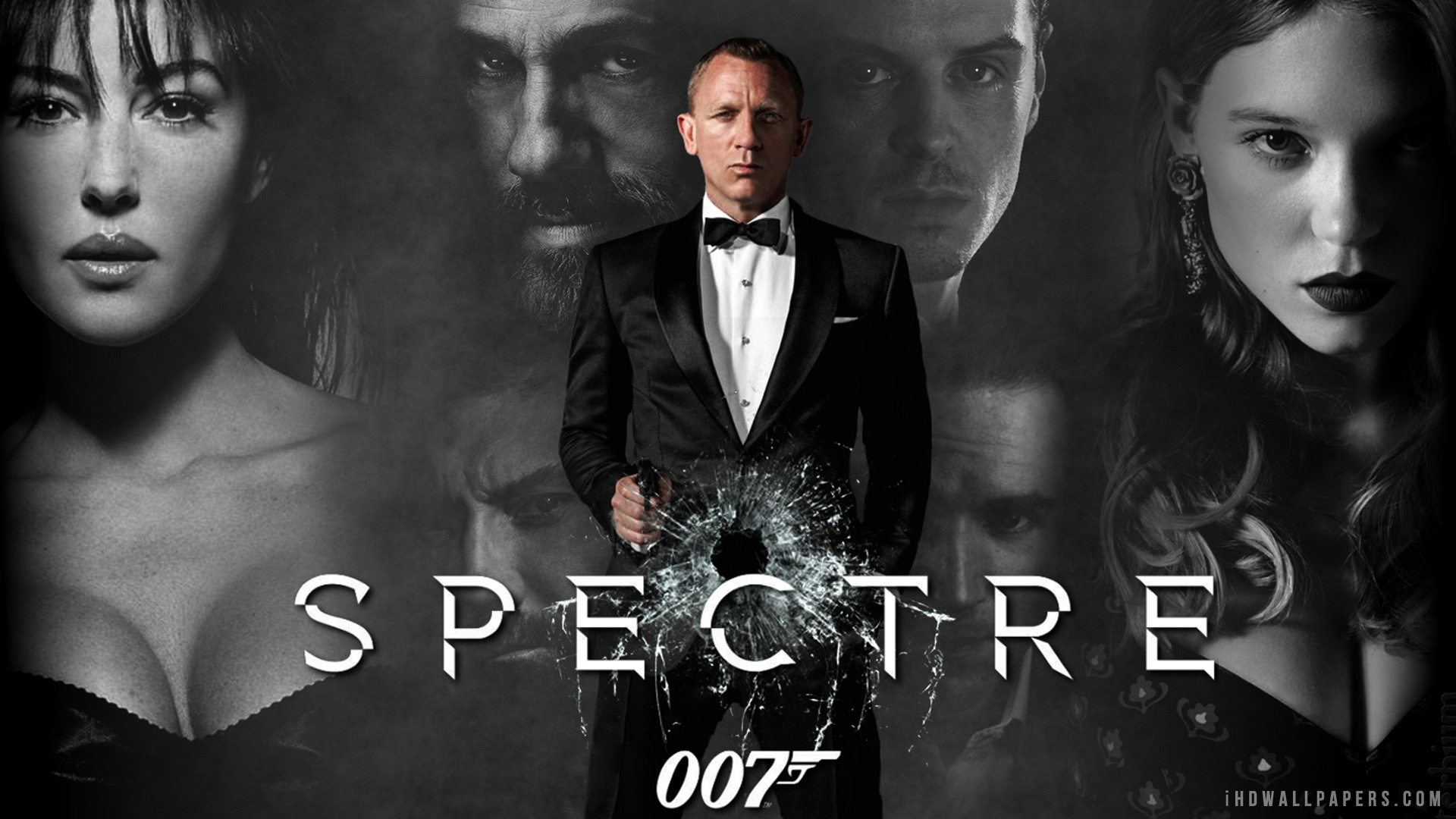
Spectre UK / USA 2015.

From Friday December 11th.

Spectre

So James Bond arrives on Friday. I don’t think I have ever seen a Bond at the HPPH before. However, it appears that this film is only distributed in a 2K DCP [or on Imax] so it should look and sound just as good as elsewhere on the cinema’s screen and sound system. Bond films are usually entertaining, and recent ones have all included spectacular action sequences.

Daniel Craig is, for me, the best Bond since Sean Connery. I shall miss Judi Dench though. And Léa Seydoux and Monica Bellucci presumably did not have to make the same sort of effort they put into their more serious characterisations. I wondered if Christoph Waltz was able to resist being funny.

The production team should provide quality. We have Sam Mendes, John Logan and Neil Purvis directing and scripting, and they are all experienced in this genre. I thought Skyfall (2012) was pretty well done, though the ending and goodbye to Judi Dench was too drawn out for me. This new film is five minutes longer.

Cinematographer Hoyte Van Hoytema worked on Interstellar (2014), visually stunning. Editor Lee Smith worked on Inception (2010), extremely well put together. Whilst Production Designer Dennis Gassner also worked on Skyfall. And they had an extremely large production crew working with them, many of them experienced in the genre. The composer Thomas Newman has also provided the score for Bridge of Spies (2015).

My most serious reservation is the return of Spectre. I never found that organisation convincing. Though it was always nice not to have to suffer another film with anti-Soviet plot and characters: a tradition continued in the aforementioned Bridge of Spies. And just an aside, if you want to see really good chess on film watch Satyajit Ray’s The Chess Players (1977).

45 Years, UK 2015

Continuing until Thursday September 10th.

Berlin

The film garnered Best Actor Awards for both Charlotte Rampling and Tom Courtney at the Berlin Film Festival – serious critical prizes. Both are deserved, but it is Rampling’s character Kate who is the centre of this film. She is a skilled actress with an ability to use extremely subtle expressions and movements. The film is a pleasure to watch as we explore the character and situation of Kate and her husband Geoff (Courtney). And they are well supported by a several fine British actors in minor roles. They are preparing for the forty-fifth wedding anniversary party: the unusual anniversary is something we learn about in the course of the film.

The film is beautifully crafted around these performances. The cinematography by Lol Crawley is especially fine. There is a precision in the use of close-ups and two-shots: and well judged use of long shots and long takes, with the occasional slow forward track. The design, sound and editing all ably support this: and visually and aurally [at a second viewing] I was struck by minor but significant detail. A good example is the opening credits with non-simultaneous sound, which acts as a plant for later in the film. Max, the German Shepherd, the settings in the Norfolk Broads, and a piece of piano music by Liszt, all bring resonances to the story.

Director and writer Andrew Haigh has adapted the film from a short story by David Constantine. Apparently he has shifted the focus of the film to Kate. It is beautifully judged. This is a character study and tale with great complexity. It also [consciously I assume] references a British film tradition of denial. There are subtle parallels with the classic Brief Encounter (1945): more recently The Deep Blue Sea (2011).

It is a film of ambiguities, as with the characters. Inattention can mean you miss an important point: and I think you need the big screen and a clear sound system to take in all its aspects. Whilst it is immensely rewarding I suspect that it will generate different responses, depending what experiences and values audiences bring to the film. After a screening I heard the tail-end comment of a discussion in the foyer:

“I’ve come to see a wonderful film with a bunch of cynics!”