How To Have Sex (UK 2023)

A breath-taking debut, an important message

Mia McKenna-Bruce as Tara

Screening Daily Until Thursday 16th November

How to Have Sex is Molly Manning-Walker’s remarkable debut feature film. Having made waves at this year’s Cannes Film Festival, the harrowing drama screened last weekend at Leeds’s International Film Festival with a director and cast Q&A and regular showings continue at the Picture House this week. Manning-Walker’s unflinching authenticity ensures her urgent examination of youth, consent and trauma deserves to be seen by everyone.

Three young British girls embark on a journey to Crete after slogging away at their A Levels, intent on finding booze, mayhem, and opportunities to ‘get laid’. So far this is a familiar story for the silver screen, as the combination of ‘sun, sea and sex’ has been depicted repeatedly in the age of Love Island. Yet unlike a ‘typical coming-of-age’ film, How to Have Sex is determined to examine the drunken escapades that countless Brits embark on through a different lens. As the girl’s trip unfolds and begins to unwind, it soon becomes clear that the new director intends to examine the notion of consent, carefully crafting a narrative that is moving and important.

This is all made possible by the powerful, immersive realism of everything the camera captures. Though there is the daring experimentalism of a directorial debut on display, audiences will be stunned to learn that this is Manning-Walker’s first feature-length effort, particularly due to the mastery of different styles and the diverse tones she creates. The opening showcases stunning picturesque shots of sunset beaches, creating dream-like sequences that make the audience feel as if they are lounging on the sands themselves as they grow closer to incredibly endearing characters.

This tone then shifts as part of a gritty depiction of booze-fuelled brits abroad, with thumping house music and discordant karaoke accompanying expertly placed hand-held camera angles. Nowhere do these moments feel forced, artificial or difficult to relate to. When the girls grimace as they down shots of hard liquor, stumble through nightclubs and drunkenly express their love for each other – and their love of the delicacy that is cheesy chips – these scenes are instantly recognisable and genuinely believable. How to Have Sex is effortlessly immersive, at least to what I can only assume is its primary target audience – a younger generation of Brits, many of whom are eager to drown their sorrows and embark on sunlit adventures with the mates they have made over turbulent teenage years.

These striking depictions of drug and alcohol use never feels judgemental, an important aspect of the film given its representation of the issue of consent. The debutant director films with a refreshing frankness, accurately depicting hedonistic escapades, but never in a way that scolds the youthful characters. Manning-Walker’s message isn’t to stop drinking, having fun, or chasing the sun whilst you are young and reckless. This is welcome, given that so much of the discussion on sexual violence has long been dragged down by the hopelessly inept idea that victims (particularly young women) need to merely drink less booze or wear longer skirts. The film instead warns against ignorance and cowardice as tragedy unfolds.

The immersion that characterises How to Have Sex is a huge part of why it’s message is so powerfully delivered, particularly due to the remarkable performances provided by it’s youthful cast. Mia McKenna-Bruce’s debut as Tara is as earthshattering, and may prove to be as career-defining, as her directors’. Their ability to subtly convey conflicting emotions is a big part of what makes How to Have Sex so moving, whilst a well-crafted script paints a searing portrayal of the behaviour that pre-empts sexual violence and the trauma that exists in the aftermath of such events. It is a triumph of a drama with a vitally important message.

Frankie Ryan-Casey
@FrankieRyanC on Twitter
@FranksRants on Substack
The Bill Douglas Trilogy

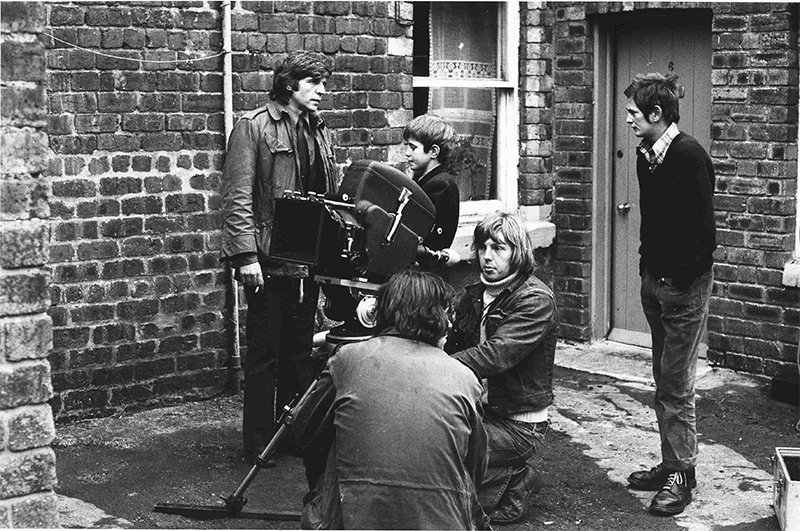
Douglas and crew filming a scene

This first part of this film trilogy was screened for members following the Friends’ Annual General Meeting. This was in the new Screen 2 of the redeveloped Picture House and was screened from a good quality 16mm print.

Scottish film-maker Bill Douglas was born in a small mining village close to Edinburgh in 1934. He was, sadly, lost to British film having only made, [apart from student films], the trilogy and a one feature film. Douglas came late to film; it was only in 1969 that he enrolled at the London School of Film Technique. This is actually the oldest school for film-making study in Britain, founded in 1956 and sited now in the Convent Garden area. Douglas made four short films while a student. However, on completing his studies he faced the usual barriers for independent film-makers.

Finally in 1972 he secured support from the British Film Institute’s production fund for three interrelated films. The first, at time with the title of ‘Jamie’, had been turned down by Films of Scotland because of the bleak view it provides of war-time Scotland. The film is based on experiences of Douglas’s own upbringing in the 1930s and 1940s. It became My Childhood, shot in black and white, academy and running 46 minutes.

The film is set in 1945, as World War II draws to a close. Jamie (Stephen Archibald) and Tommy (Hughie Restorick) live with their grandmother (Jean Taylor Smith). Their housing, diet and clothing all show the deprivation given the poverty of the family. The boys have pets which suffer from their situation. Jamie’s one outside relationship is with a German prisoner of war working locally on the land; Helmuth (Karl Fieseler). We see a celebratory bonfire at the end of the war and then Helmuth returns to Germany. There are also times when the boys (and the audience) see their father, who co-habits nearby, (Bernard McKenna). His mother is confined on some sort of mental institution. The bleakness of their lives is almost unparalleled in British film. It does have a moment of change; with a long shot of a departing figure on a train. The latter a familiar trope in films concerning children and rites of passage.

The cinematography was by Mick Campbell: the editing by Brad Thumin: and there were additional craft people on sound and a second unit. The imagery is stark but effective: the sound track is sparse, especially the dialogue, but it contributes to the overall impact: and the exteriors provide both a comparison and contrast to the central setting. The craft team, like the writer and director, seem to have a small number of credits. The quality should have led to a far greater output.

The second film of the trilogy is My Ain Folk (1973). This film picks up where My Childhood finished. The characters are the same, with the addition of other family members, as Jamie goes to live with them. Tommy is taken into welfare so this film concentrates on the experiences of Jamie. This is as harsh as his earlier life but with greater isolation. There is a brief moment of colour earlier in the film. It is in black and white and academy, running for fifty five minutes.

The final Part of the trilogy, My Way Home (1978) is also in black and white and academy but runs for 79 minutes. The film takes Jamie’s story into adulthood, entering work and then National Service. Jamie is again played by Stephen Archibald. The film takes the narrative outside of Scotland and Britain for the first time. It also presents a full and continuing friendship that leads to a change in Jamie’s life.

The National Film Archive has 35mm prints of both the second and third parts of the trilogy. It would be good if the Friends could cooperate with the Picture House to arrange screenings so that members and the public can see the rest of this outstanding work. The Archive also has a 35mm print of Douglas’ final film, Comrades (1987). The presents the story of The Tolpuddle Martyrs, agricultural labourers in the early C19th criminalised and then transported for daring to form a Trade Union. This is an important film on working class history in Britain and a fine representation in colour and widescreen which makes interesting use of early picture technologies.

L’immensitá, Italy / France 2022

Adri and Clara

This is a recent movie directed by Emanuele Crialese; one of his earlier films was the very fine Nuovomondo /Golden  Door  (2006). That feature followed Italian migrants at the start of the C20th journeying to the USA. And, as in this new title, it featured fantasy scenes to express the emotional state of the characters. The new title has been translated as ‘The Immensity’, but ‘intensity’ would be a better sense. In this new feature it is the intensity of the leading characters emotions and relationships that are the focus of the movie.

This new feature is set in the Rome of the 1970s. Penelope Cruz, in the main role of Clara, is the Spanish wife of an Italian business man with three children.  Her character uses the style, especially in her hair, of the major contemporary star, Sophia Loran. The three children are Adri (Luana Giuliani): Gino (Patrizio Francioni): and Diana (María Chiara Goretti). They form a group somewhat apart from the husband  Felice (Vincenzo Amato), who has problems adhering to marital fidelity. Adri, together with Clara, is the heart of the movie and she is experiencing difficulties with her identity.

The drama uses popular songs from the 1970s as one way to express the emotion and intensity of the characters. This is especially true of Clara and Adri, both of whom have fantasy sequences involving  performances of a popular song. The style here appears to be an amalgam of Michael Jackson and that found on Berlusconi’s television channels. The emotion flows from Clara to her children, but meets little response from the husband. Several key moments later in the movie are ambiguous which means the audience may be surprised at certain moments. Along with intense emotion the drama has humour, creating a bitter-sweet atmosphere.

Penelope Cruz is really fine as is Luana Giuliani in her first screen role. The two siblings are also played well and the supporting cast are fine in what are less sympathetic roles. Across the class divide, symbolised not by a railway track but a bamboo thicket, we find Sara (Penelope Nieto Conti), who befriends Adri.

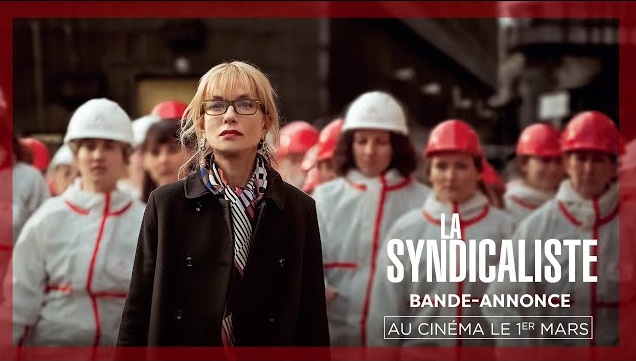
This is definitely a movie to catch: it is in colour and full widescreen with English sub-titles: and has more screenings this week. Nearly all  are in the remodelled original auditorium, now Screen 1. I was impressed with the quality of the image and sound here. I had the same feeling when I viewed an earlier screening of La syndicaliste (2022), a French political thriller set in the nuclear industry and with a fine performance from another major European actor, Isabelle Hubert.

The remodelled Screen I auditorium has a number of improvements. There is now only a single entrance but the doors are automatic and really cut out extraneous noise. The gas lighting remains though not always in use; but the aisle light snow have LEDs which are less distracting. There is a new screen; slightly smaller I think but flat, with a pristine surface and proper masking; [and the auditorium is slightly smaller due to developing the foyer].. However, the best addition is a new Barco 2K laser projector. This is the first time that I have seen one in action. It definitely provides a brighter image: the colour spectrum is improved: and the contrast also seems to be improved. I am curious as to how the digital transfers of actual film titles will look; the two French titles originated on digital equipment and software.

I had one small reservation; whilst the web pages request switching off mobile phones there is not an on-screen warning to this effect. So please, switch them off before you enter the auditorium and please do not use them as torches to find you seat; that is distracting.

Barbie (USA, 2023)

Showing until Thursday 10th August

Ken (Ryan Gosling) and Barbie (Margot Robbie) in a pink open top car driving towards us along a desert road with the rainbow of BarbieLand in the background

“I am both doing the thing and subverting the thing”

Greta Gerwig (director)

Barbie (wish spellcheck wouldn’t keep calling her Barrie!) is great cinema – stylish,  entertaining, and a little thought provoking. It was an inspired choice to have Greta Gerwig as director, and I greatly enjoyed the performances of Margot Robbie, Ryan Gosling and the rest of the cast. And it’s definitely not aimed at children. I think it will raise at least one or two questions for any woman or man in the audience, so I’m pleased that screenings are attracting a lot of people.

In his book One-Dimensional Man, Herbert Marcuse described the cultural totalitarianism created through consumerist and technological capitalism. This is the process where ‘the markets’ co-opt all protest, dilute it, and sell it back to us, the people. Think Che Guevara t-shirts, or “greenwashing”. It is the way our culture evolves until we can transcend capitalism.

Certainly Mattel will be laughing all the way to the bank.

Ken: To be honest, when I found out the patriarchy wasn’t just about horses, I lost interest.

Barbie: Kenland contains the seeds of its own destruction.

Can we really have it all?

Let us know what you think in the comments below

Bill Walton

Review: De Cierta Manera


I very much enjoyed De Cierta Manera (One Way or Another). It was shown at Leeds City Varieties as part of Cinema Rediscovered on Tour. The screening was a collaboration between the Black Cinema Project, Twelve 30 Collective, Ajabu Ajabu, the Hyde Park Picture House and the Friends. We had an excellent live introduction given by Lisa Harewood.

Film was seen as an essential aspect of Cuban culture when De Cierta Manera was released by their revolutionary government in 1974. Filming took place over four months in a “marginalised” Havana community, drawing heavily on the experience of local people. It takes the form of an entertaining romance between two charismatic actors, a woman teacher and a macho man in who works in a bus factory. It is documentary in style and reflects how the 1959 revolution started to influence culture and personal relationships. Sadly the talented director, Sara Gómez, died of a chronic illness just after filming was completed. At the time she was Cuba’s only woman film director, and of Afro-Cuban heritage. However the Cuban leadership of the time wanted to promote their practical achievements such as in housing, employment and health rather than stories about community and women’s issues, and the film was rarely shown. It was digitally restored in 2021 and is well worth a look if you get the chance.

Bill Walton

Review: The Man Who Invented Christmas

Tara (Charles Dickens’ servant, played by Anna Murphy): Is Tiny Tim dead?
Scrooge: Well, of course he is, imbecile.
Charles Dickens: He was very ill.
Scrooge: You can’t save every child in London.
Charles Dickens: And the family has no money for a doctor.
Tara: Then Scrooge must save him!
Scrooge: ME?
Charles Dickens: He wouldn’t…
Tara: WHY?
Charles Dickens: Well, he’s too selfish.
Tara: He can change, there’s good in him, somewhere. I know it.
Scrooge: People don’t change.
Charles Dickens: He’s been this way, for a long time. I’m not sure he can change.
Tara: Of course he can, he’s not a monster.
Scrooge: I thought this was a ghost story, not a fairy tale.

Forty people joined us for the Friends’ screening of the 2017 film The Man Who Invented Christmas. It tells the story of how Charles Dickens (Dan Stevens) wrote and published “A Christmas Carol” during a frantic six weeks in the run up to Christmas 1843. Many thanks to Wendy the Picture House manager and her team for making the arrangements.

It is easy to underestimate the challenge of writing and publishing a book (or making a film for that matter) to a very tight deadline with a very limited budget. Dickens had written Oliver Twist in 1838 but that had been followed by three unsuccessful books. He often had writer’s block, was heavily in debt, and had a large family to support. He could easily have ended up in a debtors’ prison as his father did. Despite this A Christmas Carol became one of the best selling books of all time and went on to influence the way Christmas is celebrated across the world.

This film is not a documentary but does draw upon Dickens’ life experiences, including the ridicule he faced as a child while forced to work in a blacking (metal polish) factory. It’s worth watching for the locations, costumes and the photography, and especially for its portrayal of Dickens’ interactions with the characters which highlights the creative struggle at the moral core of the book, And I enjoyed spotting Christopher Plummer, Jonathan Pryce, Miriam Margolyes, Miles Jupp and Simon Callow among the cast.

However. the film treats lightly the deep flaws in Dickens’ personality, including his recklessness and instability and his ill treatment of his wife. In my view the film is a very interesting “one-watch” but too sentimental to become a regular feature of Christmas screenings,

Agree/disagree? We welcome your comments or reviews below.


Bill Walton

Review: Censor (2021)

 Niamh Algar in CENSOR, a Magnet release. © CPL/SSF. Photo credit: Maria Lax. Photo courtesy of Magnet Releasing.

Censor is Prano Bailey-Bond’s spine chilling debut feature. Set in the mid 80s against the backdrop of social unrest, Thatcherism and the rise of the video nasties. We follow Enid Baines (Niamh Algar) who is a film censor. She lives a nocturnal existence watching a plethora of gore and sin in the films she is charged with watching. One day she views a film that reminds her of a tragedy from her childhood. Triggered by this, she sets out on a journey in which her fiction and reality gets blurred.

The dark and depressive world that Bailey-Bond creates is heightened by Cinematographer Annika Summerson whose hellish visuals adds an expressionistic touch. It is notable that she uses 35mm which echoes the ambience of this bygone era.

The script which Bailey-Bond co-wrote with Anthony Fletcher, is razor sharp, with one scene in particular of suitably over the top gore mirroring the video nasties themselves. However amongst the blood shed there’s occasional moments of truly dark humour. The acting is chilling with Michael Smiley delivering a cool and calculated performance as sleazy film producer Doug Smart. However, the stand out is Niamh Algar who is magnetic on screen. Enid’s character’s arch is one of the film’s takeaways and Niamh plays her unravelling superbly.

The main criticism I have of the film is it’s running time. Although admittedly most horror films tend to be under two hours, you can’t help but feel a little cheated with a running time of one hour and twenty four minutes. You are left with a sense of events being rushed over and plot points not fully explained to get to the deliciously cynical Lynchian style ending.

Sam Judd

Censor is available as a premium rental (£10) from most online platforms including BFIPlayer and Curzon Home Cinema

Review: Another Round (2020)

Mads Mikkelsen drinking from a bottle in front of a crowd of people.

First a little quiz:

  • At a party have you ever deliberately tried to knock back enough glasses of wine to bring you to the exact point of being neither drunk nor sober?
  • Have you taken part in the  “Otley Run”,  lurching from one Headingley pub to another? (Another Round features the “Lake Run”, a Danish counterpart)
  • Are you living through a mid-life crisis? Do you long to recover your zest for life?
  • Have you ever drunk so much that you pissed the bed?
  • Or do you despair of people who use alcohol to try and fill their inner emptiness?
  • Are you a Danish student of philosopher Søren Kierkegaard who asked “What is youth? A dream. What is love? The content of the dream”.

However you answered any of these questions, this film is sure to give you additional insights.

Another Round is an entertaining buddy movie about four teachers undertaking some pseudoscientific research. But it is a lot more than that. We learn some key things about their families and their emotional lives and maybe why they behave as they do. We see them drunk and sober (admittedly often quite drunk). We share their joys, grief and reckless abandon. The film does not glorify alcohol, but it does recognise its place in European culture.

Another Round won an Oscar for best international feature. Director Thomas Vinterberg (Festen, The Hunt) has brought together a great cast in this anarchic and life affirming film. Brilliant storytelling, excellent acting (a special shout out to Mads Mikkelsen) and engaging camerawork. The film is dedicated to Thomas Vinterberg’s daughter Ida whose 19 year old daughter died in a road accident just as production began.

I watched Another Round at the City Varieties as part of Hyde Park Picture House On the Road. The staff there were very helpful and have taken great care with social distancing arrangements. I’m sure that they will give us a warm welcome at our Yorkshire Day screening. Hope to see you there!


Bill Walton

The Father

Showing daily at City Varieties from Friday 18th June

UK poster for The Father featuring Olivia Coleman and Anthony Hopkins

Film has power, film can put you in the shoes of someone else and will make you see the world through their eyes. Florian Zeller’s The Father is an excellent example of this. The film centres on Anthony, played by Anthony Hopkins, who is dealing with his ever deteriorating mind and his descent into dementia. We see the strain it puts on his relationships, particularly the relationship with his daughter Anne, played by Olivia Colman.

Florian Zeller who adapted it from his own play Le Père, beautifully walks the line between both the tragedy and heartbreak that comes with dementia, and the rare comedy that also can be found in those sad situations. If you can’t laugh at yourself, who can?

The story is told almost entirely from Anthony’s perspective, meaning that the audience is confused nearly as much as him for the majority of the film. Although it is intentional and gives a glimpse into his world, at points the non-linear approach can feel overly abstract and detracts from the overall message.

The acting is superb with Anthony Hopkins deservingly walking away with the Oscar, making him the oldest winner for best leading actor. However, it is worth mentioning Olivia Colman who delivers a measured and understated performance as the loyal and grief-stricken Anne who we see trying to balance her own needs and her father’s. The supporting cast members such as Mark Gatiss, Imogen Poots and Rufus Sewell also give equally rich performances.

The artificial style does betray its conception in the theatre which sometimes makes it feel quite unapproachable, and unreal. However, it does at other points add an operatic nature and poignancy which you won’t necessarily get if it was more true to life.

Quite rarely do you see a film that deals with subject matter such as this, that takes such an experimental approach. However, what’s noteworthy is the incredible insight into what dementia patients must be going through. It is something quite unique and will make you think twice.

Sam Judd

Review: Little Joe

Final screening today (Mon 9th March) 6pm at Leeds University Union.

Little Joe

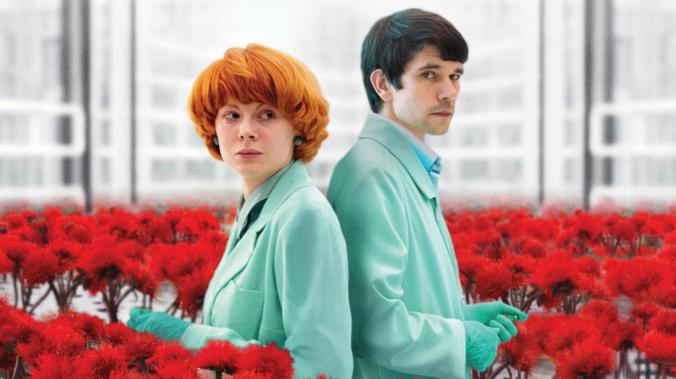
Jessica Hausner’s chilling psychological thriller is visually masterful however lacks a storyline worthy of it. The dizzying camera shots combined with the ominous and unnerving score creates an element of paranoia from the outset. The colours which are at points quite Wes Anderson esque can beautifully slip into the shadowy under belly of Blade Runner (1982).

The film centres on Alice who is a single mum and a dedicated breeder at a corporation which genetically engineers plants. She is working on developing a new breed that will control human emotions. Against company policy, she takes one home as a gift for her teenage son and names it after him but soon, though, she starts to fear it. Films and literature throughout history have dealt with the raw unspoilt beauty of flowers and the untold secrets they might hold. Little Joe carries on this tradition. Although the immortal words “Life will find a way” did pop into my head a few times, the film manages to offer up enough which feels different. The theme of mental health, maybe not fully realised, raises some interesting ideas on the subject and the stigma surrounding it. It is also about relationships, which feels more fleshed out but still perhaps not fully explored.Jessica Hausner’s eastern European routes and filmmaking style are at odds with the English setting, leaving the viewer with the impression of a tourist eye view of Britain.

The acting which was sometimes deliciously creepy and understated, sometimes fell into mockery and felt quite wooden. The saving grace in regards to the acting was Ben Whishaw who was the stand out performance.


Sam Judd