International Medieval Film Festival

Rose Sawyer from Leeds University Union’s Medieval Society is one of the organisers of the Medieval Film Festival taking place this week. We invited her to tell us more about the festival and medieval studies in Leeds…

Did you know that Leeds is a major centre for Medieval Studies?

No really, despite the fact that during the medieval period, Leeds (or Leodis as it was called) was the sort of town that existed solely because there is only so much land you can have before you have to have something else; nowadays, Leeds attracts medievalists like honey attracts hand drawn bears. This is partly due to the Institute for Medieval Studies at the University (so good that Oxford copied it), but during the summer the main draw is the International Medieval Congress. The IMC is the second largest medieval conference in the world and Europe’s largest annual gathering in the humanities. Over two thousand medievalists converge on Leeds to give papers and cadge free wine, usually they huddle in the familiar confines of the University, but this year they might just be tempted outside of the academic bubble….

This is because the inaugural International Medieval Film Festival will be taking place from Saturday the 4th to Thursday the 9th of July in order to coincide with the International Medieval Congress.

The LUU Medieval Society is working in association with the Hyde Park Picture House and the International Medieval Congress, as well as with Leeds for Life Foundation funding, to present six diverse and fascinating medieval films from around the world. The intention of the festival is to explore how the medieval world has been represented through the modern medium of film in the past century. Rather than point to anachronisms, the intention is to encourage discussion about these visual portrayals and how they influence the public perception of the Middle Ages. In particular, we want to emphasise the breadth and scope of international cinema and its ability to advance cross-cultural understanding.
Continue reading

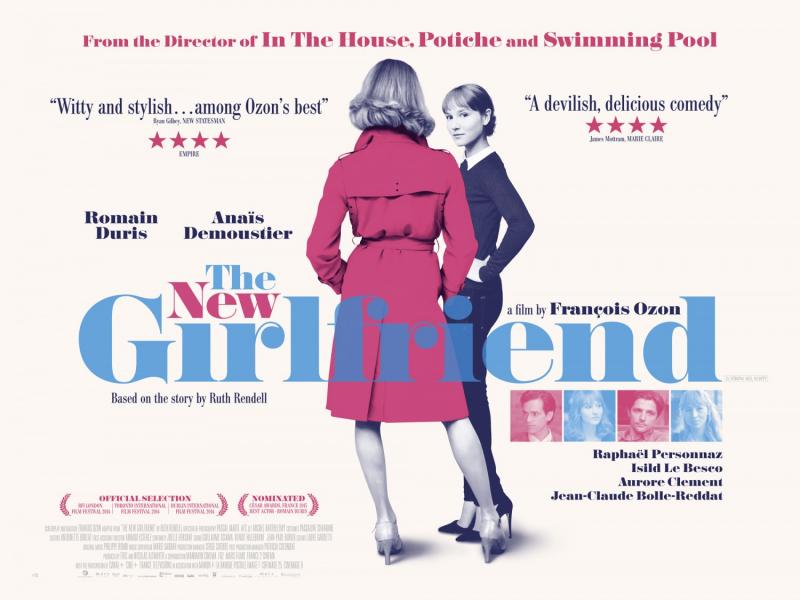
The New Girlfriend / Une nouvelle amie, France 2014.

Screening from Saturday June 4th.

the-new-girlfriend-

Friends familiar with the films of François Ozon, like Jeune & Jolie (2013) or Dans la maison (2012), will expect something  slightly off-key with his new film. Essentially this is a ‘rom-com’ [romantic comedy], but one that is atypical of the genre. Among the pleasures that it offers are wit, and humour but also the unexpected. Moreover, the film is adapted from a novel by Ruth Rendell, a writer who, like Ozon, is able to confound expectations.

The film opens with a family tragedy but then explores the development of a new relationship, one full of ambiguities and ambivalence. The film manages to offer moments of emotion together with frequent and pleasurable surprises: note the UK trailer unfortunately pre-empts one of the best of these.

The lead protagonist is David, played with assurance and a sense of enjoyment by Romain Duris. He is possibly the most gifted and charismatic of the younger French actors, and he is always willing to explore different roles. Opposite him is Claire, played beautifully by Anaïs Demoustier. At times she reminded me irresistibly of the young Isabel Hubert.

I found the film both entertaining and involving.

The First Film, UK 2015

Screening on Wednesday July 1st at 8 p.m.

slide

The title may suggest Thomas Edison in New York: the Lumière Brothers in Paris: even the Skladanowsky Brothers in Berlin. In fact the events in the film took place in Leeds in West Yorkshire. Here in 1888 Louis le Prince shot several short film sequences onto a paper-backed cellulose strip using a camera that he designed and constructed. Recent research has shown that Le Prince was also working on the use of celluloid for the film rolls and was developing a projection system.

The signs of this key pioneer filmmaker can seen around Leeds. The display at the Oakwood Clock shows the site of a Roundhay Garden where he filmed two sequences. There is a Blue Plaque on Leeds Bridge where he filmed another sequence. There is a second Blue Plaque alongside the old BBC Building by the University to mark the site of his workshop. And there is an unmarked house in Chapeltown where he resided for a time.

People who attended the 1988 Leeds International Film Festival will remember how this celebrated the centenary of Le Prince’s pioneering films, including a restaging of the filming on Leeds Bridge. The Metropolitan University Film School used to have copies of the individual frames mounted on the stairwell and you could examine these as you ascended.

Both the Armley Industrial Museum and the National Media Museum have displays and artefacts about Le Prince. And the Museum has a series of online pages on his career,  his cameras and his films.

However you are less likely to come across Le Prince outside of the city and he is even not always credited in  academic histories of early cinema. This is because the life of Le Prince involves not just a first but also a mystery. This new film, a labour of love over many years by filmmaker David Nicholas Wilkinson’s  explores the life of the Pioneer, his film work and the unexplained events that meant that he failed to gain the recognition he deserved.

The screening at the Picture House is a Charity Premiere. There will be introductions, examples of Le Prince’s technology and in the film itself the audience will be able to see these creations from over a century ago.

Safety Last, USA 1923

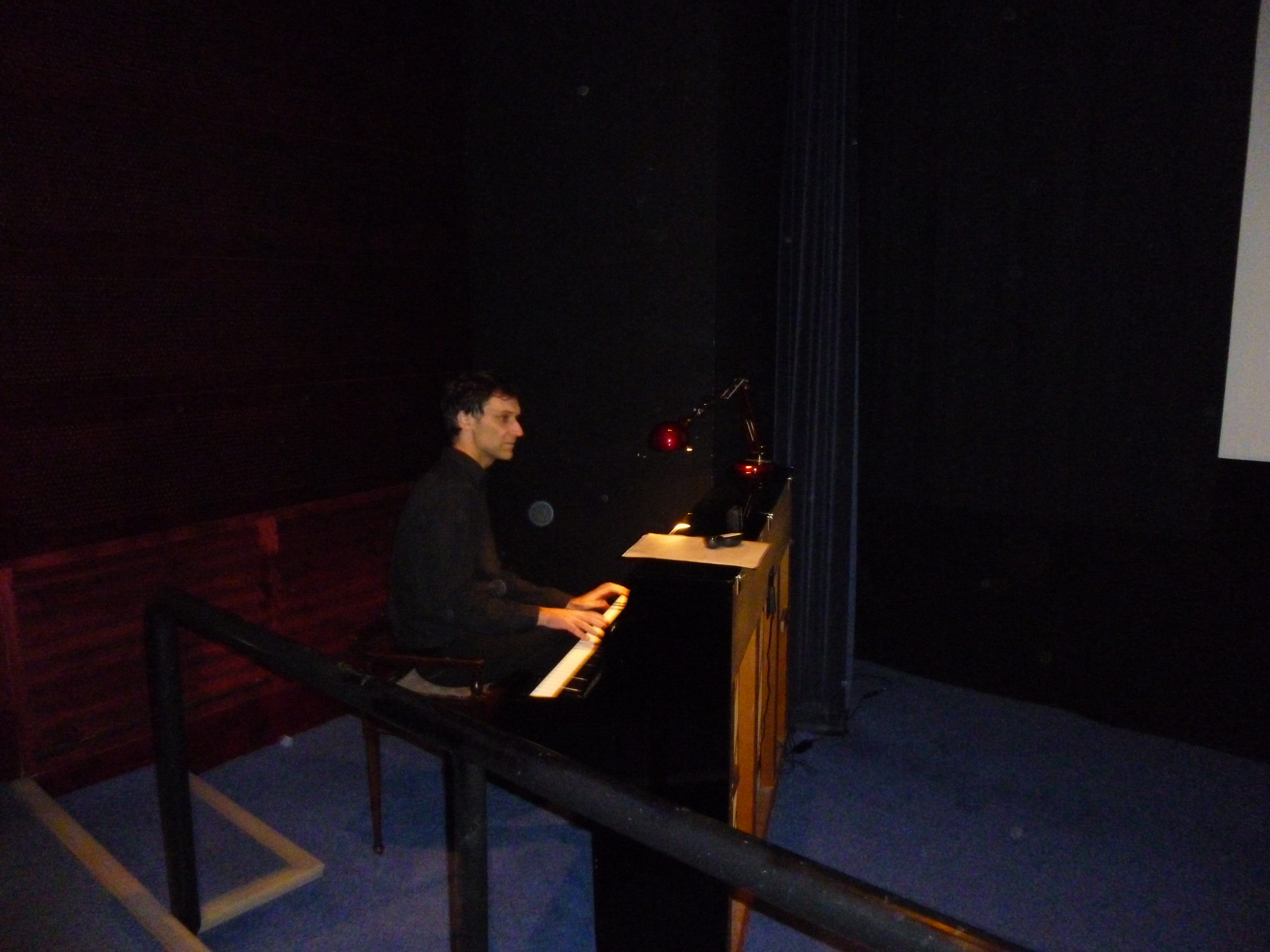
Screening on Sunday June 21st at 3 p.m. from a 35mm print with live musical accompaniment

SafetyLast_007Pyxurz

Friends who have seen Martin Scorsese’s Hugo will have seen a clip from this film. It is famous for the stunts performed by its star Harold Lloyd. Lloyd was one of the three great comic stars of Hollywood in the 1920s; along with Chaplin and Keaton. He had his own distinctive persona with a straw boater and earnest and spectacled visage and a sort of ‘college boy’ character. He shared his mentors’ gift for timing but was especially skilled in stunt work.

This is ‘small town’ boy makes good in the big city. Much of the film uses the setting of the Department Store, one of the canonic images in 1920s cinema. The film offers the romantic  sweetheart back home, the trials and tribulations which the hero must overcome, and some of the most dare-devil stunts in films of that era. The screenplay moves deftly from gag to gag whilst developing an increasing drama and tension.

The last time I saw a print it had an added soundtrack, but this can be switched off. Certainly when it originally played at the Picture House it would have had a musical accompaniment. And the same pleasure will be available this Sunday with an accompaniment by Darius Battiwalla. Darius is an experienced and accomplish accompanist and he has a particular skills in adding to the action and pointing up character.

P1000009

This is a film that is a ‘must’ for your ‘have seen’ list.

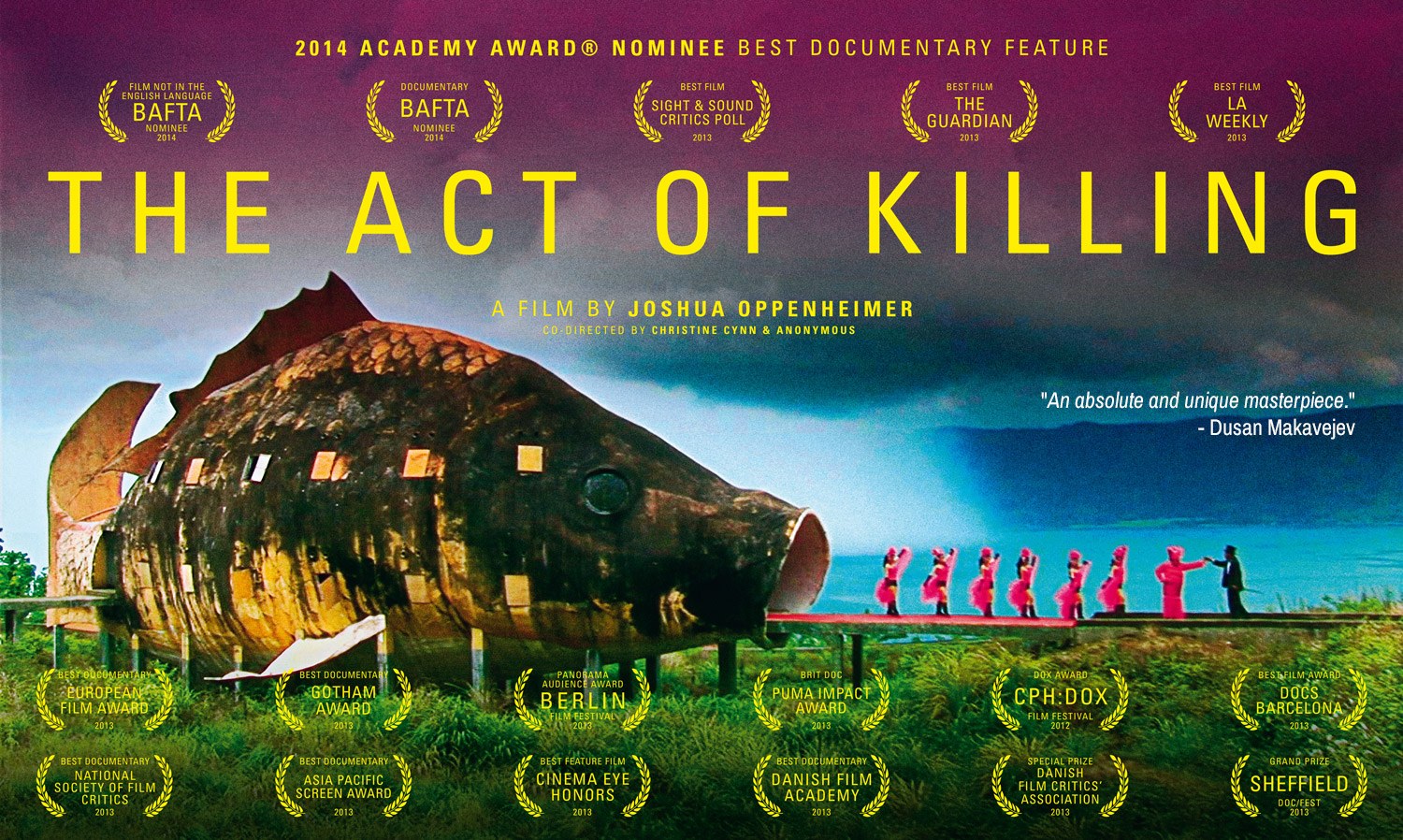
The Act Of Killing

As The Look Of Silence starts it’s run at the Picture House, Friends committee member Bill Walton takes a look at Oppenheimer’s earlier companion piece The Act Of Killing.

The Act Of Killing poster
Truth can be stranger than fiction. This is my favourite film documentary of all time … but maybe it will take second place in my heart after I have seen its follow-up The Look of Silence showing daily from Friday 19th June.

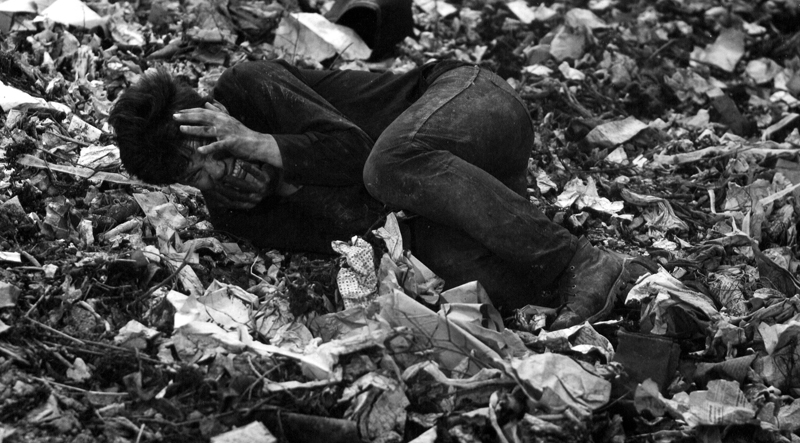
A military dictatorship took power in Indonesia in a coup in 1965. The new regime gave its blessing and protection to death squads who massacred over a million communists and other activists, particularly among the ethnic Chinese population. With Western assistance, the Suharto dictatorship kept its grip on power and ensured that their propaganda version of their rise to power remained largely unchallenged.

What is a radical film director to do?

Continue reading

Masterpieces of Polish Cinema

Ashes and Diamonds Thursday 18th June 6.20 p.m.
Leeds Movie Fans Meetup is planned for this screening.

 fo_film_popiol_i_diament_09_51761

Between June 18th and September 22nd the Hyde Park Picture House will be presenting eight films produced in Poland over three earlier decades. Masterpieces of Polish Cinema presented  by Martin Scorsese, together with The Film Foundation and the Polish Film Institute and supported by a number of other agencies. Scorsese is not only a respected and important filmmaker, he is also a collector, archivist, educator and, through his involvement in The Film Foundation, responsible for restoring and distributing key films from World Cinema.

In the case of these films the focus is on the work of the Polish National Film School at Łódź. Numerous and talented film artists have studied here. And the work that has emanated from the school has influenced not only Scorsese but also other filmmakers such as the UK’s own Lindsay Anderson.

The programmes commence with Ashes and DiamondsPopiół i diament , 1958,

Continue reading

Timbuktu

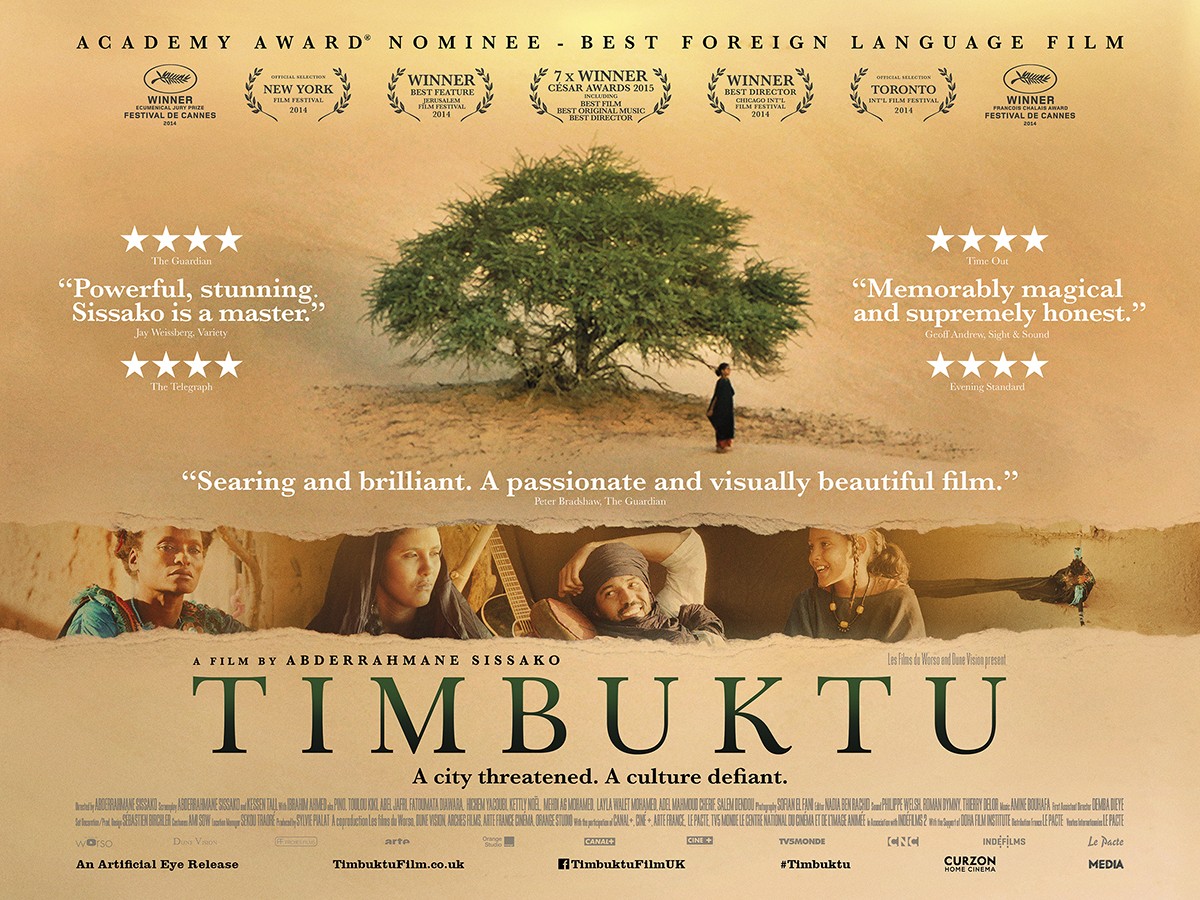
Directed by Abderrahmane Sissako, Mauritania, 2014.

Screening from Saturday 13th June

timbuktu_ver3_xlg

This film is set in Mali and depicts the occupation of the titular ancient city by Jihadists. The director, Abderrahmane Sissako [Bamako, 2006] avoids the crude representation found in many Western films and its media. This is a subtle and complex portrait of both the local people and the rather disparate army of religious warriors. In an interview reprinted in Sight & Sound (June 2015) Sissako explains:

“Generally, when the world speaks about my country, or indeed Africa in general, it does so in a tone which is, quite frankly, condescending, as if there’s one continent which is simply wretched and others which are rich. The world may speak about Ebola on a daily basis, but it hardly ever mentions that the African is also beautiful, strong and moving forward.”

Continue reading

Federico Fellini’s Otto e Mezzo / , Italy 1963.

Klat_otto_e_mezzo

I am afraid if you’ve just noticed this then you missed seeing this great film – it was screened on Thursday June 4th. There was a fairly good audience, 70 or more I reckoned. And they were clearly divided about the film. A couple passed me as the end credits rolled by – he hated it, she thought it was great. In the foyer a group of four were debating the merits or demerits of the film. Outside there were trios and pairs, one couple considering their responses. I was surprised so many people were seeing the film for the first time: I have had the pleasure of being familiar with the film for years. But it is reassuring that a film can stimulate so much intense discussion.

The HPPH Brochure notes that the film was selected in the Top Ten in the 2012 S&S Critics Poll: at number 10. Mote notably, it was number 4 in the parallel Director’s Poll and Federico Fellini was top director.

The film has so many virtues, fine cinematography by Gianni Di Venanzo; a great score by Nino Rota; and superb editing by Leo Catozzo. And the cast! – at times it felt as if Fellini was throwing a party for all the wonderful actors who had graced his films. This screening was sourced from a DCP. I thought the transfer was good, but the digital version did not do full justice to sparkling contrast tween black and white, especially in the long shots. But the sound was great.

And despair not. I last saw this film two or three years ago – so it will come round again. And it is worth waiting to see it ‘real’, on the big screen.


Citizen Kane, USA 1941

Screening on Monday May 25th at 3 p.m.

citizenkane1

The film is screening in a 35mm print, the original format, though unfortunately it is not possible to use a nitrate print. The characteristics of this format will do proper justice to one of the classics of cinema. It managed for fifty years to come top of the  Sight & Sound critics’ polls, held every decade. It turns up again and again, to the delight of those familiar with the film, and as a treat for those who have never seen it before, at least on the large screen and in the darkened auditorium. This occasion follows on from the centenary of Orson Welles, the director, on May 6th.

The script by Herman J. Mankiewicz [with Orson Welles] is at once witty and complex, with a distinctive structure. The cinematography by Gregg Toland makes exceptional use of both deep staging and deep focus, and has passages of beautiful chiaroscuro. And there are impressive special effects by a Hollywood veteran, Vernon J. Walker. The art direction by Van Nest Polglase offers range of fabulous settings from Xanadu to the great opera House in Chicago. Whilst the costumes cover the late C19th up until the present of the film. The cast are terrific, a fine actress like Agnes Moorehead has only a short scene on screen. She, like many of the cast including Joseph Cotten, had worked with Welles in the New York Theatre and radio. The editing by Robert Wise and Mark Robson [both to later become directors in their own right] is finely done: watch the sequence of breakfast scenes between Kane and his first wife Emily. The film is a key innovator in the use of sound, recorded by Bailey Fesler and James G. Stewart, but also benefitting from Welles own experience on radio. And this enjoys the first score in the career of Bernard Herrmann, one of the greatest of Hollywood composers.

All this is orchestrated by Welles, himself appearing as Kane. Both are characters with immense talent and giant egos. Welles claimed that on the night of the premiere he shared a lift in his hotel with William Randolph Hearst, the basis for the film’s fictional press baron. Welles offered Hearst a ticket to see the film, which was declined. Welles remarked:

“Kane would have accepted”.

Hearst got his revenge with a virulent press campaign, aided on the quiet by Hoover’s FBI. So the only Academy Award for the film was Best Screenplay. It did though win the New York Film Critics’ Award for Best Picture. And since then the film has enjoyed success after success. Moreover viewers and critics alike still discuss and argue over the film’s portrait and the famous single word in the opening scene.

A favourite term of praise for me is ‘panache’:

style – swagger – dashing manner

magnificence – brilliance – brazen exhibitionism

Welles had it by the bucketful, as does his most memorable film.


New release – Phoenix

Directed by Christian Petzold, Germany 2014.

Screening from Friday May 15th till Thursday May 21st, every evening.
A Leeds Movie Fans Meetup is happening at the 6pm screening on Monday 18th

Phoenix

Friends will probably be familiar with the director Christian Petzold and star Nina Hoss from their excellent earlier films Yella (2008) and Barbara (2012). Phoenix offers the same absorbing and entertaining play on a familiar genre, the world of noir, here set in post-war Berlin. The Guardian review was rather lukewarm including the suggestion that the plot was implausible. This misses the point of Petzold’s films: they appear naturalistic but they are not primarily realist. Thus, Yella is a ghost story: Barbara is set in East Germany, but it is the DDR from film dramas.

Shortly after the end of the war and the liberation of the concentration camps Nelly returns to Berlin to seek out her previous life and her friends and family. Nina Hoss plays Nelly with real verve and is ably supported by Ronald Zehrfeld (also in Barbara) as Johnny and Nina Kuzendorf as Lena.

The Phoenix in the title is a night-club for troops of the allied occupation. One of the pleasures of the film is its use of the ‘lieder’ from Berlin’s popular musical culture. There is a particular skilful play with songs by Kurt Weill.

The film builds to a gripping and likely unexpected climax. Endings are often a let-down in many contemporary films: Phoenix and its cast deliver with superb aplomb.