45 Years, UK 2015

Continuing until Thursday September 10th.

Berlin

The film garnered Best Actor Awards for both Charlotte Rampling and Tom Courtney at the Berlin Film Festival – serious critical prizes. Both are deserved, but it is Rampling’s character Kate who is the centre of this film. She is a skilled actress with an ability to use extremely subtle expressions and movements. The film is a pleasure to watch as we explore the character and situation of Kate and her husband Geoff (Courtney). And they are well supported by a several fine British actors in minor roles. They are preparing for the forty-fifth wedding anniversary party: the unusual anniversary is something we learn about in the course of the film.

The film is beautifully crafted around these performances. The cinematography by Lol Crawley is especially fine. There is a precision in the use of close-ups and two-shots: and well judged use of long shots and long takes, with the occasional slow forward track. The design, sound and editing all ably support this: and visually and aurally [at a second viewing] I was struck by minor but significant detail. A good example is the opening credits with non-simultaneous sound, which acts as a plant for later in the film. Max, the German Shepherd, the settings in the Norfolk Broads, and a piece of piano music by Liszt, all bring resonances to the story.

Director and writer Andrew Haigh has adapted the film from a short story by David Constantine. Apparently he has shifted the focus of the film to Kate. It is beautifully judged. This is a character study and tale with great complexity. It also [consciously I assume] references a British film tradition of denial. There are subtle parallels with the classic Brief Encounter (1945): more recently The Deep Blue Sea (2011).

It is a film of ambiguities, as with the characters. Inattention can mean you miss an important point: and I think you need the big screen and a clear sound system to take in all its aspects. Whilst it is immensely rewarding I suspect that it will generate different responses, depending what experiences and values audiences bring to the film. After a screening I heard the tail-end comment of a discussion in the foyer:

“I’ve come to see a wonderful film with a bunch of cynics!”

Scalarama, 2015

Various venues between September 1st and 30th.

Scalarama heading

This ‘unofficial month of cinema’ runs throughout September. Following the mantra ‘Go forth and fill the land with cinemas’ there are a varied range of events in major urban areas in England and in Scotland: there is also an event listed in the north of Ireland. To help punters there is a free Newspaper which includes listings which can be found at the various venues: in Leeds I picked one up at the Hyde Park Picture House and at the Arch Café.

As well as listings the Newspaper includes a range of articles on the various forms of cinema. The filmmaker Peter Strickland looks back at his experiences, including visiting one of the key venues for alternative and counter cinemas, The Scala. I remember many fine screenings there, including great all-nighters. Other writers sing the praises of 35mm, digital and [even] VHS. This is cinema in all its shapes and guises.

At the Hyde Park on Saturday September 12th at 11.00 p.m. we will have La Grande Bouffe (Blow-Up, France, 1973), a film that rather puts John Waters in the shade. And there is a Scalarama Special on Saturday September 26th themed round Creatures of the Night.

There will be two more of the excellent films from Martin Scorsese Presents: Masterpieces of Polish Cinema. On Sunday September 13th at 3.00 p.m. we have Provincial Actors (Aktorzy prowincjonaini , 1979). The film was co-scripted and directed by Agnieszka Holland. She worked in Polish film as a writer, director and occasional actor. The film is set in a small town, [partly filmed in Lodz] as a theatre company prepare a classic play for performance. On September 22nd at 6.30 p.m. there is The Illumination (Iluminacja, 1973) written and directed by Kryzstof Zanussi, another major filmmaker drawn to moral concerns. The protagonist in the film works as a physicist and the film explores his search for identity: his personal life affected by the larger social world.

On September 27th there is a double bill of films by US independent filmmaker Shirley Clarke. One film is a must for jazz enthusiasts, Ornette – Made In America (1985). Alongside this is her early and rarely seen The Connection (1961), a fine film adaptation of a ‘beat generation’ play. You can read about her in the profile in the Festival newspaper.

Other film venues in Leeds are also participating in the Festival. There are several screenings at Minicine, at the Oblong Cinema, and individual screenings at Little Reliance Cinema and Leeds Queer Film Festival. And there are events at The Heart and the Arch Café. You can check events here and in other cities on the Scalarama website, impressively put together. Note, fresh events are being added, so check the website and do check individual events, I have discovered a couple of minor errors. If you going to the Hyde Park over the next week you may enjoy among the trailers a showreel of the films on offer. It make September a great month for film buffs.

13 Minutes, Germany 2015.

Screening from Friday August 21st.

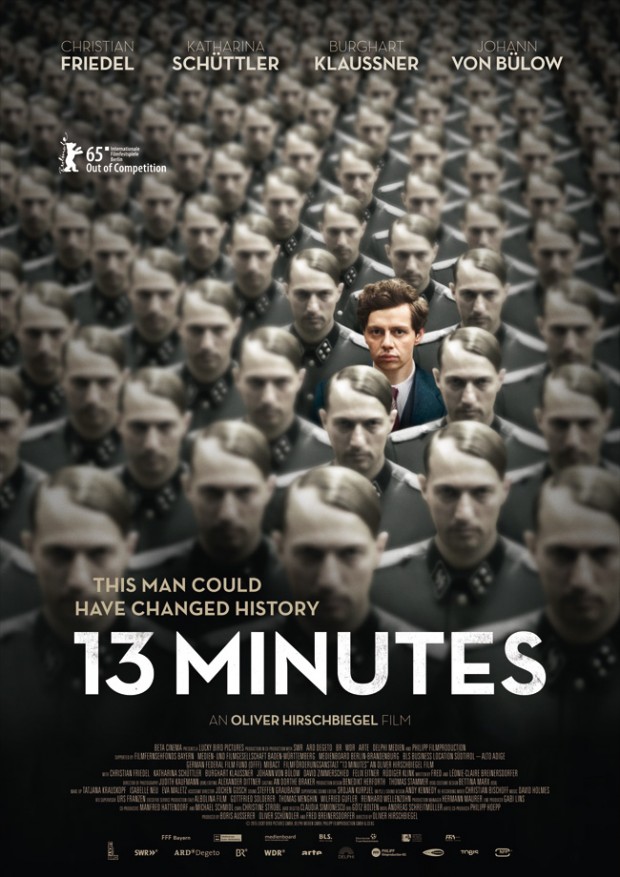
13_minutes_poster-620x877

This is the new film by Oliver Hirschbiegel. Like his earlier Downfall (2004) this deals with the Third Reich. However, rather than the drama round the leading figures of German fascism and their violent demise this film deals with ordinary Germans, including an oppositional figure. It combines a political thriller [note the title] with the Heimat genre – films that deal with, not quite homeland but, a sense of belonging to a place and its people.

The film opens on the eve of World War II: it is November 1939 and the eve of an important Nazi celebration in Munich. Then a series of flashbacks fill in the characters and background to the events of that night. The film is well produced though not as powerfully destructive as Downfall. There is a strong cast, with Christian Friedel excellent as Georg Elser, the protagonist increasingly horrified by Nazi rule. Katherine Schüttler is Elsa the girl he falls for. And Burghart Klaußner is also strong as the investigator and interrogator Arthur Nebe.

The sense of the village Heimat is strongly drawn. The actions of the police and the SS are [as you might expect] brutal and there are several disturbing sequences in the film. Georg and his developing responses as Nazi rule is cemented occupy the centre of the film. The story is based on actual characters and events and appears to have followed those fairly closely. By focusing on character it handles the issue that the outcome is known. It provides an absorbing two hours and a distinctive take on the operation of the fascist state and experiences within it.

Man With a Movie Camera/Chelovek S Kinoapparatom, USSR 1919.

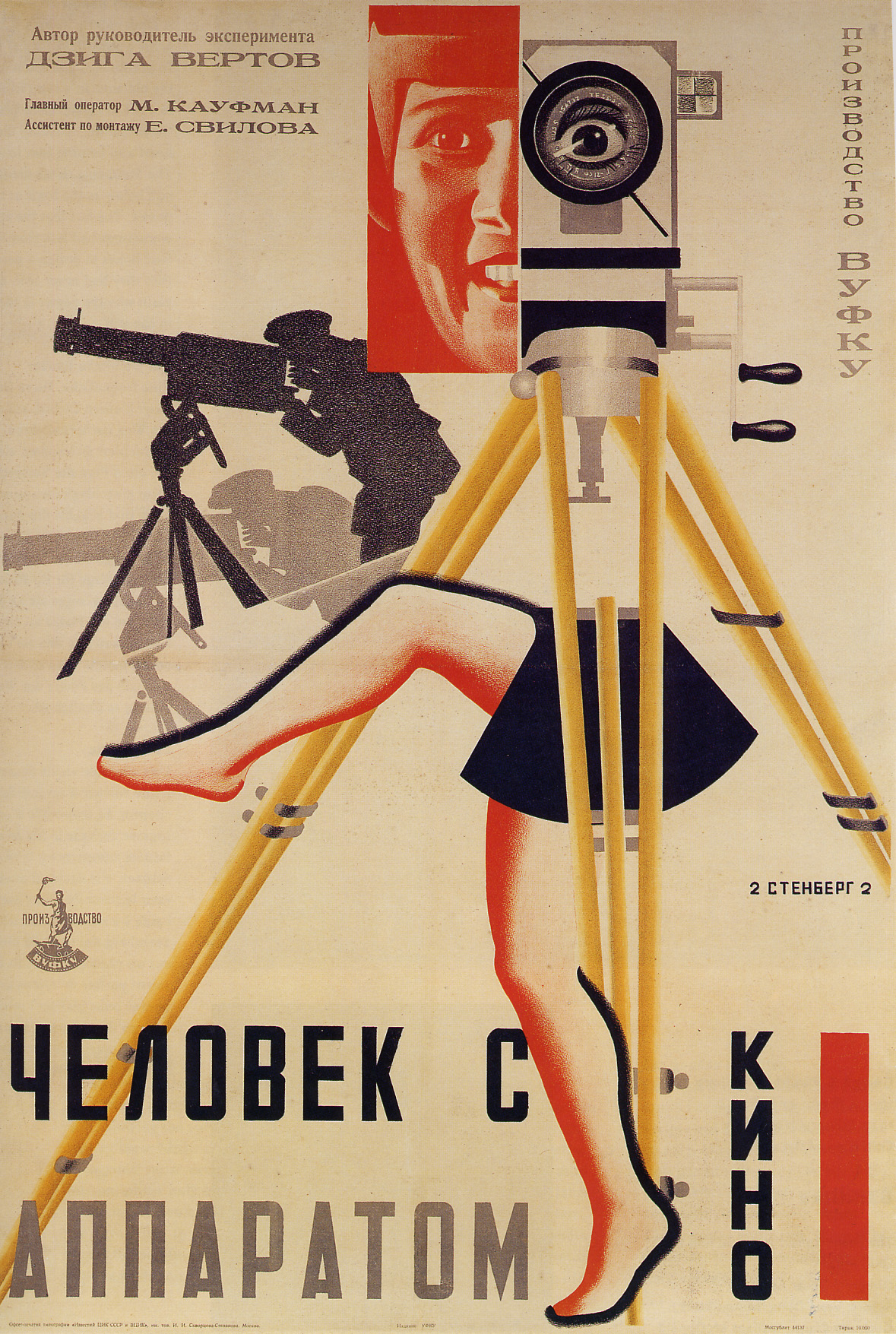
Screening on Tuesday August 18th at 7.00 p.m. Vertov32 The film hardly needs recommendation. A Soviet classic, from an excellent print from the Nederlands Filmmuseum and digitally restored by Lobster Films: both the latter are in the forefront of early cinema archival work. And this silent film is presented with a musical accompaniment by the Alloy Orchestra, who went back to the archives and Vertov’s own musical notations for the original screening, [to accompany a screening at the 1995 Le Giornate del Cinema Muto].

Dziga Vertov is usually credited as director, but the credits read ‘Author and Supervisor’. The film sprang from a collective of Kinocs [the cinema of kino-eye]: with cinematographer Mikhail Kaufman and editor Elizaveta Svilova. Other radical Soviet artists were also involved in their work, so that the famous posters for the film were designed by Georgii and Vladimir Stenberg. It is worth adding some context. The film was produced by the Ukrainian Film and Photography Administration [VUFKU]. 1929 saw the cementing of a new political line in the Soviet Union, best represented by ‘Socialism in One Country’. The emphasis was on technology rather than social relations and in art and culture there was a retreat from radical form to the more conventional. However, for a while, an outpost of more radical style and content continued in the Ukraine: VUFKU had already produced Alexander Dovzhenko’s Arsenal in 1928. Thus much of the city footage was shot in Kiev and Odessa, with some found footage from the Kinocs’ earlier films for Goskino in Moscow. The radical form of the film can be seen in the opening credits and introduction, one of the most reflexive sequences in all cinema.

“This film, made in the transitional period immediately preceding the introduction of sound and excluding titles, joins the human life cycle with the cycles of work and leisure of a city from dawn to dusk within the spectrum of industrial production. That production includes filmmaking (itself presented as a range of productive labour processes), mining, steel production, communications, postal service, construction, hydro-electric power installation and the textile industry in a seamless organic continuum, whose integrity is continually asserted by the strategies of visual analogy and rhyme, rhythmic patterning, parallel editing, superimposition, accelerated and decelerated motion, camera movement – in short, the use of every optical device and filming strategy then available to film technology. …. ‘the activities of labour, of coming and going, of eating, drinking and clothing oneself,’ of play, are seen as depending upon the material production of ‘life itself’. (Annette Michelson in the Edited Writings of Vertov).

The film is often compared to the cycle of city films of the period: e.g. Berlin: Symphony of a Great City (1927). However, this is a film about people in the city and it is consciously political. In fact, it is a paean to Socialist Construction, a still meaningful term in 1929. Thus the final sequences of the film address themselves directly to the audience, the workers and peasants of the Soviet Union. This remains not only a great documentary but one of the outstanding products of the revolutionary 1920s Soviet Cinema.

Mistress America, USA 2015

Screening from Friday August 14th.
Leeds Movie Fans Meetup Group on Monday 17th at 8:45pm

mistress america2

This is a new comedy directed by Noah Baumbach and starring his frequent collaborator Greta Gerwig. An earlier outing for the pair was the excellent Frances Ha (2012). Baum is an astute purveyor of offbeat comedy whilst Gerwig is a distinctive and intelligent on-screen presence.

Gerwig plays Brooke, a New York street-wise mentor to newly arrived Tracy (Lola Kirke). The trailer suggests that Gerwig brings her customary slightly cookie but engaging personality to the role. The Sight & Sound reviews draws parallels with the screwball comedies of the 1930s. This was one of the great Hollywood genes and it has frequently provided echoes in the better comedies of contemporary Hollywood. It was also a genre that provided strong women’s roles for stars like Katherine Hepburn. It is not offering undue praise to Gerwig to suggests that she possesses some of the qualities of the earlier icon.

Dear White People, USA 2014

Screening at 8.50 p.m. on Thursday August 6th.

Dear-White-People-group

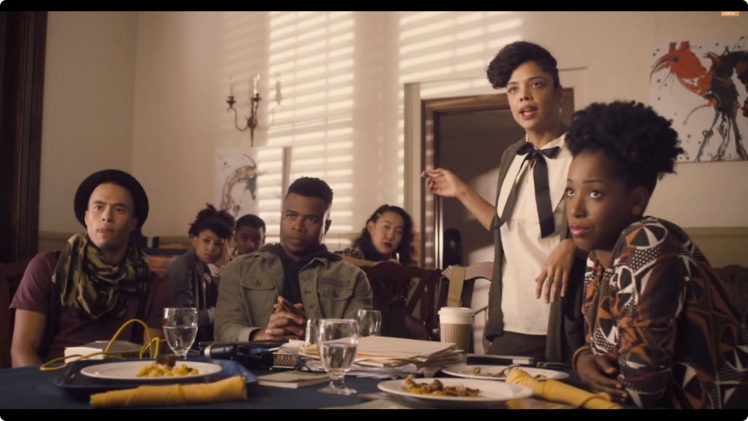
Another chance to see this distinctive and extremely relevant satire on US campus life. I found the film absorbing and interesting but somewhat flawed. Some others at the screenings were more more impressed and it it is certainly very funny at time, though also deliberately disturbing.

Set in the fictional world of Winchester University, the film explores the continuing racism to be found in US Higher Education. Like US police forces Universities over the Atlantic have faced a number of scandals in recent years and the film provocatively picks up on these.

The film makes effective use of film form and style, whilst the young cast are excellent. One of the merits of the film is how it handles a relatively large cast of key characters. These are not fully developed characters, they are there to serve the satire – directed at the white elite, the world of Education and, importantly, the media.

Film fans familiar with the work of Spike Lee will recognize a strong influence in the film. And whilst this first-time director has not yet developed his mature style, this film does offer many of the pleasures and stimulations found in the work of the major US filmmaker.

The Third Man, UK 1949

Screening Sunday July 26th at 3 p.m.

the-third-man

This classic film is being re-issued as part of the Orson Welles Centenary celebrations. Certainly Welles, oozing both his onscreen charm but also his shadowy otherness, dominates the film. It contains some of his most memorable dialogue: his aside on the cuckoo clock is one of the most oft-quoted lines in English-language cinema.

But the film is also a tribute to the talents of a number of fine, mainly British, filmmakers. The director was Carol Reedis often dismissed by the appellation ‘metteur en scène’: a phrase that stresses reliance on collaborators as opposed to the supposed dominating talent of the ‘auteur’. In fact many of the great films depend exactly on such a constellation of talents, and this is especially true of British cinema where many a final film is much more than just the sum of its parts.

The film has a fine script by Graham Greene, adapted from his own short story. Certainly Reed’s direction benefits from the magisterial black and white cinematography of Robert Krasker. And his work depends to a degree on Vincent Korda’s atmospheric art direction. Both are ably served by the editing of Oswald Haffenrichter. And there is the inspired choice of Anton Karas’ music: his zither is as famous as dialogue of Orson Welles.

The cast, both leading and supporting players, is ‘pitch perfect’. Alongside Welles Joseph Cotton turns in one of his finest performances. And Alida Valli is hauntingly beautiful and tragic. Then there are Trevor Howard and Bernard Lee with brief but memorable appearances from Ernst Deutsch and Paul Hoerbiger among others.

It is the combination of all these talents that makes the occupied and divided post-war Vienna so believable. This is a perfect gem of a movie.


The Promised Land / Ziemia obiecana, Poland 1975.

Screening Sunday July 19th at 2.10 p.m.

Promised Land 10 This is another title in the series of Masterpieces of Polish Cinema. One pleasure of the series is in revisiting familiar masterworks: another is the chance to catch [as in this case] very rare films. To the best of my knowledge this film has not enjoyed a general UK release, so this is a not to be missed opportunity. It was directed by Andrej Wajda in 1975, the outstanding filmmaker in post-WWII Poland. The film runs for 170 minutes, which is the full length release version. It was filmed in the European widescreen ration of 1.66:1 and with Orwocolor, an East German variant on Agfa. This colour stock has particular characteristic including often fairly dark hues. These work well with some of the expressionist techniques used in the Cinematography by Waclaw Dybowski, Edward Klosinski and Witold Sobocinski.

The film is set in C19th Lodz, then a centre for textile manufacture, and follows the power struggles within a small group of would-be capitalist entrepreneurs. The story give expression to the dominant values in 1970s Poland. But there are also overtones reminiscent of some of the characters found in the C19th novels of Charles Dickens and also in the great cycle of Les Rougon-Macquart novels by Emile Zola. This is the period of capitalism, ‘red in tooth and claw’. This is an epic film, full of character and situation and filmed with impressive style.

2015: Your Thoughts So Far?

Somehow we’re already halfway through the year and perhaps more surprising is just how many films have been shown at the Picture House. It felt like a good time to take a look back over the first half of the year and find out which films have impressed you the most. We’ve put together a poll featuring 18 new films all screened at the Picture House and all with a score of 90% or more on Rotten Tomatoes.

Narrowing down the full list to create the poll was hard enough so we’re allowing you three votes. Please feel free to leave comments explaining your choices.

PS If you’re voting “other” us admins can see your answers but other people can’t so please leave a comment so people can see how you are casting your vote.

Manuscript workshop and The Secret of Kells

Anna Turner from Leeds University’s Medieval Society takes a look back at the first event at the Hyde Park Picture House as part of their International Medieval Film Festival

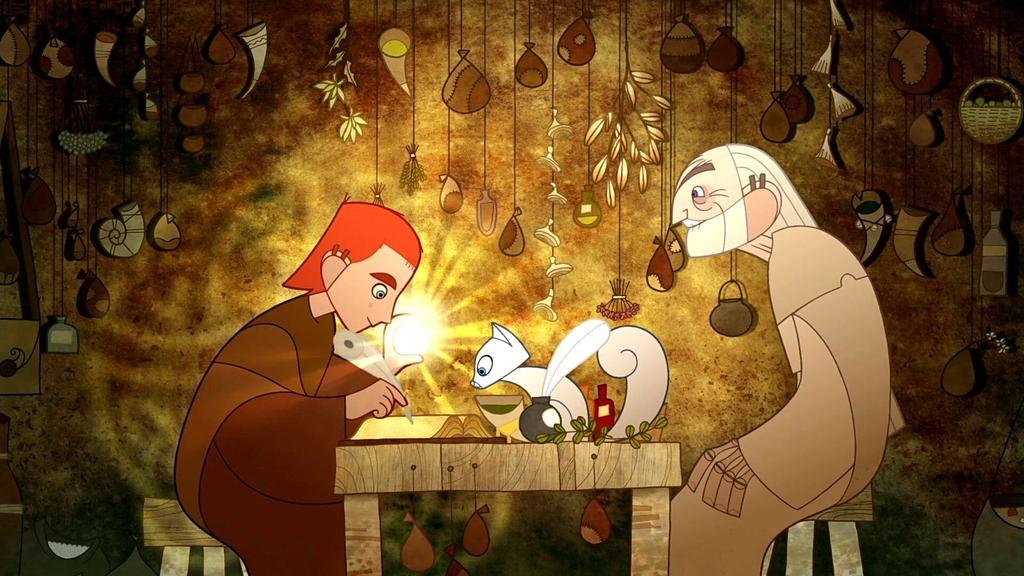
The Secret of Kells

Rainy Saturday mornings have a way of slipping away from you – lost somewhere between the duvet and the television. However, on this dull and grey Saturday morning a group of University of Leeds students gathered in Hyde Park Picture House to hold a small but effective protest against waste weekends. It’s not often that a revolution comes along in the form of a Medieval workshop and film screening – but there you have it. What could be more revolutionary than succeeding in getting a group of kids to part with their bed, teaching them about medieval print culture and having them sit silently through a beautifully animated movie about a unique artefact from Irish history, all before lunchtime?

I was one of three University of Leeds students lucky enough to be invited to lead a workshop about ‘The Book of Kells’, and medieval manuscripts more generally, as a sort of interactive introduction to their screening of The Secret of Kells. The event took place as part of the LUU Medieval Soc’s ‘International Medieval Film Festival’ – an offshoot of this year’s International Medieval Congress. The words ‘International Medieval Film Festival’ seem to conjure up images of stiff men in tweed jackets lamenting the lack of period-accurate armour in the latest Crusades docu-drama. Far from it!

Continue reading