Mistress America, USA 2015

Screening from Friday August 14th.
Leeds Movie Fans Meetup Group on Monday 17th at 8:45pm

mistress america2

This is a new comedy directed by Noah Baumbach and starring his frequent collaborator Greta Gerwig. An earlier outing for the pair was the excellent Frances Ha (2012). Baum is an astute purveyor of offbeat comedy whilst Gerwig is a distinctive and intelligent on-screen presence.

Gerwig plays Brooke, a New York street-wise mentor to newly arrived Tracy (Lola Kirke). The trailer suggests that Gerwig brings her customary slightly cookie but engaging personality to the role. The Sight & Sound reviews draws parallels with the screwball comedies of the 1930s. This was one of the great Hollywood genes and it has frequently provided echoes in the better comedies of contemporary Hollywood. It was also a genre that provided strong women’s roles for stars like Katherine Hepburn. It is not offering undue praise to Gerwig to suggests that she possesses some of the qualities of the earlier icon.

Dear White People, USA 2014

Screening at 8.50 p.m. on Thursday August 6th.

Dear-White-People-group

Another chance to see this distinctive and extremely relevant satire on US campus life. I found the film absorbing and interesting but somewhat flawed. Some others at the screenings were more more impressed and it it is certainly very funny at time, though also deliberately disturbing.

Set in the fictional world of Winchester University, the film explores the continuing racism to be found in US Higher Education. Like US police forces Universities over the Atlantic have faced a number of scandals in recent years and the film provocatively picks up on these.

The film makes effective use of film form and style, whilst the young cast are excellent. One of the merits of the film is how it handles a relatively large cast of key characters. These are not fully developed characters, they are there to serve the satire – directed at the white elite, the world of Education and, importantly, the media.

Film fans familiar with the work of Spike Lee will recognize a strong influence in the film. And whilst this first-time director has not yet developed his mature style, this film does offer many of the pleasures and stimulations found in the work of the major US filmmaker.

The Third Man, UK 1949

Screening Sunday July 26th at 3 p.m.

the-third-man

This classic film is being re-issued as part of the Orson Welles Centenary celebrations. Certainly Welles, oozing both his onscreen charm but also his shadowy otherness, dominates the film. It contains some of his most memorable dialogue: his aside on the cuckoo clock is one of the most oft-quoted lines in English-language cinema.

But the film is also a tribute to the talents of a number of fine, mainly British, filmmakers. The director was Carol Reedis often dismissed by the appellation ‘metteur en scène’: a phrase that stresses reliance on collaborators as opposed to the supposed dominating talent of the ‘auteur’. In fact many of the great films depend exactly on such a constellation of talents, and this is especially true of British cinema where many a final film is much more than just the sum of its parts.

The film has a fine script by Graham Greene, adapted from his own short story. Certainly Reed’s direction benefits from the magisterial black and white cinematography of Robert Krasker. And his work depends to a degree on Vincent Korda’s atmospheric art direction. Both are ably served by the editing of Oswald Haffenrichter. And there is the inspired choice of Anton Karas’ music: his zither is as famous as dialogue of Orson Welles.

The cast, both leading and supporting players, is ‘pitch perfect’. Alongside Welles Joseph Cotton turns in one of his finest performances. And Alida Valli is hauntingly beautiful and tragic. Then there are Trevor Howard and Bernard Lee with brief but memorable appearances from Ernst Deutsch and Paul Hoerbiger among others.

It is the combination of all these talents that makes the occupied and divided post-war Vienna so believable. This is a perfect gem of a movie.


The Promised Land / Ziemia obiecana, Poland 1975.

Screening Sunday July 19th at 2.10 p.m.

Promised Land 10 This is another title in the series of Masterpieces of Polish Cinema. One pleasure of the series is in revisiting familiar masterworks: another is the chance to catch [as in this case] very rare films. To the best of my knowledge this film has not enjoyed a general UK release, so this is a not to be missed opportunity. It was directed by Andrej Wajda in 1975, the outstanding filmmaker in post-WWII Poland. The film runs for 170 minutes, which is the full length release version. It was filmed in the European widescreen ration of 1.66:1 and with Orwocolor, an East German variant on Agfa. This colour stock has particular characteristic including often fairly dark hues. These work well with some of the expressionist techniques used in the Cinematography by Waclaw Dybowski, Edward Klosinski and Witold Sobocinski.

The film is set in C19th Lodz, then a centre for textile manufacture, and follows the power struggles within a small group of would-be capitalist entrepreneurs. The story give expression to the dominant values in 1970s Poland. But there are also overtones reminiscent of some of the characters found in the C19th novels of Charles Dickens and also in the great cycle of Les Rougon-Macquart novels by Emile Zola. This is the period of capitalism, ‘red in tooth and claw’. This is an epic film, full of character and situation and filmed with impressive style.

The New Girlfriend / Une nouvelle amie, France 2014.

Screening from Saturday June 4th.

the-new-girlfriend-

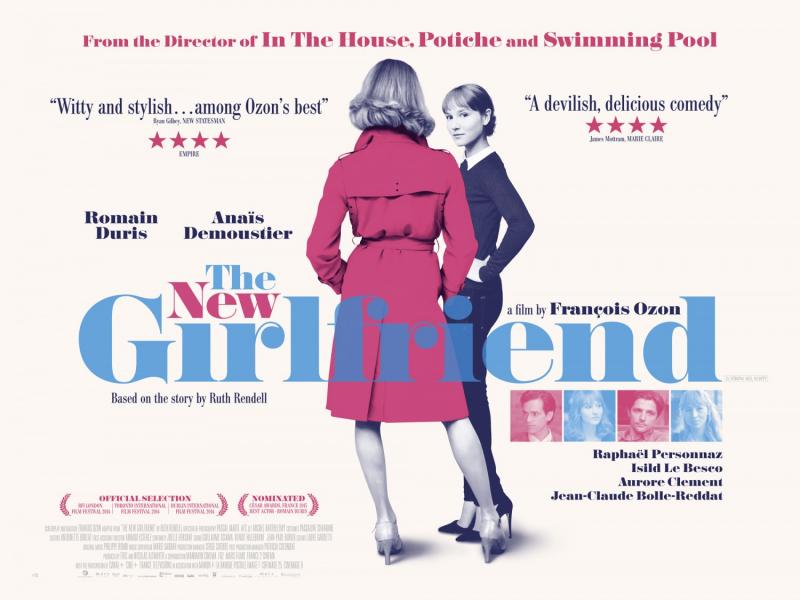
Friends familiar with the films of François Ozon, like Jeune & Jolie (2013) or Dans la maison (2012), will expect something  slightly off-key with his new film. Essentially this is a ‘rom-com’ [romantic comedy], but one that is atypical of the genre. Among the pleasures that it offers are wit, and humour but also the unexpected. Moreover, the film is adapted from a novel by Ruth Rendell, a writer who, like Ozon, is able to confound expectations.

The film opens with a family tragedy but then explores the development of a new relationship, one full of ambiguities and ambivalence. The film manages to offer moments of emotion together with frequent and pleasurable surprises: note the UK trailer unfortunately pre-empts one of the best of these.

The lead protagonist is David, played with assurance and a sense of enjoyment by Romain Duris. He is possibly the most gifted and charismatic of the younger French actors, and he is always willing to explore different roles. Opposite him is Claire, played beautifully by Anaïs Demoustier. At times she reminded me irresistibly of the young Isabel Hubert.

I found the film both entertaining and involving.

The First Film, UK 2015

Screening on Wednesday July 1st at 8 p.m.

slide

The title may suggest Thomas Edison in New York: the Lumière Brothers in Paris: even the Skladanowsky Brothers in Berlin. In fact the events in the film took place in Leeds in West Yorkshire. Here in 1888 Louis le Prince shot several short film sequences onto a paper-backed cellulose strip using a camera that he designed and constructed. Recent research has shown that Le Prince was also working on the use of celluloid for the film rolls and was developing a projection system.

The signs of this key pioneer filmmaker can seen around Leeds. The display at the Oakwood Clock shows the site of a Roundhay Garden where he filmed two sequences. There is a Blue Plaque on Leeds Bridge where he filmed another sequence. There is a second Blue Plaque alongside the old BBC Building by the University to mark the site of his workshop. And there is an unmarked house in Chapeltown where he resided for a time.

People who attended the 1988 Leeds International Film Festival will remember how this celebrated the centenary of Le Prince’s pioneering films, including a restaging of the filming on Leeds Bridge. The Metropolitan University Film School used to have copies of the individual frames mounted on the stairwell and you could examine these as you ascended.

Both the Armley Industrial Museum and the National Media Museum have displays and artefacts about Le Prince. And the Museum has a series of online pages on his career,  his cameras and his films.

However you are less likely to come across Le Prince outside of the city and he is even not always credited in  academic histories of early cinema. This is because the life of Le Prince involves not just a first but also a mystery. This new film, a labour of love over many years by filmmaker David Nicholas Wilkinson’s  explores the life of the Pioneer, his film work and the unexplained events that meant that he failed to gain the recognition he deserved.

The screening at the Picture House is a Charity Premiere. There will be introductions, examples of Le Prince’s technology and in the film itself the audience will be able to see these creations from over a century ago.

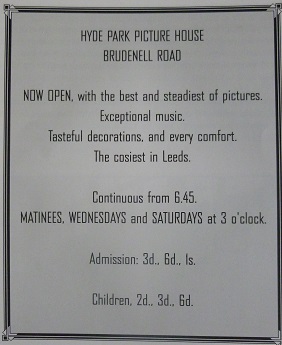
‘The Cosiest Picture House in Leeds’.

YEP Advert

This illustration is from the printed history of the Hyde Park Picture House published by the Friends in 1997: [copies still available at the cinema].

Recently a relative of Harry Childs, who was involved in the opening and running of the Hyde Park Picture House, donated a set of ‘Log Books’ that start with the opening of the cinema and carry on until the 1950s. The books record the daily performances, ticket sales in different price categories and the daily and weekly income. You can imagine that there are lots of figures to be analyzed. The performances and prices are shown in the above advertisement from the Yorkshire Evening News.

It is not clear how seats and customers were demarcated, perhaps the 1s. seats were in the balcony. The bulk of the customers fell into the 3d and 6d price range.

Firstly, the capacity of a standard rectangular theatre was increased by using a balcony .. [which] … allowed an astounding 587 people to be crammed in. [Since the 1980s the seating has been reduced to 350].

The records in 1914 offer no information about the films screened. However from early in 1915 the title of the feature is usually recorded in the margin. The norm appears to be two prrogrammes a week, one from Monday to Wednesday and one from Thursday to Saturday. This is done briefly, so it is not always possible to identify the film: and about two thirds of titles from this period have been lost. However there are also other sources.

Continue reading

A Night at the Cinema in 1914 

Screened at the Hyde Park Picture House as part of the Centenary Programme on November 7th 2014.

thYF814ALO

Looping the Loop at Hendon (March 1914)

Pioneering British aviators Gustav Hamel and Bentfield Hucks perform stunts at the legendary Hendon airfield. Although not hard news, this was a topical story.

Palace Pandemonium (May 1914)

The leading campaigner for votes for women, Emmeline Pankhurst, goes to petition the King in person at Buckingham Palace. The campaign for votes for women was very high-profile and often featured in the news. The suffragettes would stage appearances at events for maximum impact. 

Austrian Tragedy (July 1914)

Following the assassination of Archduke Franz Ferdinand in Sarajevo, this newsreel shows footage of the Austro-Hungarian royal family, including the wedding of Archduke Karl who succeeded Franz Ferdinand as heir to the imperial throne.

Dogs for the Antarctic (August 1914)

Following the death of Captain Scott, Sir Ernest Shackleton plans another expedition to Antarctica, taking plenty of dogs. This is typical of the ‘magazine’ style film shorts of the time.

Continue reading

Safety Last, USA 1923

Screening on Sunday June 21st at 3 p.m. from a 35mm print with live musical accompaniment

SafetyLast_007Pyxurz

Friends who have seen Martin Scorsese’s Hugo will have seen a clip from this film. It is famous for the stunts performed by its star Harold Lloyd. Lloyd was one of the three great comic stars of Hollywood in the 1920s; along with Chaplin and Keaton. He had his own distinctive persona with a straw boater and earnest and spectacled visage and a sort of ‘college boy’ character. He shared his mentors’ gift for timing but was especially skilled in stunt work.

This is ‘small town’ boy makes good in the big city. Much of the film uses the setting of the Department Store, one of the canonic images in 1920s cinema. The film offers the romantic  sweetheart back home, the trials and tribulations which the hero must overcome, and some of the most dare-devil stunts in films of that era. The screenplay moves deftly from gag to gag whilst developing an increasing drama and tension.

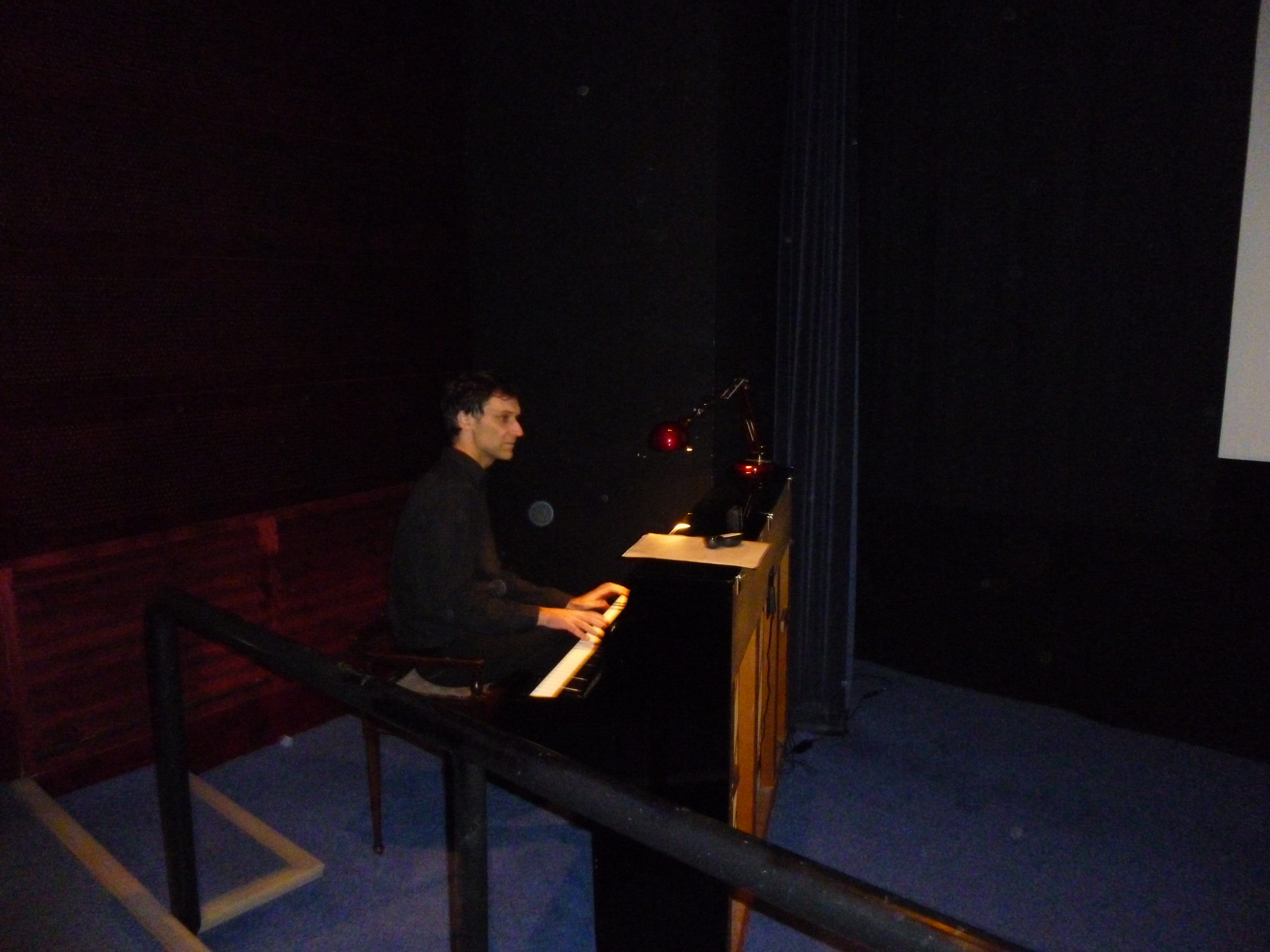
The last time I saw a print it had an added soundtrack, but this can be switched off. Certainly when it originally played at the Picture House it would have had a musical accompaniment. And the same pleasure will be available this Sunday with an accompaniment by Darius Battiwalla. Darius is an experienced and accomplish accompanist and he has a particular skills in adding to the action and pointing up character.

P1000009

This is a film that is a ‘must’ for your ‘have seen’ list.

Masterpieces of Polish Cinema

Ashes and Diamonds Thursday 18th June 6.20 p.m.
Leeds Movie Fans Meetup is planned for this screening.

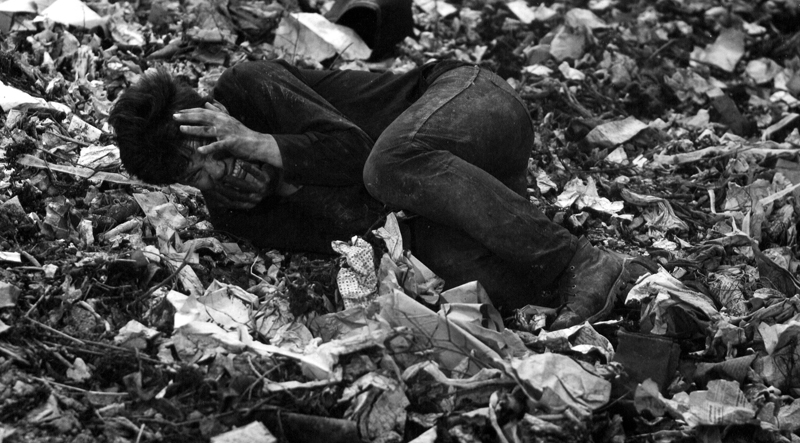
 fo_film_popiol_i_diament_09_51761

Between June 18th and September 22nd the Hyde Park Picture House will be presenting eight films produced in Poland over three earlier decades. Masterpieces of Polish Cinema presented  by Martin Scorsese, together with The Film Foundation and the Polish Film Institute and supported by a number of other agencies. Scorsese is not only a respected and important filmmaker, he is also a collector, archivist, educator and, through his involvement in The Film Foundation, responsible for restoring and distributing key films from World Cinema.

In the case of these films the focus is on the work of the Polish National Film School at Łódź. Numerous and talented film artists have studied here. And the work that has emanated from the school has influenced not only Scorsese but also other filmmakers such as the UK’s own Lindsay Anderson.

The programmes commence with Ashes and DiamondsPopiół i diament , 1958,

Continue reading