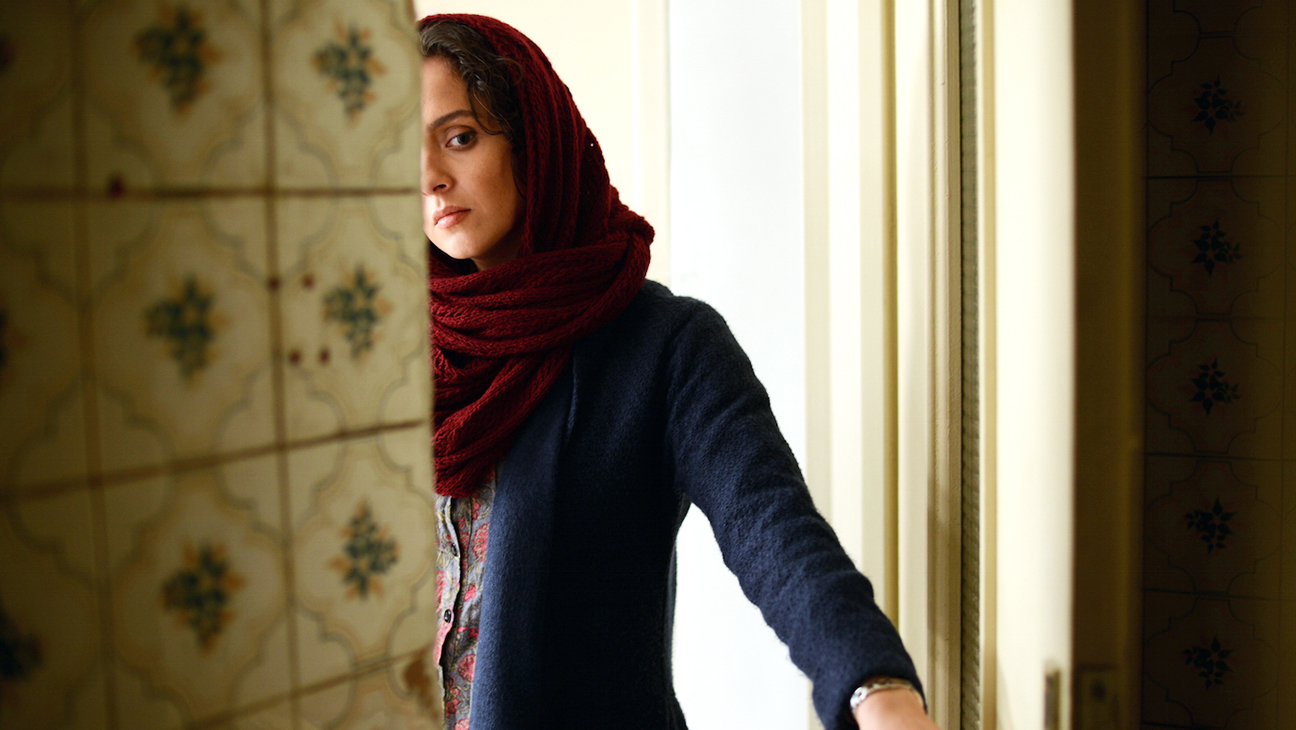
The Salesman / Forushande Iran, France, 2016.

Daily from Friday March 24th until Thursday March 30th

Salesman

This film won the Best Foreign Language title at the Academy Awards. It also gained attention when the director boycotted the ceremony in opposition to new and discriminatory immigration controls by the USA. It is rather pleasing that most notable bane of the USA has recently won two Academy Awards; this title and A Separation / Jodaeiye Nader az Simin in 2012. That title was also written and directed by Asghar Farhadi. This film repeats some of the tropes of the earlier title though the central theme is rather different.

Both films rely on the importance of place for the characters, especially the apartments that provide their home. But this new film has an added dimension: a play within a play, ‘Death of a Salesman’. There are definite parallels between the apartment of the lead characters and the theatrical setting. However, I thought the relationships were closer to Tennessee Williams than to Arthur Miller.

The are fine performances as the central couple by Taraneh Alidoosti as Rana Etesami  and Shahab Hosseini  as Emad Etesami.  They were also a couple in Farhadi’s earlier About Elly / Darbareye Elly (2009) and if you saw that film the relationship then it offers a faint but interesting prequel to that in this film.

This is a fascinating and absorbing study. And the production is very well done. However, I found it was less compelling than the two earlier films made in Iran, [Farhadi has also worked on a French film The Past / Le passé, 2013). And I felt it was not quite as telling in its portrayal of contemporary Iran.

It is still worth seeing, especially as this has not been so far [with a few exceptions] a great year for new releases. Note regarding the UK trailer; it includes more plot than is necessary; and the cutting does not represent the film effectively, this has a rather different tempo,

Manchester by the Sea USA 2016

manchester-by-the-sea1Saturday March 4th and Monday March 6th

It is good to have another opportunity to see this film, the best new release so far of 2017. That said, the first two months of the year have been fairly undistinguished: a number of good films but a lack of masterworks [Moonlight (2016) will hopefully remedy this]. This film garnered Lead Actor and Original Screenplay Awards at the recent Academy. I do still worry that a mislaid envelope may turn up and scupper either of these.

Casey Affleck as Lee Chandler is superb and fulfils the promise displayed in his earlier films. The supporting cast are uniformly excellent. I was especially struck by Michelle Williams as Randi Chandler. She has a brief but powerful scene with Casey.

The film also fulfils the promise shown by writer and director Kenneth Lonergan in his previous films. He heads a fine production team and I was particularly struck by the cinematography by  Jody Lee Lipes, with some  beautifully executed exteriors on the North Eastern Atlantic coastline. And the  Film Editing by Jennifer Lame  is very fine, handling a complex set of flashbacks that fill out the story and the drama. Note, the actual town is ‘Manchester-by-the Sea’: odd that the title is different in all release versions as it suggests something else.

This is a film that deals with memories and loss that colour and inhibit the present. The powerful drama delves into these and the accompanying relationships with care and compassion. It is a long film, 137 minutes, but the characters and settings render that timescale completely absorbing.

Fences, USA 2016

Daily, Saturday February 18th through till Thursday February 23rd.

fences-2016-david-gropman-design

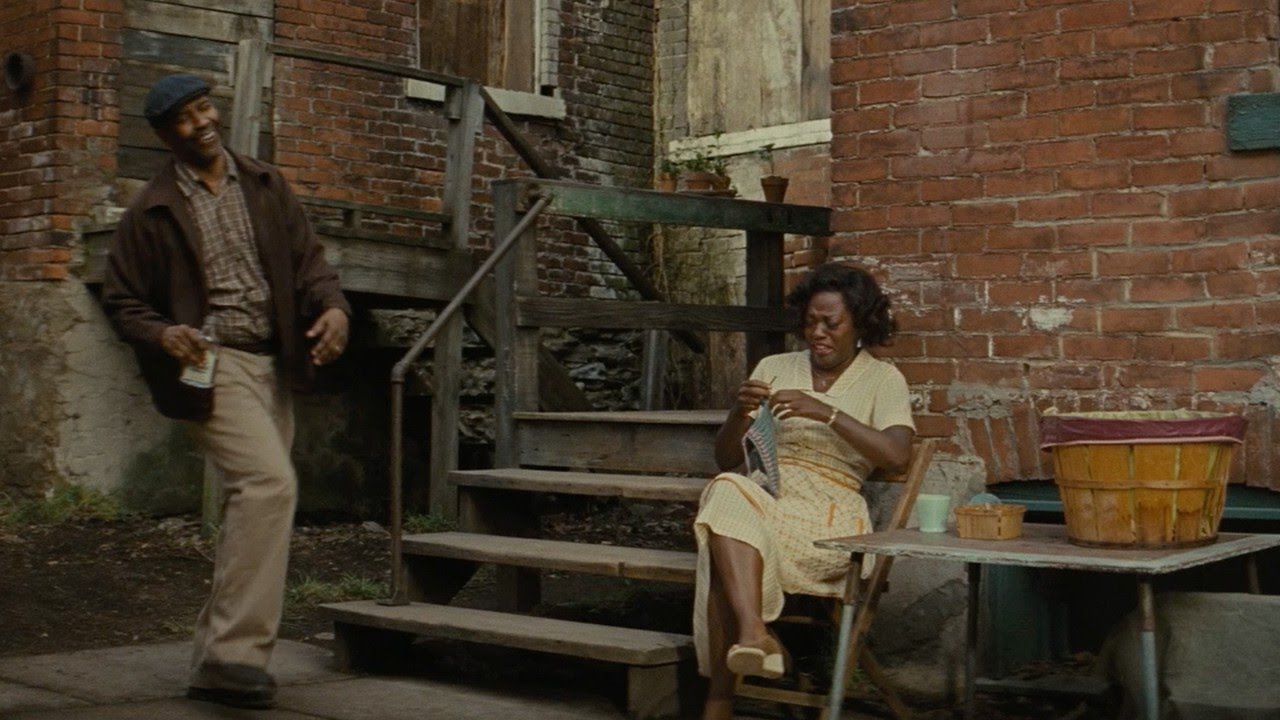
The two leading players in this film, Denzel Washington and Viola Davies, have both been nominated for Academy Awards. Viola Davis has already won a Golden Globe as Best Supporting Actress. This, like the Academy Award, nomination, should really be for Best Actress as whilst her screen time is less than Washington her character and performance are equally essential to the film.

This is an actor’s films with both Washington and Davis reprising roles that they played on Broadway in 2010: Troy and Rose Maxton. And another player in this production Stephen McKinley Henderson as Jim Bono is part of a fine supporting cast.

The film is adapted from a play originally written in 1983 by August Wilson. He died in 2005 but had already written a screenplay on which this film is based. Wilson, whose early experiences of US racism informed his work, wrote a cycle of seven plays about Afro-American life and experiences. He insisted that this play, if adapted for cinema, should be directed by an African-American, and Washington both stars and directs.

The play fits into what is almost a genre of African-American life on film, harking back to A Raisin in the Sun (USA 1961), another play adapted first for television then cinema. In fact this film displays its theatrical origins both in structure and settings. It also has lengthy dialogue scenes but the delivery by the fine cast make these compelling and convincing.

The film is set in Pittsburgh in the 1950s and moves onto the early 1960s. These times are an important backdrop to what is essentially a family drama. And the title, as Rose explains to Troy in one powerful scene, is itself a metaphor for the emotions and contradictions dramatised in this absorbing film.

T2 Trainspotting, UK 2017

Daily from Friday February 10th until Thursday February 16th

t2-trainspotting

This is a sequel twenty years on from the popular and well received original.  I suspect that the pleasures of watching the film will depend on how much you liked the 1996 title: this is clearly an exercise in retro-pleasure, even nostalgia. The original cast are all there; Ewan McGregor as Renton; Robert Carlyle as Begbie; Ewan Bremner as Spud; John Lee Miller as Simon. Kelly MacDonald also returns as Diane, but only in a brief walk-on part. She does tell Renton that the new romantic/sexual character Veronika (Anjela Nedyalkova) is ‘too young for you’.

The film also returns with familiar settings and tropes from the original: including toilets and the great Scottish outdoors. The new film also has the same certification as the earlier title, 18. However, from memory, I would say that this has slightly less violence and drug-taking and a little more sex.

The film uses extracts from the 1996 film, more frequently than I thought was justified or necessary. But it also shows the characters’ lives before the plot of 1996 and we get to see on-screen the meaning of the title of both films. At the same time it brings the story up-to-date in terms of changed mores and social settings. Thus we have Veronika who is from Bulgaria. And the ending of the film moves on from  that of 1990s Edinburgh.

The production values, including the cinematography and editing are very well done. However the film is circulating in  a 2K DCP which I think does less justice to the visual than the 35mm of the original. But probably as Renton proposes, ‘choose  Trainspotting 2′.


Toni Erdmann, Germany, Austria, Romania 2016.

Daily from Friday February 3rd till Thursday February 9th.

tonierdmannweb3

This film won the Best Film and two acting prizes at the European Film Awards 2016. It is also being considered for the Academy Awards and the UK BAFTAS. And it is one of three titles in line for the European Parliament’s Lux Prize.

The film was screened at the closing night of the 2016 Leeds International Film Festival. It is a long film, running for 162 minutes. It also has a very open narrative: the resolution is ambiguous and there are aspects of character and situation that are unexplained and/or unresolved.

“…it’s full of surprises, very warm and touching and frequently hilarious.” (LIFF Catalogue).

It does hold the interest, partly because of the central performances of Peter Simonischek as Winfried alias Toni and Sandra Hüller as his daughter Ines.  The film moves from Germany to Romania and from the comic to the dramatic and back and forth between these modes. Writer and director Maren Ade generally handles this very well though at times I found the opacity of the narrative slightly problematic. Ade includes a strong set of social themes, which I think is one reason for the film’s critical success. Sight & Sound placed it first in its top twenty films of 2016.

Definitely to be seen but prepare for a possible challenging two and half hours.

European audiences could vote for the film for the Lux Prize [including British citizens as we are still in the European Union]. There are two other finalist films; My Life as a Courgette / Ma vie de Courgette (France 2016), an animated film which was late addition to the Leeds International Film Festival programme; and As I Open My Eyes / À peine j’ouvre les yeux (Tunisia, France, Belgium, United Arab Emirates 2015). Unfortunately My Life as a Courgette seems to only have had the LIFF screening so far. And there is no sign of As I Open My Eyes at all. Final straw, the voting ended on January 31st!


La La Land, USA / Hong Kong 2016

Daily from Friday January 13th

la-la-land

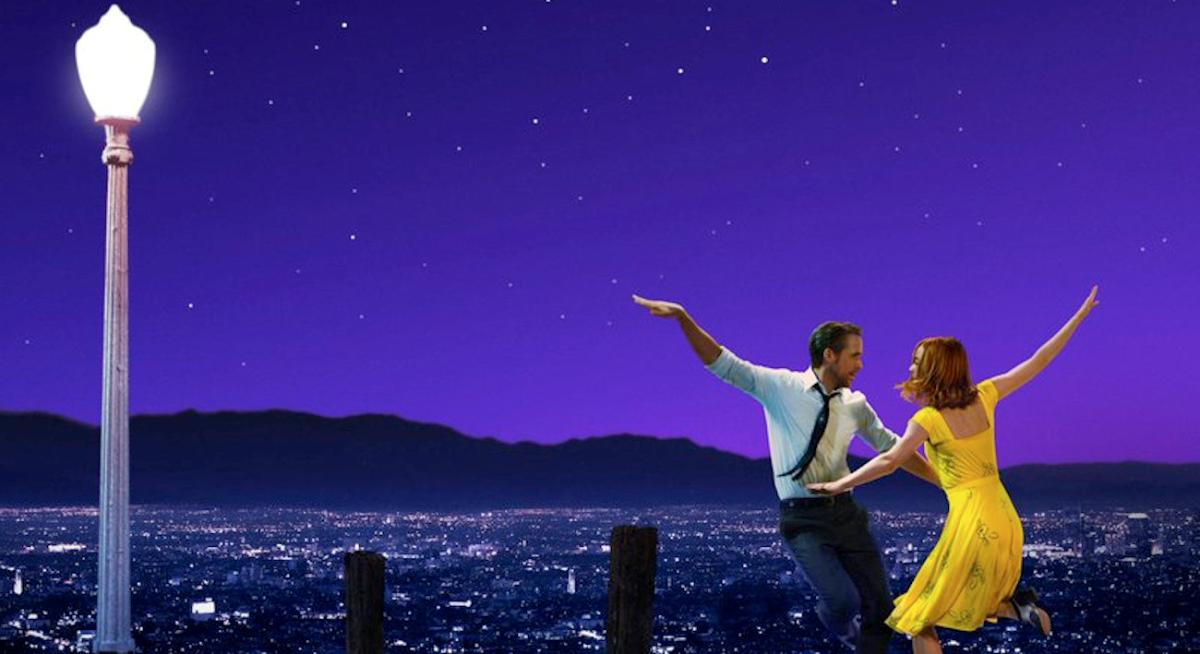
This film challenges the conventional wisdom that the Hollywood romantic musical is dead or moribund. Deservedly the film has won awards at the recent Golden Globes, as has writer and director Damien Chazelle; the two stars Ryan Gosling (Seb) and Emma Stone (Mia); and the composer Justin Hurwitz. But praise is also due to the cinematographer Linus Sandgren; editor Tom Cross; and production designer David Wasco. I should add a special mention for choreographer Mandy Moore as the two stars are not experienced dancers, nor are they as skilled as Gene Kelly and Leslie Caron, who receive a homage in the film. But the songs, dances and presentation are all completely engaging.

Apart from the homages to the great 1950s Hollywood musical the film also has parallels with Jacques Demy’s Les Demoiselles de Rochefort (1967) and Martin Scorsese’s own foray into the genre, New York New York (1977); the latter was presumably an influence on the title. And as with Chazelle’s previous film Whiplash (2014) we can also enjoy references to the world of jazz.

The film is a bitter-sweet affair. Whilst the ‘Lighthouse Café’ [seen in the film] can still be enjoyed the ‘Rialto Cinema’ [another actual setting] is sadly closed. However, this film is so good I think we can expect to enjoy a further musical.

Favourites from 2016

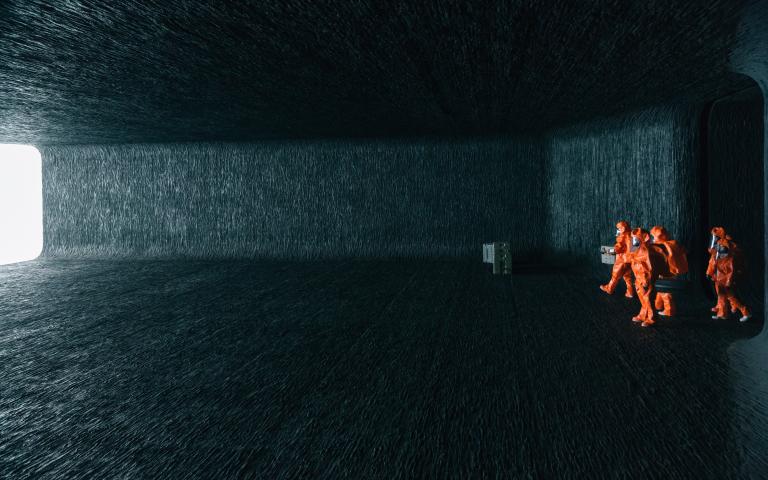
arrival-movie-still

So we enter the Award season and the moment when we reflect back on the previous year. I thought a good year, but not a great year for film: but there were some great movies. Of the new releases that I watched at the HPPH I was especially impressed with:

Arrival (USA but also Canada 2016). Denis Villeneuve has directed the most interesting sci-fi in years and Amy Adams offers a sterling performance.

The Pearl Button / El botón de nácar *France, Spain, Chile, Switzerland 2015). Patricio Guzmán provided a documentary that was moving, analytical and both looked and sounded great.

Son of Saul / Saul fia (Hungary 2015). László Nemes produced an intense and revelatory treatment of an often overworked subject.

Taxi / Taxi Teheran (Iran 2015). I prefer film to video but Jafar Panahi can make an impressive film with any sort of cinematic technology.

Our Little Sister / Umimachi Diary (Japan 2016). The latest film by Hirokazu Koreeda is a simple tale of four sisters: and goes into my list of the top films of the century so far.

still-ourlittlesister2

We also enjoyed a lot of classics from times gone by. The best in a competitive field for me was:

Eternity and a Day / Mia aioniotita kai mia mera (France, Italy, Greece, Germany 1998). Theo Angelopoulos’ rich and complex film was screened in a good quality 35mm print.

2017, 100 years on …

soviet-directors

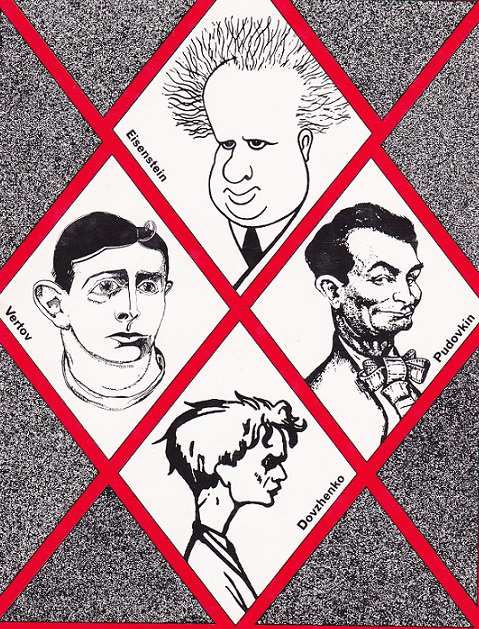
So welcome to the year in which we celebrate the centenary of the Great October Revolution. One enjoyable form of celebration will be to watch some of the masterworks of Soviet Montage Cinema. One obvious candidate is Sergei Eisenstein’s film of the historic event, Oktyabr (Ten Days That Shook the World, 1928).

Other key films that we may hopefully see this year on 35mm [four with live music) would be:

The New Babylon (Novyy Vavilon, 1929) directed by Grigori Kozintsev and  Leonid Trauberg. A powerful dramatisation of the historic Paris Commune of 1871: a forerunner for the October revolution.

Mother (Mat, 1926)  directed by Vsevolod Pudovkin. Set during the Russian Revolution of 1905 and based on the 1906 novel ‘The Mother’ by Maxim Gorky.

The Girl with a Hatbox (Devushka s korobkoy, 1927) directed by Boris Barnet and starring Anna Sten. The film satirises the ‘Nepmen’, entrepreneurs who were allowed to conduct commercial business during the New Economic Policy of the 1920s.

Earth (Zemlya, 1930) directed by Alexander Dovzhenko and dealing with the process of collectivization and the hostility exhibited by the Kulak landowners.

Enthusiasm (Entuziazm / Simfoniya Donbassa, 1931) directed by Dziga Vertov. A film celebrating Socialist Construction in the Don Valley of the Ukraine. Needs to be seen with its original soundtrack rather than with live music.

Arrival, USA 2016

Tuesday December 27th at 3.00 p.m.

arrival-21

A chance to catch one of the best English-language films of the year. The film tends towards what is called ‘hard science fiction’, that is concern with the theoretical and scientific aspects of the future. That is part of its entertainment value, though it is also well produced and enjoys a fine central performance from Amy Adams. She is a linguist recruited by the military to attempt to communicate with visiting aliens. The design of the aliens is as innovative as I have seen in years. A central theme is time: the resolution of the film unlocks the complexities this involves.

The director is Canadian filmmaker Denis Villeneuve who was responsible for the very fine drama Incendies (2010). His two other films have been Prisoners (2013) and Sicario (2015), demonstrating a varied approach to genre. Whilst the film bears the US tag it was filmed in Canada. The screenplay by Eric Heisserer has been adapted from a short story by Ted Chiang. He seems to specialise in shorter fiction writing and has a high reputation in science fiction circles. This tale has an interesting treatment of language as well as of time.

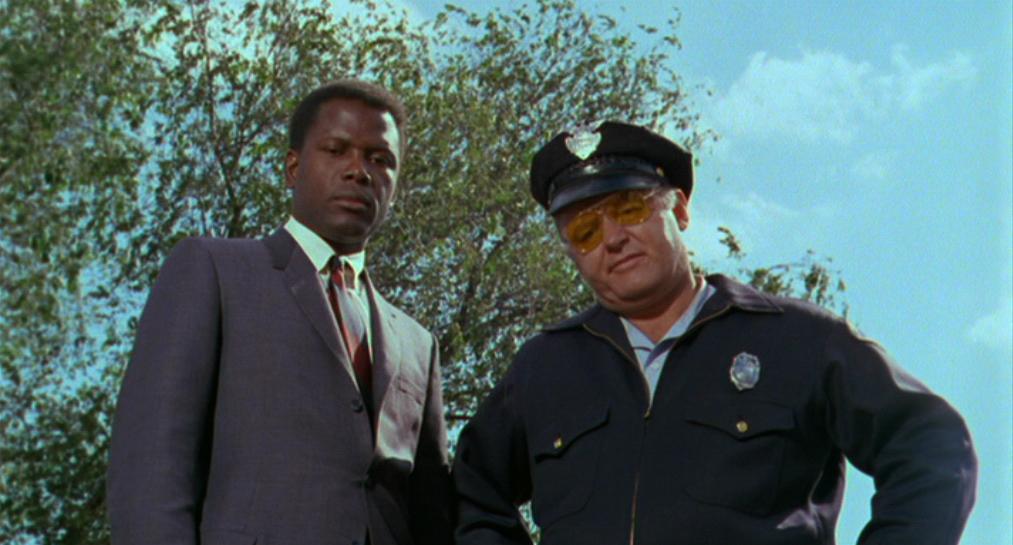
If you have time and are feeling a little frustrated by the  few quality films around over the festive season you can wait a little while and catch a classic: In the Heat of the Night (1967) with award winning performances by Sidney Poitier and Rod Steiger.

in-the-heat-of-the-night-film

The Unknown Girl / La fille inconnue, Belgium / France / Italy 2016.

Opens Friday December 16th at 6.00 p.m.

theunknowngirl4-1600x900-c-default

This is the most promising title in December, not a great month for new releases. It is the latest film from Jean-Pierre and Luc Dardenne. Their track record over the years offers series of very fine films. Their work is best described as social realism. They started their career with documentaries and there is still a touch of the documentarily style about their films. But there screenwriting also offers drams that are intense as well as socially relevant.

They won the Cannes Festival Palme d’Or in 1999 with Rosetta, which followed the efforts of a teenage girl to free herself from a dysfunctional family situation. The Son (Le Fils) was nominated for the same prize in 2002. This tale studied a young man and a relationship with a surrogate father. The Child (L’enfant) was again the winner in 2005. This was an intense drama about parents living on welfare and their newly born child. Lorna’s Silence (Le Silence de Lorna) received a another nomination for a study of a young woman who undertakers an arranged marriage. Once again in 2011 the brothers were nominated for The Kid with a Bike (Le Gamin au vélo), a more upbeat tale about a young boy and an effective surrogate mother. Two Days, One Night (Deux jours, une nuit) also received a similar nomination in 2014. This film parcelled both the British I, Daniel Blake and the French La loi du marché in the tale of a young female factory worker.

Now this year The Unknown Girl received the Dardenne Brothers seventh nomination for this prestigious award. Clearly Cannes juries like these filmmakers: deservedly so. The films are simply yet beautifully composed. They work with their cast with real skill. And the stories they present are intriguing and powerfully relevant. Their latest film follows an investigation into the death of an unidentified young woman. It sounds like familiar Dardenne territory and whilst is has received mixed reviews it remains a promising film to watch.

The Dardenne’s have explored the world of the young, exploited oppressed and disenfranchised youth in many of their films. It is remarkable that they do so with such skill since they are both now in their fifties. And in that time they have produced a series of films that are equal to the work of other leading European filmmakers.

Note the film opens today with the only early screening. The following ones on Sunday, Monday and Tuesday all run up to or pass 11 p.m.