Alam (France / Saudi Arabia / Tunisia / Qatar / Occupied Palestinian Territory, 2022)

This is the next title being screened at the Picture House as part of the Leeds Palestinian Film Festival. It is a drama set among the Palestinian Arabs who live in the part of occupied Palestine known as Israel. The drama centres round the celebration of the founding day of Israel, usually in early May. Dispossessed Palestinians mourn their lost country on Land Day, later in May.

For Palestinians who stayed on the land that became Israel, Israel’s day of founding is also the Palestinian’s day of Catastrophe [Al-Nakba]. For their exams, high school students have to learn Israel’s version of history, with the stories of dispossessed former Palestinians being suppressed.

Tamer (Mahmood Bakri) is drawn to a new high school student Maysaá (Sereen Khass) and through her becomes involved in an act of defiance of the occupiers’ celebrations. These centre on the Israeli flag; one meaning of ‘Alam’ is ‘flag’. Tamer ‘s family already have the experience of Israeli repression which leads to tensions within his family.

This feature is written and directed by Firas Khoury; he has already made some short movies. He is also involved in organising screenings and cinematic events throughout Palestine. This feature is a multi-territory production involving both European and Arab funding. It is shot in colour and anamorphic wide screen, 2.39:1. The running time is 109 minutes. The dialogue is in Arabic and Hebrew with English sub-titles.

This feature won the Golden Pyramid Award and the Audience Award at the Cairo International Film Festival. The experience of Palestinians living in Israel is often overlooked in the media. Given the repression taking place in Israel of Palestinian expression and opposition to the war, this is a welcome opportunity to get a sense of this Palestinian world.

Showing in Screen 1 on Wednesday 29th November at 6pm

Leeds Palestinian Film Festival 2023

This is now a regular event in Yorkshire though this year it comes against a backdrop of a criminal violence and destruction across occupied Palestine. Thus it offers an opportunity to deepen our knowledge and understanding of the experience of the Palestinian people since the British Empire sold away their land for a mess of pottage.

There are a further eleven events in the Festival programme. And two of these are featured at the Hyde Park Picture House,

On Tuesday November 21st at 6 p.m. there is,

Cinema Palestine – Tim Schwab, Canada/Israel/Jordan/Palestine, 2014, 78 minutes. English, Arabic with English subtitles. This is a documentary about Palestinian film and film-makers and how this connects with |Palestinian identity. Some of the work of these film-makers is airing on Al Jazeera channels and on their web pages.

On Wednesday 29th November at 6 p.m.

Alam – Firas Khoury, 2022, France/Tunisia/Palestine/ Qatar/UAE, 109 minutes. Arabic with English sub-titles. This feature offers a narrative about political awakening for a young Arab living in Galilee.

Given the context for this year’s Festival the organisers have published a statement on their web pages;

The Leeds Palestinian Film Festival Team are filled with horror, grief and sadness at the current violent loss of life across Palestine/Israel.

We are motivated by a strong belief in justice, respect and dignity for all people, which is why we have selected the films for this festival carefully.

The intentions of our 13 outstanding and thought-provoking events are:

  • to shine a light on hidden stories of Palestinians, their history, culture and politics
  • to challenge stereotypes and one-dimensional views
  • to portray a people in all their diversity

We believe our programme provides invaluable context which can help to illuminate the root causes of the present violence, and to develop responses grounded in understanding and care for others.

All our events constitute safe spaces for constructive and respectful dialogue, with no place for racism, xenophobia or aggression. [LPFF]

And hopefully Friends  were also able to catch the title screened during the Leeds International Film Festival.

Al-Makhdu’un (The Dupes, Syria 1972), this is a feature adapted from the novella  Rijāl Fi Al-Shams / Men of the Sun by  Ghassan Kanafani in 1963. The film version was scripted and  directed by Tewfik  Saleh, an Egyptian who made a number of films that can be counted as part of Third Cinema. He suffered censorship in  Egypt and left in the 1970s and this film was produced by the Syrian National Film Organisation.  The film was shot in black and white academy, running for 107 minutes in Arabic; English sub-titles provided.

The director made these comments in an interview for a French Film Dossier;

I worked on the adaptation of Men in the Sun by Ghassan Kanafani – a militant of the Popular Front for the Liberation of Palestine assassinated on 9 July 1972 in Beirut by the Zionist secret service (Mossad) – from 1954 to 1971. My intentions and my interpretation of the novel and its characters changed in light of the tragic events that took place in the region in June 1967 and September 1970. In the latest version, I wanted to emphasises the element of escape that characterise the Middle East at this time. Three characters from three different generations, representing three phases of the same collective problem, decide to flee their situation in search of what each considers or hopes to be their individual salvation. But the end is very different from their expectations; there is no individual salvation from a collective tragedy. And this is the lesson that history teaches us every day.

Saleh here refers to the seizure of Palestinian lands and the further expulsion of Palestinians during and after the six-day war in 1967; and the expulsion of the Palestine Liberation Organisation from Jordan in 1970, including the massacre of Palestinian militants and civilians. The film’s central characters are victims of the earlier Al-Nakba (Palestinian catastrophe) of 1947 and 1948. Set in the 1950s in the Iraqi desert; three dispossessed Palestinians  attempt  to journey to a new life in Kuwait.

Leeds Palestinian Film Festival 2022

The Unreported Occupation

We pull the curtains back on the illegal occupation Israel wants the world to forget
‘Mediterranean Fever’

This year’s Festival opens, as usual, with a title screening the Leeds International Film festival. This and the complete programme can be found, with all details, on the Festival WebPages.

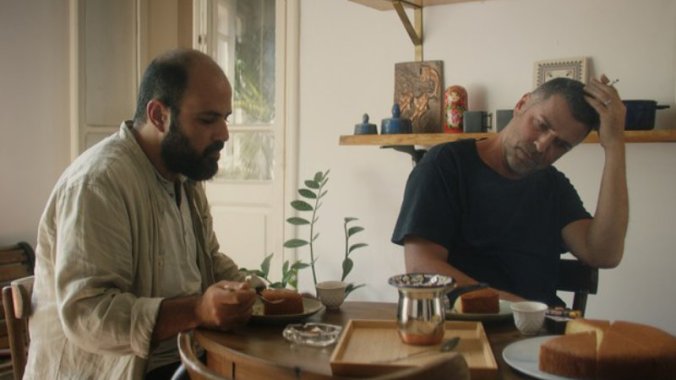
Mediterranean Fever, Palestine/Germany/France/Cyprus/Qatar / 2022 / 108 minutes Arabic with English subtitles – Director Maha Haj. LIFF screening at the Vue in the Light on November 16th and 17th.

This subtly tender film tackles the dynamics of male friendship and the strain of living under occupation. It focuses on the daily struggles of Haifa’s Arab community, as two middle-aged frenemies develop an unexpected relationship and are drawn together by a series of terrifying events. Premiered at the 2022 Cannes Film Festival in the Un Certain regard section, and won the Prize for Best Screenplay.

Following the International festival the programme of Palestinian titles offers screenings at a number of venues up until early December. There will be speakers at some events: a musical event: and an evening which includes Middle eastern food.

Fadia’s Tree, Sarah Beddington / UK / 2022 / 68 minutes / Arabic, English, English subtitles. Seven Arts Friday November 18 2022 7:00pm

Sarah Beddington’s film is a compelling documentary account of the director’s friendship with Fadia, a charismatic Palestinian woman and teacher who lives in a refugee camp in Lebanon but yearns to reconnect with her ancestral village in Palestine.

The film spans 15 years, during which time Beddington agreed to make the journey that Fadia was prevented from taking to the home village she has never seen – to find the mulberry tree that has taken on a totemic significance for generations of her displaced family.. Speaker: Susan Simnett, producer of Fadia’s Tree

Love and Resistance in the Films of Mai Masri

Double-bill – Q&A with Victoria Britain – delicious Middle Eastern buffet. Wheeler Hall Saint Anne’s Street – Monday 21 November 2022 4-7.15pm

Frontiers of Dreams & Fears, Mai Masri / Palestine / 2001 / 56 minutes

A tender insight into the lives of Palestinian children growing up in refugee camps. Although Mona and Manar live in camps miles apart, a friendship is forged through barbed wire and walls of concrete.

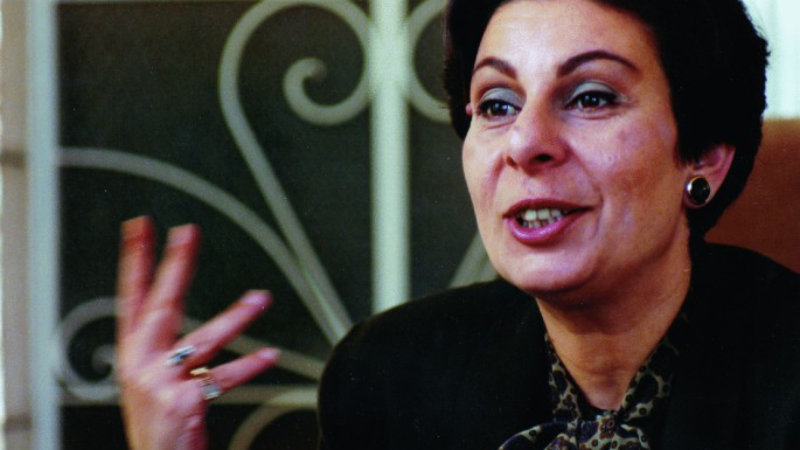
Hanan Ashrawi: A Woman of her Time, Mai Masri / Palestine / 1996 / 50 minutes

An intimate portrait of a formidable political activist and former spokesperson for the PLO who rejected a position in government in favour of human rights advocacy.

Roadmap to Apartheid, Ana Nogueira & Eron Davidson / South Africa/Israel / 2012 / 94 minutes. Slung Low at The Holbeck – Friday November 25 2022 7:30pm

The analogy of the Palestinian experience under Israeli occupation as apartheid is dissected in a forensic comparison with the history of apartheid in South Africa. Eye-witness accounts and unseen archive material are included. Speaker / Q&A with Robert Cohen.

Tantura, Alon Schwarz / Israel / 2022 / 85 minutes. THE HEART – Sunday November 27 2022 1:30pm

In the late 1990s, a graduate student conducted research into an alleged massacre at Tantura. His work later came under attack and his reputation was ruined, but 140 hours of audio testimonies remain. Israelis insist that the massacre never happened, while Palestinians view it as a hell that can’t be forgotten.. Speaker: Dr Kholoud Al-Ajarma.

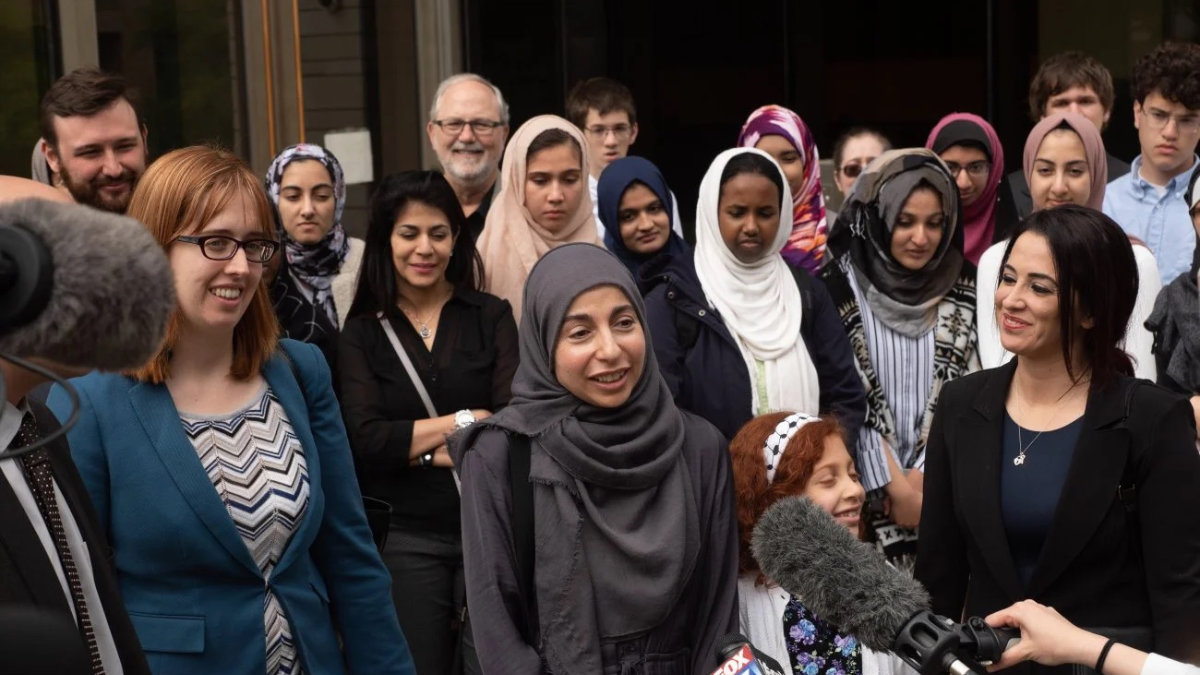
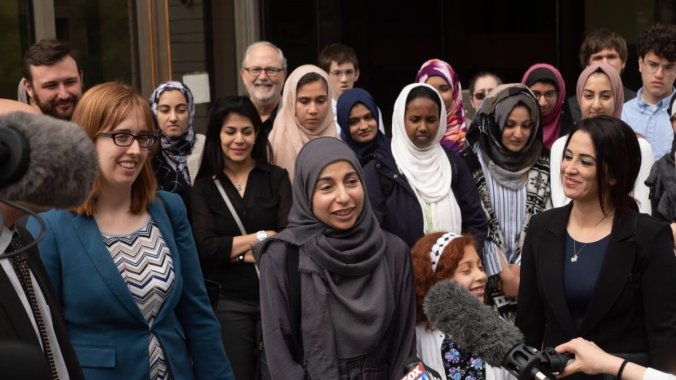
Boycott, Julia Bacha / USA / 2021 / 70 minutes / English. Otley Courthouse – Sunday 27 November 7.30 p.m.:  Wheeler Hall – December 9th 6.30 p.m.

When a news publisher in Arkansas, an attorney in Arizona, and a speech therapist in Texas are told they must choose between their jobs and their political beliefs, they launch legal battles that expose an attack on freedom of speech across 33 states in America.. Speakers. Jenny Lynn – Ben Jamal
‘Boycott’

Eye Witness – singing, film and food. Chapel FM Arts Centre – Sunday 4 December 2022 3pm – 5pm

We are delighted to offer you two eye-witness accounts of life under occupation, both reflecting the power of solidarity. The singing and film will be followed by refreshments. Tadhamon Choir- The singers are fresh from a solidarity visit from Sheffield to Palestine in October. They travelled around the West Bank, visited projects and met many community activists, witnessing first-hand the brutality of life under Israeli occupation. They will share their songs and discuss what they learnt.

Tour Wadi Hilweh, Silwan  18minutes

Sahar Abassi is a community activist and Deputy Director of the Madaa-Silwan Creative Centre She gives us a personal tour of the Silwan neighbourhood of East Jerusalem, where an art project with Art Forces from the USA reinforces local resistance to the ethnic cleansing of the neighbourhood.

And running throughout the Festival is an exhibition of photographs.

Humans of Palestine – Unique exhibition showcasing top Palestinian photographers. Otley Courthouse, 1st – 28th November

A virtual Palestinian Film Festival

The Leeds Palestinian Film Festival 2020

This year’s programme is, as with so many events, on line. It runs from November 14th until November 28th. The programme is structured through four themes:

Annexation, Occupation Defiance

As Seen by Annemarie Jacir

As Seen by Children

As Seen Through Creative Eyes

All told there are fourteen features that include both dramas and documentaries. In addition there are several supporting videos. As with earlier Festivals there are a range of views and experiences from amongst Palestinians and the few critical voices found among Israelis

The Festival is available on line through ‘InPlayer’ which is an online streaming platform. It claims to be ;

‘the world’s leading pay-per-view and subscription solution’.

It appears to be based in Britain and be an independent company. It relies on the Vimeo provision. There does not appear to be a test video to check reception but when I looked both the image and sound were of a good quality.

You can check yourself on the Festival Web Pages by looking at one of the ‘free’ videos like ‘Through the Eyes of Others – Launch Event’. This is useful as there is an introduction and a conversation regarding grassroots film provision.

You can buy a festival pass for the whole period or buy tickets for individual titles. Note, with the latter your viewing window is 48 hours. I assume that the pass enables you to view right through the period.


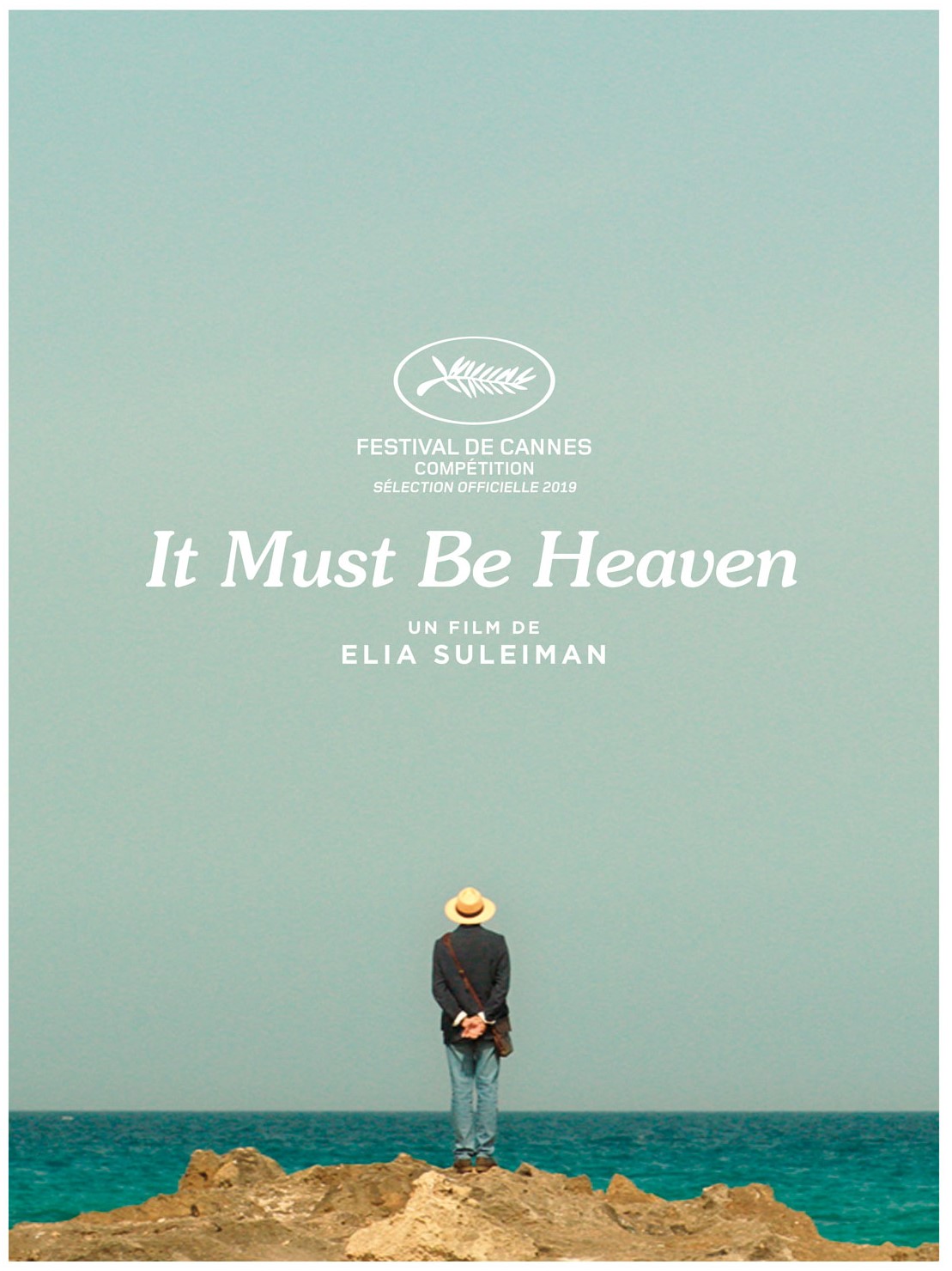
It Must Be Heaven, (France/ Qatar/ Germany / Canada/ Turkey / Palestine, 2019)

Monday November 18th at 8.3. p.m. and Wednesday November 20th at 6.30 p.m.

This year’s Festival of Palestinian films launches, as usual, with this title screening during the Leeds International Film Festival, Already screened at the London Film Festival which provided this description:

“The beard is now inflected with grey and the eyelids hang a little lower, but for Elia Suleiman, the deft comic touch and wistful regret for a home just out of reach remain strong in It Must Be Heaven. The Palestinian film-maker fourth feature film – and his first in a decade – revisits similar themes to his earlier work, once again employing himself as the near-mute central character. This time, however, Suleiman transposes much of the action to Paris and New York. The upheaval across the Arab world since 2011 has seen the Palestinian struggle for statehood lose some of the existential urgency it once had to outsiders. Suleiman’s film is a delicious reminder of both the vitality of the cause, and the vibrancy of his artistry.”

His earlier features have been screened at the Hyde Park over the years. His last, the very fine The Time That Remains (2009), was part of an ealier Festival of Palestinian films. This most recent title runs 97 minutes, in colour and in English / French / Arabic / Spanish / Hebrew [English sub-titles, it has an unusually wide ration, 2.66:1.

Wajib (Palestine, France, Germany, UAE 2017)

Tuesday November 20th at 6.30 p.m.

This is the second title in the Leeds Palestinian Film Festival following on from the very fine Reports on Sarah and Saleem in the Leeds International Film Festival. It testifies to the variety of Palestinian film that whilst the latter film was in part a thriller this is essentially a road movie. The journeys involve delivering invitations for a forthcoming Palestinian wedding in Nazareth [the meaning of the Palestinian title is ‘duty’]. This event is both an important traditional occasion in Palestinian culture and a regular feature in Palestinian films; notably in the pioneer feature A Wedding in Galilee (Urs al-jalil, 1987).

This new film is written and directed by Annemarie Jacir. She has written and directed a number of films; the earlier When I saw You / Lamma shoftak (2014) was set in 1967 amongst Palestinian refugees in Jordan. This was a splendid drama that I saw at a screening organised by Reel Solutions in Bradford. Her new release has already won awards including being selected as ‘Best Picture’, ‘Best Screenplay’ and ‘Best Actor’ by the Arab Critics assembled in Cannes this year.

The film works partly as a family drama and partly as a ‘bitter-sweet comedy’. The treatment of the political situation is handled with subtlety. It was shot in colour and is in Arabic with English sub-titles. It has received very good reviews; you can check out one here.

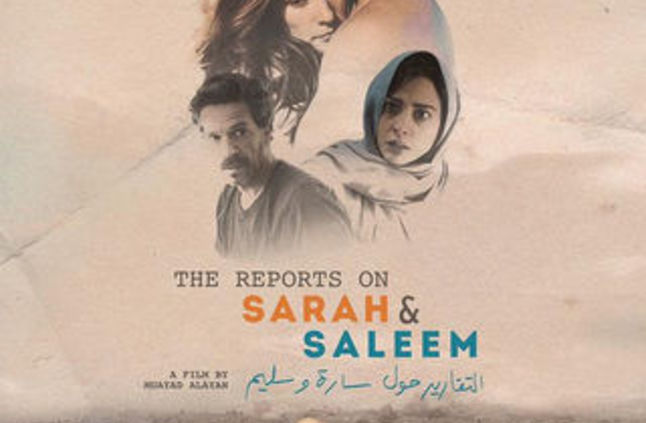
Reports on Sarah and Saleem (2018) Leeds Film Festival Screening

Screening at the Vue in the Light on  Saturday 10th November at 1030 a.m. And on Sunday 11th November at 3.30 p.m.

This is a new film from the developing Palestinian Film Industry and it is both a welcome feature in LIFF and [as in previous years] launches the Leeds Palestinian Film Festival which runs on until December.

The film deals with an affair between two married people, a Palestinian man and an Israeli woman. Affairs between Palestinians and Israeli’s have been a staple of the cinemas of both Palestine and Israel but adding marriage to the complications is rarer. The film combines the thriller genre with the romantic drama genre. The film is the work of director Muayad Alayan and [his brother] writer Rami Musa Alayan. They have worked together on both a feature and short films but I have not seen any of these. As is often the case the production relies on funding from a number of different countries, Netherlands, Palestine, Germany and Mexico.

The film was shot digitally in both East and West Jerusalem with their contrasting cityscapes and cultures. It is in colour and a 2.35:1 ratio with Arabic, Hebrew and English dialogue and sub-titles in English. It promises to be an engaging and thought provoking film. Palestinian film-makers have become expert at combining cinematic genres with political issues and characterisations.

NB. The Festival online pages do not seem to have an straight alphabetical listing,; I found the title under country [Palestine].