Peter Watkins 1935 to 2025

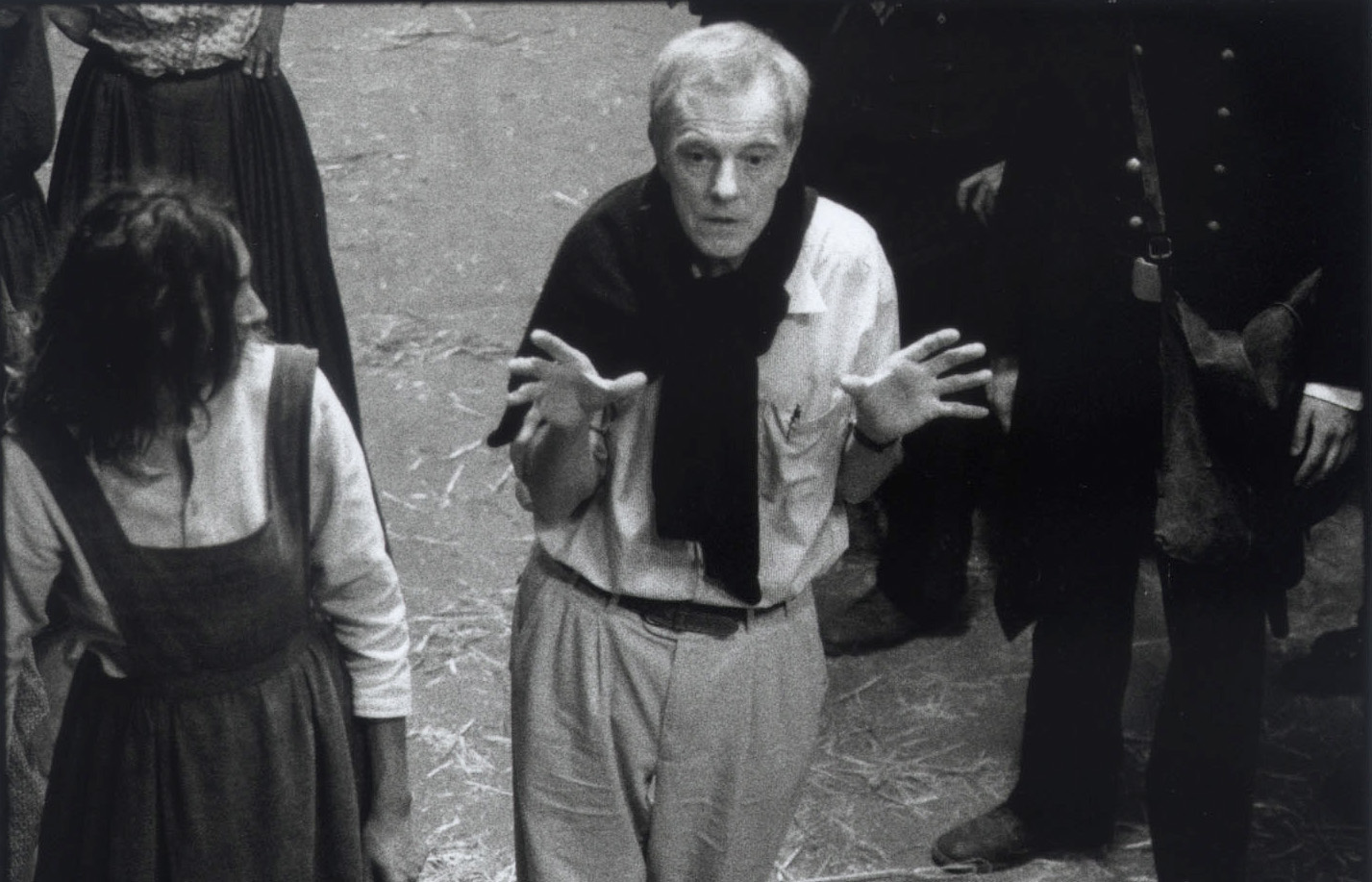
Peter Watkins on the set of ‘La Commune’

This British-born director who became an important international film-maker died in October last year, aged 90. He made a number of important films categorised as docudramas, though alternative documentaries would cover his varied work better. His distinctive approach was to present historic, contemporary or possible future events in a newsreel or TV style, highlighting both political narratives but also thee treatment of these by the media. His uncompromising approach did not fit with the dominant values of the mainstream media and his work was censored, banned or just difficult for audiences to access.

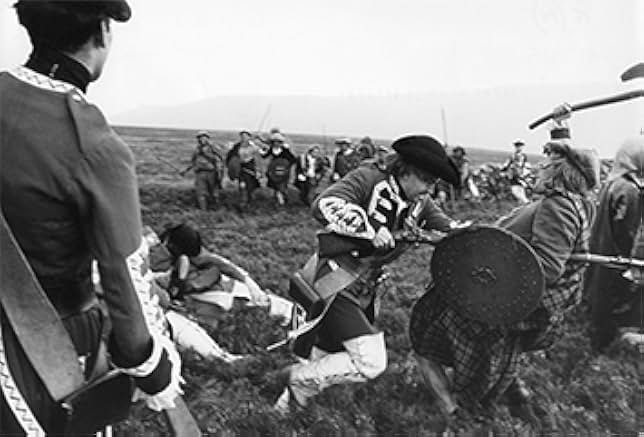
In the early 1960s he was working at the BBC. He first made a docu-drama about the battle of Culloden, 1745. His innovation was to present the battle through the eyes of a C20th reporter and film crew, with the reporter interviewing participant from the Highland and British armies during the battle. This radical presentation met with critical and audience praise.
The BBC then commissioned Watkins to direct a documentary about the effects of a nuclear attack; at a time when disquiet and opposition to nuclear weapons was a central issue in Britain. The finished film, The War Game, presented a dystopian vision of a post-nuclear attack in Kent, likely to shock viewers. It certainly shocked the BBC and the Government; the film was banned from Television though ‘selected audiences’ were able to view it in the cinema. In one of those ironies in the transatlantic alliance the Hollywood Academy awarded the film Best Documentary.

Continue reading

Agnès Varda (1928–2019)

One of the most distinguished and most sympathetic of European film-makers died last week. She enjoyed a film-making career of fifty years and made 54 films including documentary shorts and feature length films. At the revered age of ninety Varda was the doyen of a cinema that harked back to the influential and transforming new waves of the 1960s. Varda was part of what was called ‘the left bank group’ which also concluded Alain Resnais. He edited her first film, La Pointe Courte (1955), screened in a Varda season at the Picture House in 2018. Another colleague was the film essayist Chris Marker. Varda also made film essays and the pair shared a strong affection for cats.

Regulars at the Picture House have had a number of opportunities over the last year to enjoy some of her other films. Cleo from 5 to 7 / Cléo de 5 à 7 (1962) was screened in the Leeds International Film Festival. This film that established Varda’s reputation bought a distinctive content and style to European cinema and remains a film that takes on new aspects when revisited.

The Picture House also screened One Sings, the Other Doesn’t / L’une chante l’autre pas (1977) which dramatises the struggle by French women to win legal access to abortion in that decade. The film demonstrates how Varda’s politics were not just confined to the cinema screen but involved her active participation.

The Beaches of Agnès / Les plages d’Agnès (2008) found Varda in playful mood as she revisited her earlier work and the themes and motifs that really interested her. These included the beaches of the title, cats, mirrors and art works; in the latter area she demonstrated a renaissance style grasp of visual art.

Her most recent film to be screened was Faces Places / Visages villages (2017) in which, with a fellow eccentric artist J. R., she explored rural France through a distinctive form of photography. This also returned her to her first artistic forays in the 1950s when, as a young photographer, she recorded key theatre moments of the decade. The relationships in the film showed Varda’s empathy for ordinary people, something found throughout her long career.

Her final film debuted at the recent Berlinale, Varda by Agnès / Varda par Agnès (2019). The film presents excerpts from a series of illustrated talks that Varda gave about her career. Her talks are intelligent, precise, fascinating and full of charm and occasional irony. The film offers a worthy testament to her impressive career. We can look forward to enjoying this last offering later this year.

Gene Wilder 1933 to 2016

Teri Garr, Gene Wilder and Marty Feldman, 'Young Frankenstein'

Teri Garr, Gene Wilder and Marty Feldman, ‘Young Frankenstein’

Recently deceased Gene Wilder was an impressive film actor, mainly in comic roles and best when playing some sort of likable eccentric. Wilder progressed from Broadway to films; opening his career with producer and director Mel Brooks. His best work was probably with Brooks: The Producers (1967), especially in the last 45 minutes, revels in bad taste, performed with marvellous aplomb by Wilder and one-time blacklisted Zero Mostel. Blazing Saddles (1974)  is one of the best send-ups of the western.  But the key film is one on which Wilder also had writing credits, Young Frankenstein (1974). His performance as the grandchild of the infamous innovator was splendid. And the film also enjoyed a host of excellent supporting characters, notably Marty Feldman as Igor.

Wilder also teamed up several times with Afro-American actor Richard Pryor, early on in Blazing Saddles. Then in Silver Streak (1976) and Stir Crazy (1980)  which were both very funny but also in advance of the times in their pairing of white and black protagonists. Pryor’s tutoring of Wilder in ‘street cred’ is great.

The coming Saturday the Hyde Park is screening Willy Wonka and the Chocolate Factory (1971), an accomplished musical adaptation from the Roald Dahl novel. It is also the centenary of the latter much-loved writer.

willy-wonka-and-the-chocolate-factory-20091006005120611_640w

There is one other of Wilder’s films that would pay revisiting. He has a small role, as an undertaker, in Bonnie and Clyde (1957), still one of the outstanding examples of the gangster genre. Wilder received an Oscar nomination for Best Supporting actor in The Producers  and as co-scriptwriter for Young Frankenstein.