Io Capitano (2023)

Multiple screenings until Thursday 18th April

This is a joint co-production from Italy, France and Belgium. Starting in Africa it follows the trail taken by African migrants attempting to reach Europe and the ‘better life’ it seems to offer. It was written and directed by Matteo Garrone. His previous movies include Gomorrah (2008) and Dogman (2018). Both these dramas were set in Italy and presented powerful but often violent stories. For this new project Garrone worked with several scriptwriters: utilised stories by African writers: and accounts of Africans who had made the journey across the Mediterranean.

The movie opens in Dakar in Senegal where two teenage boys, Seydou (Seydou Sarr) and Moussa (Moustapha Fall), still officially at school, secretly plan to attempt this odyssey. More than one critic has described the cinematic journey as ‘Homeric’. Obtaining forged passports they travel though Mali, Niger, across the Sahara and into Libya. They are exploited by the smugglers and border military. They are violently abused both by criminal gangs and the soldiers. What little help they receive comes from fellow travelers on the illegal trail.

Once in Libya they have to find a way across the Mediterranean sea. This is is an old dilapidated vessel, crammed with would-be migrants: with no proper crew or engineers: and the sole aid a mobile device with GPS and a telephone number to ring: the latter apparently that of some refugee or migrant aid organisation. The Italian title translates literally as ‘Me Captain’.

The movie is well served by the locations [mainly in Morocco]: the cinematography: the editing: and a fine music track. Whilst predominately realist it also contains two sequences more like magical realism. The cast, including actual migrants, and the two leads who are non-professional, are excellent. The movie is in standard widescreen and colour and the dialogue is in Wolof / French / Arabic / English and with English subtitles. The only characters we see are Africans. Europeans are absent apart from a voice on the telephone; otherwise they only appear on the small screen of a mobile device with the images of the ‘better life’: behind the exteriors of oil rigs: inside an overhead helicopter.

This dramatic movie has received widespread critical acclaim and a standing ovation at the Venice Film Festival. It presents that part of the migrant experience that is little seen on the European screens. There are still several opportunities to catch screenings at the Picture House. At times harrowing it is still impressive drama to view; running just over two hours.

Another movie worth watching is Michael Winterbottom’s In this World (2005) which follows the journey of two even younger Afghan boys attempting to travel from their home territory to Britain. This is currently available on the BBC iPlayer.

L’immensitá, Italy / France 2022

Adri and Clara

This is a recent movie directed by Emanuele Crialese; one of his earlier films was the very fine Nuovomondo /Golden  Door  (2006). That feature followed Italian migrants at the start of the C20th journeying to the USA. And, as in this new title, it featured fantasy scenes to express the emotional state of the characters. The new title has been translated as ‘The Immensity’, but ‘intensity’ would be a better sense. In this new feature it is the intensity of the leading characters emotions and relationships that are the focus of the movie.

This new feature is set in the Rome of the 1970s. Penelope Cruz, in the main role of Clara, is the Spanish wife of an Italian business man with three children.  Her character uses the style, especially in her hair, of the major contemporary star, Sophia Loran. The three children are Adri (Luana Giuliani): Gino (Patrizio Francioni): and Diana (María Chiara Goretti). They form a group somewhat apart from the husband  Felice (Vincenzo Amato), who has problems adhering to marital fidelity. Adri, together with Clara, is the heart of the movie and she is experiencing difficulties with her identity.

The drama uses popular songs from the 1970s as one way to express the emotion and intensity of the characters. This is especially true of Clara and Adri, both of whom have fantasy sequences involving  performances of a popular song. The style here appears to be an amalgam of Michael Jackson and that found on Berlusconi’s television channels. The emotion flows from Clara to her children, but meets little response from the husband. Several key moments later in the movie are ambiguous which means the audience may be surprised at certain moments. Along with intense emotion the drama has humour, creating a bitter-sweet atmosphere.

Penelope Cruz is really fine as is Luana Giuliani in her first screen role. The two siblings are also played well and the supporting cast are fine in what are less sympathetic roles. Across the class divide, symbolised not by a railway track but a bamboo thicket, we find Sara (Penelope Nieto Conti), who befriends Adri.

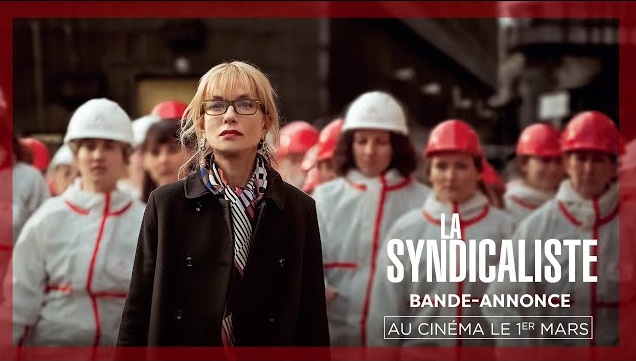
This is definitely a movie to catch: it is in colour and full widescreen with English sub-titles: and has more screenings this week. Nearly all  are in the remodelled original auditorium, now Screen 1. I was impressed with the quality of the image and sound here. I had the same feeling when I viewed an earlier screening of La syndicaliste (2022), a French political thriller set in the nuclear industry and with a fine performance from another major European actor, Isabelle Hubert.

The remodelled Screen I auditorium has a number of improvements. There is now only a single entrance but the doors are automatic and really cut out extraneous noise. The gas lighting remains though not always in use; but the aisle light snow have LEDs which are less distracting. There is a new screen; slightly smaller I think but flat, with a pristine surface and proper masking; [and the auditorium is slightly smaller due to developing the foyer].. However, the best addition is a new Barco 2K laser projector. This is the first time that I have seen one in action. It definitely provides a brighter image: the colour spectrum is improved: and the contrast also seems to be improved. I am curious as to how the digital transfers of actual film titles will look; the two French titles originated on digital equipment and software.

I had one small reservation; whilst the web pages request switching off mobile phones there is not an on-screen warning to this effect. So please, switch them off before you enter the auditorium and please do not use them as torches to find you seat; that is distracting.

‘Happy Lazzaro’ on Film 4

Film 4 Monday-through-Tuesday at 12.55 a.m. and now available on All 4.

Happy as Lazzaro / Lazzaro felice (Italy / France / Switzerland / Germany 2018

This film was one of the outstanding releases in 2018. I enjoyed immensely both the screening at the Leeds International Film Festival and again when it returned to the Picture House in 2019. And I look forward to seeing it again on terrestrial television. It should look reasonably good as long as Film 4 stick to the 1.66.:1 aspect ratio. It runs just over two hours and has both Italian and English dialogue with sub-titles for the former.

Directed by Alice Rohrwacher, one of her earlier films was The Wonders (2014). This film has been described as magic realist. It combines naturalistic observation with a plot that includes references to myth and folk tales, social exploitation and a touch of fantasy. Lazzaro of the title is a sweet natured and apparently simple minded peasant. He is part of a village cut off from modern Italy and involved in some form of share cropping. Later in the film a migration leads members into a lumpen-proletarian existence. The film shares tone and tropes with recent migrant films. It is fascinating and at times moving. Visually Hèléne Louvart’s cinematography is both beautiful and atmospheric and the overall production is excellent. I thought this the best film I saw at the Festival. A friend commented,

“I greatly admired The Wonders … and this was even better. This tale of a holy fool in a setting which blurs the borders between realism and the fantastic is not, perhaps, for the literal-minded but should delight most of the rest of us.”

The number of foreign language titles screened on terrestrial television has severely reduced in recent years. So a film like this is a rare pleasure. It is unconventional and the narrative tends towards the picaresque; and it is also really imaginative.

L’eclisse, Italy 1962

The #HydeParkPick for today is L’eclisse (1962) by Michelangelo Antonioni which is available to watch on MUBI for the next 20 days.

Fresh off the end of an affair with an older man Vittoria meets the vital and exciting Piero. The two start to explore their passion for one another while wandering the deserted suburbs of Rome but their affair soon reveals itself to be doomed.

This pick was selected by Leeds Cineforum who invited Fabio Vighi, Professor of Italian and Critical Theory at Cardiff University, to write about themes in Antonioni’s work for  us.

Leeds Cineforum are also keeping active during lock down in part by compiling this rich list of sites where films can be streamed for free. We’re always looking for new contributors so if you find anything interesting on that list or elsewhere and would like to flex your writing muscles please get in touch.

L’eclisse
by  Fabio Vighi, Professor of Italian and Critical Theory at Cardiff University

The dominant theme throughout Antonioni’s filmography is what we could call, borrowing from French psychoanalyst Jacques Lacan’s 1960s motto, “the non existence of the sexual relationship”. This theme is especially apparent in L’eclisse, where the couple’s failure works as the film’s leitmotif from start (Vittoria leaves Riccardo) to end (Vittoria and Piero break up), effectively bringing the main character back to her initial position. Particularly in his Italian films, Antonioni explores fraught relationships by focusing on middle-class alienation against the background of the country’s rapid modernization. But the originality of his cinema has less to do with sociology than with aesthetics. More specifically, it lies in the way narrative content is over-determined by precise formal choices, which result in a stylized framing of the characters’ positioning within their space. Let us consider the long, almost experimental opening sequence of L’eclisse (1962), set in Riccardo’s flat. The sequence details both Vittoria’s inability to come to terms with her state of emotional drainage and Riccardo’s morose ineptitude at responding to it. Antonioni’s minimalist long takes convey a sense of impasse and claustrophobia, while dialogue is sparse and cryptic. This is clearly a cinema that works by subtraction: while the viewer is denied assistance in retrieving narrative information, the camera slowly pans over various objects scattered around the room, as if more interested in framing them than narrating the lovers’ separation. This aspect of Antonioni’s cinema epitomises his typically modernist penchant for sabotaging narrative progression through the erosion of conventional representations of space and time. That is to say, tension is created not so much through action and reaction, as in classical cinema, but by the opposite process of abstraction, fragmentation and de-dramatization, which ultimately reveals the director’s fascination with seemingly meaningless formal patterns.  Continue reading

Happy as Lazzaro / Lazzaro felice (Italy / France / Switzerland / Germany 2018

Screening on Wednesday April 10th at 8.50 p.m. and on Thursday 11th at 6.15 p.m.

You may have already been to an earlier screening or saw the title at the Leeds International Film Festival; however, if you enjoyed it as much as I did you will surely want a second viewing.

Directed by Alice Rohrwacher, one of her earlier films was The Wonders (2014). This film has been described as magic realist. It combines naturalistic observation with a plot that includes references to myth and folk tales, social exploitation and a touch of fantasy. Lazzaro of the title is a sweet natured and apparently simple minded peasant. He is part of a village cut off from modern Italy and involved in some form of share cropping. Later in the film a migration leads members into a lumpen-proletarian existence. The film shares tone and tropes with recent migrant films. It is fascinating and at times moving. Visually Hèléne Louvart’s cinematography is both beautiful and atmospheric and the overall production is excellent. I thought this the best film I saw at the Festival. A friend commented

I greatly admired The Wonders … and this was even better. This tale of a holy fool in a setting which blurs the borders between realism and the fantastic is not, perhaps, for the literal-minded but should delight most of the rest of us.

L’eclisse/The Eclipse, Italy – France 1962.

Screening on Sunday September 20th at 12 noon and again in BYObaby Wednesday September 23rd at 1100.

An interior - Monica Vitti as Vittoria.

An interior – Monica Vitti as Vittoria.

It is good to see two screenings at the cinema of this art film classic. Even more that it will be an opportunity for very young film buffs to become acquainted with one of the masters of modern European cinema. Michelangelo Antonioni achieved fame with a trio of films at the start of the 1960s: L’avventura (1959), La notte (1960) and this final film in the trilogy. People differ about which is the finest; my favourite is L’avventura. However, I think most would admit that this film is the most challenging: a challenge that offers its own rewards.

Antonioni has been described as the ‘poet of alienation’. The films describe failed or rootless relationships: metaphors for the wider social dislocations of the period. But these are relationships embedded in evocative landscapes: both natural and urban. The central relationship in this film is between Vittoria, played by one of the icons of sixties cinema Monica Vitti: and Riccardo, played by Alain Delon, a fine actor who moved easily between French and Italian films.

The predominant landscape is Rome, following in the footsteps of the neo-realists and Federico Fellini. But Antonioni concentrates on the city’s Stock Exchange and city’s modern and fashion conscious EUR zone. In these films the landscape is an accompanying character, here presented in the luminous black and white cinematography of Gianni Di Venanzo. Interiors are equally impressive and suggestive. It is the landscape and its architecture that dominates the final moments of the film: a series of beautifully composed shots which close with another metaphoric image.

The film has been restored by the BFI onto a digital package, running 126 minutes with English subtitles.

Federico Fellini’s Otto e Mezzo / , Italy 1963.

Klat_otto_e_mezzo

I am afraid if you’ve just noticed this then you missed seeing this great film – it was screened on Thursday June 4th. There was a fairly good audience, 70 or more I reckoned. And they were clearly divided about the film. A couple passed me as the end credits rolled by – he hated it, she thought it was great. In the foyer a group of four were debating the merits or demerits of the film. Outside there were trios and pairs, one couple considering their responses. I was surprised so many people were seeing the film for the first time: I have had the pleasure of being familiar with the film for years. But it is reassuring that a film can stimulate so much intense discussion.

The HPPH Brochure notes that the film was selected in the Top Ten in the 2012 S&S Critics Poll: at number 10. Mote notably, it was number 4 in the parallel Director’s Poll and Federico Fellini was top director.

The film has so many virtues, fine cinematography by Gianni Di Venanzo; a great score by Nino Rota; and superb editing by Leo Catozzo. And the cast! – at times it felt as if Fellini was throwing a party for all the wonderful actors who had graced his films. This screening was sourced from a DCP. I thought the transfer was good, but the digital version did not do full justice to sparkling contrast tween black and white, especially in the long shots. But the sound was great.

And despair not. I last saw this film two or three years ago – so it will come round again. And it is worth waiting to see it ‘real’, on the big screen.