LIFF2025

The Leeds International Film Festival (LIFF2025) starts today with Richard Linklater’s Blue Moon as one of the opening films at the Picture House. As well as the festival screenings, Bugonia and The Choral are also showing in the regular Picture House programme.

Other festival highlights included the free breakfast screenings of Holiday and Roman Holiday, It Was Just An Accident, Die My Love, Rental Family, Sentimental Value, The Secret Agent, Game + Q&A and the Night Of The Dead all-nighter returns.

Four our First Thursday meetup we’ll be getting together in the bar around 8pm after the screening of La Grazia on the 6th November and hope to see you there.

Let us know what else you’re planning on seeing or if you have any recommendations in the comments below.

Bill’s Review of #LIFF2023

What I love about the Leeds International Film Festival is the sheer variety of the films on offer, with insights into different cultures, times, and ways of seeing the world. Here is a selection of this year’s highlights for me:

There were thrills from the Sahel (Sira 2023) and melodrama involving Dutch imperialists in Indonesia (Sweet Dreams 2023).

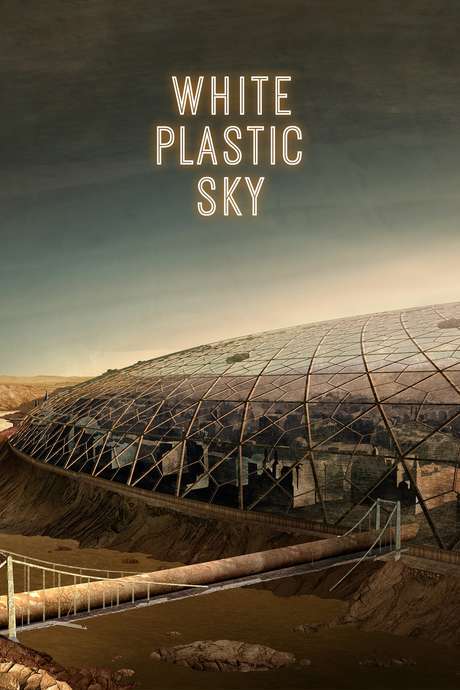
I was taken into the future where to save resources citizens at the age of 50 are turned into life-giving trees (White Plastic Sky 2023), and into the past with a frantic search for a winning lottery ticket (Le Million 1931).

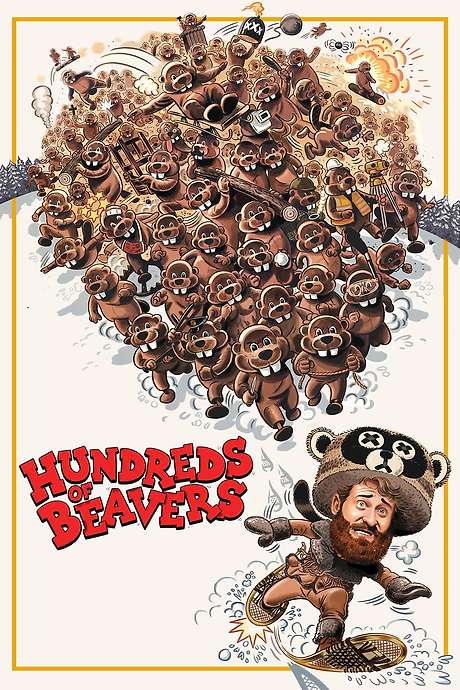
There was the craziness of Hundreds of Beavers (2023), and a moving Question and Answer with the director of the Celluloid Underground documentary about how Iranian fundamentalists used censorship and torture in their quest to destroy collections of ‘ideologically unsound’ 35mm films, including by setting them on fire – a fanatical counterpart to book burning.

I wouldn’t be surprised if The Holdovers (2023) becomes a cult Christmas classic.

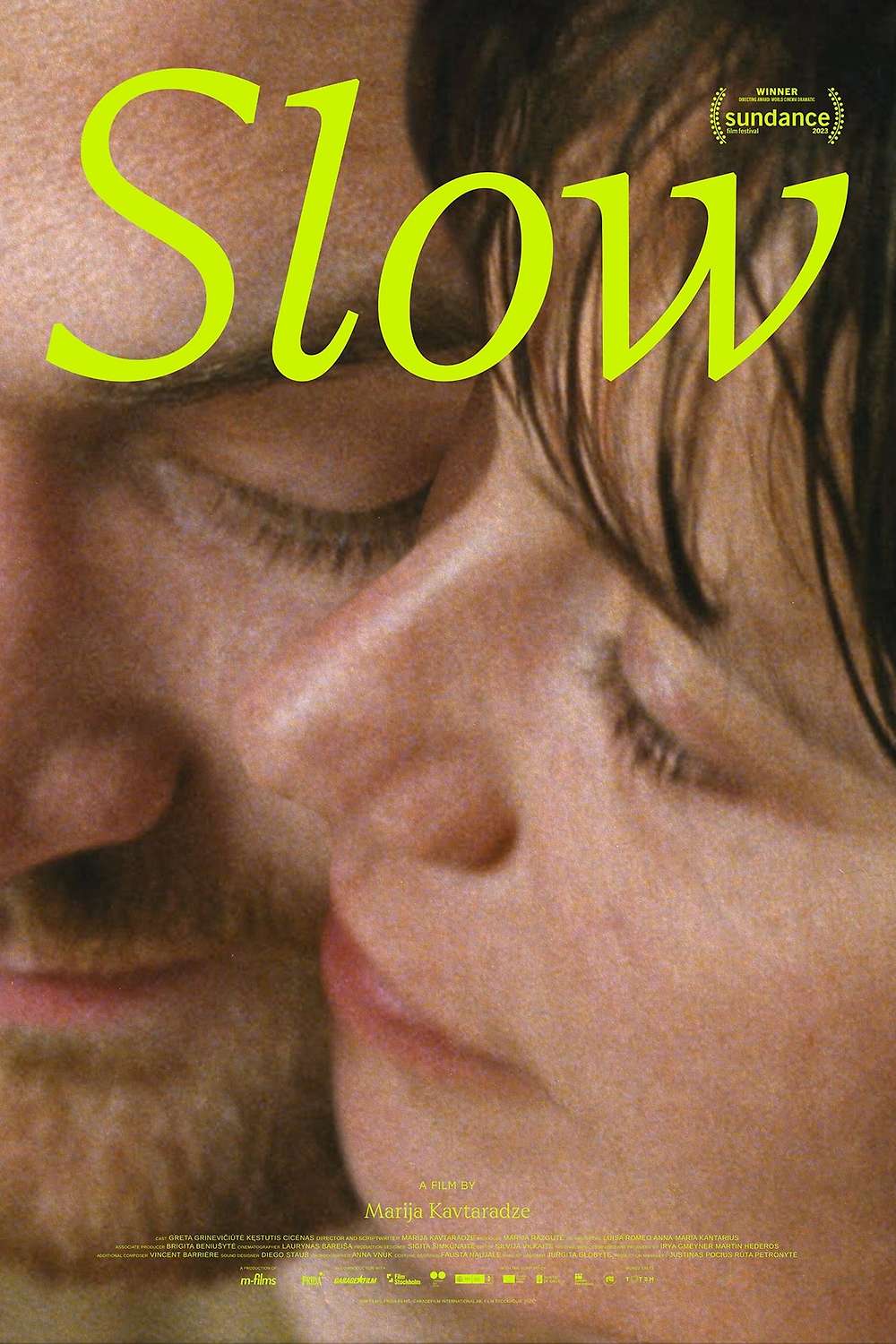
The Festival was rounded off at the Hyde Park Picture House with Slow (2023) a touching study of sexuality, intimacy and communication between a dancer and a sign language interpreter.

So many films I didn’t get to see of course. I hope to catch some of them at the wonderfully refurbished Hyde Park Picture House in the coming months.

What were the highlights for you? Do let us know.

Huge congratulations to all the staff and volunteers who brought it all together.

Bill Walton

How To Have Sex (UK 2023)

A breath-taking debut, an important message

Mia McKenna-Bruce as Tara

Screening Daily Until Thursday 16th November

How to Have Sex is Molly Manning-Walker’s remarkable debut feature film. Having made waves at this year’s Cannes Film Festival, the harrowing drama screened last weekend at Leeds’s International Film Festival with a director and cast Q&A and regular showings continue at the Picture House this week. Manning-Walker’s unflinching authenticity ensures her urgent examination of youth, consent and trauma deserves to be seen by everyone.

Three young British girls embark on a journey to Crete after slogging away at their A Levels, intent on finding booze, mayhem, and opportunities to ‘get laid’. So far this is a familiar story for the silver screen, as the combination of ‘sun, sea and sex’ has been depicted repeatedly in the age of Love Island. Yet unlike a ‘typical coming-of-age’ film, How to Have Sex is determined to examine the drunken escapades that countless Brits embark on through a different lens. As the girl’s trip unfolds and begins to unwind, it soon becomes clear that the new director intends to examine the notion of consent, carefully crafting a narrative that is moving and important.

This is all made possible by the powerful, immersive realism of everything the camera captures. Though there is the daring experimentalism of a directorial debut on display, audiences will be stunned to learn that this is Manning-Walker’s first feature-length effort, particularly due to the mastery of different styles and the diverse tones she creates. The opening showcases stunning picturesque shots of sunset beaches, creating dream-like sequences that make the audience feel as if they are lounging on the sands themselves as they grow closer to incredibly endearing characters.

This tone then shifts as part of a gritty depiction of booze-fuelled brits abroad, with thumping house music and discordant karaoke accompanying expertly placed hand-held camera angles. Nowhere do these moments feel forced, artificial or difficult to relate to. When the girls grimace as they down shots of hard liquor, stumble through nightclubs and drunkenly express their love for each other – and their love of the delicacy that is cheesy chips – these scenes are instantly recognisable and genuinely believable. How to Have Sex is effortlessly immersive, at least to what I can only assume is its primary target audience – a younger generation of Brits, many of whom are eager to drown their sorrows and embark on sunlit adventures with the mates they have made over turbulent teenage years.

These striking depictions of drug and alcohol use never feels judgemental, an important aspect of the film given its representation of the issue of consent. The debutant director films with a refreshing frankness, accurately depicting hedonistic escapades, but never in a way that scolds the youthful characters. Manning-Walker’s message isn’t to stop drinking, having fun, or chasing the sun whilst you are young and reckless. This is welcome, given that so much of the discussion on sexual violence has long been dragged down by the hopelessly inept idea that victims (particularly young women) need to merely drink less booze or wear longer skirts. The film instead warns against ignorance and cowardice as tragedy unfolds.

The immersion that characterises How to Have Sex is a huge part of why it’s message is so powerfully delivered, particularly due to the remarkable performances provided by it’s youthful cast. Mia McKenna-Bruce’s debut as Tara is as earthshattering, and may prove to be as career-defining, as her directors’. Their ability to subtly convey conflicting emotions is a big part of what makes How to Have Sex so moving, whilst a well-crafted script paints a searing portrayal of the behaviour that pre-empts sexual violence and the trauma that exists in the aftermath of such events. It is a triumph of a drama with a vitally important message.

Frankie Ryan-Casey
@FrankieRyanC on Twitter
@FranksRants on Substack

Bill’s Experience of #LIFF2022

Without the coziness of the Hyde Park Picture House or the grandeur of the Town Hall, this year I went for the 6 screenings for the price of 5. Choice is difficult with so many films from so many countries. I decided on:

No Bears (2022)


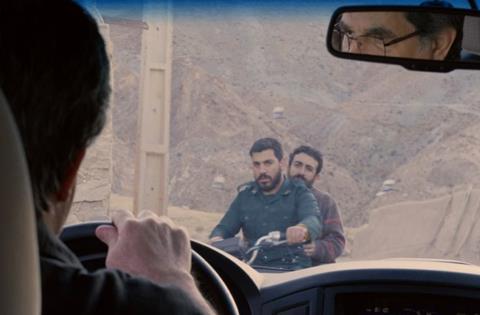
Highly recommended.  Once again Jafir Panahi uses his considerable film making skills to challenge the Iranian state. This time the film actors are in Turkey while Panahi directs from Iran close to the Turkish border because of government restrictions on his movement. There are stories within stories. 

In 2010 the Iranian government banned Panahi from film making for twenty years for propaganda against the state but with huge international support he found ways to continue. Since No Bears was released he  has been rearrested and is currently serving a six year prison sentence. The screening I went to was sold out.

Zuhal (2021)

A very well made black comedy about a lawyer who hears a cat meowing in her Istanbul apartment. Or does she? The sound takes over her life, as she struggles to find an explanation. Excellent cast. Recommended. (Presented jointly with Bird’s Eye View and Reclaim The Frame).

Casque d’Or (1952)

A newly restored taut French thriller. Set in 1902, it shows the struggle between an ex-con who is trying to go straight, and a local gangster boss. The reason? Marie (Simone Signoret) who is a force to be reckoned with. Highly recommended.

We Might As Well Be Dead (2022)

This satirical film creates a coherent dystopian world with a tower block as a refuge from dangers in the surrounding countryside. I struggled a bit with following the plot, but interesting enough for me to consider a repeat viewing.

Fanomenon Shorts

As well as aliens trying to take control of human relationships and breeding, I enjoyed the Japanese film Theatre (2022). Staff at a Tokyo cinema carry out plans to ensure its survival during Covid, with the help of a ghostly spirit. Inspiration for the Hyde Park Picture House!

Return to Seoul (2002)

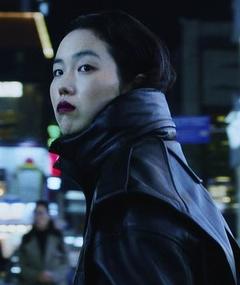
This is summed up by the subtitle: all the people I’ll never be. Freddie, a 25-year old French adoptee goes to South Korea to find her biological family. Based on a true story. An emotionally intense exploration of clashes of cultural values around family and society in the two countries. Ji-Min Park, the headstrong Freddie, gives a powerful performance in her first film. Highly recommended.

Many thanks to all the LIFF22 staff, volunteers and venues for bringing it all together. 

Bill Walton

Jozi Gold Director’s Discussion

Jozi Gold (2019) was screened at Leeds University Union as part of the Hyde Park Picture House On The Road programme in conjunction with the UK Green Film Festival on Sunday 7 November 2021.

Following the film was a discussion with host Sai Murray and film director Sylvia Vollenhoven (who joined via Zoom from South Africa). Capturing the urgency of the current conversation around climate change and the deep links between UK politics, policies and institutions and the impact this has on other countries. The discussion was recorded and here we have a transcription for you to enjoy.

You can watch the film here: https://vimeo.com/ondemand/jozigold

SM: Sylvia is not only a filmmaker, an award winning journalist, playwright, writer and knight fellow. Her book about identity, the Keeper of the Kumm won the award for literature, and her dance drama adaptation of the book was showcased on the main programme at the South African National Arts Festival, nominated for various awards – best director, best documentary, playwright, award for human rights in the arts etc.. Individual artist, activist and it’s our real pleasure to welcome you to this screening. Brilliant so we have a select audience gathered here today who I’m sure have questions and responses but I’d also like to begin by thanking you for such an inspiring film, a very provocative film and a really important film. Some really really interesting facts and also the way the film was put together and characters. I guess my first question comes from a conversation I had around the film with one of the people who invited me here today who is from South African heritage and who’s here. Our reaction I guess to knowing this film was about Johannesburg, about mining and your choice to follow this character – because we begin with the stilettos, with the very ornate dressed individual of the white woman but you being a black film director, that was not what was expected but she is such an interesting and intriguing character who has done a lot of good and her activism is having a lot of results. So could you speak about the choice to follow this individual and how you perhaps first became aware of her activism?

SV: Greetings! Thank you for screening the film and thank you for this opportunity. How I first got to hear about this is there’s a tiny magazine in South Africa that is small in numbers and audience but very very powerful. It’s an investigative journalism magazine called Noseweek and the editor of that magazine and I have worked together at different media houses and I’ve always been following his work and I’d seen so much of Mariette Liefferink’s activism in Noseweek. In fact, we feature in the film that Superwoman power image – that came out of Noseweek! The editor also has a son who is a journalist and Adam Wells had been following Mariette’s story and filming and he’s more of a print journalist rather than a filmmaker and he was following her around for 4 years. He has a friend who’s the director of a film in Norway and spoke to Stephan about finishing this film that he had been filming for four years but didn’t know how to structure and didn’t know how to put it all together. Stephan said well I have a friend in Sweden, Frederick Garrington[?] At WG Film would be very interested in the story, and Frederick said I’ll get on board if Silvia is the South African producer and my co-director because Frederick and I have been working together for many years and we also are very close friends for decades, having covered apartheid together and I used to be a correspondent for a Swedish outlet. So that’s how it came about. But I must say when Adam Wells, the South African journalist, came to see me and said Frederick said he’s on board if you become the South African director I was not agreeable! I just had not met Mariette and I thought I’m not going to sit here so many years after South African democracy and allow a white Africans woman to tell us what is wrong with South Africa. It just didn’t sit well with me. But then I went to Johannesburg and in Cape Town at the time and changed my mind completely. There were two things that changed my mind mainly, there were lots of little things, but the two main reasons were her integrity and her passion and the second reason was that being an activist myself I knew how important it was to have an image that was out of the ordinary, that would stop people in their tracks, and not only did she have this exotic image that was attention getting and we could use to our advantage for the activism that the film is hoping to elicit but also in the mining industry, dominated by men, and a certain kind of patriarchal class, they don’t see her coming, and by the time they sit up and take notice she’s already in the Supreme Court with a huge court case. So I thought well given my activism background I could really work with this woman.

Continue reading

Bill’s Festival Highlights

Another good year! Special thanks to the Leeds International Film Festival 2021 team for screening an impressive selection of films despite Covid and the non availability of the Hyde Park Picture House and Leeds Town Hall this year.

I watched a total of 8 films

Dear Future Children (2021). Very powerful interviews with young women activists facing huge personal risks in Hong Kong, Santiago and an Ugandan village, plus Q&A with the director.

The Ants and the Grasshopper (2021) following two Malawian women who share experiences of climate change with people from a wide variety of backgrounds in the USA. Great to have this screened while the COP26 Climate Conference was being held in Glasgow. (Available on LeedsFilmPlayer until Thursday)

No Straight Lines: The Rise of Queer Comics (2021), with interviews with some key American women and men artists. The documentary shows how they adapted from underground comics in the late 60s, to supporting people through the AIDS epidemic, leading on to graphic novels and a Broadway show. (Available on LeedsFilmPlayer until Thursday)

Seven Samurai (1954). Great to see on the big screen. Actors were really tough in those days!

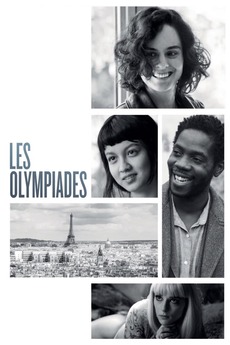
Paris, 13th District (2021). Some interesting insights into life in the eight tower blocks of Les Olympiades.

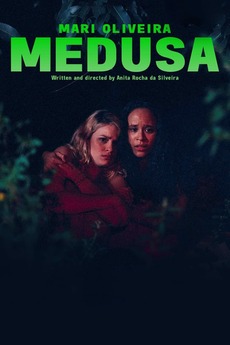
Medusa (2021). A Brazilian feminist horror film. Despite an interesting soundtrack and colour design I struggled to follow the plot in this one.

Compartment No. 6 (2021). A great film showing the common humanity shared between a female Finnish archaeology student and a male Russian mineworker on a long train journey to Murmansk.

The Hand of God (2021). The first half is the hugely entertaining story of a gathering of an extended Italian family, followed by the story of how this and other life experiences have influenced the director’s (Paolo Sorrentino’s) work.

This is but a small taste of the huge range of films on offer. Once again it shows the importance of International Film Festivals in building the  global understanding that we so urgently need.


Bill Walton

Leeds International Film Festival 2021

It’s that time of year again and #LIFF2021 is heading back into venues and also making lots of films available to watch online. Earlier this week committee members Bill Walton and Andy Smith attended the launch of the festival and share their first impressions.

For me one of the delights of the Leeds International Film Festival has been settling into the comfy seats of the Hyde Park Picture House, and watching several films in a row. A pleasure deferred until November next year…

This year we had the usual LIFF launch, with a breathless back to back screening of many short trailers for 55 minutes. This approach does give an impression of the variety of films on offer but is not ideal for decision-making. However I came away with a few clues:

But this is just scratching the surface. I haven’t had time yet to delve into the printed programme yet, so these impressions are very much subject to change. I suggest that you have a look for yourself!

Bill Walton

I always look forward to the LIFF preview so after missing last year it was with a sense of anticipation that I went along to the Vue on Wednesday especially as the venue was bragging about their new seats….I could have happily watched more trailers [and you now can – see below] but was glad that the screening was only 55 minutes as I could not have slouched in those seats for any longer despite having fiddled with the adjustment throughout, there was not a comfortable setting for a back now in its 7th decade….

It was a whirlwind of trailers….

I picked out the same ones as Bill plus:

Our task is now to go through the brochure and working out which films and venues align with work and other commitments with the backstop of the Leeds Film Player [the clashfinder can help with this]

Andy Smith


The festival guides are available from Vue Leeds in The Light, Leeds Town Hall now and more sites around Leeds and Yorkshire soon. For a guide in the post, email your details to leeds.film@leeds.gov.uk.

A PDF version is available online and tickets and passes are on sale now.

A number of festival fans have also put together some things that may help you plan your festival.

  • Clashfinder – see what films are on at the same time, highlight your choices, export to your calendars
  • The Films of #LIFF2021 – a Letterboxd list of most of the films showing at the festival
  • Online films at #LIFF2021 – a Letterboxd lists of most of the films available on the Leeds Film Player during the festival
  • LIFF2021 Trailers – a YouTube playlist of 80+ trailers for films at the festival

Leeds Film Festival Extended

Leeds Film Player

Normally at this time of year the film festival will have come to end but as we all know this year is far from normal. Plans to show films in venues had to be cancelled as cinemas closed again at the start of November but this has made the online selection even stronger and many of the films are still available until the end of the month.

I found the Leeds Player to work very well with only a few minor niggles, it’s certainly better than offer online film festival platforms with no visible watermarks and the ability to cast to TVs.

Here’s my selection of the films I liked the most that are still available to watch until November 30th.

Poster for Anne at 13,000ft

Anne at 13,000 ft

A divisive film but one I really liked with a very strong central performance; it stuck with me for days after viewing.

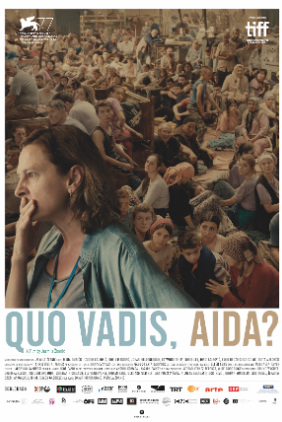
Poster showing Aida in front of a warehouse of refugees.

Quo Vadis, Aida?

A really powerful film centred around a translator in Bosnia, 1995 as the Serbian army take over her town. It manages to be both intimate and cover the larger scale of what happened and always feels very relevant.

17 year old Selma eating a honey cigar

Honey Cigar

A late addition to the online programme but a great coming of age film with a really good central performance that wonderfully captures the life of French-Algerian teenager living in Paris in the early nineties.

Illustrated bear wearing a regal robe with a number of human and bear character standing behind him

The Bears’ Famous Invasion

One from the Young Film Festival selection but this charming animation is a delight for all ages (and only £3 to rent).

Poster featuring a woman in a white suit covered in blood holding a pair of shears.

The Columnist

It doesn’t always make a lot of sense and can get quite silly but this is also the most fun I had watching a film for quite some time. A black comedy about a newspaper columnist taking on social media trolls.

I didn’t have time to explore the Cinema Versa strand but hear that Andrey Tarkovsky. A Cinema Prayer and Kubrick by Kubrick are worth watching. I’m making my way through the Shorts, as always this is a varied selection but so far have been consistently good.

I was slightly worried that there may not be as many good films this year but once again it has been a really good programme. I only saw one film that was (arguably) bad and there were a few I struggled to get on board with but I’m glad I saw everything else. You can see my comments on all of the films along with star ratings on my Letterboxd list.

LIFF 2019 Preview: Retrospective

Verna Fields

The Festival Retrospective this year offers a distinctive programme:                              ‘Mother Cutter Women Who Shaped Film’.

The women shaping film in this case are the editors, an important aspect of film-making which women have often dominated and which for much of the industry history has been one of the few areas where women had similar opportunities to men; another interestingly is scriptwriting.

The retrospective title is that of the nickname of Verna Fields, a long-standing editor in Hollywood. Her work included such disparate titles as Medium Cool {1969) and Jaws (1975). The former, a classic of the counter-culture, is the title screening in the Retrospective.The programme screenings are split between The Victoria at the Town Hall and the Hyde Park Picture House. Note, some titles are screening twice, some only once; so check the Brochure and calendar.

With the exception of the most recent ‘Mad Max’ release all of the titles were produced using photo-chemical film with the appropriate techniques. This means that the editing not only involves viewing, selecting, and arranging the complex tapestry of film shots and sequences in relation to sound tracks; it was physical manipulation,  cutting and splicing reel film, nearly always 35mm. So it is a little disappointing that only four of the titles in the programme are being presented in this format. All screen at the Hyde Park Picture House.

‘Beau travail’

Beau travail (1999.) [Wednesday 13th and Friday 15th November].

This is an adaptation of Herman Melville’s story ‘Billy Budd,Sailor’ by the director Claire Denis with Jean-Pol Fargeau. There have been other film versions of the Melville story but this is the most ambitious, with the narrative moved from a ship-o’-war to a Foreign Legion outpost in North Africa. Two important collaborators on the film were cinematographer Agnès Godard and film editor Nelly Quettier. Both have worked on other important films. Agnès Godard was cinematographer on a fine Italian film Golden Door / Nuovomondo (2006). Nelly Quettier worked on the equally fine and more recent Italian film Happy as Lazzaro / Lazzaro felice (2018).

‘Dancer in the dark’

Dancer in the Dark (Denmark and thirteen other territories, 2000)                                    [Monday 18th and Tuesday 19th November].

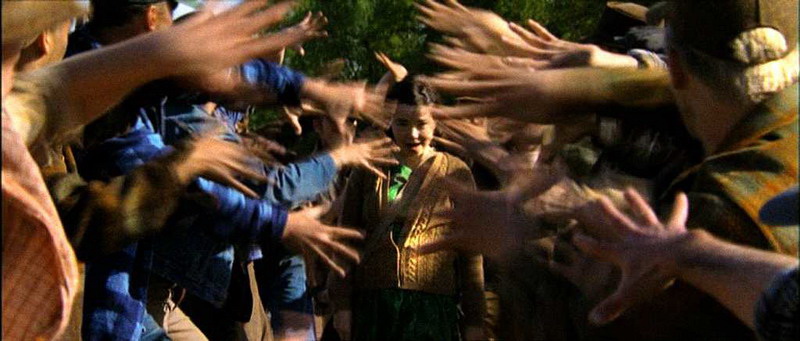
This is a post-Dogmé film from Lars von Trier. As you might expect it moves to a harrowing climax. Before that a young immigrant single mother [played by singer Björk) is living in rural USA in 1964. Her world of escape presents musical sequences set in her factory workplace. The film was edited by Molly Malene Stensgaard who had to manipulate DVcam video before its transfer to 35mm film. She has worked on a number of Lars von Trier titles, including the outstanding Melancholia (2011). This film won the prestigious Cannes Palme d’Or.

‘Movern Callar’

Movern Callar (Britain, Canada 2002).                                                                                                        [Tuesday 19th and Wednesday 20th November].

This was the second feature directed by Lynne Ramsay. This, and the earlier Ratcatcher (199),.seem to me better than her later films with US participation. Samantha Morton in the title role plays a grieving young woman who goes on a journey and an odyssey to Spain. The film was edited by Lucia Zucchetti. She also edited Ratcatcher, and, a little later, the highly successful The Queen (2006).

‘The Tempest’

The Tempest (Britain 1979). [Monday 11th and Wednesday 13th November].

The talented and subversive Derek Jarman adapts William Shakespeare: later he added Christopher Marlowe Edward II (1992). ‘Such stuff as dreams are made of …’ in a completely distinctive treatment. The editor Lesley walker, in only her second feature, provided an editing style that matched the unconventional style of Jarman. Her later work includes popular hits like Mama Mia (2013) but also other unconventional titles like Fear and Loathing in Las Vegas (1998). The film originated on 16mm.

Esfir Shubb

The Fall of the Romanov Dynasty / Padenie dinastii Romanovykh (USSR 1927),        [Monday 11th November].

This title, originally on 35mm, is screening from a 16mm print; the format used in film societies and by Kino in 1930s, when Soviet films were almost impossible to see in Britain. Directed and edited by Esfir Shubb, this is a pioneer compilation documentary. Shubb worked through thousands of metres of stock footage, short films and newsreels to produce 1500 metres that traced the the developments in Russia from 1913 to the revolutionary year of 1917 and the final dissolution of the Russian ruling class. Shubb could be called the ‘mother cutter’ of Soviet cinema. Many of the famous talents learned from her tutelage, including the young Sergei Eisenstein. The film has no sound track but uses title cards and will have live musical accompaniment by Jonathan Best at the piano.

These five films are the only photo-chemical prints in the Festival. The number seems to go down year by year; so apart from the quality of the films these screenings are also an opportunity to enjoy a’ vanishing prairie’ of reel film.

************************************************************************

Note: a bonus.

Green for Danger  (Black and White, 1946) by Lauder and Gilliat is also a 35mm print, the second screening is on Thursday a,m. This is a murder mystery with a fine performance from Alastair Sim. Edited by Thelma Myers [later Connell]. She learned her craft on films like The Life and Death of Colonel Blimp (1943) and worked on many more titles including the fine black and white drama The Hill (1965).

I can also happily report that the 35mm prints of The Tempest and Green for Danger  were both good and that for Beau Travail was excellent.

 

LIFF2019 Preview #2

Next in our series of posts on Leeds International Film Festival, Hannah tells us about her festival plans…

Last week, on a bit of a nostalgia trip, I watched the French film A Town Called Panic (2009) This showed on bonfire night at the Picture House during LIFF24 in 2010 and was my first taste of the film festival. Since then, my festival has steadily grown from the occasional odd film when I happened to be in Leeds to being an essential fortnight of my autumn calendar, around which all other things must be carefully arranged.

This year I’m going full tilt into LIFF (can we call it LIFF33?). After 2018, I said I’d take it easy and have time to reflect between screenings, maybe pop home occasionally, check in with my family or go for some leisurely lunches. You know, the things it’s nice to do when you’ve taken a week off work. Unfortunately somewhere in the planning, that idea has been bulldozered. The changes in ticketing for the festival, a jam-packed programme to choose from and a kind of film festival FOMO have conspired to keep me as square-eyed as ever.

At the time of writing, I’m lining up 45 screenings across the 16 days of festival; from Hollywood yet-to-be-blockbusters like Jojo Rabbit and Little Monsters, French animation (I Lost My Body), and East Asian action (The Gangster The Cop The Devil, The Wild Goose Lake) to documentaries like The Hidden City, shorts (ALL the animation) and a smattering of classics (All About Eve, Bonnie and Clyde). It’s going to be an effort, but when the line-up is this varied and exciting, I want to make the most I can of the opportunity.

The Picture House has been the scene of some of my favourite LIFF memories and this year has some exciting offerings:

  • The Fall of the Romanov Dynasty – A 1926 silent found-footage film marking the 10th anniversary of the 1917 revolution with live piano accompaniment.
  • The Hidden City – a documentary by Víctor Moreno on subterranean worlds; the pipes, tunnels and transport beneath our cities.
  • Night of the Dead and the inaugural Sci-fi Day – the marathon events at HP are staples of the film festival programme and this year the line-up includes a sci-fi run back to back with NOTD. If you’re really going for it you could attempt both, and I’m sure some will!

Outside the Picture House, I’m really looking forward to:

  • The Gangster The Cop The Devil – Thanks to LIFF, I’ve discovered a love of Korean action. A gangster and a police officer hunt a serial killer – the trailer is promising and I have high hopes.
  • Come to Daddy – Elijah Wood in a grizzly family drama. It might tip into type-casting, but Wood does wide-eyed terror well and I expect it to be put to good use here.
  • Days of the Bagnold Summer – the directorial debut from Simon Bird (Will from The Inbetweeners) is an adaptation from the graphic novel of the same name by Joff Winterhart. A story of a teenage boy and his mum navigating a long summer holiday together. The cast includes British favourites Alice Lowe, Monica Dolan and Tamsin Greig, with Earl Cave (Nick’s son) in the central role.
  • Family Romance LLC – A Werner Herzog documentary exploring a business in Japan that rents out actors to substitute in others’ lives, like a nonfiction rendering of Yorgos Lanthimos’ 2011 film Alps. That film was strange enough and I’m interested to see how the real version might work. From the trailer and bits I’ve read online, it’s going to be an odd one.

With a programme that offers such a variety and by giving myself the freedom to take some risks, the LIFF experience to date has dramatically expanded my cinematic horizons. Before discovering them in the cinema, I probably would have skirted all sorts of excellent foreign-language films because they felt like too much of a challenge and I definitely wouldn’t have gone out to see many documentaries on the big screen. These days the reluctance has vanished and recent years have been a feast of the weird and wonderful.

Taking an afternoon off work to go to the cinema feels like a decadent treat, something you can file under ‘self care’ and spoil yourself rotten at a matinee. Take a whole day off to go to the pictures and it might start to feel strange – more than one film at this time of year and you’ll barely see daylight. Take a few more and step out of your day-to-day life, disconnect from rolling news and immerse yourself in the moving image. There in the dark, you might learn something new, experience something you wouldn’t have otherwise, and lose yourself in other people’s imaginations. It really is the most wonderful time of the year.

LIFF 2019 starts on Wednesday. I’ll see you in the cinema!