The Outrun (2024)

For October’s First Thursday Film Club we’ll be watching The Outrun at 5pm on Thursday 3rd and then gathering in the bar for a chat to share our feelings on the film, or about film in general, from around 7:30pm. First Thursdays are a new meet-up organised by the Friends of Hyde Park Picture House but open to everyone.

Starring and produced by Saoirse Ronan, and adapted from the bestselling memoir by Amy Liptrot, The Outrun is a life-affirming story about living on the edge, healing and what it means to return home.

“This is beautiful filmmaking. This is cinema where everything matters, where every little detail adds up to create something seriously exhilarating to experience in the theater.” – Alex Billington, FirstShowing.net

“The Outrun’s true tether, however, is Ronan, and here she works to all her greatest strengths. The film wraps entirely around her, yet she’s far too honest an actor to ever play up to the audience’s expectations of a woman in crisis.” – Clarisse Loughrey, Independent

The film is showing every day this week so we hope you will get chance to see it and then join us on Thursday to talk about it.

Book Tickets

Review: Not A Rock-Doc

 
“If you can remember the 70s, you weren’t there!” A quote very freely adapted from Timothy Leary, or was it Pete Townsend, or maybe even Robin Williams, when commenting on the 60s …  to be honest I’m actually not sure who said it. Anyway they were two tremendously creative decades in rock history. We still have the recordings, some films of concerts, and some ageing rockers are still touring. But what was life really like for a band like Sharks on the edge of the big-time? They made good music and were signed to Island Records. They even had a shark-shaped car. What could possibly go wrong? 

Fortunately their frontman Steve (Snips) Parsons is also a filmmaker. Despite a very limited budget Steve, along with Anke Trojan, made Not a Rock-Doc to share his experience of the ups and downs of being in a working band. As the film title says this is not a traditional documentary. What we have here is a series of impressions of people, places and sounds, some fleeting, drawn from hours of film footage. We meet other band members, in particular accomplished guitarist Chris Spedding. The film touches on the formation of Sharks in 1972, the people, the glamour, the top musicians, the American tour, the albums, the rise of Sharks, their decline, their resurgence in the 21st century, and their subsequent collapse. We join band members in the dubious joys of playing a gig in Scarborough, answering questions from punk icon Jordan Mooney, and declining an audition for the Rolling Stones.

This film does for rock documentaries what Almost Famous (2000) does for rock journalism. It gets behind the glamour while recognising the talent and hard work of the music industry. And it also shows the big egos, personal problems and pettiness surrounding the mythical band Stillwater. Of course Almost Famous had a much bigger budget than Not a Rock-Doc. But Not a Rock-Doc may well follow Almost Famous as another cult classic. 

Not a Rock-Doc is fun. It’s also very human, silly, and sad, and a tribute to creative people struggling against the odds to bring their art to the public. Screen 2 of The Hyde Park Picture House was ideal for a screening of Not a Rock-Doc, followed by Q&A with director Steve Parsons, moderated by Alice Miller. An intimate auditorium. Up close and personal. Snips is refreshingly open in responding to audience questions. He is now using his energy to promote the film to wider audiences and to get funding to get the film on to DVD.  

In short another great Picture House event to celebrate our cultural lives.

Bill Walton

The Bill Douglas Trilogy

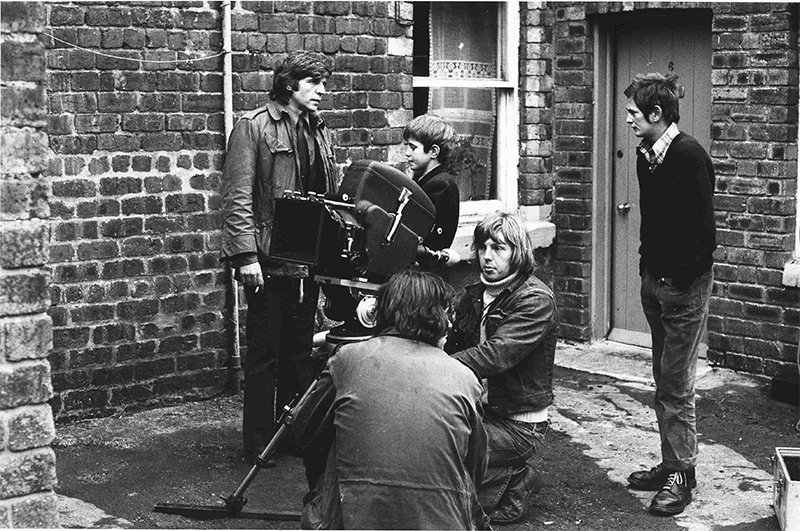
Douglas and crew filming a scene

This first part of this film trilogy was screened for members following the Friends’ Annual General Meeting. This was in the new Screen 2 of the redeveloped Picture House and was screened from a good quality 16mm print.

Scottish film-maker Bill Douglas was born in a small mining village close to Edinburgh in 1934. He was, sadly, lost to British film having only made, [apart from student films], the trilogy and a one feature film. Douglas came late to film; it was only in 1969 that he enrolled at the London School of Film Technique. This is actually the oldest school for film-making study in Britain, founded in 1956 and sited now in the Convent Garden area. Douglas made four short films while a student. However, on completing his studies he faced the usual barriers for independent film-makers.

Finally in 1972 he secured support from the British Film Institute’s production fund for three interrelated films. The first, at time with the title of ‘Jamie’, had been turned down by Films of Scotland because of the bleak view it provides of war-time Scotland. The film is based on experiences of Douglas’s own upbringing in the 1930s and 1940s. It became My Childhood, shot in black and white, academy and running 46 minutes.

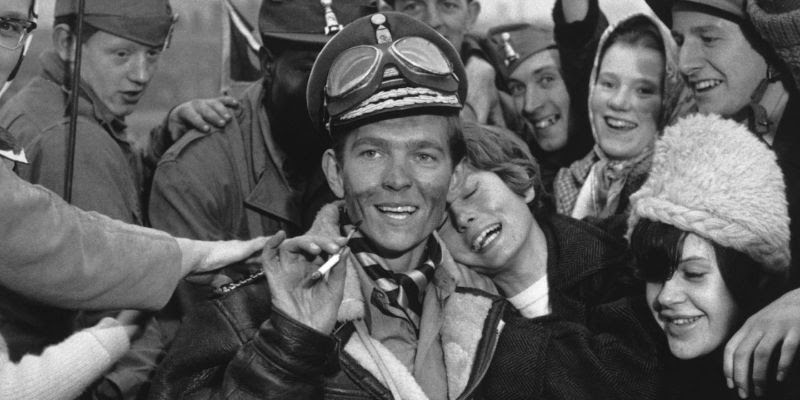
The film is set in 1945, as World War II draws to a close. Jamie (Stephen Archibald) and Tommy (Hughie Restorick) live with their grandmother (Jean Taylor Smith). Their housing, diet and clothing all show the deprivation given the poverty of the family. The boys have pets which suffer from their situation. Jamie’s one outside relationship is with a German prisoner of war working locally on the land; Helmuth (Karl Fieseler). We see a celebratory bonfire at the end of the war and then Helmuth returns to Germany. There are also times when the boys (and the audience) see their father, who co-habits nearby, (Bernard McKenna). His mother is confined on some sort of mental institution. The bleakness of their lives is almost unparalleled in British film. It does have a moment of change; with a long shot of a departing figure on a train. The latter a familiar trope in films concerning children and rites of passage.

The cinematography was by Mick Campbell: the editing by Brad Thumin: and there were additional craft people on sound and a second unit. The imagery is stark but effective: the sound track is sparse, especially the dialogue, but it contributes to the overall impact: and the exteriors provide both a comparison and contrast to the central setting. The craft team, like the writer and director, seem to have a small number of credits. The quality should have led to a far greater output.

The second film of the trilogy is My Ain Folk (1973). This film picks up where My Childhood finished. The characters are the same, with the addition of other family members, as Jamie goes to live with them. Tommy is taken into welfare so this film concentrates on the experiences of Jamie. This is as harsh as his earlier life but with greater isolation. There is a brief moment of colour earlier in the film. It is in black and white and academy, running for fifty five minutes.

The final Part of the trilogy, My Way Home (1978) is also in black and white and academy but runs for 79 minutes. The film takes Jamie’s story into adulthood, entering work and then National Service. Jamie is again played by Stephen Archibald. The film takes the narrative outside of Scotland and Britain for the first time. It also presents a full and continuing friendship that leads to a change in Jamie’s life.

The National Film Archive has 35mm prints of both the second and third parts of the trilogy. It would be good if the Friends could cooperate with the Picture House to arrange screenings so that members and the public can see the rest of this outstanding work. The Archive also has a 35mm print of Douglas’ final film, Comrades (1987). The presents the story of The Tolpuddle Martyrs, agricultural labourers in the early C19th criminalised and then transported for daring to form a Trade Union. This is an important film on working class history in Britain and a fine representation in colour and widescreen which makes interesting use of early picture technologies.

Celebrate Yorkshire Day with Billy Liar

Wednesday 3rd August 6pm Leeds University Union

To celebrate Yorkshire Day this year there is a screening of Billy Liar (1963) at Leeds University Union on Wednesday 3rd August at 6pm.

Before the film there will be a brief update on the upcoming changes to the Friends Membership scheme and how that fits in with the development, changes and reopening of the Picture House in the autumn.

The Friends will be moving to an annual “Pay What You Decide” membership model and focussing more on our charitable aims. Soon, The Hyde Park Picture House will be introducing their own new membership scheme which will include discounted tickets and other benefits.

We’ve made these changes because membership schemes are an important way for cinemas like the Picture House to raise income and grow audiences. The primary motivation for the Friends has always been different, focussing on our charitable objects to support and celebrate the cinema. At this point clearly separating the two so both could thrive felt like a great opportunity.

We’ve put together a page of Frequently Asked Questions on our website which explains things in more detail but if you have any other questions please get in touch

Back to Billy Liar in which Tom Courtenay plays an irresponsible funeral director’s clerk, who fiddles the petty cash, is at war with his parents, and has become involved with two young women who share the same engagement ring. An incorrigible liar and day dreamer by nature, whenever possible, Billy retreats into a fantasy world where he is the hero: a dictator of an imagined land of Ruritania or a famous novelist. Anything to avoid have to make a decision, grow up, get out.

Filmed on location in Bradford and Leeds, Billy Liar is outlier to the brand of kitchen-sink realism then current in 60s Britain. Director John Schlesinger, with screenwriters Keith Waterhouse (who wrote the 1959 novel the film is based on) and Willis Hall, craft a wonderfully cast and irreverent film that sits somewhere between reverie and reality, cleverly mirroring the modernisation of British society at the time.

Review: Censor (2021)

 Niamh Algar in CENSOR, a Magnet release. © CPL/SSF. Photo credit: Maria Lax. Photo courtesy of Magnet Releasing.

Censor is Prano Bailey-Bond’s spine chilling debut feature. Set in the mid 80s against the backdrop of social unrest, Thatcherism and the rise of the video nasties. We follow Enid Baines (Niamh Algar) who is a film censor. She lives a nocturnal existence watching a plethora of gore and sin in the films she is charged with watching. One day she views a film that reminds her of a tragedy from her childhood. Triggered by this, she sets out on a journey in which her fiction and reality gets blurred.

The dark and depressive world that Bailey-Bond creates is heightened by Cinematographer Annika Summerson whose hellish visuals adds an expressionistic touch. It is notable that she uses 35mm which echoes the ambience of this bygone era.

The script which Bailey-Bond co-wrote with Anthony Fletcher, is razor sharp, with one scene in particular of suitably over the top gore mirroring the video nasties themselves. However amongst the blood shed there’s occasional moments of truly dark humour. The acting is chilling with Michael Smiley delivering a cool and calculated performance as sleazy film producer Doug Smart. However, the stand out is Niamh Algar who is magnetic on screen. Enid’s character’s arch is one of the film’s takeaways and Niamh plays her unravelling superbly.

The main criticism I have of the film is it’s running time. Although admittedly most horror films tend to be under two hours, you can’t help but feel a little cheated with a running time of one hour and twenty four minutes. You are left with a sense of events being rushed over and plot points not fully explained to get to the deliciously cynical Lynchian style ending.

Sam Judd

Censor is available as a premium rental (£10) from most online platforms including BFIPlayer and Curzon Home Cinema

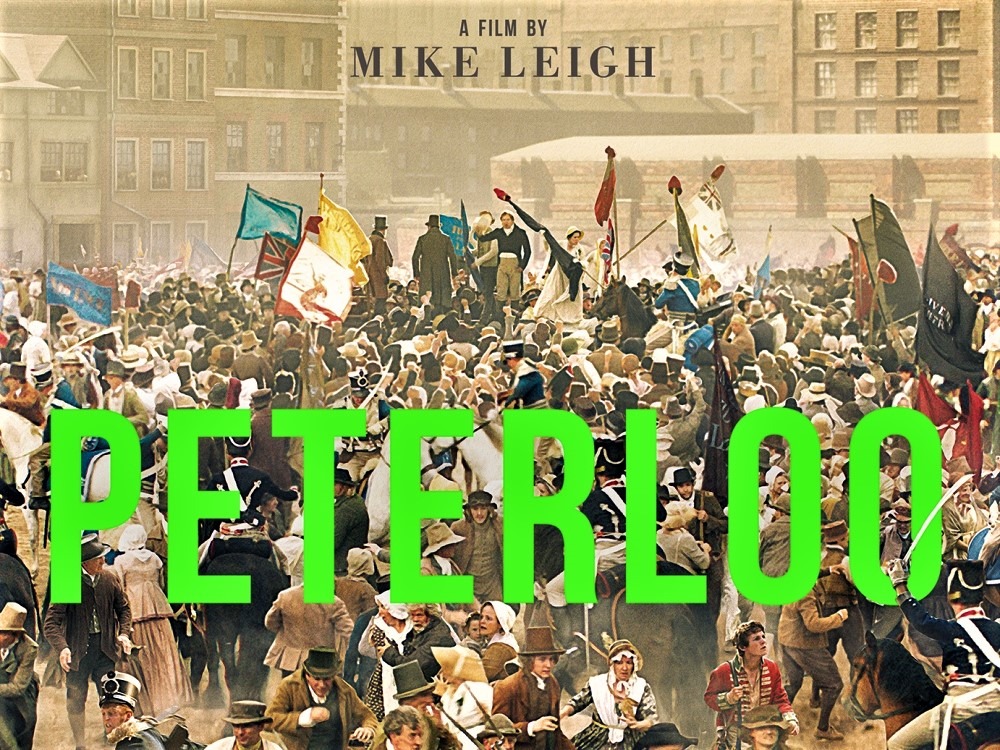
Peterloo on C4

Saturday March 13th on C4 at 10 p.m.

So if you missed this title on release or you want to enjoy it again this very fine film is screening tonight on C4 (and will be available on All4 ). Quite a few reviewers did not really appreciate the film on its release. British film critics, with some exceptions like Derek Malcom, do not really engage with actual and detailed politics in dramas. Even when they admire Ken Loach they tend to prefer his dramas built round personal lives rather than those constructed around political movements. This would seem to be one reason why British cinema has never quite equaled the output  from the continent.

This is one of the finest films to be made in Britain in this new century and it is certainly one of the most interesting. It is flawed in some ways. This seems to have been due to the project being rushed in its final stages. Originally planned for the Centenary of the Peterloo Massacre in 2019 it came out a year early. This seems to have affected in particular the final sequences of the title which seem less developed, especially after the lengthy treatment of the causes and actual violence of this historic protest in Manchester.

It has been very well filmed by a talented craft team with excellent cinematography by Dick Pope and sharp editing by Dick Gregory. It has a very intelligent script from Mike Leigh.  Care has been taken to render accurate local dialects and the setting shave been well reconstructed . But what stands out is that the politics of the emerging working class are given full expression here; something not often seen and heard in British films though it is also found in the other fine study of C19th working class radicalism Comrades (Bill Douglas, 1986). The cast of proletarian characters and their middle class allies are generally very fine. And the opposing local functionaries and the rising bourgeoisie are convincing.

The major weakness is in the representation of the aristocracy and the dominant political figures. Other Mike Leigh films have presented upper and middle class characters close to caricature and the royal and authority figures here are not convincing. Nevertheless their preening narcissism and their  ruthless and violent defence of undeserved and unearned privileges is accurate. .

This is a film that combines documentary style recreation, powerful and emotional sequences with a compelling political representation. It is amazing that it has taken over a hundred years of British cinema till we have a film of such a major historic event. It should be noted that Peterloo is a motif in the earlier Fame is the Spur (the Boulting brothers 1945 adaptation of Howard Spring’s novel) which is also well worth viewing. I cannot think of much else  this coming Sunday evening to match this presentation. And Jacqueline Riding’s ‘ Peterloo: The Story of the Manchester Massacre’ (2018) is worth reading as well.

The Life and Death of Colonel Blimp, Britain 1943

BBC 2 Sunday April 26th at 12 noon.

This is a film from Michael Powell and Emeric Pressburger; arguably the most imaginative British filmmakers to work in our mainstream industry. The 1940s was the great decade for the duo with a string of master-works that were both popular and ground breaking. The pair had their own production company, ‘The Archers’, with the famous logo of an arrow striking a target.

The ‘Colonel Blimp’ of the title was well known in war-time Britain; a character in a cartoon series by David Lowe which satirized the traditionalist British military. Powell and Pressburger transformed the character though they cleverly retained aspects of the series as with the Turkish bath sequence that opens the film.

At this point the ‘Blimp’ character, Clive Candy [Roger Livesey) has come out out retirement to manage the newly organised Home Guard. He retains traditional military attitudes which come into conflict with the modern and ruthless attitudes of a young brash regular army lieutenant. The action leads into a flashback which traces Clive career and personal life from the Boer War period.

This, the main part of the film, is partly a war story, partly a romantic drama, but also a moving portrait of ageing, devotion and friendship. The friendship is with a member of the German military, Theo Kretschmar-Schuldorff (Anton Walbrook). The devotion involves a series of women, Edith, Barbara and Angela, all played by Deborah Kerr.

The cast are superb. Roger Livesey also played the lead in the later and equally fine I Know Where I’m Going (1945). Deborah Kerr was the lead in several films by Powell and Pressburger, notably Black Narcissus (1945). And Anton Walbrook played the far less sympathetic ‘’Svengali’ producer Boris Lemontov in The Red Shoes (1948).

Walbrook – Livesey – Kerr.

Whilst Clive Candy’s career and personal-life are full of interest there is also a strong thematic current. This is the critical examination of the mores of war when Clive commenced his career at the turn of the century and those now required by the current European war against the ruthless Nazi regime. The film manages to marry this critical perspective with an emotional interest in Candy and his friends and his loves.

The film runs 183 minutes, but I never found this a long film to watch. As is the case with really talented film-makers, Powell and Pressburger had a fine eye for skilled craft people. The Technicolor cinematography by Georges Perinal is excellent. The Production Design by Alfred Junge together with the Costumes by Joseph Bato are very fine. And there is clear crisp editing by John Seabourne with well-scored musical track Allan Gray.

The film has undergone two restorations over the years. Contemporary 35mm prints enjoy a high standard of colour and definition. This film is screening on BBC HD which should do sufficient justice to the original. And be thankful. Winston Churchill disliked the film but his efforts to stop the production were in vain. Whilst the British public liked the film which came fourth in the 1943 box office.


Cheer up with Ealing Comdedies

Three of the finest contributions to British cinema have been Powell and Pressburger, British Documentary and the output of this famous studio from 1945 until 1955. If you want an excellent overview then the book to read is Charles Barr’s study, [a Movie Book, 1980 and 1993, Leeds Central Library have a copy when they reopen]. This is of a comparable quality to many of the best titles produced at Ealing.

As Stephen pointed out BBC 2 is screening one of the comedy classics every day this week. Three of them are, to mine mind, among the great classics of our own film industry.

The Man In The White Suit

BBC2 Tuesday 3.25 p.m.
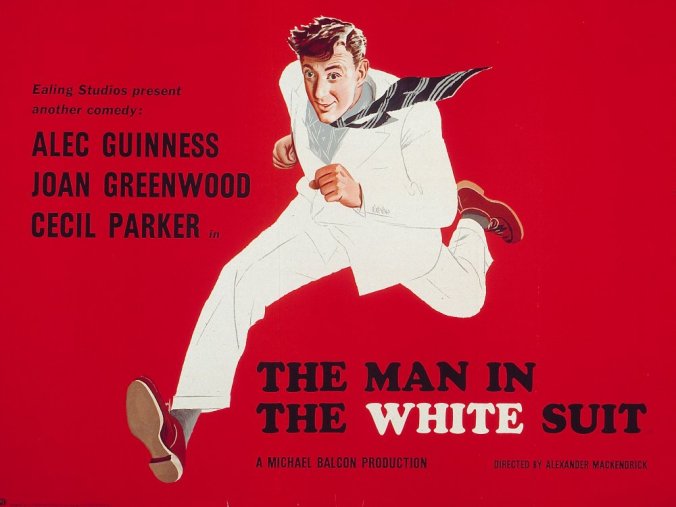
1951, black and white, 85 minutes.

This is a superb film which is effectively a science fiction drama. It was directed by one of the finest film-makers in Britain in this period, Alexander Mackendrick. The director also worked on the script with two experienced writers John Dighton and Roger Macdougal.

Alec Guinness, in a decade that saw a string and variety of fine performances, plays inventor Sydney Stratton, with a new miraculous cloth. There are a fine cast of supporting players including Joan Greenwood, she of the memorable husky voice, as the romantic interest; as a key mill owner; Cecil Parker, the embodiment of pomposity; and a delightful cameo by Ernest Thesiger, as a wily capitalist

The invention has both positive and negative aspects, and this fuels the drama. The research laboratory sequences are marvelous and this film is replete with not only visual but also aural humour. The finale, with the joining of forces of both capital and labour, is a subtle critique of the entire British establishment.

Whisky Galore!

BBC2 Thursday, 3.35 p.m.
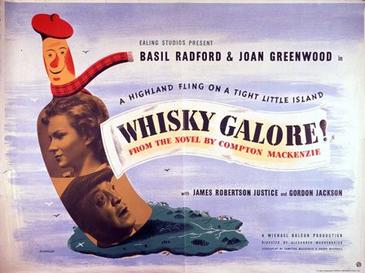
1949, black and white, 92 minutes.

Another masterwork from Alexander Mackendrick and on this occasion working on the script with Angus Macphail and the author of the source novel, Compton Mackenzie. This film enjoys another performance by Joan Greenwood, accompanied by a fine supporting cast including Gordon Jackson, James Robertson Justice and, as the film’s fall guy, Basil Radford.

The population of the small island of Toddy relish their malt whiskey but wartime brings restrictions. Then a miracle; a transport ship, laden with export whisky, is driven ashore, The rest of the film depicts the ploys of the islanders to rescue and enjoy the precious liquid whilst the authorities, representing far away Whitehall, attempt to recover the salvage.

This is a different type of comedy from The Man in the White Suit. At times whimsical and at time almost farcical, this is delightful portrait of a small, intimate community. The film manages to combine some sort of moral with a celebration of Scottish island culture. Presumably there will be many member of the Scottish National Party enjoying this outing.

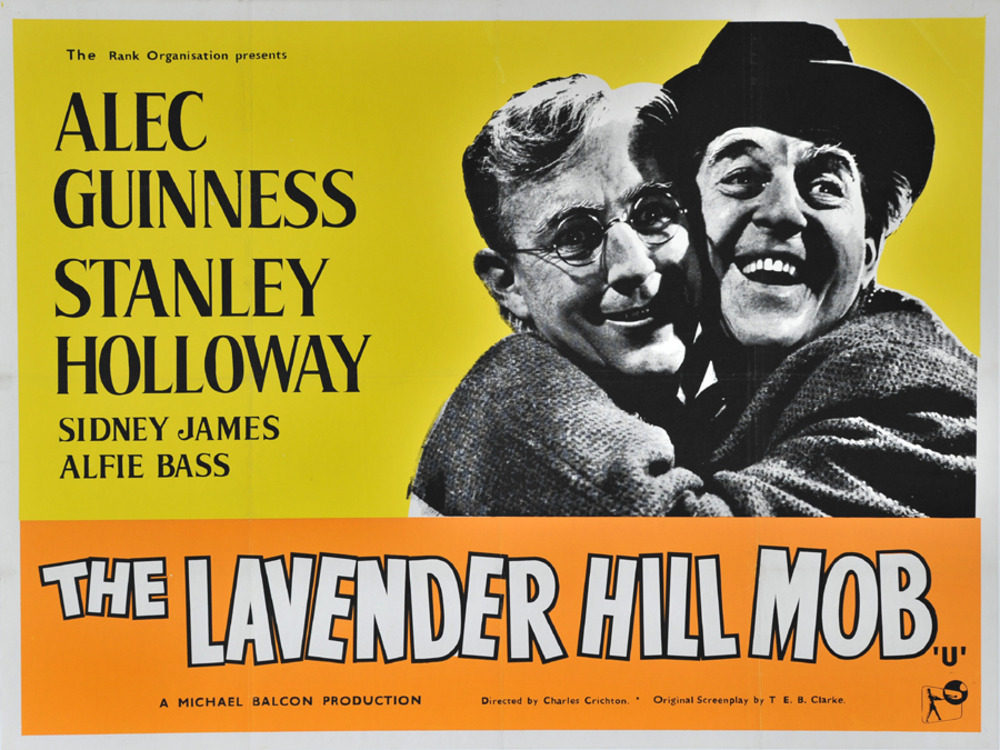
The Lavender Hill Mob

BBC2 Friday 3.30 p.m.
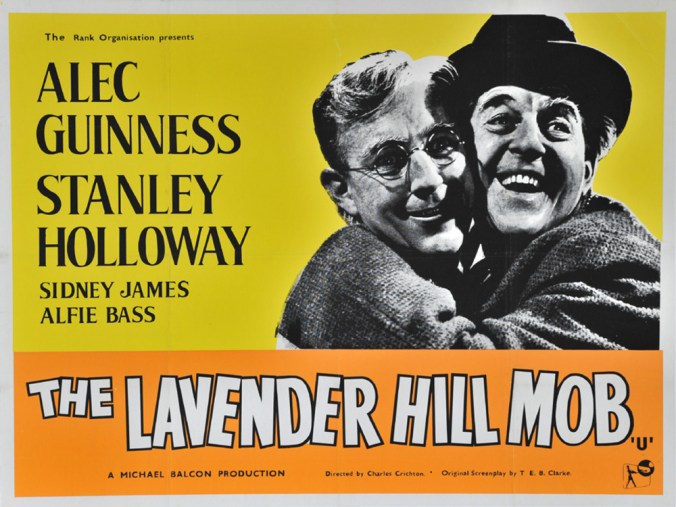
1951, black and white, 81 minutes.

This is a fine heist movie; written by one of the key writers in the Ealing of this period, T. E. B. Clarke. The film was directed was Charles Crichton; his later A Fish Called Wanda (1988) is on BBC 1 next Sunday evening.

Once again Alec Guinness stars, this time as the ‘mastermind’ of the robbery of a van of gold bulletin. He is supported by Stanley Holloway and as fellow criminals Sid James and Alfie Bass. John Gregson makes an early appearance as the representative of law and order.

The film is told in a flashback and the opening sequence features a cameo by Audrey Hepburn, stopping off in Britain on her way to Hollywood. The plotting is ingenious, in particular the method used to dispose of the stolen merchandise. And the final chase sequence has some inspired moments.

These three titles are all representative of a particular period and a particular interpretation of this ‘sceptred isle’. But they all subtly undermine this representation.

What to do on Saturday night

BBC2 (HD) Saturday March 21st at 9 pm and 10:40 pm.

Stay Home, walk the dog, watch …

My condolences to fellow cineastes, but the closure of the Hyde Park Picture House has only come forward by a week or so. And the development work will continue. So there is a future after the crisis.

Fortunately terrestrial television is still screening a few quality films and on HD channels; two of these you may have seen at the Hyde Park. Both are well worth revisiting. The two films are fairly different but both privilege performances by two of the finest actresses in English language cinema. Both were circulated to cinemas on 2K DCPs so on TV HD the loss of quality is less than with 35mm film. They were though both shot on wide screen formats so they will be reduced.

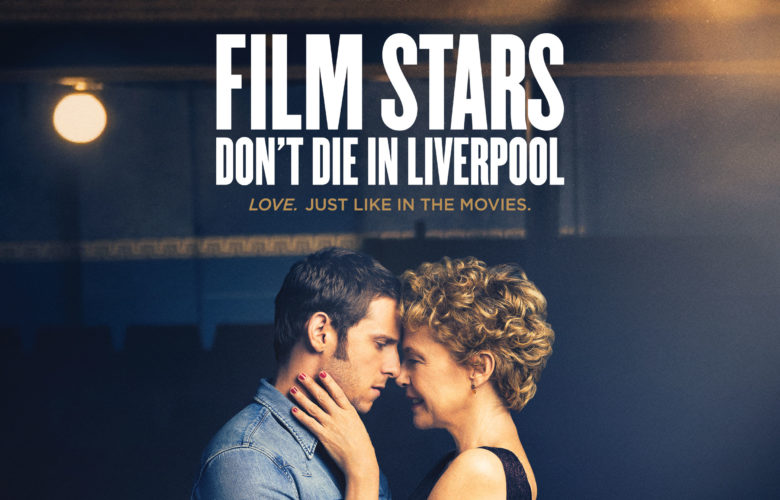
Film Stars Don’t Die in Liverpool

UK, 2017.

In fact this title offers two great Hollywood leading ladies; with Annette Bening playing the earlier star Gloria Grahame as she finds solace in later life and illness in one of Britain’s most distinctive cities. Gloria Grahame was a fine and attractive actress in the late 1940s and 1950s with a persona that fitted well in film noir; think In a Lonely Place (1950) and The Big Heat (1953). This story takes place between 1979 and 1981 when Grahame, acting in Britain, starts a relationship with a minor actor Peter Turner (James Bell). Later he takes her back to his home in Liverpool. The film apparently closely follows Turners own memoir of the same title.

The story is well acted by the leads and develops real emotion. And the film makes good use of Liverpool locations and a studio recreated California. A fine drama that only enjoyed a limited release.

You can read a fuller review;

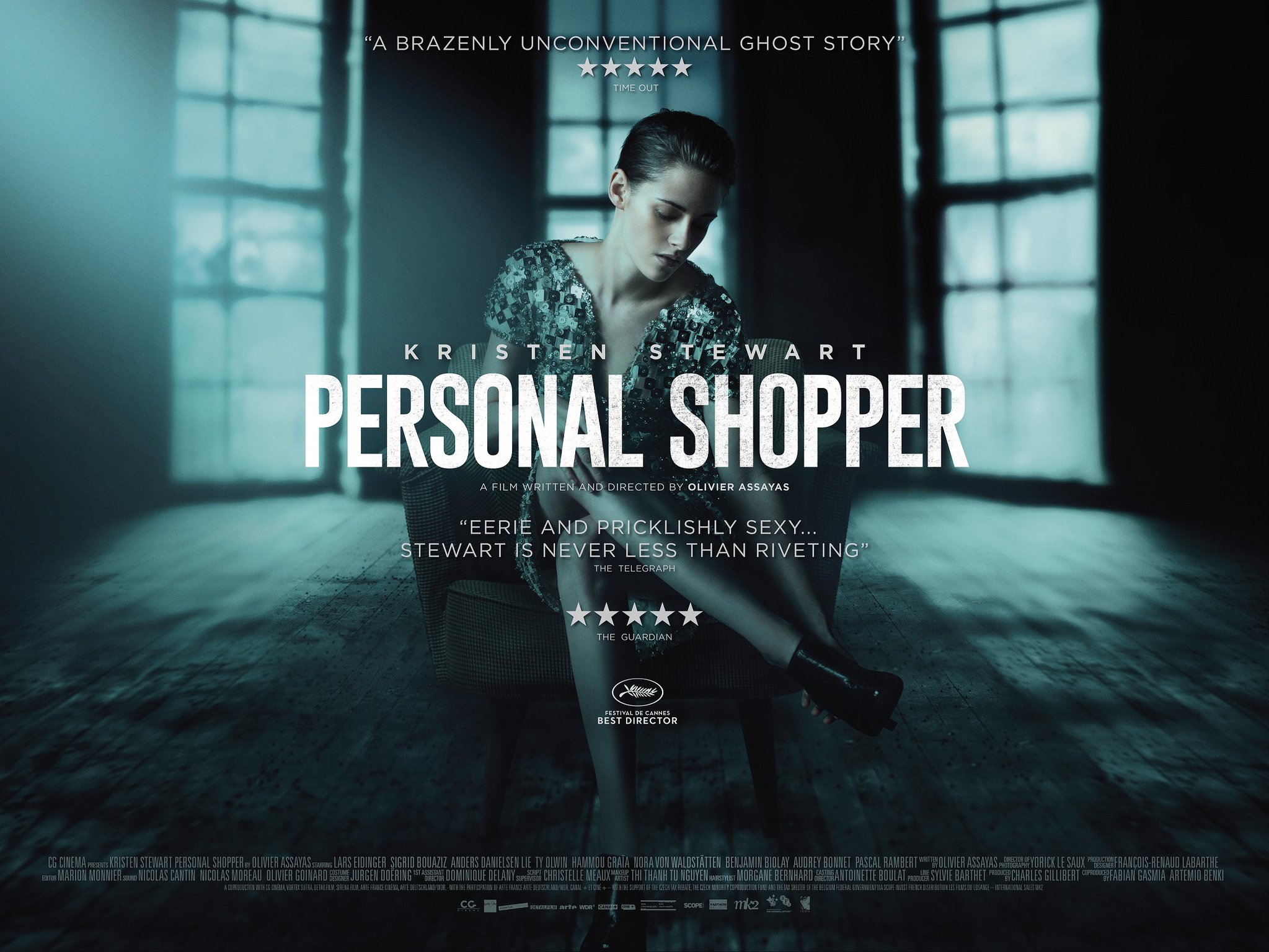
Personal Shopper

France, Germany, Czech Republic, Belgium, 2016.

This film was written and directed by the French film-maker Oliver Assayas. He had Kristen Stewart in his mind as leading actor. He had already worked with her on Clouds of Sils Maria (2014); a film in which Stewart performed alongside Juliet Binoche. This was another fine film with both actors turning in excellent and convincing performances.

The ‘Personal Shopper’ of the title is Maureen (Stewart) who buys clothes and jewellery for a super-model Kyra. There are some intriguing sequences where Maureen selects commodities for her employer, not seen until late in the film. This is a situation in which a young American woman, with a strong sense of style, provides services for a wealthy and pampered celebrity. This aspect harks back to Clouds of Sils Maria.

However, the meat of the story is a dead relative and their house, apparently haunted. This is Lewis, Maureen’s recently deceased twin brother, with whom she shared both a heart condition and an interest in spiritualism. It is the exploration of this ‘other world’ that occupies most of the movie. There is though crime/thriller plotting late in the movie.

What the film does effectively is to conjure up the ‘other’ world, full of ambiguities for both the protagonist and for the viewer. Stewart is excellent; her performance here and in Clouds of Sils Maria made me go back and check out one of the ‘Twilight’ series. I was also impressed by her skills in the 2014 Still Alice.

The Guardian offered the release five stars, calling it

“uncategorisable yet undeniably terrifying”

I did not find the film at all terrifying though it does generate a disturbing air at times. But it is fascinating and fits more or less into the ‘haunted house’ / ‘ghost story’ genre. The languages – English, French, Swedish and German – have English subtitles where needed.

Bait, Britain 2019

Fri 6th December at 8.50 pm, Sun 8th December at 8.30 pm and  Wed 11th December at 1.30pm and 6.30 pm

This new independent British film returns to the Picture House in a 35mm print. It was shot on a 16mm Bolex and the director, Mark Jenkin, processed the film himself. It seems that he wanted to make the film look like older titles that originated on ‘reel’ film and in the processing added some of the signs of age and usage with scratches and the like. It first circulated on a digital transfer and, to be  honest, the effects that Jenkin aimed at did not translate to that format; they looked artificial. On 35mm the 16mm original should look as intended; so this is a film worth revisiting if you have already seen it.

It is a powerful drama set in a Cornish village. The film, through the use of camera techniques such as large close-ups and a non-linear narrative develops a intense feel  and effect. The village in this film is an old fishing port which has now become a summer venue for holiday-makers. The conflicts generated by these two separate worlds are personalised in two leading characters, brothers born and raised in the village.

The form and the style of the film is at times challenging but always absorbing. It is definitely a stand out film drama from this year’s selection of British film. And, like the earlier and equally fine  Gods Own Country  (2017), finds drama and compelling characters away from the urban settings that are more common in film stories.