The Bill Douglas Trilogy

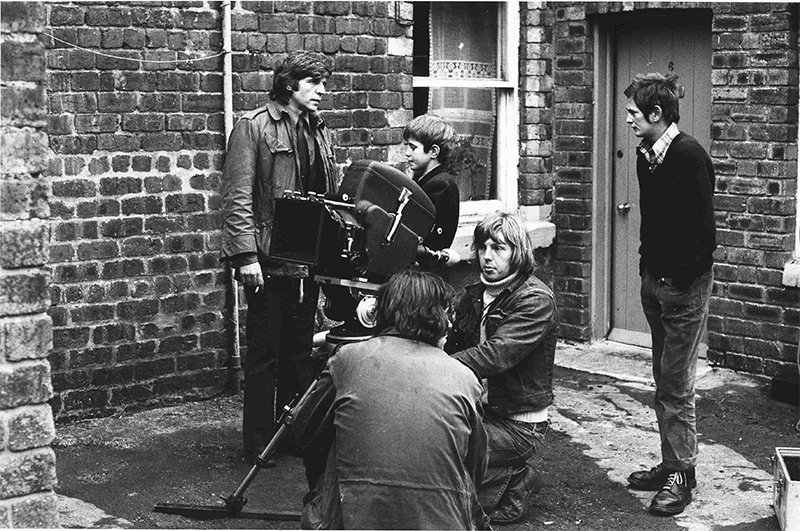
Douglas and crew filming a scene

This first part of this film trilogy was screened for members following the Friends’ Annual General Meeting. This was in the new Screen 2 of the redeveloped Picture House and was screened from a good quality 16mm print.

Scottish film-maker Bill Douglas was born in a small mining village close to Edinburgh in 1934. He was, sadly, lost to British film having only made, [apart from student films], the trilogy and a one feature film. Douglas came late to film; it was only in 1969 that he enrolled at the London School of Film Technique. This is actually the oldest school for film-making study in Britain, founded in 1956 and sited now in the Convent Garden area. Douglas made four short films while a student. However, on completing his studies he faced the usual barriers for independent film-makers.

Finally in 1972 he secured support from the British Film Institute’s production fund for three interrelated films. The first, at time with the title of ‘Jamie’, had been turned down by Films of Scotland because of the bleak view it provides of war-time Scotland. The film is based on experiences of Douglas’s own upbringing in the 1930s and 1940s. It became My Childhood, shot in black and white, academy and running 46 minutes.

The film is set in 1945, as World War II draws to a close. Jamie (Stephen Archibald) and Tommy (Hughie Restorick) live with their grandmother (Jean Taylor Smith). Their housing, diet and clothing all show the deprivation given the poverty of the family. The boys have pets which suffer from their situation. Jamie’s one outside relationship is with a German prisoner of war working locally on the land; Helmuth (Karl Fieseler). We see a celebratory bonfire at the end of the war and then Helmuth returns to Germany. There are also times when the boys (and the audience) see their father, who co-habits nearby, (Bernard McKenna). His mother is confined on some sort of mental institution. The bleakness of their lives is almost unparalleled in British film. It does have a moment of change; with a long shot of a departing figure on a train. The latter a familiar trope in films concerning children and rites of passage.

The cinematography was by Mick Campbell: the editing by Brad Thumin: and there were additional craft people on sound and a second unit. The imagery is stark but effective: the sound track is sparse, especially the dialogue, but it contributes to the overall impact: and the exteriors provide both a comparison and contrast to the central setting. The craft team, like the writer and director, seem to have a small number of credits. The quality should have led to a far greater output.

The second film of the trilogy is My Ain Folk (1973). This film picks up where My Childhood finished. The characters are the same, with the addition of other family members, as Jamie goes to live with them. Tommy is taken into welfare so this film concentrates on the experiences of Jamie. This is as harsh as his earlier life but with greater isolation. There is a brief moment of colour earlier in the film. It is in black and white and academy, running for fifty five minutes.

The final Part of the trilogy, My Way Home (1978) is also in black and white and academy but runs for 79 minutes. The film takes Jamie’s story into adulthood, entering work and then National Service. Jamie is again played by Stephen Archibald. The film takes the narrative outside of Scotland and Britain for the first time. It also presents a full and continuing friendship that leads to a change in Jamie’s life.

The National Film Archive has 35mm prints of both the second and third parts of the trilogy. It would be good if the Friends could cooperate with the Picture House to arrange screenings so that members and the public can see the rest of this outstanding work. The Archive also has a 35mm print of Douglas’ final film, Comrades (1987). The presents the story of The Tolpuddle Martyrs, agricultural labourers in the early C19th criminalised and then transported for daring to form a Trade Union. This is an important film on working class history in Britain and a fine representation in colour and widescreen which makes interesting use of early picture technologies.

My Childhood (1972) at the AGM

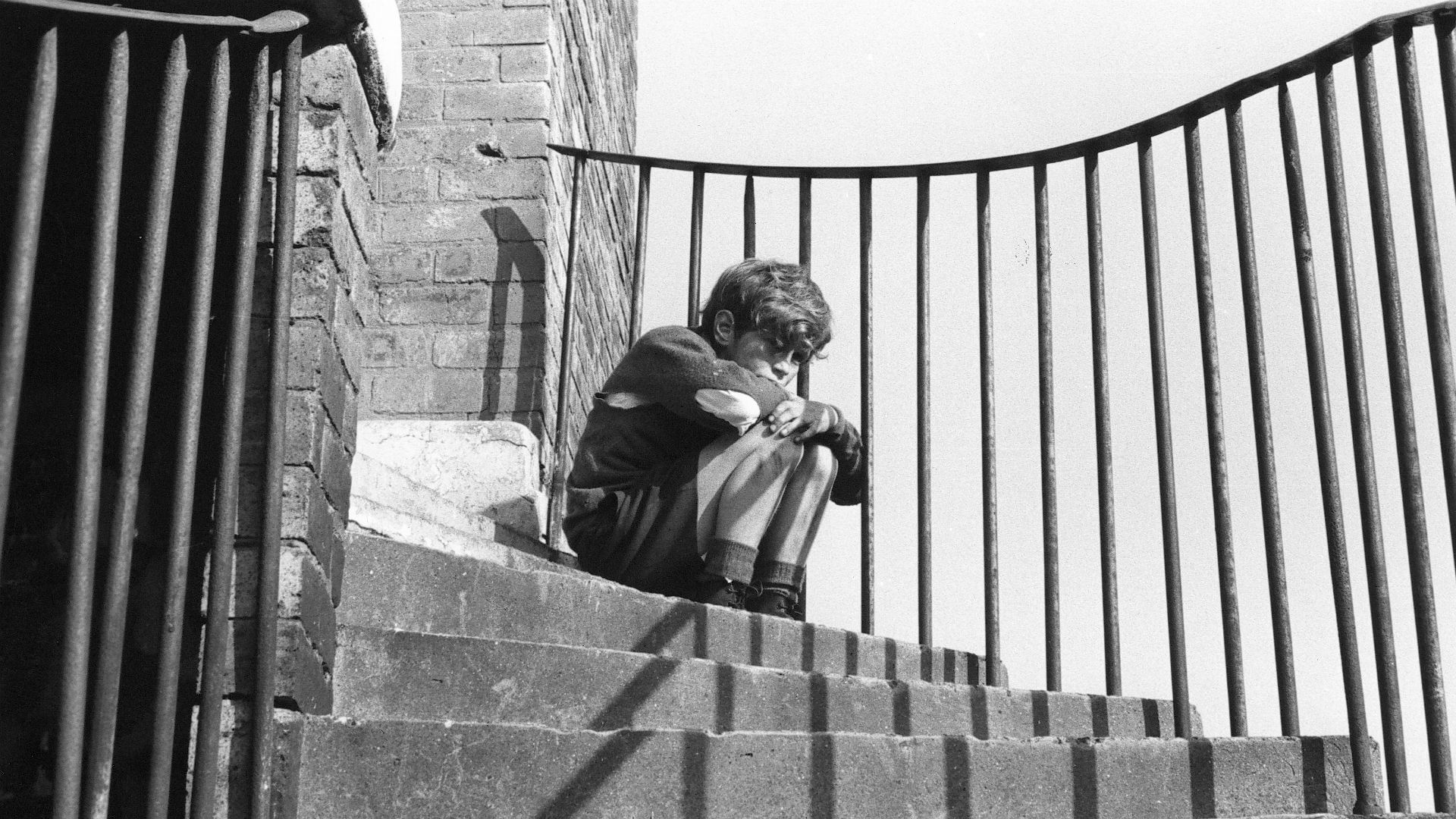
Black and white photo of a boy in shorts and torn jumper sitting on some curved steps
My Childhood (1972)

Following the formal business, elections and discussion at our Annual General Meeting on Sunday 24th September, the Friends are putting on a free screening of My Childhood. We are delighted to bring you a rare opportunity to watch this classic on a cinema screen.

My Childhood is a 45 minute film directed by Bill Douglas, made in 1972. Filmed in 16mm, it draws on his experiences as an 8 year old boy in a Scottish mining village as World War 2 comes to an end. My Childhood reflects the austerity of his everyday life through its use of location, non-professional actors and powerful black and white photography. “A harsh, unsentimental, but also intensely felt and moving portrait of childhood”.

We look forward to you joining us to watch this treat from the comfortable seats of the recently opened Hyde Park Picture House Screen 2.

Please note that all Friends memberships from 2020 and earlier are expiring before the AGM and you need to sign up to our new Pay What You Decide scheme in order to attend the AGM. If you would like to attend the AGM please let us know by completing this form.

Important Information About Friends Memberships

Since 2020 we have kept all existing memberships of The Friends of Hyde Park Picture House active beyond their initial expiry dates. Now that the Picture House is open again with their own membership schemes, the Friends will be focussing more on our wider charitable aims and to better reflect this we have switched to a new Pay What You Decide membership model.

This means that if you have not already signed up for the new Friends scheme your existing membership (from pre 2020) will be coming to an end before our Annual General Meeting on Sunday 24th September 2023.

We hope you will sign up and continue to be a Friend. The Friends still have a vital part to play in celebrating the heritage and promoting the work of the cinema we all love.

All new Friends memberships will be valid until the end of 2024.

L’immensitá, Italy / France 2022

Adri and Clara

This is a recent movie directed by Emanuele Crialese; one of his earlier films was the very fine Nuovomondo /Golden  Door  (2006). That feature followed Italian migrants at the start of the C20th journeying to the USA. And, as in this new title, it featured fantasy scenes to express the emotional state of the characters. The new title has been translated as ‘The Immensity’, but ‘intensity’ would be a better sense. In this new feature it is the intensity of the leading characters emotions and relationships that are the focus of the movie.

This new feature is set in the Rome of the 1970s. Penelope Cruz, in the main role of Clara, is the Spanish wife of an Italian business man with three children.  Her character uses the style, especially in her hair, of the major contemporary star, Sophia Loran. The three children are Adri (Luana Giuliani): Gino (Patrizio Francioni): and Diana (María Chiara Goretti). They form a group somewhat apart from the husband  Felice (Vincenzo Amato), who has problems adhering to marital fidelity. Adri, together with Clara, is the heart of the movie and she is experiencing difficulties with her identity.

The drama uses popular songs from the 1970s as one way to express the emotion and intensity of the characters. This is especially true of Clara and Adri, both of whom have fantasy sequences involving  performances of a popular song. The style here appears to be an amalgam of Michael Jackson and that found on Berlusconi’s television channels. The emotion flows from Clara to her children, but meets little response from the husband. Several key moments later in the movie are ambiguous which means the audience may be surprised at certain moments. Along with intense emotion the drama has humour, creating a bitter-sweet atmosphere.

Penelope Cruz is really fine as is Luana Giuliani in her first screen role. The two siblings are also played well and the supporting cast are fine in what are less sympathetic roles. Across the class divide, symbolised not by a railway track but a bamboo thicket, we find Sara (Penelope Nieto Conti), who befriends Adri.

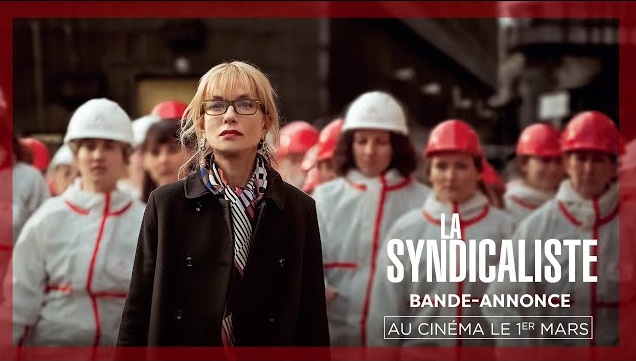
This is definitely a movie to catch: it is in colour and full widescreen with English sub-titles: and has more screenings this week. Nearly all  are in the remodelled original auditorium, now Screen 1. I was impressed with the quality of the image and sound here. I had the same feeling when I viewed an earlier screening of La syndicaliste (2022), a French political thriller set in the nuclear industry and with a fine performance from another major European actor, Isabelle Hubert.

The remodelled Screen I auditorium has a number of improvements. There is now only a single entrance but the doors are automatic and really cut out extraneous noise. The gas lighting remains though not always in use; but the aisle light snow have LEDs which are less distracting. There is a new screen; slightly smaller I think but flat, with a pristine surface and proper masking; [and the auditorium is slightly smaller due to developing the foyer].. However, the best addition is a new Barco 2K laser projector. This is the first time that I have seen one in action. It definitely provides a brighter image: the colour spectrum is improved: and the contrast also seems to be improved. I am curious as to how the digital transfers of actual film titles will look; the two French titles originated on digital equipment and software.

I had one small reservation; whilst the web pages request switching off mobile phones there is not an on-screen warning to this effect. So please, switch them off before you enter the auditorium and please do not use them as torches to find you seat; that is distracting.

Barbie (USA, 2023)

Showing until Thursday 10th August

Ken (Ryan Gosling) and Barbie (Margot Robbie) in a pink open top car driving towards us along a desert road with the rainbow of BarbieLand in the background

“I am both doing the thing and subverting the thing”

Greta Gerwig (director)

Barbie (wish spellcheck wouldn’t keep calling her Barrie!) is great cinema – stylish,  entertaining, and a little thought provoking. It was an inspired choice to have Greta Gerwig as director, and I greatly enjoyed the performances of Margot Robbie, Ryan Gosling and the rest of the cast. And it’s definitely not aimed at children. I think it will raise at least one or two questions for any woman or man in the audience, so I’m pleased that screenings are attracting a lot of people.

In his book One-Dimensional Man, Herbert Marcuse described the cultural totalitarianism created through consumerist and technological capitalism. This is the process where ‘the markets’ co-opt all protest, dilute it, and sell it back to us, the people. Think Che Guevara t-shirts, or “greenwashing”. It is the way our culture evolves until we can transcend capitalism.

Certainly Mattel will be laughing all the way to the bank.

Ken: To be honest, when I found out the patriarchy wasn’t just about horses, I lost interest.

Barbie: Kenland contains the seeds of its own destruction.

Can we really have it all?

Let us know what you think in the comments below

Bill Walton

Our Plans For The Future

Now that the cinema has reopened we can’t wait to get on with some of our plans. We thought we would start with building up our team of online supporters and reviewers. Seen a good film lately?  Why not contribute a short review for our Facebook page or website? Hated a film? Tell us anyway!  Or let us know if you have an interesting piece of history or anecdote involving the Hyde Park Picture House. You can get in touch via the Contact Us form.  

Another of our priorities is outreach to local communities, and introducing people and organisations you may know to the the life of the Hyde Park Picture House. Tell us your ideas…

We would also like to be involved in putting on social events, discussions, quizzes, and special screenings; helping with cataloguing the Picture House archive; and commissioning a mural on the exterior back wall of the cinema (in Pearson Grove). But our activity depends on you, our members.

We will be discussing ideas and next steps at the Friends Annual General Meeting. The provisional date is on the afternoon of Sunday September 24th 2023 at the Hyde Park Picture House, we hope to confirm these details soon. You’ll need to (re)join the Friends in order to attend because any extended memberships from before the closure will come to an end before the AGM starts.

A New Chapter Begins

At last a new chapter in the life of the Hyde Park Picture House begins!

The Friends are so pleased to see the huge positive response to the reopening. We love the way the character of our historic cinema has been preserved while offering us, as audiences, much better access (ramp, toilets, lift), a warm welcome, a new level of comfort, and a second screen (opening very soon). Well worth the wait. We look forward to seeing you there. 

The Friends continues to have a vital part to play in celebrating this heritage and promoting the work of the cinema. Our organisation is independent of the Hyde Park Picture House but we work very closely with their staff team.

We updated our membership arrangements this year. If you have not already (re)joined the Friends, please do so. Our annual membership fee is on a “pay what you decide” basis and you can find out How To Join here on our website.

You will be able to meet some of the Friends Committee at the Yorkshire Day screening of Brassed Off on Sunday 30th July at 1.30pm (we will be there from 1pm). There’s also going to be a Q&A with director Mark Herman, tickets are selling fast so book yours now if you haven’t already.

Welcome News

Members will have received the good news email from the Chairperson, Bill Walton:    

At last! News of the upcoming screenings at our wonderful Hyde Park Picture House, which reopens to the public on Friday June 30th. There is a lot of information now on their new website, including announcements of their full programme including the return of favourites like ‘Tuesday Wonders’, ‘Creatures of the Night’, ‘reRUN classics’, ‘Memory Matinees’, ‘Cinema Africa!’, ‘Hyde and Seek’, ‘Philosophy and Film’, ‘BYO Baby’, ‘Hyde Park Film School’ and ‘Pavilion Presents’.  On their website there is also news about the improved access and their own Hyde Park Picture House membership scheme (which offers some discounts). ”                                                                                         

Note, the Picture House plans Open Days for people to visit the redeveloped cinema. The ‘second screen’ opens late July which also sees the return of 35mm screenings. Some popular new releases are in the programme as well as titles that other local cinemas do not reach.

Return To Dust – Wednesday 12th April

Whilst we eagerly await the reopening of the Picture House, we have arranged a joint presentation with Films at Heart of the Golden Bear nominated ‘Return to Dust‘ on Wednesday April 12th.

Films At Heart presents Return To Dust
Doors 7pm, film 7.30pm
HEART Centre, Bennett Road, LS6 3HN

2022’s Return to Dust is a Chinese drama in which Ma and Cao have been forced into an arranged marriage by their families. They do their best to build a home whilst facing many great challenges together. The unlikely couple form a bond to create an unexpected love story. 

This screening forms part of the regular Films at Heart programme, all tickets are £6/£5 and available via the HEART reception and online. Of course very nice refreshments are available too. And we’ll be there for a friendly chat.

“Return to Dust is many things — a vivid portrait of China’s hardscrabble rural north- west, an unexpected victim of state censorship — but it is first and last a love story. ”

Danny Leigh- Financial Times

“It’s a gorgeous, quietly affecting film that finds an unassuming beauty in this simple life in rural China, but which doesn’t shy away from the extreme hardships faced by the very poorest.”

Wendy Ide – Observer
Continue reading

Suggested films for the reopening Hyde Park Picture House

Chantal Ackerman

Readers are likely to have noted of the welcome surprise when in the Sight & Sound decennial poll for 2022 a little known Belgium film garnered the highest number of votes among contributing critics. Jeanne Dielman, 23 quai du Commerce, 1080 Bruxelles is a 1975 feature written and directed by the then young film-maker Chantal Ackerman. It is long, over three hours, has an essentially minimalist style and fits into what is often called counter-cinema. It pipped three previous poll-winners, all closer to the mainstream film and all by directed by men: Ladri di biciclette: Citizen Kane: and Vertigo.

The film follows three days in the life of the titular character. She is a single mother with a teenage son and offers a challenging role for the fine French actress Delphine Seyrig. Apart from the mother and son, the only other characters are a neighbour and three gentlemen callers. It is for most of its running time a low-key drama finally disrupted by a fairly shocking sequence.

Fortunate Friends will have seen the feature during the 2013 Leeds International Film Festival with a good quality 35mm print screening at the Picture House. Given its success in the S&S poll and its important place in European cinema this would be a fine film to screen when the Picture House reopens. Unfortunately there does not seem to be a 35mm print in the country. In 2013 the Festival obtained its print from the Brussels Archive. Perhaps, a number of independent cinemas could band together to obtain a print for British audiences.

Jean-Luc Godard

Counter-cinema itself lost one of its luminaries in 2022, Jean-Luc Godard. Over the years many of his films have been seen on the Picture House screen: often challenging: frequently with fine visuals and sound: sometimes more insouciance than dramatic: always searching out new ground for cinema. His first film, A Bout de Soufflé (1960) made young audiences in particular sit up and take notice. His most recent, The Image Book (2018), broke new ground with colour and digital formats. To date there does not seem to have been a retrospective of Godard’s work; nothing at the Leeds Film Festival was a missed opportunity. So a series of films when the Picture House reopens would be welcome. The National Film Archive has 21 film prints of Godard’s titles, mainly on 35mm. These are predominantly from his earlier career: A bout de soufflé  but only on 16mm: Vivre sa vie (1962): Alphaville (1965): also Weekend and Le Mepris, both 1967. There are some titles on other formats but neither Film Socialisme (2010) or The Image Book. Even so, the prints available would offer a remarkable cinematic programme.

A much more recent movie that would also be a treat is Empire of Light (2022). The title was shot on a digital camera and format but there are several 35mm prints of the movie available; though the nearest screenings to Leeds have been Barnsley and Sheffield. The drama is set in a cinema in Margate in the early 1980s. The cinema has 35mm carbon arc projectors which we briefly see in action; presumably one reason why there are 35mm prints.

The film deals with relationships among the staff working at the cinema and the affect on these of the conflicts of the period. There include sexual activity and violence. The latter arises with sudden and unexpected power.

We see inside the projection box in three brief scenes and only once do we see someone watching a film in the auditorium. These are interesting sequences and also feed in to the themes of the drama. The film was written and directed by Sam Mendes; not every aspect of the script works successfully. The cinematography of the title are one of its virtues and were directed by the very fine cinematographer Roger Deakins. Think Fargo (1996): The Assassination of Jesse James by the Coward Robert Ford (2007): Sicario (2015).

In one scene Norman (Toby Jones) the Empire projectionist, tells a colleague that the projectors are K.18s; provided by the Projected Picture Trust. These are Kaylee Projectors, a firm that operated in Leeds from 1942 until 1958, during which time the company was taken over by Gaumont. Some Friends will have seen Kaylee projectors operating in a local cinema; a large number used Kaylee equipment at one time. Some fortunate members will have seen them at an event organised by the Pavilion in 2011. The old Lyric cinema, disused, still had Kaylee projectors in situ. Some skilled projectionists, including Allan at the Picture House, repaired the projectors for a series of screenings of a new 35m print. The Picture House staff organised a special tour of the venue and the event. Friends climbed up the old metal staircase to the projection box to see the projectors close up and have the carbon arc technology demonstrated. And extra treat was that, after the main screening, we watched a 35mm print of a short film, which was one of the early ventures filmed by Roger Deakins.