The Lady in a Van UK 2015

On 30th January – 2.30 PM and on 31st January – 3.10 PM 

The-Lady-in-the-Van’

Much comment on this film has focussed on the lead performance of Maggie Smith. She has garnered nomination for Best Actress at both the Golden Globes and the BAFTAs, [though to be honest Charlotte Rampling’s in 45 Years is finer]. Smith characterisation in the film is a crowd pleasing and vastly entertaining act. It is also an interesting variation on her well-established persona. However the film actually offers two ‘national treasures’. This is another fine work from  the pen of Alan Bennett. He not only is the shrewdest writer on the English culture but is also something of modernist. In this film we get the ‘actual’ Bennett and his own imagined double.

The pair at the centre of this very funny but also occasionally moving film are equally well served by the production. Director Nicholas Hytner has marshalled his team with excellence. The music by George Fenton is judicious, the  Cinematography by Andrew Dunn is fine, and the  Film Editing by Tariq Anwar and Production Design by John Beard both serve this well.

This is the type of film that British crafts do so well. Adapted from a successful stage original it also has a very good co-star in Alex Jennings and a fine supporting cast, with some delightful cameos.

David Bowie on film

BYOBABY 20th January – 11.00 AM /  20th January – 2.30 PM
Wednesday 27th January – 8.30 PM

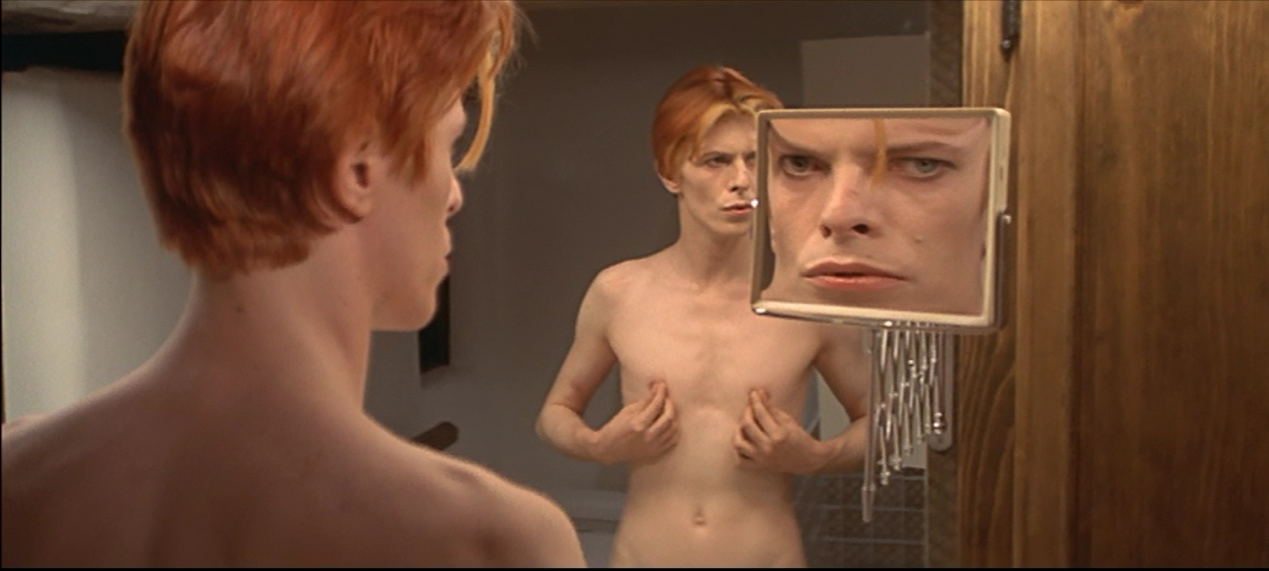
Bowie as Thomas Jerome Newton

Bowie as Thomas Jerome Newton

This Saturday the Hyde Park Picture House had a sell-out for Labyrinth (1986, two more daytime screenings this coming Wednesday and an 8:30pm screening on Wednesday 27th). Presumably quite a few of the audience were film fans, even Jim Henson fans. However, one can be certain that the majority were fans of David Bowie. The deserved crucial accolades in recent days have focussed on Bowie’s musical career. However, he also had a notable presence on the big screen. His film music credits run to over 450 titles. But his acting credits also run to 40 titles.

I did not realise but he was an uncredited squaddie in The Virgin Soldiers (1969). But his first notable was screen appearance was as Thomas Jerome Newton in Nicholas Roeg’s unconventional sci-fi movie, The Man Who Fell to Earth (1976). This was a fascinating exercise in futurology, beautifully presented in the cinematography of Anthony B. Richmond and the design of Brian Eaton. But the film also made fine use of Bowie’s androgyny and his distinctive star persona.

In 1983 he starred alongside Catherine Deneuve [a coup in itself] in the unusual vampire film, The Hunger (1983): they were John and Miriam Blaylock. This became a cult movie and spawned a fairly long-running Television series.

The same year saw Merry Christmas Mr Lawrence, this time distinguished by being the work of Japanese director Nagisa Ôshima. Set in a World War II prisoner-of-war camp the film was far removed from the conventions of most war dramas. It was probably Bowie’s finest acting moment as the POW, Major Jack ‘Strafer’ Celliers.

Then we had Goldcrest’s Absolute Beginners (1986), adapted from the novel by Colin MacInnes. Bowie’s advertising entrepenur Vendice Partners was one of the darker aspects of the story. The film itself was critically mauled but, though uneven, it stands up remarkably well. The score is by Gil Evans, [think Miles Davis and ‘Sketches of Spain’] and is excellent. And the choreography by David Toguri is outstanding: a film that stood out in a genre uncommon in British cinema.

More recently Bowie played the cameo of Nikola Tesla in The Prestige (2006). This was a fascinating study in obsessions and a rare look at the world of magic and chicanery.

Any of the above films would be a happy addition to the cinema programme. And they are all worth seeing as movies as well as for the pleasure of seeing/hearing David Bowie.

Zarafa France, Belgium 2012.

On Saturday 16th January – 11.30 a.m.

Zarafa

Good news, this animated film gets a rerun screening. The version on show may have the original French narration dubbed into English. A friend, who saw the film in the dubbed version, recommended it highly. Since then I have been waiting for an opportunity to catch it.

The title refers to a giraffe, in fact an actual giraffe offered as a present in the early C19th to the French king by the Viceroy of Egypt. The actual hero of the tale is the young Sudanese Maki, who also meets or tangles with slavers, pirates and the Turkish army. He and Zarafa have to cross the desert and pilot their way to France.

This is a tale from the colonial era, but by and large it is the Europeans who are represented negatively. As well as adventures the film offers humour and emotion.

It is another fine example of relatively traditional animation techniques:

“Using a wide-ranging colour palette that shifts from the warmer hues of the Sahara desert to the colder, sadder blues and greys of old-time Paris, Lie and his team provide a pared-down animation technique that recalls classic Disney, albeit with a rougher, at times abstract touch (especially during the Egypt-set sequences).” (Hollywood Reporter)

The screening promises to be a real treat following in the footsteps of the films by Sydney Chomet [Les triplettes de Belleville, 2003 and L’illusionniste, 2010].

Note the film starts promptly at 1130 – more good news, apparently no adverts.

The Forbidden Room Canada 2015

Tuesday 5th January at 6.00 p.m.

forbidden-room-the-2015-005-pilots-in-soace-montage

This the latest film from the Canadian artist and filmmaker Guy Maddin. Maddin is a distinctive and unconventional filmmaker. His films do not offer straightforward narration and are full of ambiguous symbols. A reader on IMDB confessed to giving up on the film after an hour. It helps if you have some idea of what the 130 minutes of screen time will offer.

IMDB identifies a set of Trademarks in Maddin’s work

  • Trade Mark (5)
  • Films often imitate the visual look and special effects of the silent film era
  • Plots usually involve a series of complicated, entangled, unsuccessful love stories
  • Often uses motifs of sexual repression and errant perversity
  • Characters frequently suffer from amnesia, forgetting even their own marriages and loves
  • Many of his films are set in a mythologized version of his hometown of Winnipeg.

At least the first three of these appear in The Forbidden Room.  Maddin has also arrived in the UK to promote his film. In an online interview is the following:

“Still, The Forbidden Room is an experience worth having on the biggest screen you can find, as this is a film designed to overwhelm. …

“I’m glad you said ‘too much’ because I wanted the movie to be too much. You know, I have regrets about my ten other feature films because I always wish they were shorter; I feel I just called them finished a bit too soon and often a few months later I wished I could go back into the editing room and trim them, tighten the screws. The director’s cuts of all my movies would ironically be much shorter rather than longer. But this one, editing it was a counter-intuitive experience because I really wanted viewers to feel at the end that they had been washed up, panting on a far shore having just barely survived drowning in a narrative tempest.”

The phrase “narrative tempest” is probably the neatest summary of The Forbidden Room that you’re likely to find. … Maddin layers stories within stories within stories, pulling us ever deeper into a labyrinthine world that encompasses flapjacks, vampires, volcanoes, skeletons, moustaches, advice on the correct method for having a bath, …

All of this could be described as very Maddin-esque, but the roots of each story contained within The Forbidden Room actually lie in lost artefacts from cinema’s past. For the past couple of years, Maddin has been working on interactive work Séances. The project has seen the filmmaker collecting the titles and sometimes the plot synopses from films that are no longer extant and re-enacting them in his trademark frantic, surreal, hyper-stylised fashion. “

So possibly a challenging evening. But on past experience it will be rewarding and worth the effort. And it is worth noting that this is a film to be seen in a cinema and there are likely to be few opportunities to do that.

Committee’s Films Of The Year

As we reach the end of 2015 we thought it would be interesting to find out which films our committee considered the highlights of the year. Amazingly there were more than 350 different films screened at the Picture House throughout the year and (nearly?) all of them were  interesting in some way.

After a quick poll we came up with the following top 5 (which in the grand tradition of film lists contains 6 films).

1. 45 Years
2. Girlhood
3. The Falling
4= Carol
4= The Tales Of Princess Kaguya
4= Wild Tales

Other films highlighted by the committee include: Alphaville, Amy, Diary Of A Teenage Girl, A Girl Walks Home Alone At Night, Mommy, Our Little Sister, A Pigeon Sat on a Branch Reflecting on Existence, Selma, Taxi Tehran, Timbuktu, We Are Many.

So how did we do? Is this a good representation of film in 2015? It’s great to see a strong female presence in our selection alongside more mainstream films (Mad Max: Fury Road, The Force Awakens, Sicario, Mission Impossible: Rogue Nation).

We’d also like to hear your Top 5 films shown at the Picture House throughout 2015, if we get enough responses we’ll collate a Members List. Let us know in the comments below or over on Twitter using #FOHPPH2015 or Facebook.

Disclaimer: Not all of the committee were available to take part in this poll and it may be updated in the future to include their responses.

It’s a Wonderful Life USA 1945

From Friday December 18th until Thursday 24th.

It-s-A-Wonderful-Life-its-a-wonderful-life-32920383-1200-957

This classic film comes round every Christmas. Some of the audience revisit an old favourite; some taste its pleasures for the time. After over six decades of success one would think that there is nothing left to say or write about this film. But, just as it finds new fans, it also stimulates fresh insights and comments. With an unusual stance Sandy Irvine in Picturing a Planet in Peril (Introducing Green Issues to Film Studies in Splice Volume 3 issue 2, Spring 2009) writes:

“Take, for example, the popular evergreen It’s a Wonderful Life by Frank Capra, released in 1945. The major driving force in environmental destruction is simply human overpopulation, and George Bailey [James Stewart] and his wife [Donna Reed] generously contribute to the population boom by parenting four children, instead of just ‘replacing’ themselves with two (indeed, in real life, actress Donna Reed was a mother of four).”

This aspect possibly escapes most members of the audience. And I am sure that you can enjoy the film and not worry about population during its screening. There is an unexpressed assumption here. That George should follow in his parent’s virtuous footsteps: not just by taking on the Building and Loan Society, but also in only fathering two children: in their case George and his brother Harry (Todd Karns).

I have to confess that I would have been hard put to name the four Bailey children. I looked it up, Janie Bailey (Carol Combs), Pete Bailey (Jimmy Hawkins), Tommy Bailey (Larry Simms), Zuzu Bailey (Karolyn Grimes). However, I could name Clarence’s (Henry Travers) favourite book, Tom Sawyer by Mark Twain. And I could identify one of Uncle Bill’s (Thomas Mitchell) pets as a squirrel.

So if you have a new insight over the coming week why not post a comment?

Open Bethlehem Palestine, UAR, UK, USA 2015

Tuesday 15th December 2015 at 6.30 p.m.

Open Betlehem

A Palestinian Film Festival has been running in Leeds since November, opening with a screening at the Leeds International Film Festival. The final film is Open Bethlehem (aka Operation Bethlehem) screening this coming Tuesday. It will be nice to finish with the full cinematic experience. The film records the writer and director Leila Sansour’s journey to revisit and explore the town of her birth and upbringing. The town is  not only under Israeli occupation but is a meeting point of cultures and conflicts involving the communities and the religions of this region. The conflicts has been exacerbated by the construction of the ‘separation wall’ by the Israeli state. Sansour’s film records a rather novel response to this situation. It seems she shot about 700 hours of footage and the result was something different from what she had expected. The film is in English, and in colour and runs for 90 minutes.

Spectre UK / USA 2015.

From Friday December 11th.

Spectre

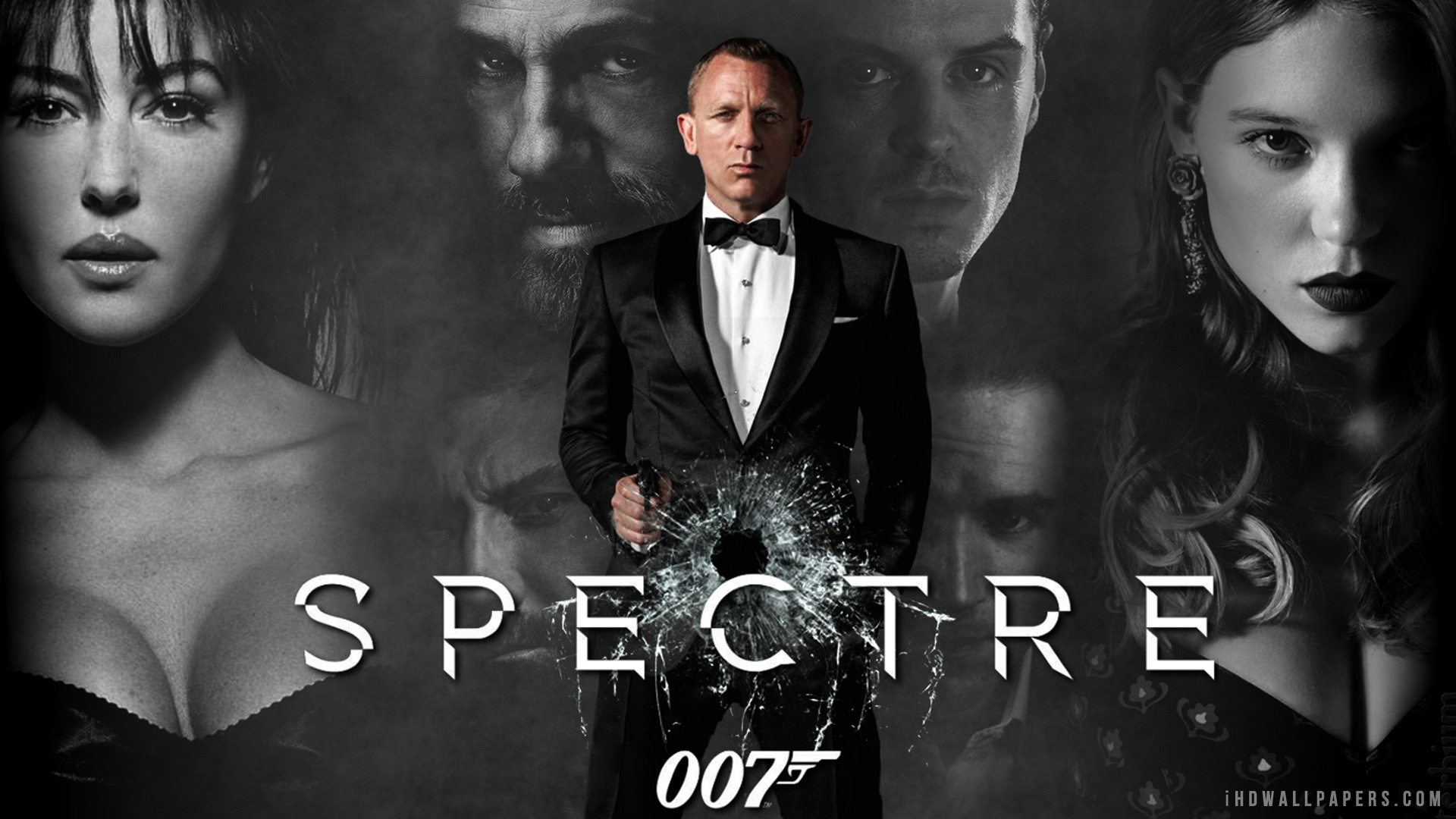
So James Bond arrives on Friday. I don’t think I have ever seen a Bond at the HPPH before. However, it appears that this film is only distributed in a 2K DCP [or on Imax] so it should look and sound just as good as elsewhere on the cinema’s screen and sound system. Bond films are usually entertaining, and recent ones have all included spectacular action sequences.

Daniel Craig is, for me, the best Bond since Sean Connery. I shall miss Judi Dench though. And Léa Seydoux and Monica Bellucci presumably did not have to make the same sort of effort they put into their more serious characterisations. I wondered if Christoph Waltz was able to resist being funny.

The production team should provide quality. We have Sam Mendes, John Logan and Neil Purvis directing and scripting, and they are all experienced in this genre. I thought Skyfall (2012) was pretty well done, though the ending and goodbye to Judi Dench was too drawn out for me. This new film is five minutes longer.

Cinematographer Hoyte Van Hoytema worked on Interstellar (2014), visually stunning. Editor Lee Smith worked on Inception (2010), extremely well put together. Whilst Production Designer Dennis Gassner also worked on Skyfall. And they had an extremely large production crew working with them, many of them experienced in the genre. The composer Thomas Newman has also provided the score for Bridge of Spies (2015).

My most serious reservation is the return of Spectre. I never found that organisation convincing. Though it was always nice not to have to suffer another film with anti-Soviet plot and characters: a tradition continued in the aforementioned Bridge of Spies. And just an aside, if you want to see really good chess on film watch Satyajit Ray’s The Chess Players (1977).

Friends’ Christmas Screening – Scrooge, Sunday 13th December

Members  of the Friends Of Hyde Park Picture House are cordially invited to an afternoon of festival celebration on Sunday 13th December.

Doors will open at 1:45pm for a 2pm presentation by Julia Thomason from David Clarke Associates, the consultancy firm the Picture House is working with to develop a plan for the future of the building. From 2:15pm we’ll  be serving  sherry and mince pies and there will be time for questions and discussion on the future of the Picture House.

At 3pm our feature presentation is the 1951 version of SCROOGE starring Alastair Sim – possibly the most famous retelling of Dickens’ classic tale of an old miser given the chance to change his ways one bitter and cold Christmas Eve.

Scrooge

Tickets are free to members but please RSVP by Monday 7th December to wendy@hydeparkpicturehouse.co.uk, via the Facebook event or by letting the box office know you wish to attend. Non-members are welcome to attend the screening section of the afternoon though they must purchase a ticket as per a normal screening.

There are also a number of other Christmas films showing in December including  Joyeux Noël (Sat 5th), Muppets Christmas Carol (Sat 12th & Sun 20th), Home Alone (Sat 19th) and from Friday 19th two quite different films taking place on Christmas Eve, Tangerine and of course It’s A Wonderful Life.

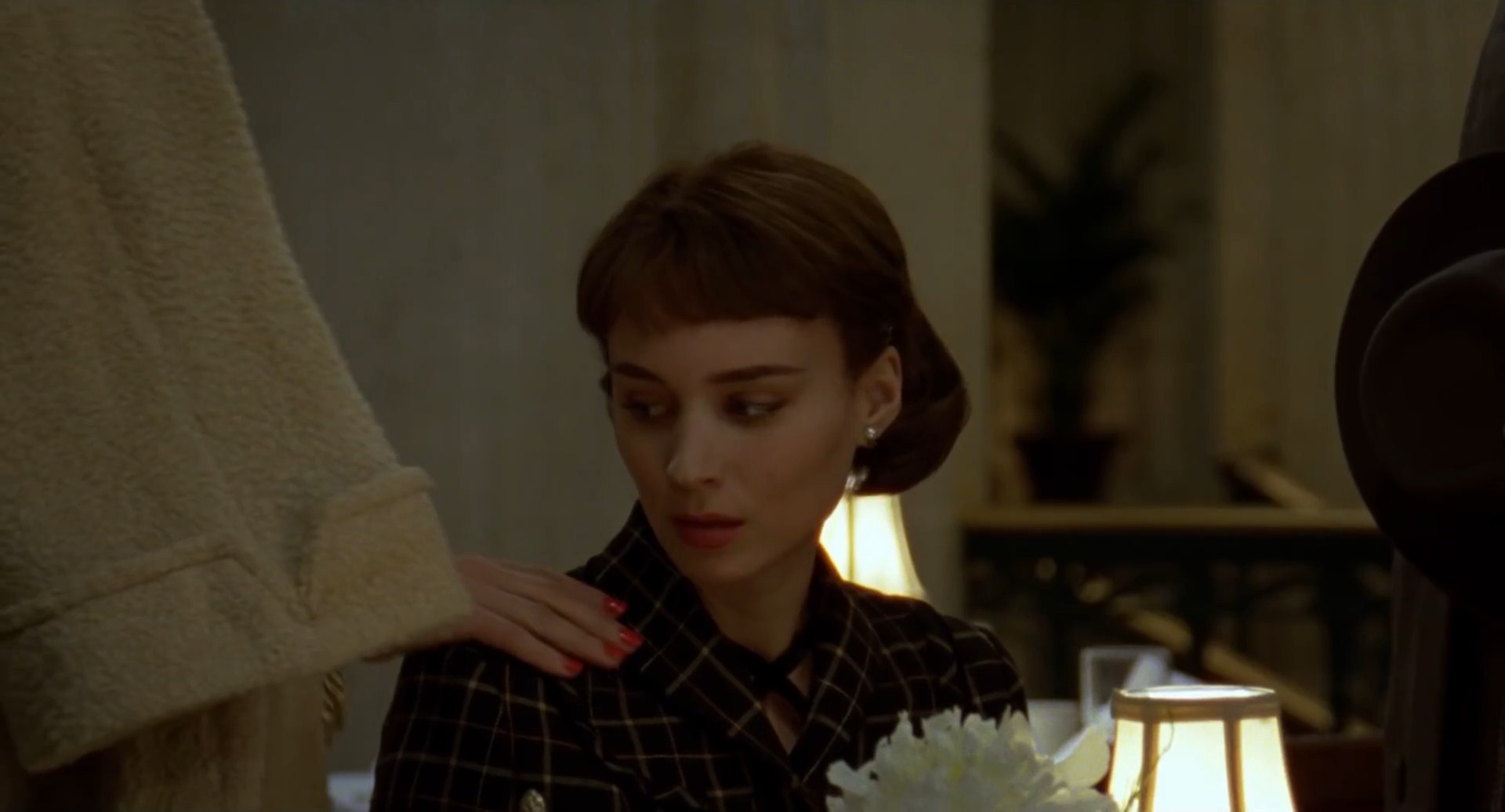
Carol (UK, USA 2015)

Opens Friday November 27th

Carol1web

This film promises to be a real treat. The two stars, Cate Blanchett and Rooney Mara, have already received  plaudits for their performances. The film is directed by Todd Haynes, one of the most talented filmmakers working in the USA. His Far From Heaven  (2002) was a memorable and intelligent re-visiting of a classic by Douglas Sirk. And the film is adapted from a novel by Patricia Highsmith, The Price of Salt (1952). Highsmith is an enjoyable and stimulating writer. Her novels are replete with a real sense of irony. Moreover, her novels adapt so well to the other media. The BBC offered a series of fine radio adaptations of her five Ripley novels in 2009 and repeated these in 2014. Then there are the films – all the ones I have seen have been good but the outstanding ones are probably The American Friend (Der amerikanische Freund 1977) directed by Wim Wenders and Strangers on a Train (1951) directed by Alfred Hitchcock.

Haynes was quoted in the LIFF Catalogue where the film was the closing screenings,

“When we think of our love affairs, our most memorable ones are those that put you on the side of the weaker and desiring subject. Stories about marginal women are more interesting than films about men: they contain the limits of social burden: women’s lives are more burdened by society, in the choices they make, as they carry on the institutions of the family, satisfying men.”

This promises to be a real treat. It opens on Friday and is screening most days of the following week.