Revisiting 2024

The Picture House staff have produced a list of their top 50 films of the last year. There is a top ten on which regulars and friends can vote for a film to be re-screened in the coming days. However the film I would most like re-screened is in the top fifty but not the top ten. I suspect some readers may face the same issue. So I thought it was worth posting on my choice. It will be interesting to see if any other readers share this choice or indeed if they have other choices from the list.

Mine is Nuri Bilge Ceylan’s About Dry Grasses / Kuru Otlar Üstüne, (2023), listed at 14. As with most of his features this is scripted by Nuri with his partner Ebru. The feature runs for 197 minutes, in wide screen and colour; shot using digital formats. Set in the Turkish region of Anatolia, like most of Ceylan’s dramas, it focuses on a young teacher working in a remote village.

Ceylan’s movies are always worth watching; he is one of the finest film-maker working today. And in widescreen and colour it deserves to be seen in a cinematic forum, preferably on the laser projector in screen one.

There were [as I remember] several screenings at the Picture House but I was away and missed them. And there has not been an opportunity since to catch the title at a cinema.

The Bill Douglas Trilogy

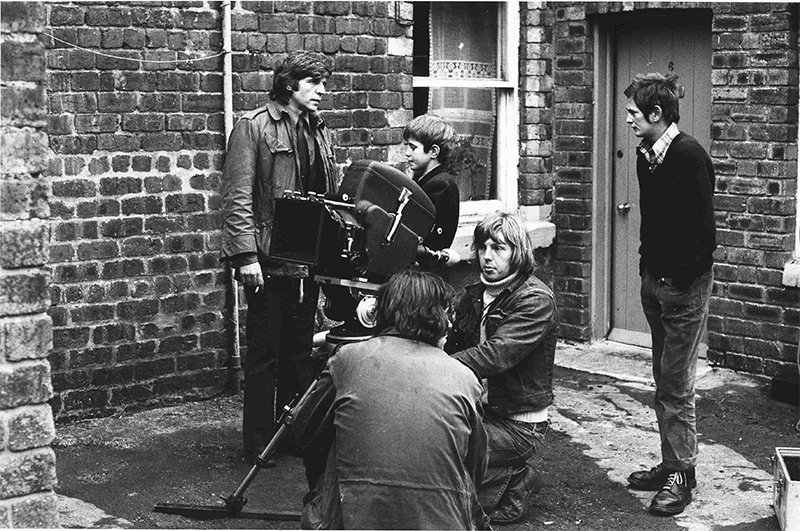
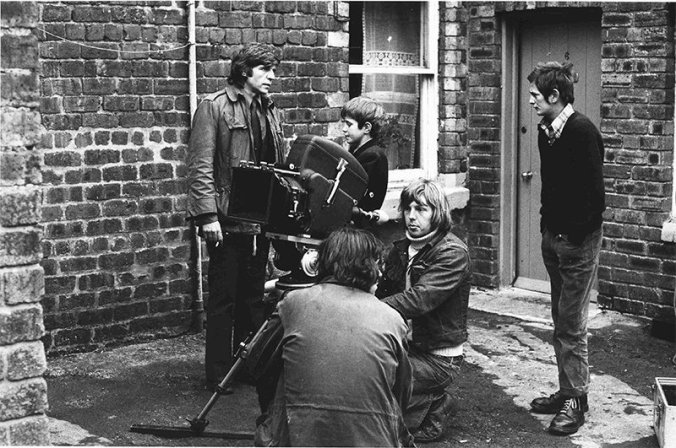
Douglas and crew filming a scene

This first part of this film trilogy was screened for members following the Friends’ Annual General Meeting. This was in the new Screen 2 of the redeveloped Picture House and was screened from a good quality 16mm print.

Scottish film-maker Bill Douglas was born in a small mining village close to Edinburgh in 1934. He was, sadly, lost to British film having only made, [apart from student films], the trilogy and a one feature film. Douglas came late to film; it was only in 1969 that he enrolled at the London School of Film Technique. This is actually the oldest school for film-making study in Britain, founded in 1956 and sited now in the Convent Garden area. Douglas made four short films while a student. However, on completing his studies he faced the usual barriers for independent film-makers.

Finally in 1972 he secured support from the British Film Institute’s production fund for three interrelated films. The first, at time with the title of ‘Jamie’, had been turned down by Films of Scotland because of the bleak view it provides of war-time Scotland. The film is based on experiences of Douglas’s own upbringing in the 1930s and 1940s. It became My Childhood, shot in black and white, academy and running 46 minutes.

The film is set in 1945, as World War II draws to a close. Jamie (Stephen Archibald) and Tommy (Hughie Restorick) live with their grandmother (Jean Taylor Smith). Their housing, diet and clothing all show the deprivation given the poverty of the family. The boys have pets which suffer from their situation. Jamie’s one outside relationship is with a German prisoner of war working locally on the land; Helmuth (Karl Fieseler). We see a celebratory bonfire at the end of the war and then Helmuth returns to Germany. There are also times when the boys (and the audience) see their father, who co-habits nearby, (Bernard McKenna). His mother is confined on some sort of mental institution. The bleakness of their lives is almost unparalleled in British film. It does have a moment of change; with a long shot of a departing figure on a train. The latter a familiar trope in films concerning children and rites of passage.

The cinematography was by Mick Campbell: the editing by Brad Thumin: and there were additional craft people on sound and a second unit. The imagery is stark but effective: the sound track is sparse, especially the dialogue, but it contributes to the overall impact: and the exteriors provide both a comparison and contrast to the central setting. The craft team, like the writer and director, seem to have a small number of credits. The quality should have led to a far greater output.

The second film of the trilogy is My Ain Folk (1973). This film picks up where My Childhood finished. The characters are the same, with the addition of other family members, as Jamie goes to live with them. Tommy is taken into welfare so this film concentrates on the experiences of Jamie. This is as harsh as his earlier life but with greater isolation. There is a brief moment of colour earlier in the film. It is in black and white and academy, running for fifty five minutes.

The final Part of the trilogy, My Way Home (1978) is also in black and white and academy but runs for 79 minutes. The film takes Jamie’s story into adulthood, entering work and then National Service. Jamie is again played by Stephen Archibald. The film takes the narrative outside of Scotland and Britain for the first time. It also presents a full and continuing friendship that leads to a change in Jamie’s life.

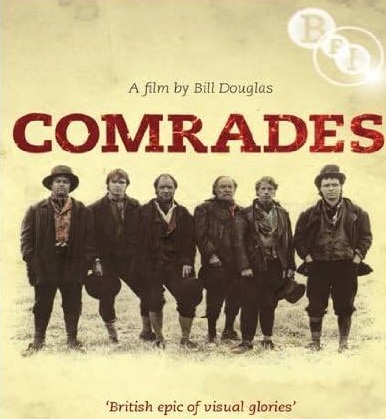
The National Film Archive has 35mm prints of both the second and third parts of the trilogy. It would be good if the Friends could cooperate with the Picture House to arrange screenings so that members and the public can see the rest of this outstanding work. The Archive also has a 35mm print of Douglas’ final film, Comrades (1987). The presents the story of The Tolpuddle Martyrs, agricultural labourers in the early C19th criminalised and then transported for daring to form a Trade Union. This is an important film on working class history in Britain and a fine representation in colour and widescreen which makes interesting use of early picture technologies.
A Festive Treat On Line

Kennington Bioscope Presents [on YouTube].

The Kennington Bioscope is a film club at London’s Cinema Museum.  It used to run on Wednesday evenings and usually offered screenings in 35mm [or sometimes 16mm] enhanced by live musical accompaniments. The prints were always from early cinema and from a ranger of territories. The musicians were really able performers; several have played for silent titles at International Film Festivals. With the arrival of the pandemic The Bioscope has gone on line; earli8er programmes are still available on You Tube and now a Festive special is panned for the coming week.

A Christmas Special courtesy of the BFI and the EYE Filmmuseum, Amsterdam.

Featuring a whole array of shorts of Winter and Christmas by the enormous generosity of EYE Filmmuseum and the British Film Institute (BFI).

 Holland in Ijs (NL 1917) – Scenes from the Netherlands in what was an extremely cold winter for them – Daan van den Hurk

Expedition to the North Pole (USA 1916) – Animated adventure by airship to the frozen North – Cyrus Gabrysch

 Il Natale di Cretinetti (IT 1909) – Early film comedian André Deed wreaks havoc with an outsize Christmas tree – José María Serralde Ruiz

Ida’s Christmas (USA 1912) – Dolores Costello and John Bunny star in this heart-warming tale from the Vitagraph studios – Colin Sell

Snowstorm in New York (NL 1926?) – A blizzard paralyzes Manhattan – Ben Model

Scrooge; or Marley’s Ghost (UK 1901) – R.W. Paul’s early and ingenious depiction of Dickens’ seasonal story – Meg Morley

Snowballs (UK 1901) – Schoolboy scamps besiege passers-by with handfuls of the cold white stuff – Lillian Henley

 Santa Claus (UK 1898) – The wonder of Christmas. British filmmaker G.A. Smith’s film features his children and wife Laura Bayley – Stephen Horne

The Little Match Girl (UK 1914) – Percy Nash directs this, the second British adaptation of Hans Christian Andersen’s heartrending story – Donald Sosin

The Mistletoe Bough (UK 1904) – An unlucky bride is locked in a trunk in this early film – Costas Fotopoulos

Broncho Billy’s Christmas Dinner (USA 1911) – Villainous Broncho Billy finds himself accidentally invited to the Sheriff’s home for the festive repast – Philip Carli

 Santa Claus and the Fairy (UK 1898) – Have you been naughty or nice? Stockings at the ready! – John Sweeney

This will offer a pleasure for fans of early cinema.  The titles [facsimiles versions] are provided by the support of our own National Film Archive and the fine archival collection at the Eye Museum in Amsterdam. During the pandemic, The Eye, like a number of archives is offering access on line to parts of their collections; though these screenings are usually silent. The Bioscope music is a real cachet and, in a nice touch, the pianist’s hands and instrument can be seen in a small  additional frame. The Bioscope organisers also ensure sub-titles for films with foreign language title cards. You also get introductions to the titles by film historian Michelle Facey and a chance to see the Cinema Museum.

If  interested you can read more about the Bioscope af Early and Silent Cinema.

Leeds Film Festival Extended

Leeds Film Player

Normally at this time of year the film festival will have come to end but as we all know this year is far from normal. Plans to show films in venues had to be cancelled as cinemas closed again at the start of November but this has made the online selection even stronger and many of the films are still available until the end of the month.

I found the Leeds Player to work very well with only a few minor niggles, it’s certainly better than offer online film festival platforms with no visible watermarks and the ability to cast to TVs.

Here’s my selection of the films I liked the most that are still available to watch until November 30th.

Poster for Anne at 13,000ft

Anne at 13,000 ft

A divisive film but one I really liked with a very strong central performance; it stuck with me for days after viewing.

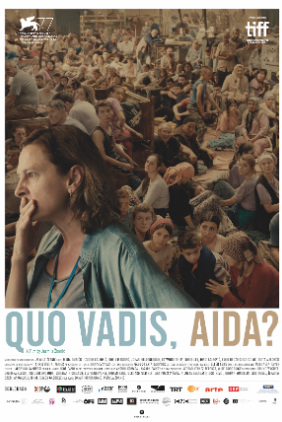
Poster showing Aida in front of a warehouse of refugees.

Quo Vadis, Aida?

A really powerful film centred around a translator in Bosnia, 1995 as the Serbian army take over her town. It manages to be both intimate and cover the larger scale of what happened and always feels very relevant.

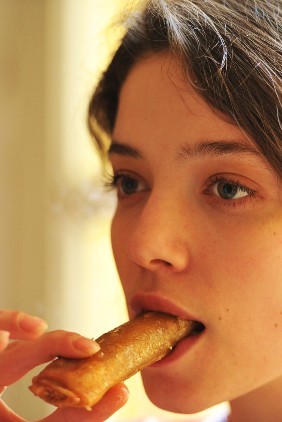
17 year old Selma eating a honey cigar

Honey Cigar

A late addition to the online programme but a great coming of age film with a really good central performance that wonderfully captures the life of French-Algerian teenager living in Paris in the early nineties.

Illustrated bear wearing a regal robe with a number of human and bear character standing behind him

The Bears’ Famous Invasion

One from the Young Film Festival selection but this charming animation is a delight for all ages (and only £3 to rent).

Poster featuring a woman in a white suit covered in blood holding a pair of shears.

The Columnist

It doesn’t always make a lot of sense and can get quite silly but this is also the most fun I had watching a film for quite some time. A black comedy about a newspaper columnist taking on social media trolls.

I didn’t have time to explore the Cinema Versa strand but hear that Andrey Tarkovsky. A Cinema Prayer and Kubrick by Kubrick are worth watching. I’m making my way through the Shorts, as always this is a varied selection but so far have been consistently good.

I was slightly worried that there may not be as many good films this year but once again it has been a really good programme. I only saw one film that was (arguably) bad and there were a few I struggled to get on board with but I’m glad I saw everything else. You can see my comments on all of the films along with star ratings on my Letterboxd list.

Surviving Lockdown With Mubi

Portrait of a Lady On Fire available in the Mubi library
What with the temporary closure of the Hyde Park Picture House and the lockdown of other venues, I was really missing my regular cinema visits.
 
I took out a free 90 days trial of MUBI (still available via the Picture House). which I had never used before. You have to give MUBI your card details when you sign up and if you don’t unsubscribe in time you they start charging you monthly until you do. Current rates are £9.99 a month or £95.88 for a year. You might find some other free trials, for example through Amazon Prime.
 
MUBI is a streaming platform https://mubi.com which they say will work on any device, (computers, mobile devices iPad, iPhone, Android and smart TVs). They have an ever-changing collection of international, classic, arthouse and indie films. It’s a good chance to see films that you missed first time round, and explore ones that you’ve never even heard of before. Every day MUBI adds a new film that stays online tor 30 days, and they’ve just added a lot more from their film library too.To give a glimpse of what is on offer, here are some titles to give an idea of the range:
 
  • Portrait of a Lady on Fire (2019) feminist tale of lesbian desire
    Frank (2014) comedy
  • Persepolis (2017) animated story of girl growing up in Iranian revolution
  • Pan’s Labyrinth (2006) dark fairy tale
  • Discreet Charm of the Bourgeoisie (1972) satire
  • Orgy of the Dead (1965) cult classic 
  • Army of Shadows (1969) French resistance, suspense
  • The White Sheik (1952) early Fellini
  • La Bête Humaine (1938) psychological thriller
  • Grand Illusion (1937) anti-war classic 

Let us know in the comments if you’ve joined Mubi (or other services) and have any recommendations.


Bill Walton

Films on iPlayer

This year was always going to be a strange one for us but none of us expected it to be like this. I hope that you are all staying safe and finding plenty of things to keep you occupied. One good thing that I’ve seen is an amazing sense of community from so many people and there’s no shortage of film recommendations and opportunities for group watch alongs at home.

Hopefully you are already aware of the Hyde Park Picks, daily recommendations from the Hyde Park Picture House team along with some great extras. Our old friends at MiniCine have started a Self Isolation Season on Instagram, picking out two films each day. I’m trying to share as many of these recommendations as I can over on Twitter (and less so on Facebook) so do follow us there if you are not doing so already.

I was going to pick out some films coming up on Freeview TV this week but there are so many to go through and Mark Kermode already does a good job of this on his Radio 5 show/podcast. Instead I thought it would be worth pointing out that many of the films shown on the BBC are also available to watch on iPlayer. Here are my recommendations from what is currently available:

It’s also worth noting that from Monday BBC2 will be screening a classic film every afternoon around 3pm, usually preceded by an episode of the Talking Pictures documentary. This week it’s (mostly) Ealing comedies:

  • School For Scoundrals
  • The Man In The White Suit
  • The Titfield Thunderbolt
  • Whisky Galore
  • The Lavender Hill Mob

Enjoy, stay safe and do let us know if you spot anything else we should be watching.