Review: Spring Breakers (2012)

Last Thursday I caught the showing of the lurid, controversial and oh so millennial work that is Harmony Korine’s Spring Breakers as part of the Guilt-free Pleasures season at the Picture House. Having never seen the film in cinemas before, I was eager to revisit it in all of its neon-clad glory.

The existing cult following of Spring Breakers has seen a revival in recent years thanks to the pop culture phenomenon that was Charli XCX’s BRAT – a conceptual dance album that echoes the film’s motifs of party culture – and the track Spring Breakers that appeared on its deluxe edition last summer. This screening then seemed perfectly apt following the film experiencing somewhat of a renaissance, thirteen years after its initial release.

Intercut with frenzied, Skrillex-scored beach montages of (real life) spring breakers, the film follows Faith (Selena Gomez), Candy (Vanessa Hudgens), Brit (Ashley Benson) and Cotty (Rachel Korine), four young women studying in a Kentucky University town. Listless, jaded and left to their own devices during spring break, they hatch a plan to break free from their dorms and party with the masses. What begins as a quest for freedom and empowerment quickly turns sideways when we meet Alien (James Franco), a local drug dealer and wannabe gangster who has his own plans for the girls. As the third film to be picked up and distributed by A24, Spring Breakers certainly played its part in establishing the studio’s distinctive brand; It served as a stylistic and narrative precursor to later releases in the A24 catalogue like American Honey (2016), Good Time (2017) and Zola (2020), films that also employed naturalism, hyperreal elements and dream-like imagery to explore the intricacies of American life.

Before going into the rewatch, I hadn’t realised just how much of Spring Breakers I was missing watching at home. With the film being shot on 35mm, the intention behind the texture, colour and lighting was felt rather than just seen on the big screen. The encompassing warm pink hues briefly lure the audience into the same naive fantasy that the characters inhabit, where wealth and adventure promise escape from the boredom and emptiness of their lives back home. Sickly, seedy greens and moody blues soon seep in though, and they serve as a gnawing reminder of the rot that lies just beneath. The constant flux between these two states captures the familiar feeling of a night out turned sour – when the party goes on, but the fun ended hours ago.

The film lays its themes on thick, turning the American Dream inside out to expose the corruption, exploitation and violence that are indelibly tied to the pursuit of wealth and power. The hyperreal, oneiric world Korine builds around these forces warps them into their most absurd and heightened form. With a narrative that centres around the corruption and exploitation of four young women, it was of course by design that Disney starlets (Gomez and Hudgens) and their teen show adjacent (Benson) – women who grew up in the industry, mythologised as icons of teen girlhood and innocence – were cast for the starring roles. The same can also be said for Britney Spears, whose music features recurrently. The depiction of women has been a key point of contention for audiences from the film’s outset; it is left for us to decide whether or not the objectification of the film’s female subjects informs Korine’s satirical commentary on 2010s popular media, and the hypersexualised representations of women that were prevalent within it. Regardless of its intention, the voyeuristic gaze makes for uncomfortable viewing and cultivates a constant sense of foreboding for these women.

The performances are less than standout, with most veering into the ridiculous (Franco’s appearances especially elicited groans from the room). The dialogue and dynamics between characters are bizarre, and they more so monologue and chant ritualistically than talk to each other. This unpolished approach has, to me, always given the film its charm and only emphasised the parodic tone as it riffs off of the moment in which it was conceived. I would go as far as to say that there is no film that embodies 2012 quite like Spring Breakers. It emerged as part of the zeitgeist alongside – or perhaps in reaction to – cultural productions being churned out in the US during the late 2000s and early 2010s with a focus on hedonistic, party culture (see: Project X; Jersey Shore; Indie Sleaze; “Recession Pop” and every song released by LMFAO), material excess and celebrity scandal. It exists as a vestige of a bygone era in the not so distant past, when Instagram was in its infancy, “YOLO” was plastered everywhere, and being a care-free young adult was a novelty.

Despite being Korine’s arguably most accessible and definitely most mainstream film, it still stands today as one of the most polarising works I’ve seen. At the showing, both positive and negative post-credit debriefs could be overheard leaving screen one, but one phrase seemed to unite first-time watchers: “What was that?!”. Throughout the years, the film has amassed a slew of labels: messy, sleazy, vulgar, gratuitous, nonsensical – but I think this is also precisely what grants it staying power and keeps audiences coming back. Whether you see it as empty provocation or biting satire, Spring Breakers has undeniably left its mark.

Sophie Laing

Review: Fire Walk With Me (1992)

Spoiler warning for Fire Walk With Me and Twin Peaks (TV Series)

Enveloping totality: the scalding heat of violence tears open the moment. In simultaneity, violence is birthed and combusts, an eclipsed instant of creation and destruction. White-hot, flashing and brazen, shattering the present into fractals of unspooled being. In these still frames of bloodied frenzy, a scream speaks manifestation to the unutterable presence of evil. Its figure, physical and otherwise, finds prevalence.

Twin Peaks: Fire Walk With Me is a tapestry of inflicted violence, a throbbing suture between its moments of rearing horror. The suffering inflicted upon Laura Palmer, each assault, rape, and her eventual killing, is a blinding mirror set equally between a symbolic and lived experience. Much like her representational force as idol and character, her experience pertains to the violence inflicted against all women, non-conforming, and non-masculine flesh; it is that of total debasement at the grasping hands of a masculine force. Inflicted by Leland as individual, his abuse choking Laura’s corporeal self, and tied to Bob as ephemeral, his perversion of Laura’s after-self constant, violence is foundational to the masculine. It is crafted in the image of omnipresence, a suffocating replication pasted upon every figurehead of our society, and beyond the confines of anything singular. David Lynch does not tie violence and its masculine face to one character, rather, infects all his creation with its miasma – the opposing symbol of Laura’s idolatry. Violence, captured upon film, is not bound to the hopeful tangibility of death.

Primarily, it is in this complete lack of anchoring that Lynch most deftly renders violence, severing it from the possibility of a solely physical presence. The constancy of The Black Lodge and Bob, their totality in dreamscape placing them aside from the binds of place and time, lives in all myth, religion, and folkloric tale. Violence and its channels are found woven into all pieces of scripture, consecrated or otherwise, fluid in position and clung, parasitic, to the very base of spoken human narratives. FWWM draws close to collagic, pasting together iconic images of religion, the capital-W Woman, vague esoteric grafts, and America to craft a motion of feverently worshipped visual language. Lynch recognises the near-blandness of their appearance, their complete crossover in implied meaning, and brings them close enough together to sap all simularity from them, conclusively drawing out an unspoken through-line of pervasive evil. Vitaly, it is in these images’ perversion, sullied in flashing light and drawn blood, that the violence begetting the impetus of our stories, in all their forms, becomes visible.  Narrative, at Lynch’s level, is the retelling of the same story. Precisely like the violence that imbues it, narrative is cyclical and told in circles. Laura Palmer’s story will happen again. It will be told again. Violence finds no end in the image.

To watch FWWM is to watch Laura Palmer’s torture play out in repeat, her construct destined to be mutilated by the desire for conclusion we have bred narrative to bring. Linearity, in perspective and construction, grants nothing but the constancy of violence, birthing itself without the shackles of temporal structure.

FWWM deems violence to be its own progenitor, lacking in origin, and granted creation only in its moments of infliction. Its nature is that of transness, of mutability, and fluidity, tied into the fabric of being and time, separate from binary constraint, and enacted by all through misguided action. Our hand feeds the presence that kills: it is our ignorance that lets cyclicality form imposition, riding as companion to humanity. It is not inherent to us, merely sickness regurgitated. Lynch does not offer the comfort of plain hope to this, nor gives away the blanket of conclusion – so what lies in solution?

An equal transness, one of total encompassment: perspective beyond linearity and vision struck from the restraint of expectation. We cannot do-away with violence, with the reenactment of Laura’s story, without existence as mutable as violence itself. Lynch sees the oppositional, binary tone of people (“The good Dale is in the Lodge…”)  and acknowledges these selves in flux, caught in forever-battle. To welcome transness, as Lynch’s ‘absurdity’ does, is to challenge every force, structure, and institution that upholds the present evil. Transness must be brought to the iconic image, to faith, to belief, to system, to society, in order to rid visual distraction and view the maliciously plain, logical, and glaring simpleness of violence. FWWM sees violence configured beyond the hopes of language, if anything, utilising the inbetween of meaning to generate potency – it is without a real or defined syntax. It speaks through absurdity, resting in dream, and must be matched with the full force of feeling. Opposition comes most ferociously when the burden of expectation, of translatability, is shed. Lynch’s work cries for us to build our own dream, to occupy the possibility of its genuine hope, and to relish in its transness. Dreams, seemingly, come unfettered from ignorance, capable of pulling all weight from evil.

The tragedy of FWWM is exactly that: inevitable and blandly foretold. Laura’s horror, our own reflection of that, is destined to repeat, fed by an apparatus of suffering. Do away with your ignorance, point to the violence that lives among you and within you, and finally open the ground for the capacity of betterment.

Written in response to the David Lynch: Between Two Worlds season at Hyde Park Picture House

Alfie White
Good Boys Film Club

Review: Savages (2024)

Still showing until 21 August (Daytime screenings – English Dialogue)

Here we have the long-awaited new film from Claude Barras, and for those indie animation fans, he previously made the beautiful My Life as a Courgette/Zucchini (2016)

But even without Celine Sciamma as a co-screenwriter, he still impresses with his sophomore feature. 

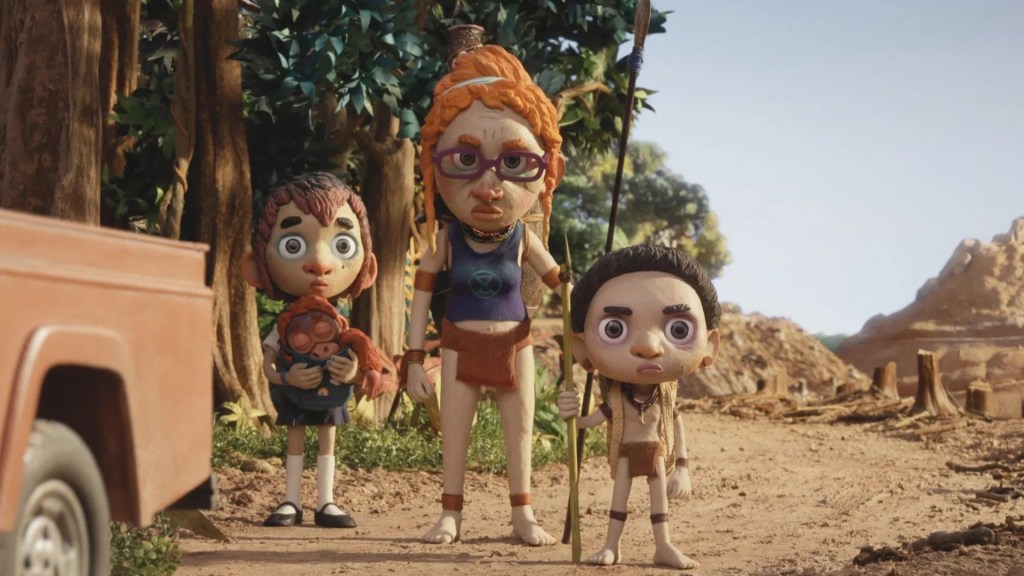
“Savages” is set in a French colonial country in which young girl Kéria, living with her father on a settlement by the indigenous forest, ends up adopting a baby orangutan, orphaned by those cutting down the trees killing its mother. Kéria’s indigenous cousin, Selaï, comes to stay but when he runs off into the forest, the trio soon end up connecting with their indigenous roots.

The eco message for an animated film sounds reminiscent of Ferngully (1992) or masterpiece Rio 2 (2014) but this film is refreshingly grounded, mature and human. The focus here is on reconnecting with and appreciating family roots, as the city girl learns of her indigenous family and gets to appreciate her culture, and learn more about her late mother. 

It’s an unhurried but peaceful film with a touch of melancholy and very much in tune with the spirit of the habitat it presents. And when the need to fight back against colonisers occurs, the rebellion is still grounded.

The stop-motion is an ambitious step up from Barras’s last film. Similar character design of large heads and wide-eyed protagonists, making that orangutan adorable, but the setting is warm and luscious in detail and texture.

It’s wonderful to see indie animation get the spotlight it deserves. One to seek out, no matter your age.

Harry Denton

Now showing at the Picture House

Review: Bring Her Back (2025)

Still showing this week (Tuesday 20:50, Wednesday 17:40 and Thursday 21:00)

Danny and Michael Phillipppu strike again, rather than go more commercial, they instead lean further into the arthouse horror direction than their prior nightmarish thrill ride sensation Talk to Me (2022).

Grief is not a new topic for the Racka Racka duo, but here it is handled in a more nuanced way than their prior film. Both interpret grief as an addictive drug, but this grapples with the moral repercussions of this addiction.

The story follows Andy and his partially blind step sister Piper, whose father has recently passed. They are taken up in the “care” of Laura, who lost her daughter years back. Laura wants to “Bring Her Back”, but has devised a rather demonic way of doing so. Andy sees Laura’s malnourished son Oliver, who appears possessed. Piper is however blind to this blatant abuse, so Laura twists her web to enact her outlandish plan.

Sally Hawkins plays Laura, a very clever casting decision. She plays Mrs Brown in the Paddington movies after all and has such a sweet voice she wouldn’t hurt a fly. It’s that feeling of comfort in her voice the film subverts, as very quickly she becomes this unsettling presence able to put on this kind persona.

It’s a slow burn piece of intrigue, as the depths of the grief and where they take the characters deepen. Laura is still in the denial stage, whereas Andy suffers PTSD- a product of the very different kinds of love lost.

And with Oliver, there’s certainly effective body horror to be found, making for gory scenes but beneath the genre thrills comes this tragic layer of the cycle of abuse and grief to be felt.

The cinematography also feels like a major upgrade, with the limited location providing more creativity with making stunning shots.

A dark horror that doesn’t just use grief as a set-up but as a key part to the narrative. This continues the Phillippou’s streak of harsh and moving horror that sticks.

Harry Denton

Now showing at the Picture House for the rest of the week

Review: Anora (2024)

Don’t forget you can join us in the bar after the 5pm screening to talk about Anora and other films at our First Thursday Film Club.

Writer-director Sean Baker has returned with his latest film, Anora. After winning the Palme d’Or at Cannes Film Festival earlier this year, alongside its initial reception, Anora has easily become one of the most anticipated films of 2024. After waiting for its release for what seemed like forever, I was more than ready to attend the first showing at the Picture House.

Mikey Madison gives a phenomenal, standout performance in the titular role that lingers long after the film ends. The starry-eyed Anora, who prefers Ani, is a 23 year old sex worker who dances in a Manhattan strip club. It is here that she meets Ivan or Vanya (Mark Eydelshteyn), the unfledged son of a wealthy Russian oligarch. Vanya soon makes Ani a business proposal à la Pretty Woman to be his girlfriend for the week. Enticed by the payout and by his life of frivolous excess, she agrees. Ani begins to fall for Vanya and her character is initiated into his world through head-spinning, reeling romantic montage. After their impromptu marriage (set to an unexpectedly moving needledrop), Ani believes this to be her golden ticket out of the club for good. Hopeful, uplifted and disarmed, we are enticed into the fantasy alongside Ani – tantalised by the prospect of a better life.

Once Vanya’s parents hear the news of the pair’s nuptials in Russia and of Ani’s profession, they set out to annul the marriage with the help of their associate Toros, flawlessly portrayed by Baker’s long-time collaborator Karren Karagulian. The film descends further into chaos when events lead Ani to assist Toros, his brother Garnick (Vache Tovmasyan) and gentle henchman Igor (Yuriy Borisov) in a manhunt for Vanya. As the foursome embark on a voyage through the streets of Brooklyn, the night tailspins into a sobering series of events, emphasised by flash cuts and overlapping, clamorous New York accents – reminiscent of the Safdie brothers’ Good Time (2017) or Uncut Gems (2019).

Baker is no stranger to this kind of storytelling. As seen in preceding titles Starlet (2012) and Tangerine (2015), the stories of sex workers are often at the forefront of his work. Baker’s films are typically structured as comprehensive character studies, employing realism to authentically explore the human condition as it relates to poverty, class, and living on the margins of American society. Anora is no doubt a continuation of this style and these themes, however confronts wealth and apathy in a way not before seen in these earlier titles.

Anora deconstructs the rags to riches trope with brutal honesty. The film is a tragicomedy akin to life itself, finding glints of light in its darkest moments. Amidst the calamity, the cast preserve a tactful, comedic tone that cuts through the bleakness. Ani, beneath her glittering exterior and professional persona, is a gritty, wilful and fierce character, able to hold her own in otherwise distressing circumstances. Her determination to escape a life of poverty propels the narrative forward. As though it were a survival instinct, she remains unrelenting in her own self-assurance and preservation, refusing to loosen the grip on her American dream until the bitter end.

Exhilarating, tender and utterly captivating, Anora is definitely one that you won’t want to miss on the big screen.

Sophie Laing

Now showing at the Picture House and as part of Leeds International Film Festival and the Friend’s First Thursday Meetup will be taking place after the 5pm screening on the 7th November

Strange Darling (2024)

Strange Darling completely shatters every expectation you might have of what initially seems to be a fairly cut and dry serial killer film: every chapter completely rips the carpet out from under what you think is going on between Willa Fitzgerald (The Lady) and Kyle Gallner (The Demon). Is it a one night stand gone horribly wrong? Is it some kinky game gone astray? 2024 has brought us some of the blandest films imaginable, so it’s refreshing to see a film from a director who is in full command of his craft and can play with the audience like a puppet-master.

The film marks both the debut of long-time actor Giovanni Ribisi as a cameraman, and the most exciting new voice in American independent cinema with JT Mollner. This is Mollner’s second film after the western Outlaws and Angels, which premiered at Sundance in 2016.

Non-linear structures can be a crutch to mask a filmmaker’s failings, but with Strange Darling it’s all about the twists and turns, which are carefully calculated with each reveal during the film’s six chapters. It’s a really impressive movie. Both of the leads have been a round for a while. Fitzgerald is mainly known for her TV work in the Scream TV series and Netflix’s Fall of the House of Usher. Gallner already has a bit of a cult following, starting with Jennifer’s Body but more recently the Scream sequel/reboot, Smile and Dinner In America. Both give star making performances and if there was any justice in the world Fitzgerald would be a nominated for a Oscar…. she won’t. 

Mollner had to fight like hell to get final cut on the film after Miramax recut it (and this is the post-Weinstein Miramax!)—but after Tiffany Haddish advocated on Mollner’s behalf with Miramax CEO Bill Block and a contractually obligated test screening of Mollner’s cut, Miramax relented and Block actually personally apologised to Moller for his trouble. When you see the film, the idea that somebody could think a linear version would possibly work will baffle you.

There hasn’t been a film yet with this kind of strong depiction of the state of Oregon since Gus van Sant’s early films, even though films are shot there all the time like the Twilight films for example. The Mt. Hood territory where the film is set is prime Sasquatch country (Mt. Hood is the hotspot for sightings). It’s home to two eccentric hippie doomsday preppers—although Ed Begley’s character wants it to be known he was a biker not a hippie—with whom The Lady seeks refugee, so of course he asks her if she is sure it’s not the ‘Squatches after her. The film depicts the strange and vast Oregon woodlands, a place full of ‘Squatches, hippies, preppers, white supremacists and yes, even serial killers (Ted Bundy and the Green River Killer both operated in Oregon). It’s not hard to believe that Sasquatches and serial killers can run rampant there. 

Also, in a world where there is much too much mediocrity shot digitally, it’s refreshing to Strange Darling proudly proclaiming that it was “shot entirely on 35MM” the moment the company credits end at the beginning of the film. Just don’t try the preppers choice of breakfast you might gag when you see the film. 

Ian Schultz

Strange Darling is showing on Saturday 19th and Wednesday 23rd October at 20:40

Review: Not A Rock-Doc

 
“If you can remember the 70s, you weren’t there!” A quote very freely adapted from Timothy Leary, or was it Pete Townsend, or maybe even Robin Williams, when commenting on the 60s …  to be honest I’m actually not sure who said it. Anyway they were two tremendously creative decades in rock history. We still have the recordings, some films of concerts, and some ageing rockers are still touring. But what was life really like for a band like Sharks on the edge of the big-time? They made good music and were signed to Island Records. They even had a shark-shaped car. What could possibly go wrong? 

Fortunately their frontman Steve (Snips) Parsons is also a filmmaker. Despite a very limited budget Steve, along with Anke Trojan, made Not a Rock-Doc to share his experience of the ups and downs of being in a working band. As the film title says this is not a traditional documentary. What we have here is a series of impressions of people, places and sounds, some fleeting, drawn from hours of film footage. We meet other band members, in particular accomplished guitarist Chris Spedding. The film touches on the formation of Sharks in 1972, the people, the glamour, the top musicians, the American tour, the albums, the rise of Sharks, their decline, their resurgence in the 21st century, and their subsequent collapse. We join band members in the dubious joys of playing a gig in Scarborough, answering questions from punk icon Jordan Mooney, and declining an audition for the Rolling Stones.

This film does for rock documentaries what Almost Famous (2000) does for rock journalism. It gets behind the glamour while recognising the talent and hard work of the music industry. And it also shows the big egos, personal problems and pettiness surrounding the mythical band Stillwater. Of course Almost Famous had a much bigger budget than Not a Rock-Doc. But Not a Rock-Doc may well follow Almost Famous as another cult classic. 

Not a Rock-Doc is fun. It’s also very human, silly, and sad, and a tribute to creative people struggling against the odds to bring their art to the public. Screen 2 of The Hyde Park Picture House was ideal for a screening of Not a Rock-Doc, followed by Q&A with director Steve Parsons, moderated by Alice Miller. An intimate auditorium. Up close and personal. Snips is refreshingly open in responding to audience questions. He is now using his energy to promote the film to wider audiences and to get funding to get the film on to DVD.  

In short another great Picture House event to celebrate our cultural lives.

Bill Walton

Review: Longlegs

Maika Monroe as FBI Agent Lee Harker standing against a blood splattered wall

It would seem like there’s a new horror film out every week but for that genre quantity doesn’t equal quality. However, being made on low budgets allows for creative freedom which can reach a large audience and provide an opportunity for exciting voices to shine through. Longlegs is one of those films.

Longlegs combines the serial killer thriller with the occult to disquieting effect. Over the past 30 years, there have been a series of whole family murders which would appear disconnected aside from the fact they have all been penned by a serial killer who goes by Longlegs. FBI Agent Lee Parker, who has semi-psychic abilities, is assigned to finally solving this puzzling case, which alarmingly seems to connect with her own life.

Having such a demanding job requires looking at tragedy and the darkest sides of humanity through a cold and objective lens and therefore acting desensitised to the worst sides of humanity. Lee is a very reserved and calm character, confident and determined to tackle this mystery but the growing revelation of how it links to her past makes it personal and so brings out the emotion in her, as we see through Maika Monroe’s incredible performance as our human guide through this descent into madness.

This is sharply contrasted with Nicolas Cage’s terrifying performance as Longlegs portraying him as a satanical Joker and going extreme Nicolas Cage. With alarmingly pale skin paint, he looks the part for a monster and his disjointed, crazed manner of speaking as he recites his religion makes for something so unsettling whenever he’s on screen.

The cinematography is astonishing where its major theme became clear to me through its clever use of tracking shots where it initially follows Lee from behind as she approaches a scene but after a particular incident it instead follows her from in front as the impersonal becomes personal. It also depicts bleak environments and makes them feel so cinematic both in its ultra-wide shots and its 4:3 claustrophobic flashbacks.  It’s minimalist sets with stark lights add to the atmosphere. Alongside startingly and unnerving sound design, it all creates such a creepy atmosphere dripping with dread.

Longlegs is an absolute must see. While it does have some jump scares, it’s far more built off tension, dread and sheer momentum as its mystery unfolds and reveals dark and unexpected revelations. Even knowing the answers, with this being my second watch, it left me spellbound and breathless- a sign of not just a great horror movie but a great piece of cinema that’s grip only tightens and further disturbs the more it progresses.

Harry Denton

Longlegs is still showing this Sunday to Wednesday

Review: Crossing

Screening until 28th July.

For those on the pulse of recent indies, defiant and hopeful films about trans people as well as films set in Turkey are on the rise. “Crossing” crosses both of those together.

The narrative is set in motion when Lia, a retired teacher, embarks to Istanbul to find her long lost transgender niece- Tekla- when her neighbour Achi speaks of where she could be. Achi joins Lia on this search as an interpreter- after all they don’t speak Georgian in Turkey. Lia hopes to bring back this missing piece of her family whereas Achi, who’s only in his twenties, seeks to kick-start his life there. In Istanbul, they meet Ervin, a trans lawyer and activist. A pair of impoverished children who hustle to make some money are also a frequent presence.

In the journey of finding lost family, found family emerges along the way as Lia learns to connect with the people around her. I mention all these characters as they all struggle to make ends meet and, more importantly, all are haunted by the absence of a family member. This is a celebration of breaking down barriers and being empathetic towards other people, even if they aren’t family.

It would be easy to focus on the difficulties and discrimination faced on being trans in Georgia and Turkey but with the inclusion of Ervin, it gives hope and demonstrates that a lot more is possible than sex work for trans runaways like Tekla.

Levan Atkin previously made an acclaimed film titled “And Then We Danced” (which is admittedly all I know about that but that should soon change). I love a film with a great dance scene, and this has three which provide opportunity to bask in the roaring culture in Istanbul and also to provide emotional release for both the characters and the audience.

The performances are excellent all around but the one which particularly impressed me was Mzia Arabuli. Lia is a stoic character- one in a state of guilt, obligation and fatigue as she searches for her niece. This near-mourning attitude is signified by the black coat she always wears. She is quite a cold presence, at least at first, but we see her emotion through subtle but effective facial expressions where we can tell how she fees deep down. It’s a quiet performance so layered that it helps immerse you in the character of Lia.

It’s a beautiful film to look at, capturing Istanbul’s grand scale and also capturing the subtle intricacies of its characters. The score is also great, especially when it comes to the dancing.

In summary, “Crossing” treats its dark subject matter of estranged and missing families and societal and financial struggles sadly more so for the marginalised with significant empathy and ultimately hope in a vibrant and compelling drama deserving to be seen.

Harry Denton

Kinds Of Kindness Reviews


Yorgos Lanthimos has always made divisive films and Kinds of Kindness is no different. Here are two reviews by volunteers at the Picture House offering different takes. What did you think of the film? Let us know in the comments.

Review by Suman

Despite its optimistic title, perhaps a cruel prank on those that enjoy going to the cinema with no knowledge of the movie they are seeing, Yorgos Lanthimos returns to his sinister roots with “Kinds of Kindness”. Those that may only know Lanthimos for “Poor Things” or “The Favourite” may be taken aback, as he swaps his recent embellished aesthetics for the liminal and uneasy settings of hospitals and empty homes seen in earlier films such as “The Killing of a Sacred Deer” – nevertheless, beautifully directed, but with little to distract you from the explicit monstrosities that are to come.

“Kinds of Kindness” tells three separate stories, each depicting an individual’s blind, relentless dedication to another. Some may argue such blind devotion is far from kindness, however, once again, the aim of a Lanthimos piece is not necessarily to entertain or allow the audience to relate and empathise, but for the viewer to question the limits of the human psyche, with the bassy introduction of Eurhythmics’ “Sweet Dreams” setting the tone for the hedonistic thriller that is brewing beneath the surface.

Despite being quite the Lanthimos fan, and both the trailer and bass boosted introduction promising an enthralling watch, sadly I was rather disappointed by “Kinds of Kindness”. Lanthimos’ signature style did not do the slow-moving plot any favours, with the second act often proving to be the tipping point for many viewers. Actors that I have otherwise seen deliver exceptional performances were reduced to inanimate, emotionless planks, which did not leave me invested in story or character; instead, wondering how many yawns I had left in me before my eyelids were drawn too heavy. 

Nonetheless, I am happy to have persevered, as the final story showed the most promise. Slightly more fleshed out characters, exotic settings, and haunting rituals and tradition kept this story afloat, as actors that had given rather 2D performances thus far truly began to benefit from Lanthimos doing what he does best – creating unsettling moments in familiar settings. 

Unfortunately, as slow-moving as Lanthimos can be with great success, this simply was not one of those occasions. I was left looking forward to the grotesque and shocking scenes, simply because I knew that these were the only points I was in any way affected or entertained. 

With a few films coming up, I am left wondering which way Lanthimos will swing with his next offering.


Review by Harry Denton

This summer will and already has come with so many blockbusters, some of which will save and some of which will spell doom for cinemas or such hyperbolic nonsense. The film I most anticipated is Yorgos Lanthimos’s latest- “Kinds of Kindness” and safe to say it did not disappoint.

Billed as a triptych fable, in English this is a collection of three wild Lanthimos stories which each feature the same cast playing different characters. An anthology can either be told one story at a time or in the style of “Cloud Atlas” where each story occurs simultaneously. As these stories don’t intertwine, the former option of allowing each story to naturally play out and have room to breathe works far better.

Many anthology films can feel like several different films just stitched together. Not this one. On paper, they may sound disparate. To briefly introduce these stories, the first follows a man trying to escape the control of his boss; the second follows a man suspecting his wife is not the same after she is rescued from a desert island and the third follows a woman searching for someone who can resurrect the dead. Those descriptions only scrape the surface of what these stories contain.

The song “Sweet Dreams” was heavily featured in the ad campaign in its trailers that gave little away but certainly gave you  a flavour of what to expect. The song only plays right at the opening here and it feels like a strong way for Lanthimos to set the stage in a song where it’s lyrics are in tune with the writing. First of all, these dreams are anything but sweet but follow a kind of dream logic in their absurdism and how they all end when something terrible occurs.

And to really establish the film’s themes- there are the lyrics:

“Some of them want to abuse you.
Some of them want to be abused”.

This is a film full of relationships which demonstrate a kind of kindness that is anything but kind. This is the core theme which pulls all these stories together as through these abusive relationships characters are often set with a task they really don’t want to do but long for validation. Their strings are being pulled but they do have some control and ability to rebel against them.

It’s disturbing subject matter makes for many suitably uncomfortable moments but the cruelty is so bizarre that it can often be darkly comedic as a result, part of which due to the return of co-writer Efthimis Filippou, who was an essential part of Lanthimos’s earlier films before “The Favourite”. That dead-pan dialogue is wonderful.

The structure of each story playing out in such a long runtime may seem exhausting but in practice is anything but with plenty of motifs through each story where in the last part, it feels like the motifs and ideas from the first two parts are all coming together giving it a great sense of momentum.

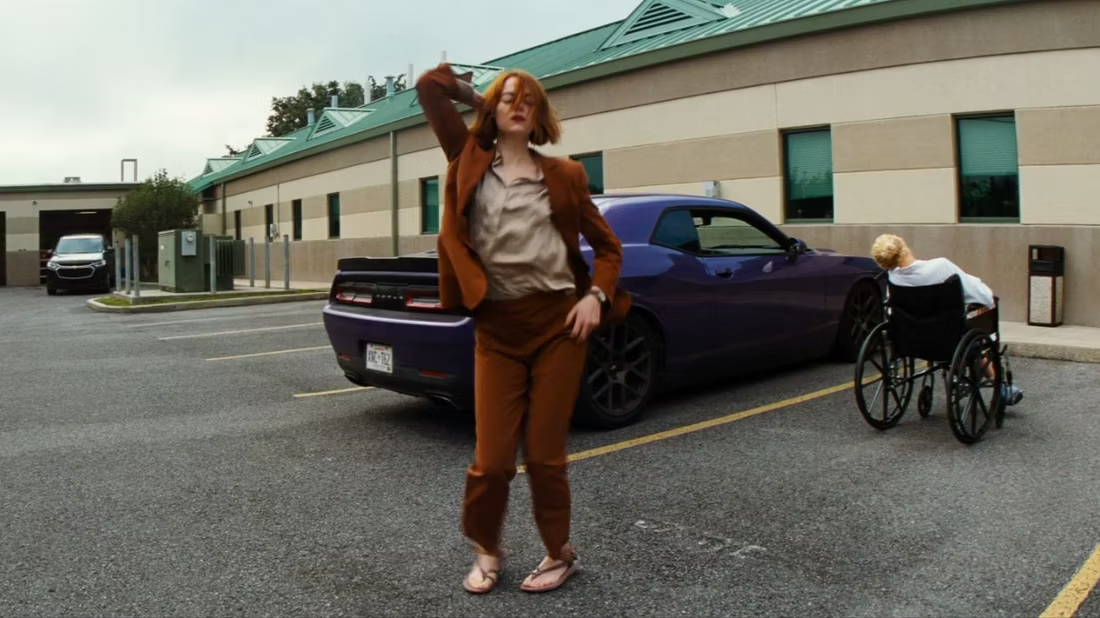
A lot of Lanthimos’s regulars return from “Poor Things” like Willem Dafoe, Margaret Qualley and of course, Emma Stone who thrillingly becomes more prevalent as the film progresses. New to his films are Hong Chau, Mamoudou Athie and Jesse Plemmons, who stars alongside Emma Stone. Stone is brilliant here giving some more wonderful dance moves and exploring similar themes of fighting against misogyny to “Poor Things”. Jesse Plemmons won Best Actor at Cannes for his performance and rightfully so, where so much emotion can be seen under Lanthimos’s style of monotone speaking.

The trailers could get away with basically just showing some shots of the movie because this looks stunning with such clever use of colour and lighting in each story. Make sure to see this on the biggest screen you can. The score uses pianos and choirs for such compelling dramatic effect.

“Kinds of Kindness” is a showcase of Lanthimos’s many talents as he examines abusive relationships through a surreal lens making for a film thrillingly original and a must see.