Alam (France / Saudi Arabia / Tunisia / Qatar / Occupied Palestinian Territory, 2022)

This is the next title being screened at the Picture House as part of the Leeds Palestinian Film Festival. It is a drama set among the Palestinian Arabs who live in the part of occupied Palestine known as Israel. The drama centres round the celebration of the founding day of Israel, usually in early May. Dispossessed Palestinians mourn their lost country on Land Day, later in May.

For Palestinians who stayed on the land that became Israel, Israel’s day of founding is also the Palestinian’s day of Catastrophe [Al-Nakba]. For their exams, high school students have to learn Israel’s version of history, with the stories of dispossessed former Palestinians being suppressed.

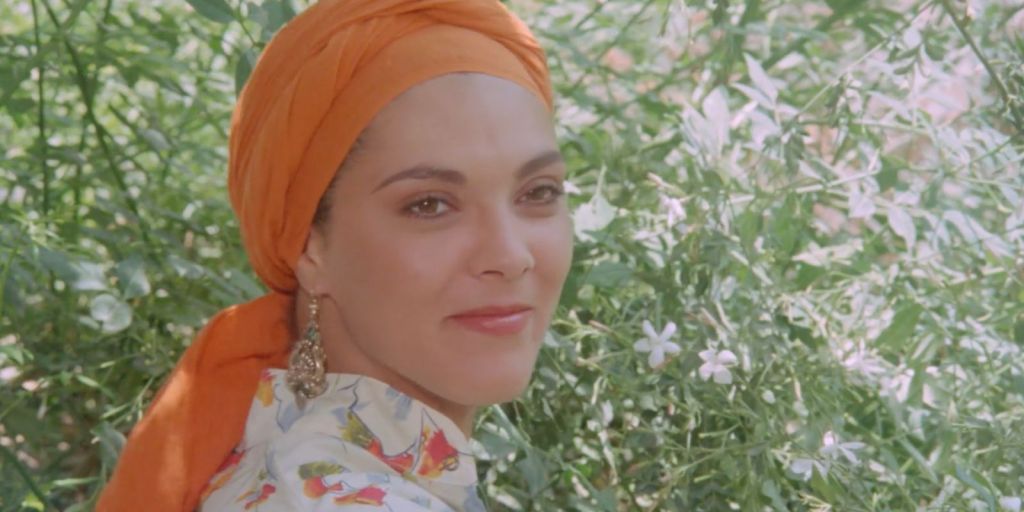
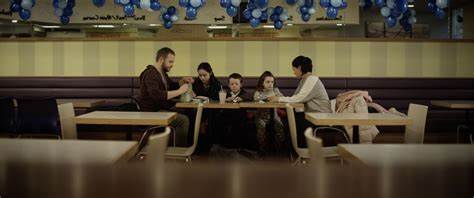
Tamer (Mahmood Bakri) is drawn to a new high school student Maysaá (Sereen Khass) and through her becomes involved in an act of defiance of the occupiers’ celebrations. These centre on the Israeli flag; one meaning of ‘Alam’ is ‘flag’. Tamer ‘s family already have the experience of Israeli repression which leads to tensions within his family.

This feature is written and directed by Firas Khoury; he has already made some short movies. He is also involved in organising screenings and cinematic events throughout Palestine. This feature is a multi-territory production involving both European and Arab funding. It is shot in colour and anamorphic wide screen, 2.39:1. The running time is 109 minutes. The dialogue is in Arabic and Hebrew with English sub-titles.

This feature won the Golden Pyramid Award and the Audience Award at the Cairo International Film Festival. The experience of Palestinians living in Israel is often overlooked in the media. Given the repression taking place in Israel of Palestinian expression and opposition to the war, this is a welcome opportunity to get a sense of this Palestinian world.

Showing in Screen 1 on Wednesday 29th November at 6pm

Leeds Palestinian Film Festival 2023

This is now a regular event in Yorkshire though this year it comes against a backdrop of a criminal violence and destruction across occupied Palestine. Thus it offers an opportunity to deepen our knowledge and understanding of the experience of the Palestinian people since the British Empire sold away their land for a mess of pottage.

There are a further eleven events in the Festival programme. And two of these are featured at the Hyde Park Picture House,

On Tuesday November 21st at 6 p.m. there is,

Cinema Palestine – Tim Schwab, Canada/Israel/Jordan/Palestine, 2014, 78 minutes. English, Arabic with English subtitles. This is a documentary about Palestinian film and film-makers and how this connects with |Palestinian identity. Some of the work of these film-makers is airing on Al Jazeera channels and on their web pages.

On Wednesday 29th November at 6 p.m.

Alam – Firas Khoury, 2022, France/Tunisia/Palestine/ Qatar/UAE, 109 minutes. Arabic with English sub-titles. This feature offers a narrative about political awakening for a young Arab living in Galilee.

Given the context for this year’s Festival the organisers have published a statement on their web pages;

The Leeds Palestinian Film Festival Team are filled with horror, grief and sadness at the current violent loss of life across Palestine/Israel.

We are motivated by a strong belief in justice, respect and dignity for all people, which is why we have selected the films for this festival carefully.

The intentions of our 13 outstanding and thought-provoking events are:

  • to shine a light on hidden stories of Palestinians, their history, culture and politics
  • to challenge stereotypes and one-dimensional views
  • to portray a people in all their diversity

We believe our programme provides invaluable context which can help to illuminate the root causes of the present violence, and to develop responses grounded in understanding and care for others.

All our events constitute safe spaces for constructive and respectful dialogue, with no place for racism, xenophobia or aggression. [LPFF]

And hopefully Friends  were also able to catch the title screened during the Leeds International Film Festival.

Al-Makhdu’un (The Dupes, Syria 1972), this is a feature adapted from the novella  Rijāl Fi Al-Shams / Men of the Sun by  Ghassan Kanafani in 1963. The film version was scripted and  directed by Tewfik  Saleh, an Egyptian who made a number of films that can be counted as part of Third Cinema. He suffered censorship in  Egypt and left in the 1970s and this film was produced by the Syrian National Film Organisation.  The film was shot in black and white academy, running for 107 minutes in Arabic; English sub-titles provided.

The director made these comments in an interview for a French Film Dossier;

I worked on the adaptation of Men in the Sun by Ghassan Kanafani – a militant of the Popular Front for the Liberation of Palestine assassinated on 9 July 1972 in Beirut by the Zionist secret service (Mossad) – from 1954 to 1971. My intentions and my interpretation of the novel and its characters changed in light of the tragic events that took place in the region in June 1967 and September 1970. In the latest version, I wanted to emphasises the element of escape that characterise the Middle East at this time. Three characters from three different generations, representing three phases of the same collective problem, decide to flee their situation in search of what each considers or hopes to be their individual salvation. But the end is very different from their expectations; there is no individual salvation from a collective tragedy. And this is the lesson that history teaches us every day.

Saleh here refers to the seizure of Palestinian lands and the further expulsion of Palestinians during and after the six-day war in 1967; and the expulsion of the Palestine Liberation Organisation from Jordan in 1970, including the massacre of Palestinian militants and civilians. The film’s central characters are victims of the earlier Al-Nakba (Palestinian catastrophe) of 1947 and 1948. Set in the 1950s in the Iraqi desert; three dispossessed Palestinians  attempt  to journey to a new life in Kuwait.

A Bunch Of Amateurs – Sunday 18th December 1pm


Hopefully you’ve already booked tickets to the various Christmas themed films which are being screened by the HPPH over the next couple of weeks. Unfortunately we’ve been unable to put on a Christmas screening for the Friends this year but some of the Committee will be joining Wendy for the screening of ‘A Bunch of Amateurs’ at 1pm on Sunday 18th December at Heart. Whilst this isn’t really a festive film, we felt that the subject matter and tone of the film really chimed with the Friends’ values. We will be in the café before the film, so come along if you can for a catch up. Bill and Wendy will be giving an update on progress at the Picture House and what’s been happening with the Friends.

“Joyous and heartbreaking celebration of film-making passion” 

Guardian 9th October 2022


Comes together as a wistful reflection on the power of cinema and community in the face of adversity.

Marina Ashioti Little White Lies

Cinema Rediscovered on Tour: Women’s Stories from the Global South (& To Whom They Belong)

Hyde Park Picture House has worked in collaboration with Watershed, Black Cinema Project and Ajabu Ajabu to develop and tour an exciting film programme, a focus on five women’s stories from Morocco, Cuba, Venezuela, Angola and Tanzania.

Curatorial collaborators Mosa Mpetha (Black Cinema Project, Hyde Park Picture House), Darragh Amelia and Jesse Gerard (Ajabu Ajabu) presented five recently digitised or restored works from the Global South that are written by and about women in Cinema Rediscovered Film Festival July 2022. Surrounding each film from this selection existed a uniquely challenging story of ownership and distribution, opening up discussion around the imbalance of power within film cultures perpetuated globally and locally. The strand includes Sambizanga the first film by a woman to be restored by the African Film Heritage Project, an initiative created by The Film Foundation’s World Cinema Project, the FEPACI and UNESCO – in collaboration with Cineteca di Bologna – presented in person at Cinema Rediscovered by Annouchka De Andrade, daughter of director Sarah Maldoror.

All Titles include: Door to the Sky (Morocco, 1989), De Cierta Manera (Cuba, 1974-77), Araya (Venezuela, 1959), Maangazimi: The Ancient One (Tanzania, 2001) and from Angola Sambizanga (1971).

Launching at this year’s festival – the package of films is available to book for cinemas and festivals across the UK from August 2022 to January 2023 with support from BFI awarding funds from The National Lottery and MUBI.

Hyde Park Picture House screened Araya in the City Varieties on 1 November 2022, and A Door to the Sky is showing on 29 November 2022.

We have an interview between Robb Barham (HPPH Operations & Programme Manager) and Mosa Mpetha (HPPH Creative Engagement Officer) about the curational process for this programme.

Robb: So, tell me how this strand came about, how you were invited to participate in Cinema Rediscovered, and how you built the strand together with the people that you were collaborating with.

Mosa: The strand came together through several separate streams of work, and it ended up being much bigger and better than I initially anticipated.

It started with the film Sambizanga; my friend Samra Mayanja and I created Black Cinema Project together a couple of years ago, and we were really obsessed with this film because it was the first film that we showed to our group. On researching the film we came to learn it had a particularly interesting backstory due to the fact that the filmmaker and her daughters were trying to reacquire the rights to get it taken off youtube where a shoddy version was available, and they were trying to get the rights back so they could restore it. They basically wanted people to see it in its full glory. But the producer of the film had sold the rights to a French distributor in a 50 year contract, and the French distributor wasn’t doing anything with the film.

So it really sparked our interest and when we were researching this, we started to wonder about the politics behind film rights and restitution in the film industry. What are the circumstances that allow a film to become locked away in individual, any individuals basement, uncared for and unseen? So we were particularly interested in this story and followed its journey. Unfortunately, the filmmaker, Sarah Maldoror died in 2020, after which her daughters continued on trying to get the film back. Eventually they did, largely because they got support from Scorsese’s Film Foundation and a wider funded project – the African Film Heritage Project.

They managed to get the rights back in order to restore the film which was screened in Bologna in 2021, and it was just a really exciting moment. So essentially, we knew this film had to be seen and appreciated by lots of people, on multiple big screens, and to be treated with the respect it deserves.

Continue reading

Rosie, Ireland 2018

This movie was screened at the Hyde Park Picture House in 2019; now it is transmitted this coming Sunday evening at 8.40 p.m. on the new BBC Three channel [Freeview 109 – also on the BBC iPlayer) . The Picture House screening was accompanied by presentations from members of the production, including  the director;  which added a welcome dimension to the event. I was impressed and included the title in my ‘best of the year’ selection . Rotten Tomatoes had very positive reviews and commented:

“Equal parts empathy and outrage, Rosie offers a heartbreaking glimpse of economic insecurity that will hit many viewers uncomfortably close to home.”

A day in the life of a family whose lose their rented home and find that the city [Dublin] is no place to be homeless. The key character is the mother, Rosie Davis (Sarah Greene); critics generally had high praise for her performance. But the whole family cast are really good with her partner John Paul Brady (Moe Dunford) and their four children, Kayleigh (Ellie O’Halloran) and three younger children Millie (Ruby Dunne), Alfie (Darragh McKenzie) and Madison (Molly McCann) equally convincing.

The day is a bleak procession of failures and lack of provision. The parents desperately seek a shelter, even for one night, as the children suffer from their poverty and insecurity. Much of the day is spent in their car as they search the city: this offers distinctive variation on the road movie: perhaps influenced by some of the also distinctive but different variants in Iranian cinema. This is the bleak landscape for the homeless in Ireland’s capital, but this is a story that could equally be filmed in British cities and in those of North America.

The screenplay is by the noted Irish writer Roddy Doyle. And the script was developed from real-life experiences  of people caught in the trap of homelessness. Filmed on location in Dublin the cinematography by Cathal Watters  uses frequent hand-held camera and large close-ups to present the emotional problems for the family.  The director Paddy Breathnach handles the production extremely well and achieves a documentary feel to the drama.

The film was likely shot in colour on a digital format in colour, it circulated on a DCP. It should show up well on the BBC HD channel though the widescreen 2.35:1 ratio may be slightly cropped. The title runs for 86 minutes. If you missed the Hyde Park screening the title was hard to see; the fate of many independent but really worthwhile movies. So it is a definite must on Sunday; be prepared for an emotional and powerful drama.

Stan & Ollie (Britain, Canada, USA 2018)

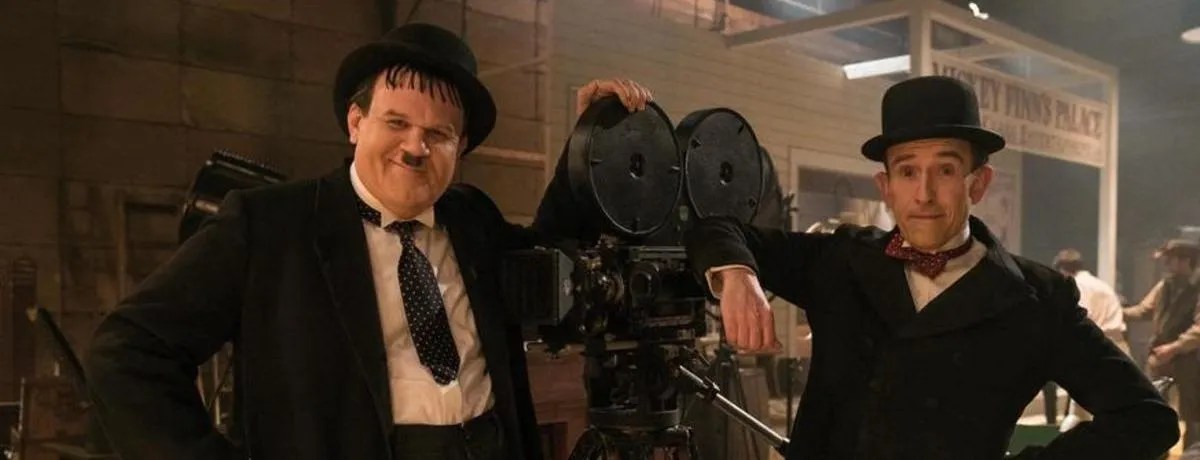
This is a portrait of two icons of film comedy, Stan Laurel and Oliver Hardy. However, most of the film deals with their later years, an eight month tour of Ireland and Britain in 1953, presenting performances on stage in music halls based on their famous routines. It was a success at the time and now offers a combination of celebration, humour and nostalgia. The film is screening this Wednesday [April 6th] at 9 p.m. on BBC 2. Since it is, in part, a BBC production it should be featured on the iPlayer for some time.

The film is well put together and has a fairly straightforward narrative. The stand out aspect are the performances as Stan / Steve Coogan and Ollie / John C. Reilly. For fans like myself it was as if watching the duo once again. The supporting cast is excellent, especially their two partners: Ida Laurel / Nina Arianda: Lucille Hardy / Shirley Henderson. In fact the actual tour, organised by impresario Bernard Delfont (Rufus Jones), is more or less played in reverse. At the opening the audiences are small and lukewarm; the reverse of actuality. The intention it would seem is to develop a rising narrative ending with a highly successful performance and a delighted audience.

It is not all humour. The tour ended when Oliver suffered a heart attack and following the tour they were unable to work again. So there is also a disconsolate note at the conclusion. The film also shows in flashback how Stan and Ollie ended their association with Hal Roach (Danny Huston). Continue reading

Oscar Micheaux: The Superhero of Black Filmmakers

This is a documentary screening on April 1st on Sky Arts at 2.40 a.m. This appears to be the only Sky channel available on Freeview, Channel 11. It offers a range of programmes on the arts including frequent studies of cinema, film and film-makers. The majority of these are rather lightweight; they tend to ‘talking heads’, which means the comments are spread across a series of interviewees and rarely have the space to develop complex comments. And the extracts from films tend to be short and not necessarily illustrative of the important points. Some, like the programmes on Buster Keaton or Josephine Baker, involve the European Media Company Arte and are more analytical. This documentary falls rather in the middle.

Oscar Micheaux was a pioneer film-maker in what was known in early C20th USA as ‘race cinema’. These were films produced specifically for black audiences and usually screened in segregated cinemas in the South and either in segregated auditorium or programming in the North. The earliest ‘race’ film dates from 1905 but the cinema took off around 1910 , mainly in Chicago. There were independent ‘race films’ production companies like The Lincoln Motion Picture Company [1916 to 1921] owned by black entrepreneurs. Most companies in this field were owned by white entrepreneurs. There were also black production crew and ‘stars’ like comedian Mantan Moreland, who actually appeared in a few mainstream Hollywood titles. The ‘race cinema’ died out at the end of the 1940s when Hollywood finally decided to attract the ‘black dollar’; and then the 1950s saw the appearance of black stars in Hollywood like Sidney Poitier.

Oscar Micheaux was possibly the most important producer and director in this field. His Micheaux Film Corporation was set up in Chicago in 1918 and he later also worked in New York. Between then and 1940 he made forty four movies; most, like much of the ‘race cinema’, are lost. But the surviving silent and sound films are key examples of that cinema and also are seminal film texts in the history of US film and black film-making. Continue reading

Summer Of Soul

Showing at City Varieties on Tuesday 10th & Wednesday 11th August at 7:30pm

Summer of Soul (...Or, When The Revolution Could Not Be Televised)

This Sundance award-winner is an absolute joy, uncovering a treasure trove of pulse-racing, heart-stopping live music footage that has remained largely unseen for half a century.

Mark Kermode, Observer (18 July 2021)

Mark Kermode isn’t the only person to suggest this is one of the best concert films ever made and it’s hard to disagree with such claims. The music from Stevie Wonder, Nina Simone, Sly & the Family Stone, Gladys Knight & the Pips and more really is fantastic, not to mention incredibly moving at several points.

The film is more than just footage from 1969’s The Harlem Cultural Festival. The full title of the film is “Summer of Soul (…Or, When The Revolution Could Not Be Televised)” because, although everybody involved knew how important it was to film these concerts, the footage was never seen and largely forgotten about. Unfortunately we can guess at some of the reasons why it never made it to TV but it’s great that we now get to see it. It was surprising to me how much more contemporary it seems compared to the more widely seen coverage of Woodstock that also took place that summer. The film captures the time and place to great effect, highlighting how much had happened leading up to the end of the decade and how much there was a need, and drive, for change.

It’s another music documentary (see also The Sparks Brothers) that will really benefit from the cinema experience. Not only will it look and sound great but this is a film to be enjoyed and experienced with other people. If you can’t make it to City Varieties it is also available to watch at home on Disney+.

Films at Heart

Bill Walton has been checking out some of the films at the Headingley Enterprise and Arts centre.

During Lockdown I’ve watched a lot of films on the small screen (though I draw the line at watching on a phone!), mostly on DVD or streamed from MUBI. But recently I’ve ventured out to events screened at the Heart centre in Headingley … a big screen, indoors, socially distanced, friendly, with flexible seating, refreshments and a friendly welcome.

First was Kurosawa’s Rashomon (1950). This was a tasty Food and Film evening. I hadn’t seen Rashomon before but it lived up to its reputation. The term “Rashomon Effect” has become a byword for situations which demonstrate relative truth and subjectivity of memory. In the film we have conflicting accounts by a woodcutter, a thief, a woman and the spirit of her husband about a violent incident in the forest. Flashbacks highlight the disagreements. What particularly surprised me was the vitality of the cast. Definitely worth more than one watch.

My second visit to Heart was to see Purple Rain (1984) which was arranged by a Prince enthusiast. The soundtrack produced 4 top 40 hits. The rock musical drama draws to some extent on Prince’s early difficult childhood and backstage life at the legendary First Avenue nightclub in Minneapolis. Certainly a charismatic performance.

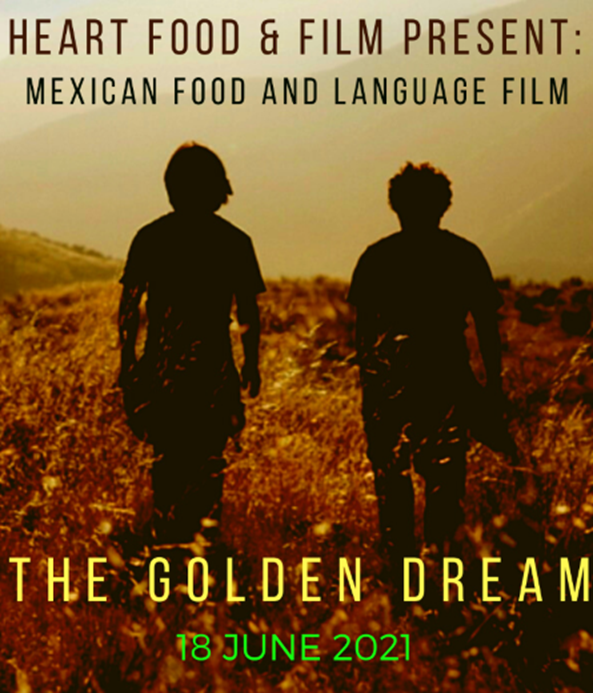
I’ve already booked for the next Heart Food and Film event on June 18th: a celebration of Mexico with fabulous food and Ariel Award winning film – THE GOLDEN DREAM.

Heart Food & Film Present: Mexican Food and Language Film - The Golden Dream 18 June 2021

Three teenagers, Juan, Sara and Samuel from the slums of Guatemala, travelling together on freight trains and walking railroad tracks through Mexico, meet Chauk from Chiapas who doesn’t speak Spanish. Together they face a journey that will change their lives forever.

For more information and tickets visit the HEART website

The Picture House’s own family friendly Hyde & Seek screenings will be starting again at Heart later this month. These screenings are ‘Pay What You Can’, which means you’re free to pay as much or as little as you can afford but must be booked in advanced via the Picture House website.

The first film is the Disney animated Robin Hood (1973) on Saturday 26th June at 10:30am.

You know, there’s been a heap of legends and tall tales about Robin Hood. All different too. Well, we folks of the animal kingdom have our own version. It’s the story of what really happened in Sherwood Forest

Alan-A-Dale


Bring your family along on the 26th to find out for yourselves.

Two films by Satyajit Ray

May 2nd was the centenary of this outstanding film-maker and a seminal figure in Indian cinema. The British Film Institute is planning a complete retrospective of his films later this year. Whilst we wait and wonder how many actual films will make it to Yorkshire Film 4 offers transfers of two of his fine titles in the coming week.

The family in ‘Mahanagar’

Monday / Tuesday night  at 01.15 a.m. [now available on All4].

Mahanagar (The Big City) – the film was shot in 1963 in black and white academy ratio: the language is Bengali with some English and with English sub-titles: and is set in Ray’s home city of Kolkata (Calcutta). The film follows the experiences of a family home which contains parents, two children and the grandparents on the husband’s side. The husband, Subrata Mazumdar (Anil Chatterjee), works as a senior clerk in a private bank; part of Bengali ‘bhadralok culture’ which Europeans would think of as lower middle class. The large family place a strain on his income and his wife, Arati (Madhabi Mukherjee) offers to help by taking a job. Despite the disapproval of the grandfather Arati obtains a post selling knitting machines door-to-door in middle class areas. Arati is the centre of this fascinating film; Madhabi is splendid as the young wife and the whole cast are excellent. Ray’s direction is beautifully and effectively restrained and his production team are excellent, especially the regular cinematographer Subrata Mitra.

Ray won the prestigious Silver Bear Award at the 1964 Berlin International Film Festival whilst the film won the Golden Bear.. However, the film itself failed to achieve a nomination by the Hollywood academy in the Best Foreign Language Film category; this was typical of the Academy. Mother India made a nomination in 1957; the next success was not until 1988 with Salaam Bombay. Three of Ray’s fine films failed to get nominations.

Wife and husband in ‘Charulata’

Tuesday / Wednesday night at 1255 a.m. [now available on All4].

Charulata (The Lonely Wife) – the film was shot in 1964 in black and white academy ratio: the language is Bengali with some English and with English sub-titles:it is set in Kolkata (Calcutta) in the 1880s. Thus this is a period film which is set in a Bengal and India under the rule of the Raj. This period also follows the 1857 ‘first war of independence’ [termed a mutiny by the British rulers). At one point in the film the Bengali men discuss a British general election contested by the the political parties led by Benjamin Disraeli and William Gladstone.

As the title suggests the film focuses on the young wife, Charu and her relationship with her husband and a visiting relative. Bhupati Dutta plays the husband whilst two actors from Mahanagar, Madhabi Mukherjee and Anil Chatterjee, play Charulata and Bhupati’s younger cousin Amal respectively. The cast are excellent. Ray’s direction provides a slowly paced portrait of the marriage interspersed with some fine lyrical moments. The opening and closing sequences are especially highly praised, [so stay awake].

The scenario was adapted by Ray from a story by Rabindranath Tagore, the leader of the Bengal Renaissance and an important influence of Ray himself. Ray is an auteur in the fullest sense of the term; in this film providing the scenario, costume design, direction and music. However, he relies on a really skilled production team. In particular this film contains some of the finest cinematography by Subrata Mitra.For the second year running Ray won the Silver Bear Award at the Berlinale. Whilst the film did not follow Mahanagar in winning the Golden Bear it is to my mind the finer film and one of Ray’s great achievements.

With adverts both titles will run over two hours. Especially with the Charulata there are few cinematic double hours which offer the same quality and pleasure. If you are new to Ray, or indeed if you are familiar with his films, then the Saudha International Satyajit Ray Congress [available on You Tube] offers a range of interesting comments on Ray’s art.