The Leeds Palestinian Film Festival 2025

This year’s Festival runs from November 12th until December 6th, including two titles appearing in the Leeds International Film Festival. The complete programme is presented on the LPFF webpages. There are twelve events, both feature titles and documentaries, and art/activity events.
Happily, several of the screenings are at the Hyde Park Picture House. These include two much anticipated new works from Palestinian and Arab film-makers.

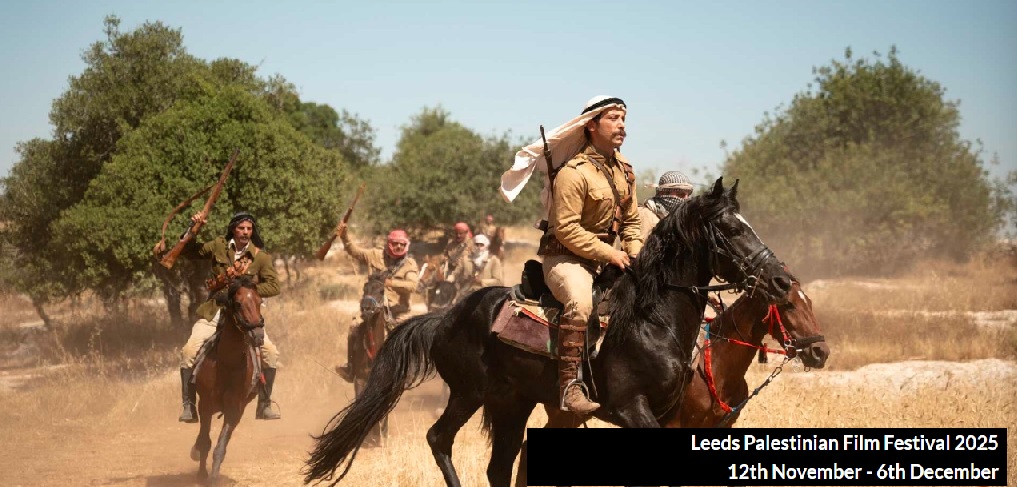
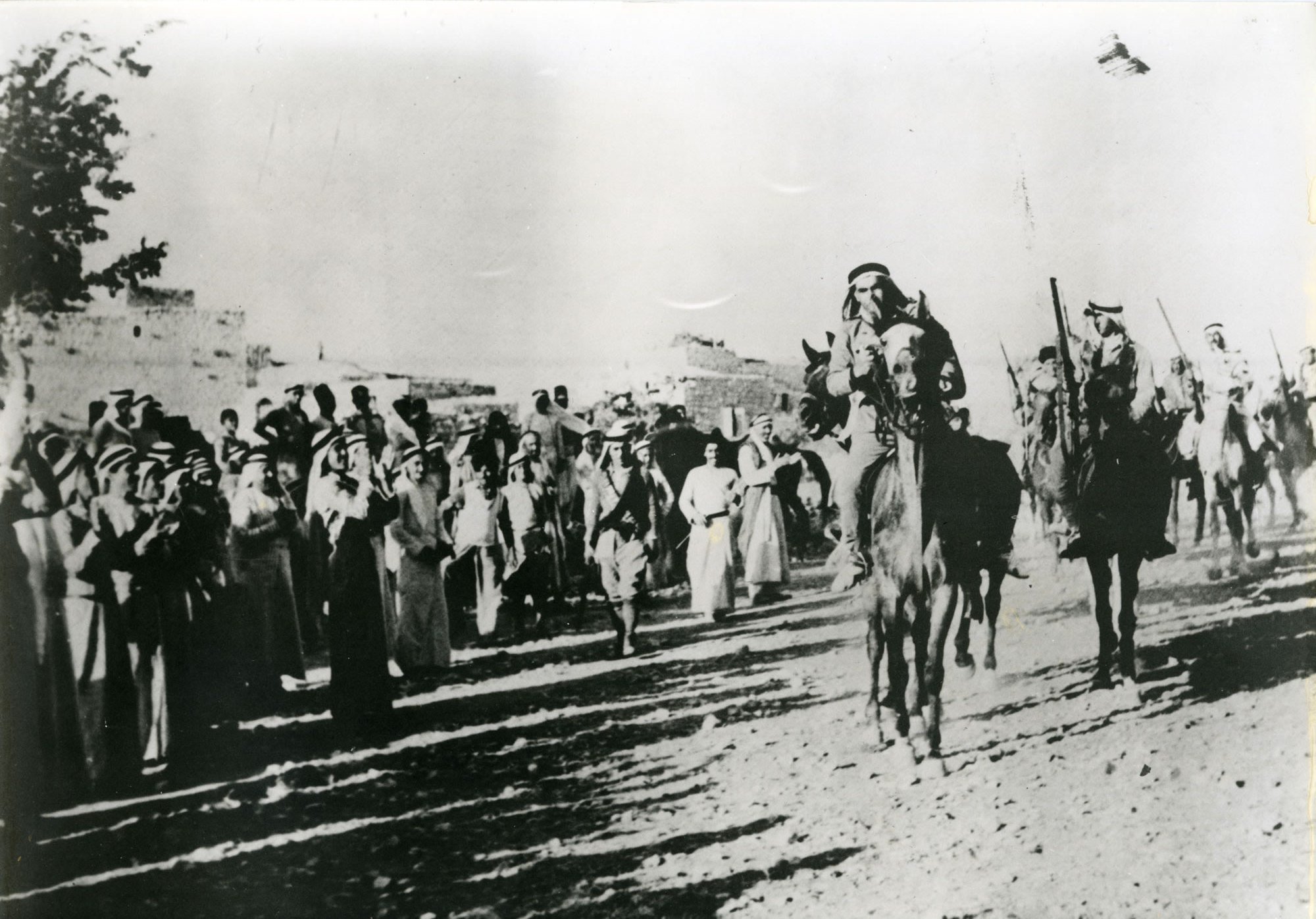
The Great Arab Revolt 1936 -1939

In the coming week there is a screening of Palestine 36 (2025); it is already sold out but there are further screenings of the feature in December. This is the latest feature from Annemarie Jacir and the screening on the 20th includes an introduction with a recorded video from the director. Her two previous productions are among the most interesting of recent Palestinian movies. Wajib ( 2017) is set in contemporary Nazareth and explores the Palestinian community as a father and son hand out invitations to a wedding. When I Saw You (2012) is set in Jordan in 1967 as another Nakba forces more Palestinians into exile while Fedayeen develop the armed resistance to Zionist occupation and aggression. Now with Palestine 36, Jacir returns to the Great Palestinian Revolt against British occupation from 1936 to 1939. A rebellion by the dispossessed Palestinian people against British colonial rule, it was brutally suppressed by the British military, aided by the armed Zionist militia. The defeat of the rebellion laid the ground for the 1947/8 Nakba. Yet it has been over-looked in much of the discussion of the settler colonial occupation in the west. Note, Wikipedia has a detailed page on the rebellion.


Then there is The Voice of Hind Rajab (2025), a drama-documentary that recreates the ordeal and death of a five-year old child under fire from the Zionist military; it is harrowing viewing. The case was widely publicised in the media and the details of the atrocity are given on a Wikipedia page. The feature is directed by the Tunisian film-maker Kaouther Ben Hania. Her previous feature, 4 Daughters (2023) was a really distinctive drama-documentary exploring women’s situation in Tunisian society. This title also has further screenings at the Picture House in December.
There has already been a screening of Yalla Parkour (2024) and there will be Put Your Soul on Your Hand and Walk (2025). These and other presentations in the Festival explore Palestinian resistance and their support across the world. As well as offering varied examples of fine film-making and supporting activities the Festival continues to present the the resistance of the Palestinian People to the ongoing Zionist genocide and ethnic-cleansing. As has been the case for decades the ruling classes in Europe and North America continue to support Zionist war crimes, though among the oppressed peoples support for the Palestinians is strong. So the Festival is an important part of the ongoing support for Palestine and for the Boycott, Divestment and Sanctions Campaign.

In The Mood For Love (2000)

Showing as part of their reRun strand, the Picture House presents Wong Kar-wai’s esteemed masterpiece, In the Mood for Love.

Set against a smoky, rain-soaked 1960s Hong Kong, the lives of neighbours Chow Mo-wan and Su Li-zhen become quietly entwined after discovering a shared betrayal. What unfolds is a visually sublime, temporal meditation on desire, longing and human connection, and an aching love letter to a Hong Kong that no longer exists.

This year marks the 25th anniversary of the film’s release. A quarter-century on, it is enduringly beloved and celebrated not only as a landmark in Asian cinema, but as one of the greatest films ever made.

A stunning, sensory collage of colour and movement – paired with a gorgeous soundtrack – In the Mood for Love is definitely one to experience on the big screen.

Showing this Sunday 12th October at 2:30pm (last few tickets) and Wednesday 15th October at 1:45pm.

Sophie Laing

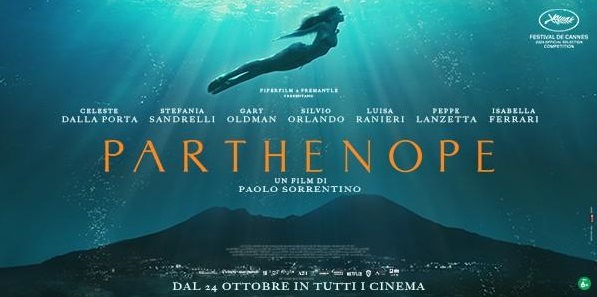
Parthenope, Italy / France 2024.

This new film from Paolo Sorrentino is screening at the Picture House over the coming days. His earlier films have been really impressive with great style but also a heart at the centre. I found this film a little disappointing because it did seem to lack heart to a degree. However, the visual and aural quality is very fine and Sorrentino is clearly working with a very talented group of craft people.

Parthe [for short] is the central character and at her birth in 1950, in the wealthy suburb of Naples, she is christened after a mythical Greek siren. Legend has it that the original Parthenope drowned in the waters off Naples and gave her name to an early settlement there. So Parthe is a reflection of the city, birthplace of the director.

From her birth the movie cuts to 1968 when Parthe is eighteen and is part of a triangle of her older brother Raimondo and the son of the family housekeeper, Sandrino. As in The Great Beauty events in this period mark both Parthe and her family for years to come.

The movie follows Parthe’s career as a student of anthropology and then as an academic who specialises in the study of miracles. She briefly toys with becoming an actor but settles for University life. She also has a number of relationships and affairs. The theme of miracles in reflected in several episodes.

She leaves Naples in later life but this is covered by an ellipsis in the narrative and the movie ends back in Naples. The narrative is absorbing, the characters and setting are finely presented, as are the sets and costumes. It is a visual feast and the soundtrack of sound and music is also excellent. The cast are very good though the script does not develop all the characters sufficiently; Gary Oldman is wasted in a cameo. I found some scenes and/or dialogue humorous and witty.

The title is in colour, with black and white, and 2.39:1; with the dialogue, Italian, Neapolitan and English, translated in subtitles. It runs 147 minutes but did not seem overlong. The production was made on digital formats and mastered at 4K. The DCP is also in 4K which does proper justice to the cinematography and music. The screening on May 25th at the Picture House is in auditorium one and the laser projector there will present the title to proper effect.

The Japan Foundation Touring Film Programme 2025

Takemine Hideko in ‘Carmen Comes Home’

This is an annual event and the good news this year is that titles will be screening at the Hyde Park Picture House. In all the programme will be visiting 33 venues across Britain. There are 24 contemporary titles, released since 2018 and there are two ‘classics’ from the last century. The programme offers a variety of genres and themes whilst the title,

Am I Right? Justice, Justification and Judgement in Japanese Cinema

suggests a strong social element. The Programme web pages provide links to all the participating venues, with lists of the titles screening there and links to individual title pages.

The Hyde Park is screening four titles from mid-February to early March. One of these is a ‘classic’, though unlike in earlier years, we will not enjoy a 35mm print.

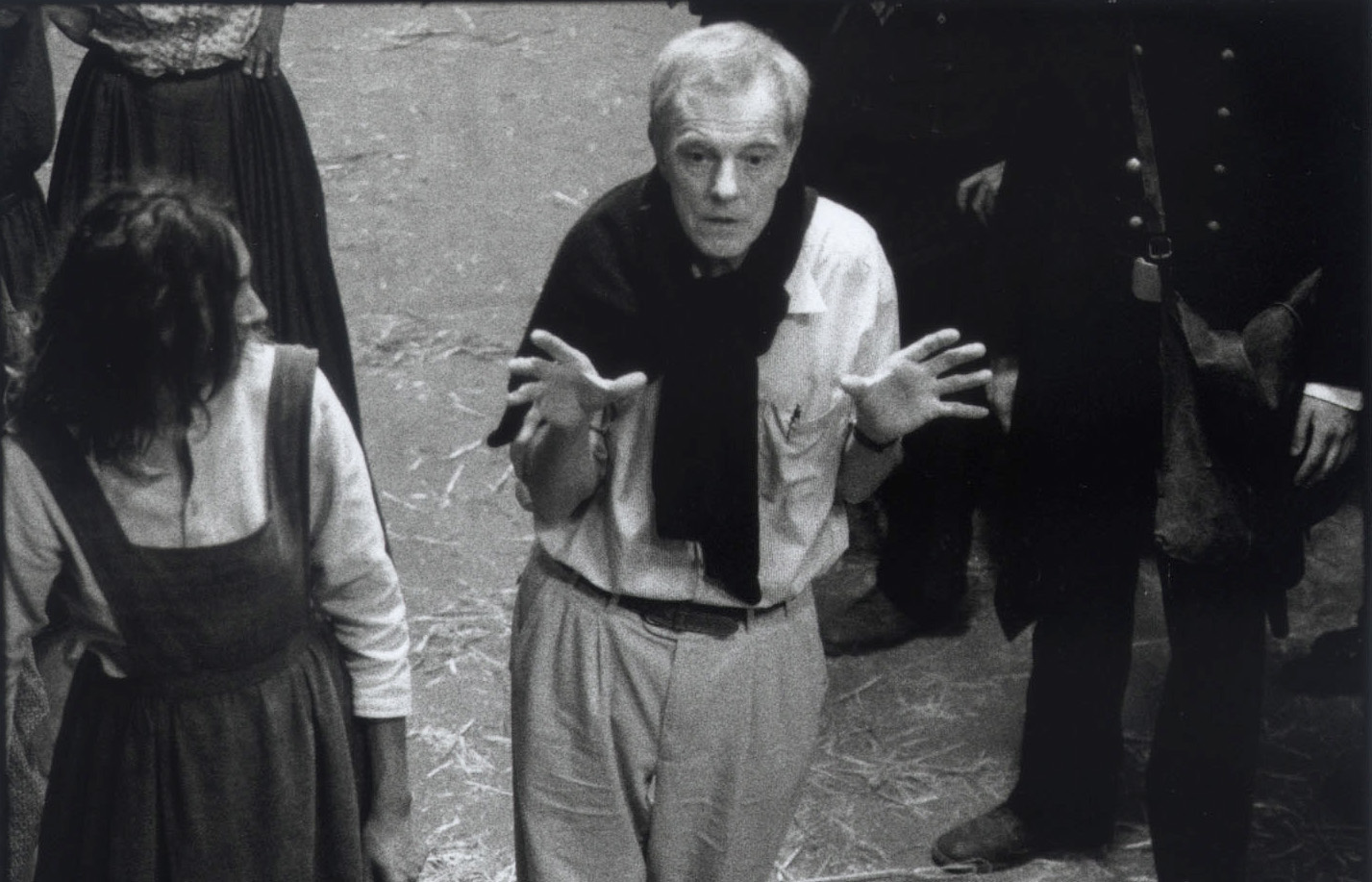
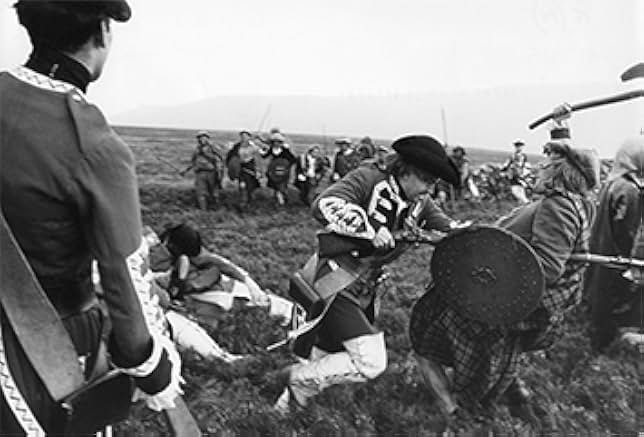
Carmen Comes Home / Karumen kokyô ni kaeru, (1951) is a comedy starring Takemine Hideko. Okin has left her rural home town in Nagano prefecture to work in Tokyo as a stripper, stage name Lily Carmen. She returns to the town with a friend where the local people are both fascinated and scandalised by this entertainer from the capital. Takemine Hideko was one of the major stars of Japanese cinema in a long career from late silent period (1929) until the 1970s. She worked with many of Japan’s most celebrated film-makers. This film was directed by Kinoshita Keisuke, whose very fine Snow Flurry / Kazabana (1959) was the classic film in the 2024 programme. Carmen was the first film to be made in colour in Japan, in Fujicolor and academy ratio. It was produced at the Shochiku Studio and the digital restoration was completed in 2012.

‘Ghost Cat Ansu’

The other titles at the Picture House are all recent. Ghost Cat Anzu / Bakeneko Anzu-chan is a colour animation released in 2024. Anzu of the title is a Ghost Cat or Bakeneko; a supernatural entity found in a number of Japanese folk tales. In this quirky drama Anzu takes eleven-year-old Karin on a magical journey. In the Wake / Mamorarenakatta mono-tachi e (2021) is a social thriller with serial killings but set in the city of Sendai (on the east coast of central Japan), struck in 2011 by the earthquake and subsequent tsunami, raising the wider problems of life there. Sakura / Kuchinai Sakura (2024) is another type of policier, here an investigation delves into the murky world of police and the national intelligence agency.

Oddly, it appears that none of the titles will be screening in Bradford at the Media Museum. But York’s City Screen and the Sheffield Showroom are screening some of the other titles, seven not in the Picture House programme. The Showroom will include the other classic in the Foundation programme, The Inugami Family / Inugami-ke no ichizoku (1976). The film was directed by Ichikawa Kon, a prolific film-maker whose best known works in the west are The Burmese Harp / Biruma no tategoto (1956, and remade in 1985) and An Actor’s Revenge / Yukinojô henge (1963). This film is reckoned to be an example of Japanese noir. The titular family come together for the will of the rich deceased family patriarch. The beneficiaries of the will and its surprising requirements lead to family dissensions. Then a murder occurs and a detective has to come in and solve the crime. Surprises abound right through the movie. It runs over two hours in colour and an unusual widescreen format.

‘The Inugami Family’

In past years the programmes have offered a rich and varied menu from one of the world’s most interesting and rewarding cinemas; so these screenings promise to be a cinephiles’ treat.
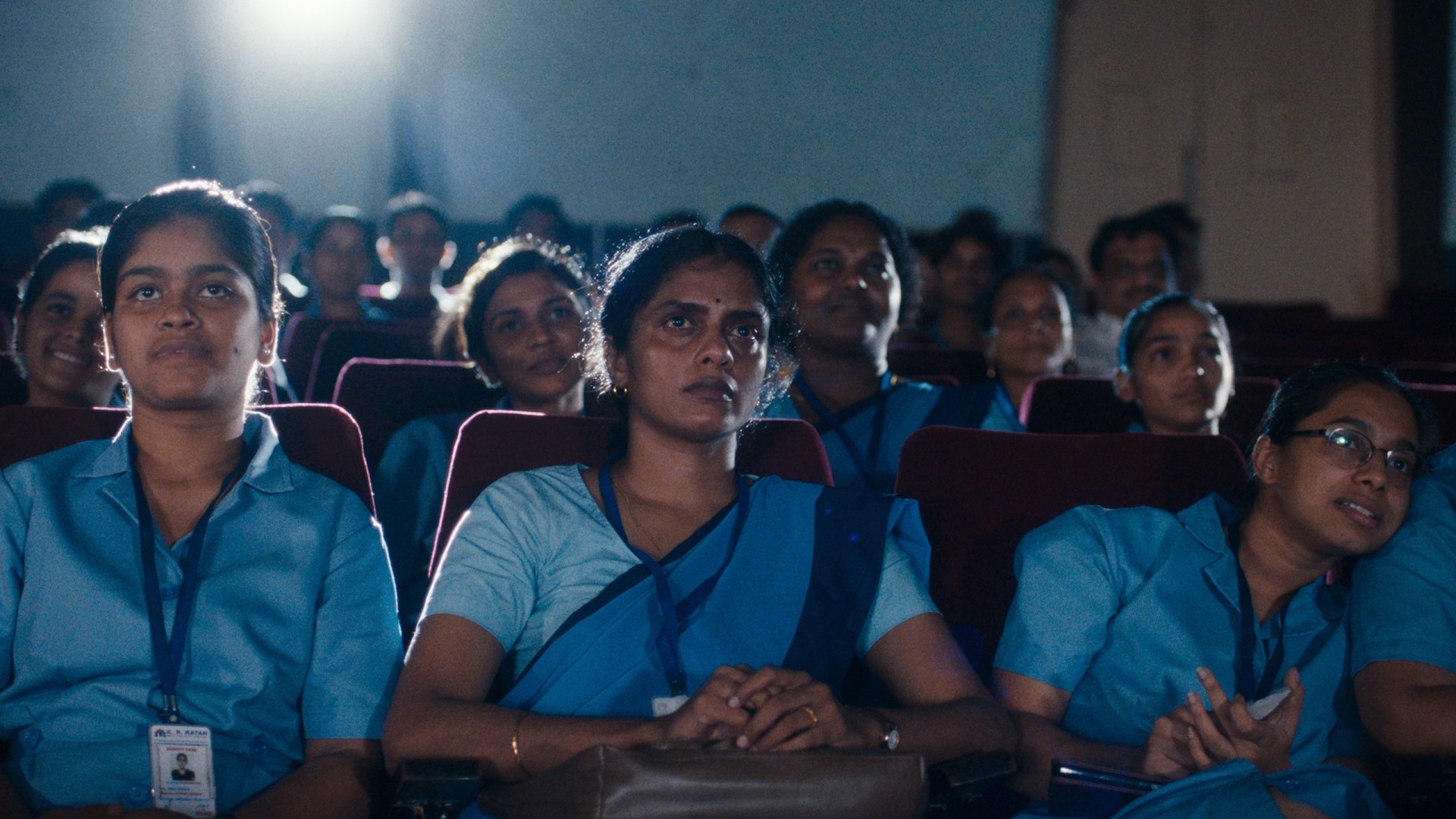
 All We Imagine As Light

A group of people dressed in blue sit in a theatre, attentively watching something.

Our next ‘First Thursday’ Film Club meet up is on December 5th after the 5:50pm screening of All We Imagine As Light. Come along and watch the film with us or see it anytime from the 29th November and then join us in the bar around 8pm on the 5th to discuss it.

All We Imagine As Light was the first Indian film to be selected in the Official Competition at Cannes in three decades. Payal Kapadia also made history as the first female Indian filmmaker ever to have a film in this prestigious section of the festival. A worthy winner of the Grand Prix and one of the best films released this year.

Centring on three co-workers and friends, Payal Kapadia’s film alights on moments of connection and heartache, disappointment and hope. Prabha, her husband from an arranged marriage living in faraway Germany, is courted by a doctor at her hospital; Anu carries on a romance with a Muslim man, which she must keep a secret from her strict Hindu family; Parvaty finds herself dealing with a sudden eviction from her apartment.

Kapadia captures the delicate intricacies of their lives within the bustle of the soaked metropolis and open-air tranquility of a seaside village, with equal radiance, articulated by her superb actresses and a stunning naturalism, which employs a European aesthetic to further enhance the film’s emotional core.

“It is both dreamlike and like waking up from a dream. This is a glorious film.” – Peter Bradshaw, The Guardian

“The film is a reminder of the transcendent power of cinema, even, and perhaps especially, when not all that much is happening” – Lindsey Bahr Associated Press

All We Imagine As Light is showing daily from the 29th November and tickets can be booked now.

Wedding in Galilee / Urs al-Jalil, Palestine, France, Belgium 1987

This film is screening on Sunday at the Picture House as part of the Leeds Palestinian Film Festival. It was the first feature film shot by a Palestinian film-maker, Michel Khleifi, in occupied Palestine. Galilee is in what passes for the Israeli state and this drama is set before the 1967 war and the extension of the occupation to the Gaza, West Bank,and territory in Lebanon and Syria.

This a different world from that when the film was produced, just before the First Intifada; and very different from the Zionist campaign of genocide, ethnic cleansing and assaults on neighbouring peoples.

The wedding of the title is of the son of a village Mukhtar [head man]. His village is under martial law and he has to seek permission from the local Military Governor who agrees on condition that he and his aides can attend the ceremony.

Most of the film is taken up with the ceremony; a rich tapestry of Palestinian traditions, both Christian and Muslim. But the tensions caused by the presence of the occupiers exacerbates divisions within the Palestinian community. As the day progresses both personal and communal conflicts reach a climax.

This is a fine piece of film-making, actually shot in villages around Nazareth and the nearby West Bank. The complex narrative not only explores the contradictions of the occupation but also presents the import of the land to Palestinians and the important role that women play in resistance.

There is an excellent article on the film by Ella Shohat in the Middle East Information and Research Project from 1988. And two guests will be illuminating the film after the screening. The film is being projected from a 16mm print in colour, widescreen and with English sub-titles. There is also a review with much of the film’s plot discussed.

First Thursday Film Club: Anora

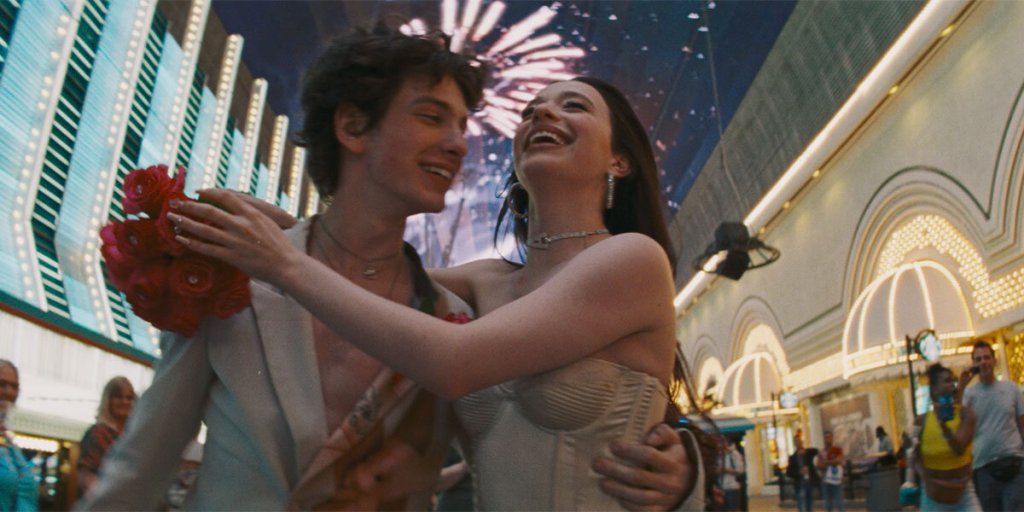
For November’s ‘First Thursday’ Film Club on the 7th November we’ll be meeting in the bar after the 5pm showing of Anora in screen 2. Anora is the latest film from Sean Baker (TangerineThe Florida Project) and won the Palme d’Or at Cannes Film Festival. It’s screening at the Picture House from Friday 1st November and is also one of the many films showing at the Leeds International Film Festival. If you can’t make the screening on the 7th and want to see the film some other time you’d still be welcome to join us around 7:30pm. Meeting at the end of the first week of the Festival should also mean we have plenty of other great films to talk about.

“Watching Anora is like riding shotgun alongside a reckless driver. Sean Baker is one of the brightest and most original filmmakers of his generation. He is one of a kind, and so is Anora.” – Leonard Maltin

“A wildly entertaining, modern-day screwball comedy set in 2018 that barrels through New York and Las Vegas. Mikey Madison is a revelation.” – Wendy Ide, Screen International

The film is showing every day from Friday so we hope you will get chance to see it and then join us on Thursday to talk about it.

Book Tickets

Strange Darling (2024)

Strange Darling completely shatters every expectation you might have of what initially seems to be a fairly cut and dry serial killer film: every chapter completely rips the carpet out from under what you think is going on between Willa Fitzgerald (The Lady) and Kyle Gallner (The Demon). Is it a one night stand gone horribly wrong? Is it some kinky game gone astray? 2024 has brought us some of the blandest films imaginable, so it’s refreshing to see a film from a director who is in full command of his craft and can play with the audience like a puppet-master.

The film marks both the debut of long-time actor Giovanni Ribisi as a cameraman, and the most exciting new voice in American independent cinema with JT Mollner. This is Mollner’s second film after the western Outlaws and Angels, which premiered at Sundance in 2016.

Non-linear structures can be a crutch to mask a filmmaker’s failings, but with Strange Darling it’s all about the twists and turns, which are carefully calculated with each reveal during the film’s six chapters. It’s a really impressive movie. Both of the leads have been a round for a while. Fitzgerald is mainly known for her TV work in the Scream TV series and Netflix’s Fall of the House of Usher. Gallner already has a bit of a cult following, starting with Jennifer’s Body but more recently the Scream sequel/reboot, Smile and Dinner In America. Both give star making performances and if there was any justice in the world Fitzgerald would be a nominated for a Oscar…. she won’t. 

Mollner had to fight like hell to get final cut on the film after Miramax recut it (and this is the post-Weinstein Miramax!)—but after Tiffany Haddish advocated on Mollner’s behalf with Miramax CEO Bill Block and a contractually obligated test screening of Mollner’s cut, Miramax relented and Block actually personally apologised to Moller for his trouble. When you see the film, the idea that somebody could think a linear version would possibly work will baffle you.

There hasn’t been a film yet with this kind of strong depiction of the state of Oregon since Gus van Sant’s early films, even though films are shot there all the time like the Twilight films for example. The Mt. Hood territory where the film is set is prime Sasquatch country (Mt. Hood is the hotspot for sightings). It’s home to two eccentric hippie doomsday preppers—although Ed Begley’s character wants it to be known he was a biker not a hippie—with whom The Lady seeks refugee, so of course he asks her if she is sure it’s not the ‘Squatches after her. The film depicts the strange and vast Oregon woodlands, a place full of ‘Squatches, hippies, preppers, white supremacists and yes, even serial killers (Ted Bundy and the Green River Killer both operated in Oregon). It’s not hard to believe that Sasquatches and serial killers can run rampant there. 

Also, in a world where there is much too much mediocrity shot digitally, it’s refreshing to Strange Darling proudly proclaiming that it was “shot entirely on 35MM” the moment the company credits end at the beginning of the film. Just don’t try the preppers choice of breakfast you might gag when you see the film. 

Ian Schultz

Strange Darling is showing on Saturday 19th and Wednesday 23rd October at 20:40

The Outrun (2024)

For October’s First Thursday Film Club we’ll be watching The Outrun at 5pm on Thursday 3rd and then gathering in the bar for a chat to share our feelings on the film, or about film in general, from around 7:30pm. First Thursdays are a new meet-up organised by the Friends of Hyde Park Picture House but open to everyone.

Starring and produced by Saoirse Ronan, and adapted from the bestselling memoir by Amy Liptrot, The Outrun is a life-affirming story about living on the edge, healing and what it means to return home.

“This is beautiful filmmaking. This is cinema where everything matters, where every little detail adds up to create something seriously exhilarating to experience in the theater.” – Alex Billington, FirstShowing.net

“The Outrun’s true tether, however, is Ronan, and here she works to all her greatest strengths. The film wraps entirely around her, yet she’s far too honest an actor to ever play up to the audience’s expectations of a woman in crisis.” – Clarisse Loughrey, Independent

The film is showing every day this week so we hope you will get chance to see it and then join us on Thursday to talk about it.

Book Tickets

Lee, Britain / USA / Norway / Australia / Ireland / Singapore – 2023.

This is a biopic of the photo-journalist Lee Miller, [full biography on Wikipedia]. In this feature she is played in a fine performance by Kate Winslet. Winslet is also the co-producer and worked closely with the writers and first-time-director Ellen Kuras, previously known for her work as a cinematographer. The movie enjoys a fine production with a strong supporting cast.

The film opens in the 1930s when Lee Miller was transitioning from a model to a photographer. She collaborated for a time with Man Ray and was also his lover. We see and hear some of the surrealist circle though who is who is unclear, [unless you watch the captioned version]. Lee Miller was a ‘free spirit’ but this and her relationships are only partly presented.

The movie concentrates on the World War II period when Lee worked for the British edition of Vogue. She usually worked with a Rolleiflex camera, a larger format and less compact than the Leica camera many other photographer used: one of these being the U.S. Dick Scherman (Andy Sandberg). After distinctive work on the British home front Lee was able to accompany U.S. Forces in the campaign in Europe after D-Day. As with the British her gender restricted her access but she firmly resisted this. Her most famous works were the photographs she took of the camps and victims of the Third Reich’s holocaust. These were censured in Britain but finally appeared in the U.S. edition of Vogue. The form of the narrative is an interview where particular and famous photographs by Lee provide references for a series of flashbacks. The interview and the use of photographs works well.

However, the writers have also attempted to make the interview a quest, not just for Lee’s career, but also her character and motivation and I found this aspect a little unsatisfactory.

Still it is a fine and powerful study. The production design, cinematography and editing are all excellent. The features is in colour and 1.85.1, running just under two hours. The dialogue is in English and French with appropriate sub-titles. This is definitely worth seeing and Lee’s biography is an fascinating study of a pioneering women and a period.