The Damned (1969)

A Pervert Pictures Presentation on Sunday March 17th, 2pm

A man in a suit holds the hand of a reclining woman on a chaise longue,

As author Sara Shepard observed “Those who forget the past are doomed to repeat it”.

In “The Damned” director Luchino Visconti takes us back in his portrayal of Nazi Germany in the 1930s. This is a disturbing film of beauty and decay, a heady mixture of sex, violence and intrigue, with a dysfunctional family enriched by arms sales at its core. Something for everyone!

We are so fortunate that the Hyde Park Picture House has worked with Pervert Pictures to bring this powerful tale of decadence to the big screen which will being with a short introduction.

Pervert Pictures is a Leeds-based film club for lovers of the erotic, the disturbing and the provocative, which aims to create a safe and social environment for the viewing of explicit and challenging films.

Herbert Thaliman (Umberto Orsini) says in the film “It does no good to raise one’s voice when it’s too late, not even to save your soul”. A vital lesson for our times? Agree? Disagree? Loved it? Hated it? Let us know. Leave a comment below, contact us with a review or join us in the cafe area after the film for a chat.

Two Scandinavian Films on 35mm

Sunday 10th December at 12 & 5pm

Girl with Hyacinths / Flicka och hyacinter
(Sweden, 1950, black and white, 99 minutes)

The film is an investigation of the suicide of a young woman, she of the title. The investigation is pursued by a neighbour played by Ulf Palme, who later appeared in the very fine Miss Julie (1951). The film relies on an interesting use of flashbacks. The cinematographer, Göran Strindberg, also worked on Miss Julie, directed by director Alf Sjöberg. Dialogue in Swedish.

The director Hasse Ekman worked as a writer and film-maker from the 1940s to the start of the 1960s; he was a contemporary and overshadowed by Ingmar Bergman. However, he was a successful and popular film-maker in Sweden.

Cross of Love / Rakkauden risti
(Finland, 1946, black and white, 89 minutes)

The film is based on a story by Alexander Pushkin. A young woman runs away to the city where she suffers exploitation before becoming a painter’s model., There are some relatively explicit scenes which, apparently, were censored in a Swedish language version.

Teuvo Tulio was a director who worked from the late 1930s through to the 1960s. His films are both very melodramatic and have an intensity of emotion that can sometime seem over the top. He often uses expressionist techniques. He is also reckoned to be an influence of the contemporary director Aki Kaurismaki. The leading player Regina Linnanheimo was a popular actress who worked on a number of occasions with Tulio and at times contributed to the script. The film dialogue includes Finnish, English and Russian.

Both films are screening from 35 mm archive prints, in the academy ratio and with English subtitles. So two ‘reel’ films on the same day is a treat. Unfortunately there is a three hours break between the screenings. Maybe visit the Hyde Park Book Club or Oxfam book shop?

Alam (France / Saudi Arabia / Tunisia / Qatar / Occupied Palestinian Territory, 2022)

This is the next title being screened at the Picture House as part of the Leeds Palestinian Film Festival. It is a drama set among the Palestinian Arabs who live in the part of occupied Palestine known as Israel. The drama centres round the celebration of the founding day of Israel, usually in early May. Dispossessed Palestinians mourn their lost country on Land Day, later in May.

For Palestinians who stayed on the land that became Israel, Israel’s day of founding is also the Palestinian’s day of Catastrophe [Al-Nakba]. For their exams, high school students have to learn Israel’s version of history, with the stories of dispossessed former Palestinians being suppressed.

Tamer (Mahmood Bakri) is drawn to a new high school student Maysaá (Sereen Khass) and through her becomes involved in an act of defiance of the occupiers’ celebrations. These centre on the Israeli flag; one meaning of ‘Alam’ is ‘flag’. Tamer ‘s family already have the experience of Israeli repression which leads to tensions within his family.

This feature is written and directed by Firas Khoury; he has already made some short movies. He is also involved in organising screenings and cinematic events throughout Palestine. This feature is a multi-territory production involving both European and Arab funding. It is shot in colour and anamorphic wide screen, 2.39:1. The running time is 109 minutes. The dialogue is in Arabic and Hebrew with English sub-titles.

This feature won the Golden Pyramid Award and the Audience Award at the Cairo International Film Festival. The experience of Palestinians living in Israel is often overlooked in the media. Given the repression taking place in Israel of Palestinian expression and opposition to the war, this is a welcome opportunity to get a sense of this Palestinian world.

Showing in Screen 1 on Wednesday 29th November at 6pm

Bill’s Review of #LIFF2023

What I love about the Leeds International Film Festival is the sheer variety of the films on offer, with insights into different cultures, times, and ways of seeing the world. Here is a selection of this year’s highlights for me:

There were thrills from the Sahel (Sira 2023) and melodrama involving Dutch imperialists in Indonesia (Sweet Dreams 2023).

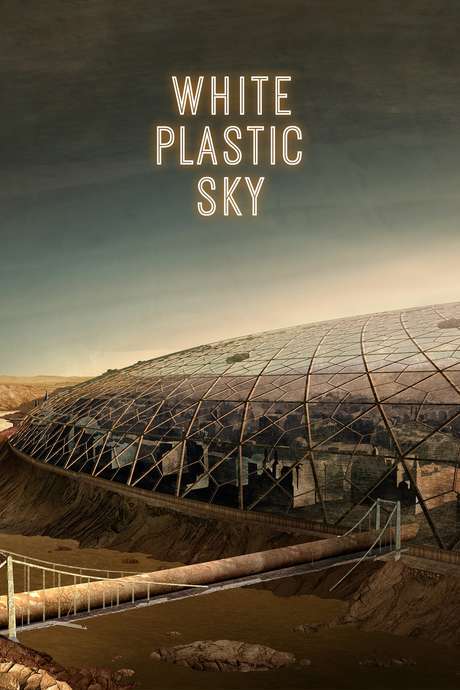
I was taken into the future where to save resources citizens at the age of 50 are turned into life-giving trees (White Plastic Sky 2023), and into the past with a frantic search for a winning lottery ticket (Le Million 1931).

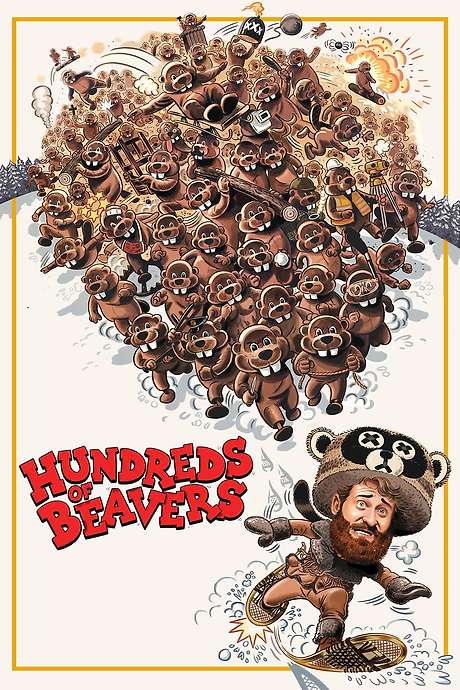
There was the craziness of Hundreds of Beavers (2023), and a moving Question and Answer with the director of the Celluloid Underground documentary about how Iranian fundamentalists used censorship and torture in their quest to destroy collections of ‘ideologically unsound’ 35mm films, including by setting them on fire – a fanatical counterpart to book burning.

I wouldn’t be surprised if The Holdovers (2023) becomes a cult Christmas classic.

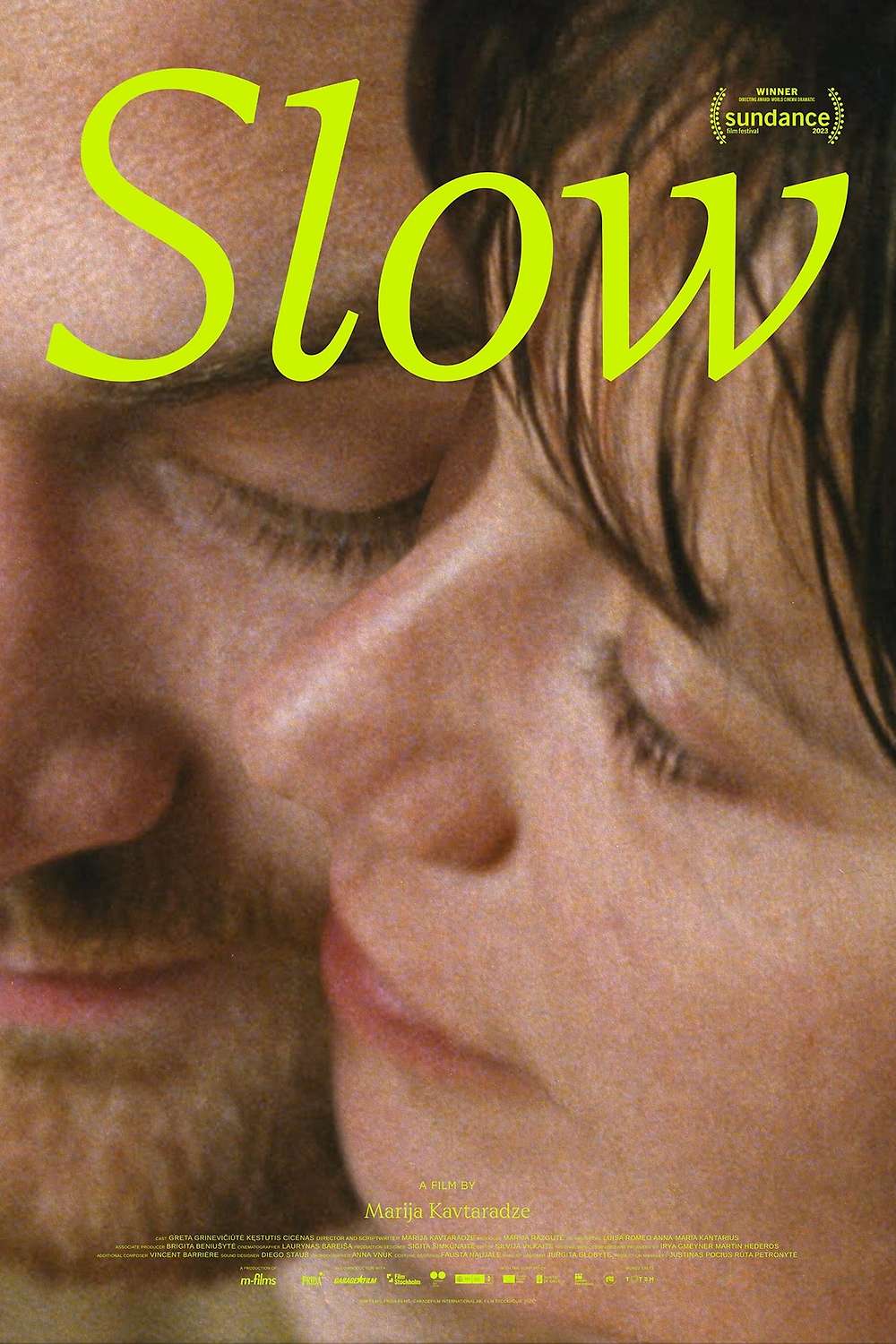
The Festival was rounded off at the Hyde Park Picture House with Slow (2023) a touching study of sexuality, intimacy and communication between a dancer and a sign language interpreter.

So many films I didn’t get to see of course. I hope to catch some of them at the wonderfully refurbished Hyde Park Picture House in the coming months.

What were the highlights for you? Do let us know.

Huge congratulations to all the staff and volunteers who brought it all together.

Bill Walton

Leeds Palestinian Film Festival 2023

This is now a regular event in Yorkshire though this year it comes against a backdrop of a criminal violence and destruction across occupied Palestine. Thus it offers an opportunity to deepen our knowledge and understanding of the experience of the Palestinian people since the British Empire sold away their land for a mess of pottage.

There are a further eleven events in the Festival programme. And two of these are featured at the Hyde Park Picture House,

On Tuesday November 21st at 6 p.m. there is,

Cinema Palestine – Tim Schwab, Canada/Israel/Jordan/Palestine, 2014, 78 minutes. English, Arabic with English subtitles. This is a documentary about Palestinian film and film-makers and how this connects with |Palestinian identity. Some of the work of these film-makers is airing on Al Jazeera channels and on their web pages.

On Wednesday 29th November at 6 p.m.

Alam – Firas Khoury, 2022, France/Tunisia/Palestine/ Qatar/UAE, 109 minutes. Arabic with English sub-titles. This feature offers a narrative about political awakening for a young Arab living in Galilee.

Given the context for this year’s Festival the organisers have published a statement on their web pages;

The Leeds Palestinian Film Festival Team are filled with horror, grief and sadness at the current violent loss of life across Palestine/Israel.

We are motivated by a strong belief in justice, respect and dignity for all people, which is why we have selected the films for this festival carefully.

The intentions of our 13 outstanding and thought-provoking events are:

  • to shine a light on hidden stories of Palestinians, their history, culture and politics
  • to challenge stereotypes and one-dimensional views
  • to portray a people in all their diversity

We believe our programme provides invaluable context which can help to illuminate the root causes of the present violence, and to develop responses grounded in understanding and care for others.

All our events constitute safe spaces for constructive and respectful dialogue, with no place for racism, xenophobia or aggression. [LPFF]

And hopefully Friends  were also able to catch the title screened during the Leeds International Film Festival.

Al-Makhdu’un (The Dupes, Syria 1972), this is a feature adapted from the novella  Rijāl Fi Al-Shams / Men of the Sun by  Ghassan Kanafani in 1963. The film version was scripted and  directed by Tewfik  Saleh, an Egyptian who made a number of films that can be counted as part of Third Cinema. He suffered censorship in  Egypt and left in the 1970s and this film was produced by the Syrian National Film Organisation.  The film was shot in black and white academy, running for 107 minutes in Arabic; English sub-titles provided.

The director made these comments in an interview for a French Film Dossier;

I worked on the adaptation of Men in the Sun by Ghassan Kanafani – a militant of the Popular Front for the Liberation of Palestine assassinated on 9 July 1972 in Beirut by the Zionist secret service (Mossad) – from 1954 to 1971. My intentions and my interpretation of the novel and its characters changed in light of the tragic events that took place in the region in June 1967 and September 1970. In the latest version, I wanted to emphasises the element of escape that characterise the Middle East at this time. Three characters from three different generations, representing three phases of the same collective problem, decide to flee their situation in search of what each considers or hopes to be their individual salvation. But the end is very different from their expectations; there is no individual salvation from a collective tragedy. And this is the lesson that history teaches us every day.

Saleh here refers to the seizure of Palestinian lands and the further expulsion of Palestinians during and after the six-day war in 1967; and the expulsion of the Palestine Liberation Organisation from Jordan in 1970, including the massacre of Palestinian militants and civilians. The film’s central characters are victims of the earlier Al-Nakba (Palestinian catastrophe) of 1947 and 1948. Set in the 1950s in the Iraqi desert; three dispossessed Palestinians  attempt  to journey to a new life in Kuwait.

How To Have Sex (UK 2023)

A breath-taking debut, an important message

Mia McKenna-Bruce as Tara

Screening Daily Until Thursday 16th November

How to Have Sex is Molly Manning-Walker’s remarkable debut feature film. Having made waves at this year’s Cannes Film Festival, the harrowing drama screened last weekend at Leeds’s International Film Festival with a director and cast Q&A and regular showings continue at the Picture House this week. Manning-Walker’s unflinching authenticity ensures her urgent examination of youth, consent and trauma deserves to be seen by everyone.

Three young British girls embark on a journey to Crete after slogging away at their A Levels, intent on finding booze, mayhem, and opportunities to ‘get laid’. So far this is a familiar story for the silver screen, as the combination of ‘sun, sea and sex’ has been depicted repeatedly in the age of Love Island. Yet unlike a ‘typical coming-of-age’ film, How to Have Sex is determined to examine the drunken escapades that countless Brits embark on through a different lens. As the girl’s trip unfolds and begins to unwind, it soon becomes clear that the new director intends to examine the notion of consent, carefully crafting a narrative that is moving and important.

This is all made possible by the powerful, immersive realism of everything the camera captures. Though there is the daring experimentalism of a directorial debut on display, audiences will be stunned to learn that this is Manning-Walker’s first feature-length effort, particularly due to the mastery of different styles and the diverse tones she creates. The opening showcases stunning picturesque shots of sunset beaches, creating dream-like sequences that make the audience feel as if they are lounging on the sands themselves as they grow closer to incredibly endearing characters.

This tone then shifts as part of a gritty depiction of booze-fuelled brits abroad, with thumping house music and discordant karaoke accompanying expertly placed hand-held camera angles. Nowhere do these moments feel forced, artificial or difficult to relate to. When the girls grimace as they down shots of hard liquor, stumble through nightclubs and drunkenly express their love for each other – and their love of the delicacy that is cheesy chips – these scenes are instantly recognisable and genuinely believable. How to Have Sex is effortlessly immersive, at least to what I can only assume is its primary target audience – a younger generation of Brits, many of whom are eager to drown their sorrows and embark on sunlit adventures with the mates they have made over turbulent teenage years.

These striking depictions of drug and alcohol use never feels judgemental, an important aspect of the film given its representation of the issue of consent. The debutant director films with a refreshing frankness, accurately depicting hedonistic escapades, but never in a way that scolds the youthful characters. Manning-Walker’s message isn’t to stop drinking, having fun, or chasing the sun whilst you are young and reckless. This is welcome, given that so much of the discussion on sexual violence has long been dragged down by the hopelessly inept idea that victims (particularly young women) need to merely drink less booze or wear longer skirts. The film instead warns against ignorance and cowardice as tragedy unfolds.

The immersion that characterises How to Have Sex is a huge part of why it’s message is so powerfully delivered, particularly due to the remarkable performances provided by it’s youthful cast. Mia McKenna-Bruce’s debut as Tara is as earthshattering, and may prove to be as career-defining, as her directors’. Their ability to subtly convey conflicting emotions is a big part of what makes How to Have Sex so moving, whilst a well-crafted script paints a searing portrayal of the behaviour that pre-empts sexual violence and the trauma that exists in the aftermath of such events. It is a triumph of a drama with a vitally important message.

Frankie Ryan-Casey
@FrankieRyanC on Twitter
@FranksRants on Substack

The Bill Douglas Trilogy

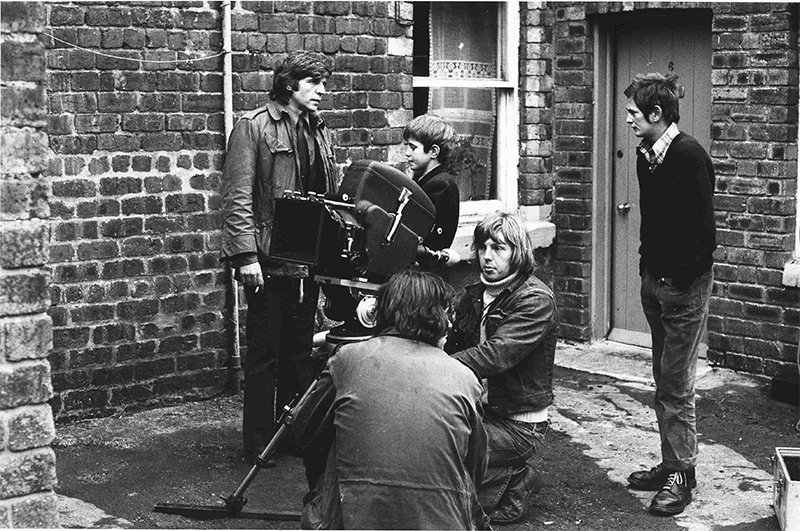
Douglas and crew filming a scene

This first part of this film trilogy was screened for members following the Friends’ Annual General Meeting. This was in the new Screen 2 of the redeveloped Picture House and was screened from a good quality 16mm print.

Scottish film-maker Bill Douglas was born in a small mining village close to Edinburgh in 1934. He was, sadly, lost to British film having only made, [apart from student films], the trilogy and a one feature film. Douglas came late to film; it was only in 1969 that he enrolled at the London School of Film Technique. This is actually the oldest school for film-making study in Britain, founded in 1956 and sited now in the Convent Garden area. Douglas made four short films while a student. However, on completing his studies he faced the usual barriers for independent film-makers.

Finally in 1972 he secured support from the British Film Institute’s production fund for three interrelated films. The first, at time with the title of ‘Jamie’, had been turned down by Films of Scotland because of the bleak view it provides of war-time Scotland. The film is based on experiences of Douglas’s own upbringing in the 1930s and 1940s. It became My Childhood, shot in black and white, academy and running 46 minutes.

The film is set in 1945, as World War II draws to a close. Jamie (Stephen Archibald) and Tommy (Hughie Restorick) live with their grandmother (Jean Taylor Smith). Their housing, diet and clothing all show the deprivation given the poverty of the family. The boys have pets which suffer from their situation. Jamie’s one outside relationship is with a German prisoner of war working locally on the land; Helmuth (Karl Fieseler). We see a celebratory bonfire at the end of the war and then Helmuth returns to Germany. There are also times when the boys (and the audience) see their father, who co-habits nearby, (Bernard McKenna). His mother is confined on some sort of mental institution. The bleakness of their lives is almost unparalleled in British film. It does have a moment of change; with a long shot of a departing figure on a train. The latter a familiar trope in films concerning children and rites of passage.

The cinematography was by Mick Campbell: the editing by Brad Thumin: and there were additional craft people on sound and a second unit. The imagery is stark but effective: the sound track is sparse, especially the dialogue, but it contributes to the overall impact: and the exteriors provide both a comparison and contrast to the central setting. The craft team, like the writer and director, seem to have a small number of credits. The quality should have led to a far greater output.

The second film of the trilogy is My Ain Folk (1973). This film picks up where My Childhood finished. The characters are the same, with the addition of other family members, as Jamie goes to live with them. Tommy is taken into welfare so this film concentrates on the experiences of Jamie. This is as harsh as his earlier life but with greater isolation. There is a brief moment of colour earlier in the film. It is in black and white and academy, running for fifty five minutes.

The final Part of the trilogy, My Way Home (1978) is also in black and white and academy but runs for 79 minutes. The film takes Jamie’s story into adulthood, entering work and then National Service. Jamie is again played by Stephen Archibald. The film takes the narrative outside of Scotland and Britain for the first time. It also presents a full and continuing friendship that leads to a change in Jamie’s life.

The National Film Archive has 35mm prints of both the second and third parts of the trilogy. It would be good if the Friends could cooperate with the Picture House to arrange screenings so that members and the public can see the rest of this outstanding work. The Archive also has a 35mm print of Douglas’ final film, Comrades (1987). The presents the story of The Tolpuddle Martyrs, agricultural labourers in the early C19th criminalised and then transported for daring to form a Trade Union. This is an important film on working class history in Britain and a fine representation in colour and widescreen which makes interesting use of early picture technologies.

My Childhood (1972) at the AGM

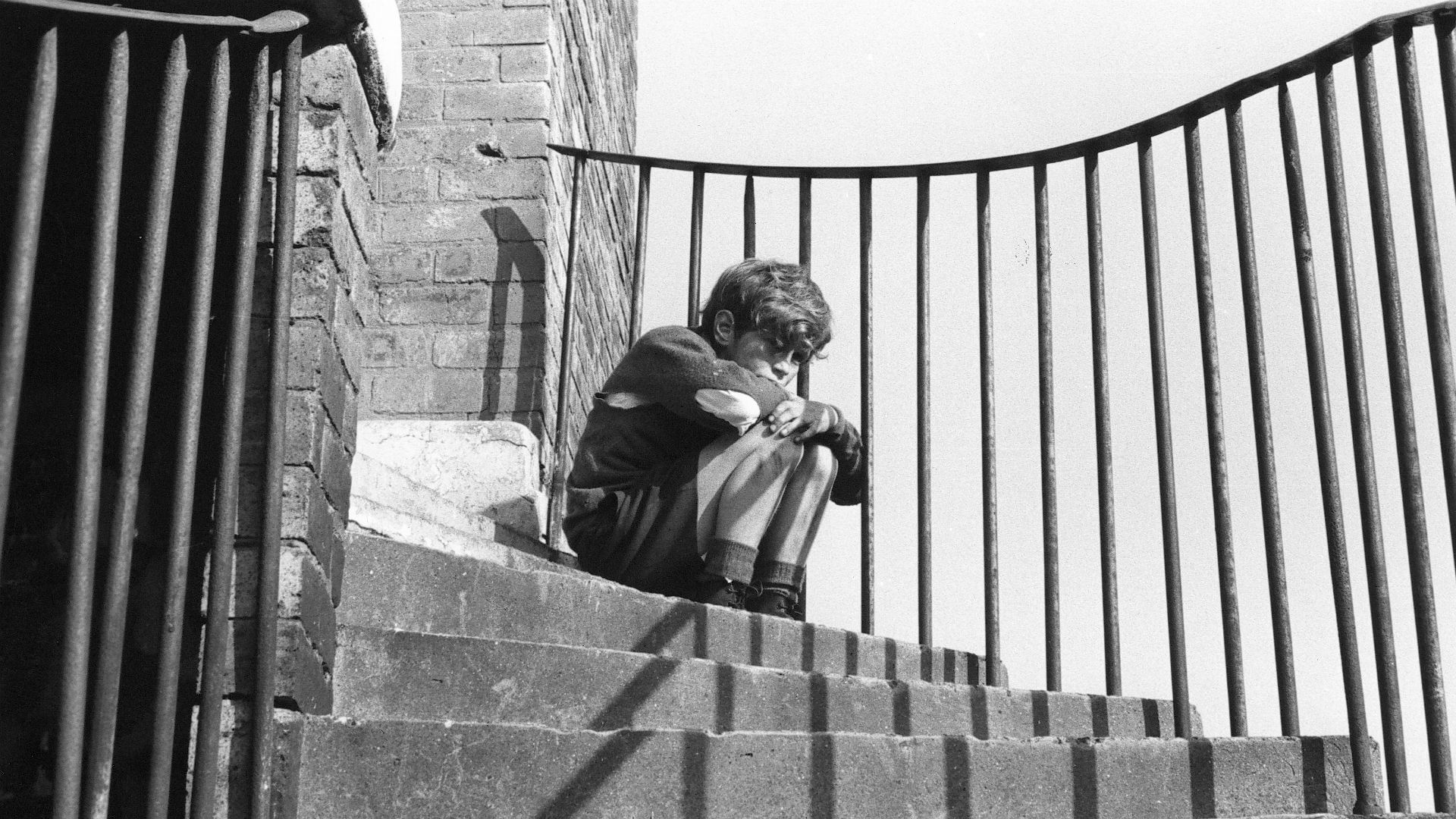
Black and white photo of a boy in shorts and torn jumper sitting on some curved steps
My Childhood (1972)

Following the formal business, elections and discussion at our Annual General Meeting on Sunday 24th September, the Friends are putting on a free screening of My Childhood. We are delighted to bring you a rare opportunity to watch this classic on a cinema screen.

My Childhood is a 45 minute film directed by Bill Douglas, made in 1972. Filmed in 16mm, it draws on his experiences as an 8 year old boy in a Scottish mining village as World War 2 comes to an end. My Childhood reflects the austerity of his everyday life through its use of location, non-professional actors and powerful black and white photography. “A harsh, unsentimental, but also intensely felt and moving portrait of childhood”.

We look forward to you joining us to watch this treat from the comfortable seats of the recently opened Hyde Park Picture House Screen 2.

Please note that all Friends memberships from 2020 and earlier are expiring before the AGM and you need to sign up to our new Pay What You Decide scheme in order to attend the AGM. If you would like to attend the AGM please let us know by completing this form.

L’immensitá, Italy / France 2022

Adri and Clara

This is a recent movie directed by Emanuele Crialese; one of his earlier films was the very fine Nuovomondo /Golden  Door  (2006). That feature followed Italian migrants at the start of the C20th journeying to the USA. And, as in this new title, it featured fantasy scenes to express the emotional state of the characters. The new title has been translated as ‘The Immensity’, but ‘intensity’ would be a better sense. In this new feature it is the intensity of the leading characters emotions and relationships that are the focus of the movie.

This new feature is set in the Rome of the 1970s. Penelope Cruz, in the main role of Clara, is the Spanish wife of an Italian business man with three children.  Her character uses the style, especially in her hair, of the major contemporary star, Sophia Loran. The three children are Adri (Luana Giuliani): Gino (Patrizio Francioni): and Diana (María Chiara Goretti). They form a group somewhat apart from the husband  Felice (Vincenzo Amato), who has problems adhering to marital fidelity. Adri, together with Clara, is the heart of the movie and she is experiencing difficulties with her identity.

The drama uses popular songs from the 1970s as one way to express the emotion and intensity of the characters. This is especially true of Clara and Adri, both of whom have fantasy sequences involving  performances of a popular song. The style here appears to be an amalgam of Michael Jackson and that found on Berlusconi’s television channels. The emotion flows from Clara to her children, but meets little response from the husband. Several key moments later in the movie are ambiguous which means the audience may be surprised at certain moments. Along with intense emotion the drama has humour, creating a bitter-sweet atmosphere.

Penelope Cruz is really fine as is Luana Giuliani in her first screen role. The two siblings are also played well and the supporting cast are fine in what are less sympathetic roles. Across the class divide, symbolised not by a railway track but a bamboo thicket, we find Sara (Penelope Nieto Conti), who befriends Adri.

This is definitely a movie to catch: it is in colour and full widescreen with English sub-titles: and has more screenings this week. Nearly all  are in the remodelled original auditorium, now Screen 1. I was impressed with the quality of the image and sound here. I had the same feeling when I viewed an earlier screening of La syndicaliste (2022), a French political thriller set in the nuclear industry and with a fine performance from another major European actor, Isabelle Hubert.

The remodelled Screen I auditorium has a number of improvements. There is now only a single entrance but the doors are automatic and really cut out extraneous noise. The gas lighting remains though not always in use; but the aisle light snow have LEDs which are less distracting. There is a new screen; slightly smaller I think but flat, with a pristine surface and proper masking; [and the auditorium is slightly smaller due to developing the foyer].. However, the best addition is a new Barco 2K laser projector. This is the first time that I have seen one in action. It definitely provides a brighter image: the colour spectrum is improved: and the contrast also seems to be improved. I am curious as to how the digital transfers of actual film titles will look; the two French titles originated on digital equipment and software.

I had one small reservation; whilst the web pages request switching off mobile phones there is not an on-screen warning to this effect. So please, switch them off before you enter the auditorium and please do not use them as torches to find you seat; that is distracting.

Barbie (USA, 2023)

Showing until Thursday 10th August

Ken (Ryan Gosling) and Barbie (Margot Robbie) in a pink open top car driving towards us along a desert road with the rainbow of BarbieLand in the background

“I am both doing the thing and subverting the thing”

Greta Gerwig (director)

Barbie (wish spellcheck wouldn’t keep calling her Barrie!) is great cinema – stylish,  entertaining, and a little thought provoking. It was an inspired choice to have Greta Gerwig as director, and I greatly enjoyed the performances of Margot Robbie, Ryan Gosling and the rest of the cast. And it’s definitely not aimed at children. I think it will raise at least one or two questions for any woman or man in the audience, so I’m pleased that screenings are attracting a lot of people.

In his book One-Dimensional Man, Herbert Marcuse described the cultural totalitarianism created through consumerist and technological capitalism. This is the process where ‘the markets’ co-opt all protest, dilute it, and sell it back to us, the people. Think Che Guevara t-shirts, or “greenwashing”. It is the way our culture evolves until we can transcend capitalism.

Certainly Mattel will be laughing all the way to the bank.

Ken: To be honest, when I found out the patriarchy wasn’t just about horses, I lost interest.

Barbie: Kenland contains the seeds of its own destruction.

Can we really have it all?

Let us know what you think in the comments below

Bill Walton