The Leeds Palestinian Film Festival 2025

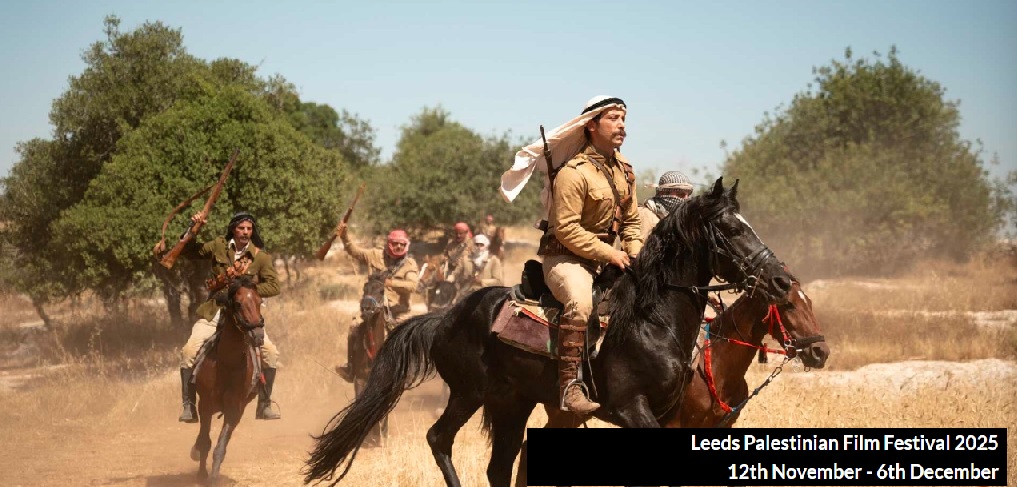
This year’s Festival runs from November 12th until December 6th, including two titles appearing in the Leeds International Film Festival. The complete programme is presented on the LPFF webpages. There are twelve events, both feature titles and documentaries, and art/activity events.
Happily, several of the screenings are at the Hyde Park Picture House. These include two much anticipated new works from Palestinian and Arab film-makers.
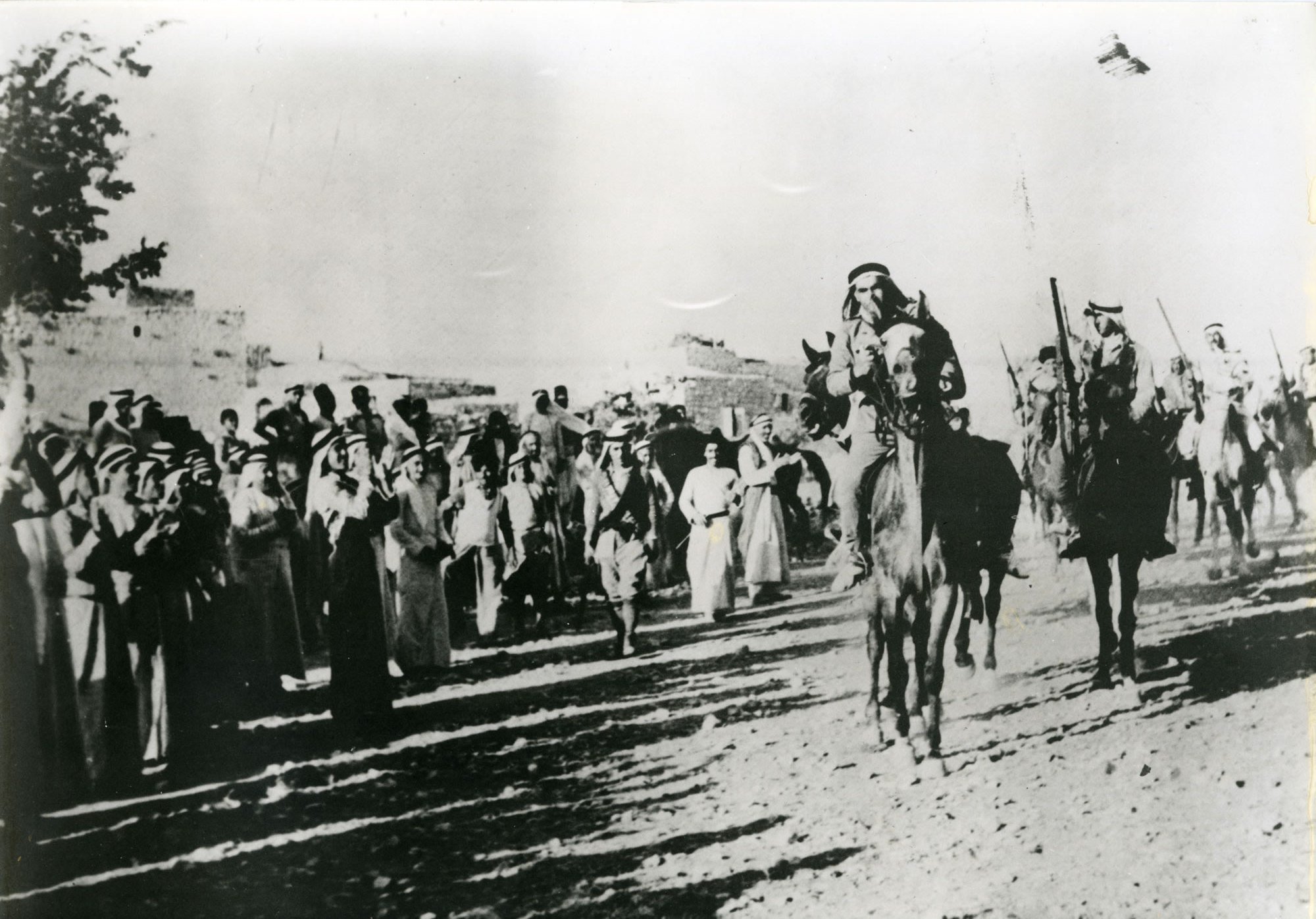
The Great Arab Revolt 1936 -1939

In the coming week there is a screening of Palestine 36 (2025); it is already sold out but there are further screenings of the feature in December. This is the latest feature from Annemarie Jacir and the screening on the 20th includes an introduction with a recorded video from the director. Her two previous productions are among the most interesting of recent Palestinian movies. Wajib ( 2017) is set in contemporary Nazareth and explores the Palestinian community as a father and son hand out invitations to a wedding. When I Saw You (2012) is set in Jordan in 1967 as another Nakba forces more Palestinians into exile while Fedayeen develop the armed resistance to Zionist occupation and aggression. Now with Palestine 36, Jacir returns to the Great Palestinian Revolt against British occupation from 1936 to 1939. A rebellion by the dispossessed Palestinian people against British colonial rule, it was brutally suppressed by the British military, aided by the armed Zionist militia. The defeat of the rebellion laid the ground for the 1947/8 Nakba. Yet it has been over-looked in much of the discussion of the settler colonial occupation in the west. Note, Wikipedia has a detailed page on the rebellion.


Then there is The Voice of Hind Rajab (2025), a drama-documentary that recreates the ordeal and death of a five-year old child under fire from the Zionist military; it is harrowing viewing. The case was widely publicised in the media and the details of the atrocity are given on a Wikipedia page. The feature is directed by the Tunisian film-maker Kaouther Ben Hania. Her previous feature, 4 Daughters (2023) was a really distinctive drama-documentary exploring women’s situation in Tunisian society. This title also has further screenings at the Picture House in December.
There has already been a screening of Yalla Parkour (2024) and there will be Put Your Soul on Your Hand and Walk (2025). These and other presentations in the Festival explore Palestinian resistance and their support across the world. As well as offering varied examples of fine film-making and supporting activities the Festival continues to present the the resistance of the Palestinian People to the ongoing Zionist genocide and ethnic-cleansing. As has been the case for decades the ruling classes in Europe and North America continue to support Zionist war crimes, though among the oppressed peoples support for the Palestinians is strong. So the Festival is an important part of the ongoing support for Palestine and for the Boycott, Divestment and Sanctions Campaign.

LIFF2025

The Leeds International Film Festival (LIFF2025) starts today with Richard Linklater’s Blue Moon as one of the opening films at the Picture House. As well as the festival screenings, Bugonia and The Choral are also showing in the regular Picture House programme.

Other festival highlights included the free breakfast screenings of Holiday and Roman Holiday, It Was Just An Accident, Die My Love, Rental Family, Sentimental Value, The Secret Agent, Game + Q&A and the Night Of The Dead all-nighter returns.

Four our First Thursday meetup we’ll be getting together in the bar around 8pm after the screening of La Grazia on the 6th November and hope to see you there.

Let us know what else you’re planning on seeing or if you have any recommendations in the comments below.

Bill’s Review of #LIFF2023

What I love about the Leeds International Film Festival is the sheer variety of the films on offer, with insights into different cultures, times, and ways of seeing the world. Here is a selection of this year’s highlights for me:

There were thrills from the Sahel (Sira 2023) and melodrama involving Dutch imperialists in Indonesia (Sweet Dreams 2023).

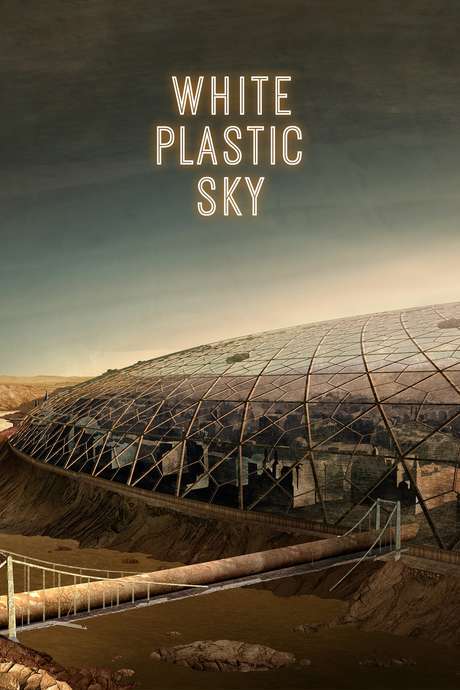
I was taken into the future where to save resources citizens at the age of 50 are turned into life-giving trees (White Plastic Sky 2023), and into the past with a frantic search for a winning lottery ticket (Le Million 1931).

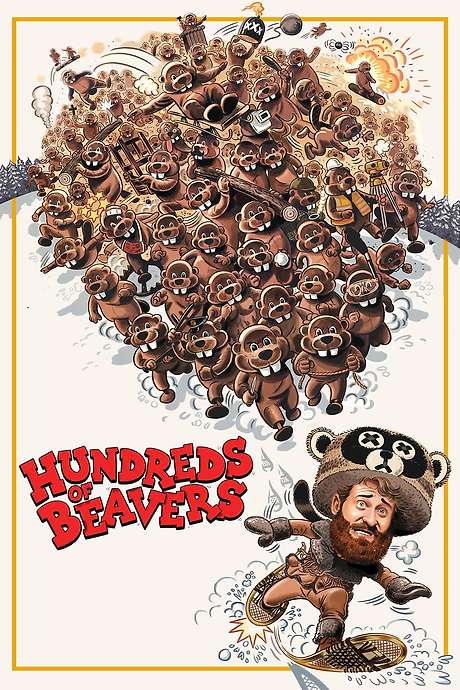
There was the craziness of Hundreds of Beavers (2023), and a moving Question and Answer with the director of the Celluloid Underground documentary about how Iranian fundamentalists used censorship and torture in their quest to destroy collections of ‘ideologically unsound’ 35mm films, including by setting them on fire – a fanatical counterpart to book burning.

I wouldn’t be surprised if The Holdovers (2023) becomes a cult Christmas classic.

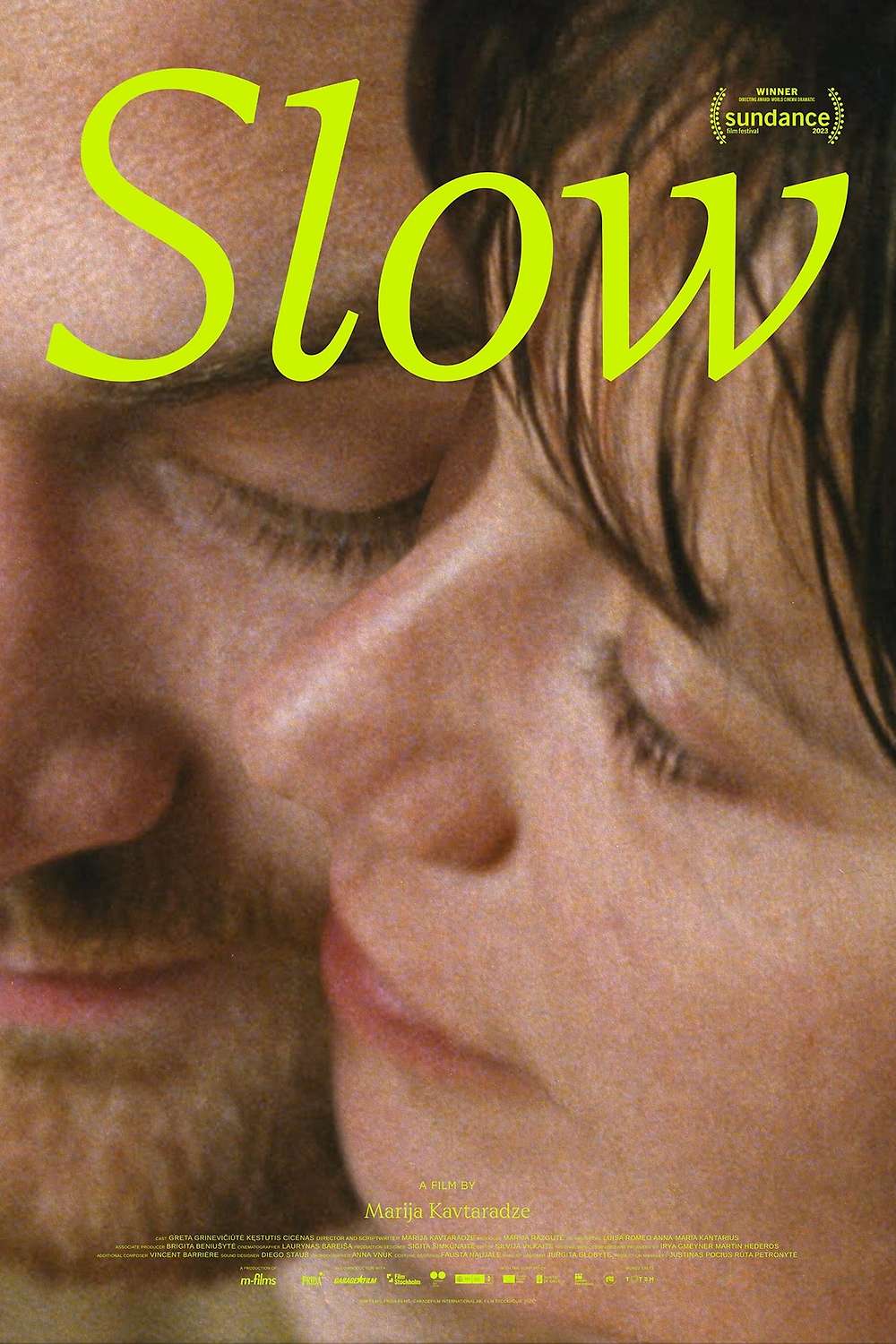
The Festival was rounded off at the Hyde Park Picture House with Slow (2023) a touching study of sexuality, intimacy and communication between a dancer and a sign language interpreter.

So many films I didn’t get to see of course. I hope to catch some of them at the wonderfully refurbished Hyde Park Picture House in the coming months.

What were the highlights for you? Do let us know.

Huge congratulations to all the staff and volunteers who brought it all together.

Bill Walton

Leeds Palestinian Film Festival 2023

This is now a regular event in Yorkshire though this year it comes against a backdrop of a criminal violence and destruction across occupied Palestine. Thus it offers an opportunity to deepen our knowledge and understanding of the experience of the Palestinian people since the British Empire sold away their land for a mess of pottage.

There are a further eleven events in the Festival programme. And two of these are featured at the Hyde Park Picture House,

On Tuesday November 21st at 6 p.m. there is,

Cinema Palestine – Tim Schwab, Canada/Israel/Jordan/Palestine, 2014, 78 minutes. English, Arabic with English subtitles. This is a documentary about Palestinian film and film-makers and how this connects with |Palestinian identity. Some of the work of these film-makers is airing on Al Jazeera channels and on their web pages.

On Wednesday 29th November at 6 p.m.

Alam – Firas Khoury, 2022, France/Tunisia/Palestine/ Qatar/UAE, 109 minutes. Arabic with English sub-titles. This feature offers a narrative about political awakening for a young Arab living in Galilee.

Given the context for this year’s Festival the organisers have published a statement on their web pages;

The Leeds Palestinian Film Festival Team are filled with horror, grief and sadness at the current violent loss of life across Palestine/Israel.

We are motivated by a strong belief in justice, respect and dignity for all people, which is why we have selected the films for this festival carefully.

The intentions of our 13 outstanding and thought-provoking events are:

  • to shine a light on hidden stories of Palestinians, their history, culture and politics
  • to challenge stereotypes and one-dimensional views
  • to portray a people in all their diversity

We believe our programme provides invaluable context which can help to illuminate the root causes of the present violence, and to develop responses grounded in understanding and care for others.

All our events constitute safe spaces for constructive and respectful dialogue, with no place for racism, xenophobia or aggression. [LPFF]

And hopefully Friends  were also able to catch the title screened during the Leeds International Film Festival.

Al-Makhdu’un (The Dupes, Syria 1972), this is a feature adapted from the novella  Rijāl Fi Al-Shams / Men of the Sun by  Ghassan Kanafani in 1963. The film version was scripted and  directed by Tewfik  Saleh, an Egyptian who made a number of films that can be counted as part of Third Cinema. He suffered censorship in  Egypt and left in the 1970s and this film was produced by the Syrian National Film Organisation.  The film was shot in black and white academy, running for 107 minutes in Arabic; English sub-titles provided.

The director made these comments in an interview for a French Film Dossier;

I worked on the adaptation of Men in the Sun by Ghassan Kanafani – a militant of the Popular Front for the Liberation of Palestine assassinated on 9 July 1972 in Beirut by the Zionist secret service (Mossad) – from 1954 to 1971. My intentions and my interpretation of the novel and its characters changed in light of the tragic events that took place in the region in June 1967 and September 1970. In the latest version, I wanted to emphasises the element of escape that characterise the Middle East at this time. Three characters from three different generations, representing three phases of the same collective problem, decide to flee their situation in search of what each considers or hopes to be their individual salvation. But the end is very different from their expectations; there is no individual salvation from a collective tragedy. And this is the lesson that history teaches us every day.

Saleh here refers to the seizure of Palestinian lands and the further expulsion of Palestinians during and after the six-day war in 1967; and the expulsion of the Palestine Liberation Organisation from Jordan in 1970, including the massacre of Palestinian militants and civilians. The film’s central characters are victims of the earlier Al-Nakba (Palestinian catastrophe) of 1947 and 1948. Set in the 1950s in the Iraqi desert; three dispossessed Palestinians  attempt  to journey to a new life in Kuwait.

Bill’s Experience of #LIFF2022

Without the coziness of the Hyde Park Picture House or the grandeur of the Town Hall, this year I went for the 6 screenings for the price of 5. Choice is difficult with so many films from so many countries. I decided on:

No Bears (2022)


Highly recommended.  Once again Jafir Panahi uses his considerable film making skills to challenge the Iranian state. This time the film actors are in Turkey while Panahi directs from Iran close to the Turkish border because of government restrictions on his movement. There are stories within stories. 

In 2010 the Iranian government banned Panahi from film making for twenty years for propaganda against the state but with huge international support he found ways to continue. Since No Bears was released he  has been rearrested and is currently serving a six year prison sentence. The screening I went to was sold out.

Zuhal (2021)

A very well made black comedy about a lawyer who hears a cat meowing in her Istanbul apartment. Or does she? The sound takes over her life, as she struggles to find an explanation. Excellent cast. Recommended. (Presented jointly with Bird’s Eye View and Reclaim The Frame).

Casque d’Or (1952)

A newly restored taut French thriller. Set in 1902, it shows the struggle between an ex-con who is trying to go straight, and a local gangster boss. The reason? Marie (Simone Signoret) who is a force to be reckoned with. Highly recommended.

We Might As Well Be Dead (2022)

This satirical film creates a coherent dystopian world with a tower block as a refuge from dangers in the surrounding countryside. I struggled a bit with following the plot, but interesting enough for me to consider a repeat viewing.

Fanomenon Shorts

As well as aliens trying to take control of human relationships and breeding, I enjoyed the Japanese film Theatre (2022). Staff at a Tokyo cinema carry out plans to ensure its survival during Covid, with the help of a ghostly spirit. Inspiration for the Hyde Park Picture House!

Return to Seoul (2002)

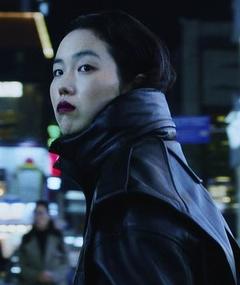
This is summed up by the subtitle: all the people I’ll never be. Freddie, a 25-year old French adoptee goes to South Korea to find her biological family. Based on a true story. An emotionally intense exploration of clashes of cultural values around family and society in the two countries. Ji-Min Park, the headstrong Freddie, gives a powerful performance in her first film. Highly recommended.

Many thanks to all the LIFF22 staff, volunteers and venues for bringing it all together. 

Bill Walton

Leeds Palestinian Film Festival 2022

The Unreported Occupation

We pull the curtains back on the illegal occupation Israel wants the world to forget

‘Mediterranean Fever’

This year’s Festival opens, as usual, with a title screening the Leeds International Film festival. This and the complete programme can be found, with all details, on the Festival WebPages.

Mediterranean Fever, Palestine/Germany/France/Cyprus/Qatar / 2022 / 108 minutes Arabic with English subtitles – Director Maha Haj. LIFF screening at the Vue in the Light on November 16th and 17th.

This subtly tender film tackles the dynamics of male friendship and the strain of living under occupation. It focuses on the daily struggles of Haifa’s Arab community, as two middle-aged frenemies develop an unexpected relationship and are drawn together by a series of terrifying events. Premiered at the 2022 Cannes Film Festival in the Un Certain regard section, and won the Prize for Best Screenplay.

Following the International festival the programme of Palestinian titles offers screenings at a number of venues up until early December. There will be speakers at some events: a musical event: and an evening which includes Middle eastern food.

Fadia’s Tree, Sarah Beddington / UK / 2022 / 68 minutes / Arabic, English, English subtitles. Seven Arts Friday November 18 2022 7:00pm

Sarah Beddington’s film is a compelling documentary account of the director’s friendship with Fadia, a charismatic Palestinian woman and teacher who lives in a refugee camp in Lebanon but yearns to reconnect with her ancestral village in Palestine.

The film spans 15 years, during which time Beddington agreed to make the journey that Fadia was prevented from taking to the home village she has never seen – to find the mulberry tree that has taken on a totemic significance for generations of her displaced family.. Speaker: Susan Simnett, producer of Fadia’s Tree

Love and Resistance in the Films of Mai Masri

Double-bill – Q&A with Victoria Britain – delicious Middle Eastern buffet. Wheeler Hall Saint Anne’s Street – Monday 21 November 2022 4-7.15pm

Frontiers of Dreams & Fears, Mai Masri / Palestine / 2001 / 56 minutes

A tender insight into the lives of Palestinian children growing up in refugee camps. Although Mona and Manar live in camps miles apart, a friendship is forged through barbed wire and walls of concrete.

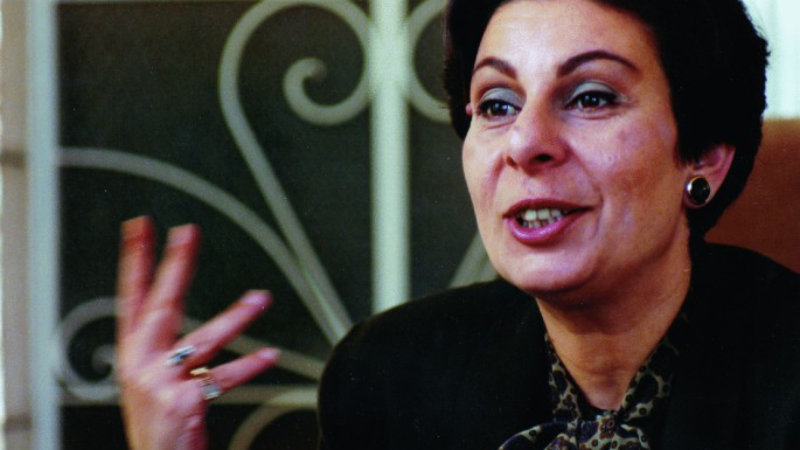
Hanan Ashrawi: A Woman of her Time, Mai Masri / Palestine / 1996 / 50 minutes

An intimate portrait of a formidable political activist and former spokesperson for the PLO who rejected a position in government in favour of human rights advocacy.

Roadmap to Apartheid, Ana Nogueira & Eron Davidson / South Africa/Israel / 2012 / 94 minutes. Slung Low at The Holbeck – Friday November 25 2022 7:30pm

The analogy of the Palestinian experience under Israeli occupation as apartheid is dissected in a forensic comparison with the history of apartheid in South Africa. Eye-witness accounts and unseen archive material are included. Speaker / Q&A with Robert Cohen.

Tantura, Alon Schwarz / Israel / 2022 / 85 minutes. THE HEART – Sunday November 27 2022 1:30pm

In the late 1990s, a graduate student conducted research into an alleged massacre at Tantura. His work later came under attack and his reputation was ruined, but 140 hours of audio testimonies remain. Israelis insist that the massacre never happened, while Palestinians view it as a hell that can’t be forgotten.. Speaker: Dr Kholoud Al-Ajarma.

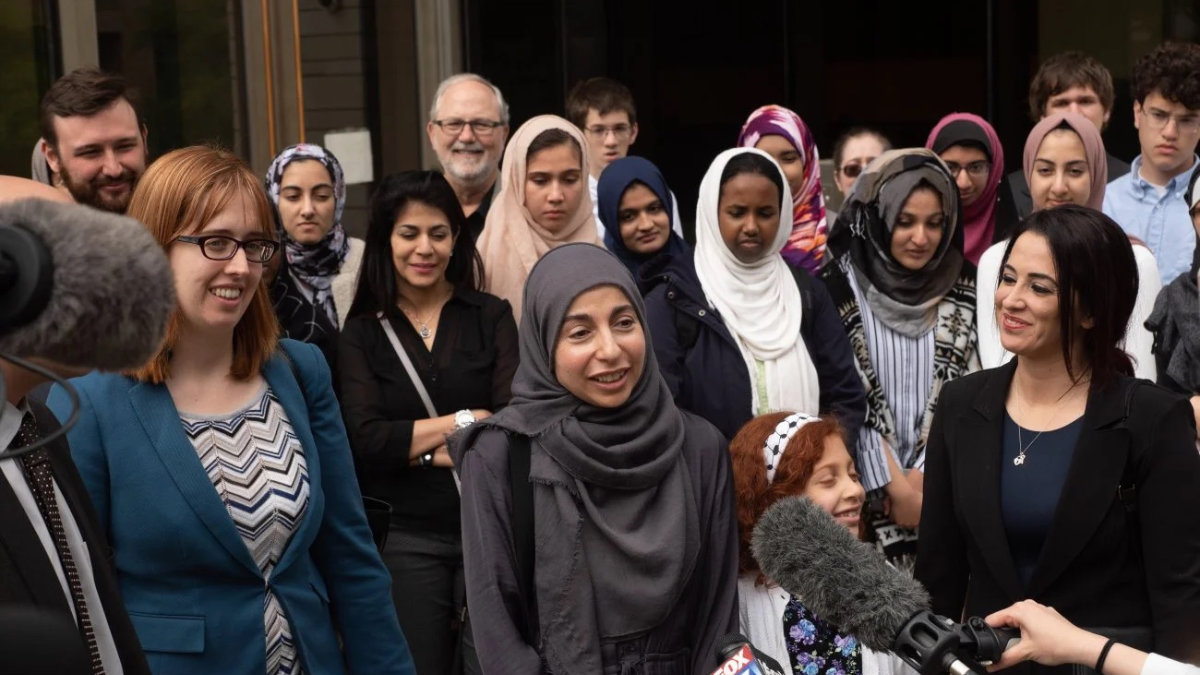
Boycott, Julia Bacha / USA / 2021 / 70 minutes / English. Otley Courthouse – Sunday 27 November 7.30 p.m.:  Wheeler Hall – December 9th 6.30 p.m.

When a news publisher in Arkansas, an attorney in Arizona, and a speech therapist in Texas are told they must choose between their jobs and their political beliefs, they launch legal battles that expose an attack on freedom of speech across 33 states in America.. Speakers. Jenny Lynn – Ben Jamal

‘Boycott’

Eye Witness – singing, film and food. Chapel FM Arts Centre – Sunday 4 December 2022 3pm – 5pm

We are delighted to offer you two eye-witness accounts of life under occupation, both reflecting the power of solidarity. The singing and film will be followed by refreshments. Tadhamon Choir- The singers are fresh from a solidarity visit from Sheffield to Palestine in October. They travelled around the West Bank, visited projects and met many community activists, witnessing first-hand the brutality of life under Israeli occupation. They will share their songs and discuss what they learnt.

Tour Wadi Hilweh, Silwan  18minutes

Sahar Abassi is a community activist and Deputy Director of the Madaa-Silwan Creative Centre She gives us a personal tour of the Silwan neighbourhood of East Jerusalem, where an art project with Art Forces from the USA reinforces local resistance to the ethnic cleansing of the neighbourhood.

And running throughout the Festival is an exhibition of photographs.

Humans of Palestine – Unique exhibition showcasing top Palestinian photographers. Otley Courthouse, 1st – 28th November

Jozi Gold Director’s Discussion

Jozi Gold (2019) was screened at Leeds University Union as part of the Hyde Park Picture House On The Road programme in conjunction with the UK Green Film Festival on Sunday 7 November 2021.

Following the film was a discussion with host Sai Murray and film director Sylvia Vollenhoven (who joined via Zoom from South Africa). Capturing the urgency of the current conversation around climate change and the deep links between UK politics, policies and institutions and the impact this has on other countries. The discussion was recorded and here we have a transcription for you to enjoy.

You can watch the film here: https://vimeo.com/ondemand/jozigold

SM: Sylvia is not only a filmmaker, an award winning journalist, playwright, writer and knight fellow. Her book about identity, the Keeper of the Kumm won the award for literature, and her dance drama adaptation of the book was showcased on the main programme at the South African National Arts Festival, nominated for various awards – best director, best documentary, playwright, award for human rights in the arts etc.. Individual artist, activist and it’s our real pleasure to welcome you to this screening. Brilliant so we have a select audience gathered here today who I’m sure have questions and responses but I’d also like to begin by thanking you for such an inspiring film, a very provocative film and a really important film. Some really really interesting facts and also the way the film was put together and characters. I guess my first question comes from a conversation I had around the film with one of the people who invited me here today who is from South African heritage and who’s here. Our reaction I guess to knowing this film was about Johannesburg, about mining and your choice to follow this character – because we begin with the stilettos, with the very ornate dressed individual of the white woman but you being a black film director, that was not what was expected but she is such an interesting and intriguing character who has done a lot of good and her activism is having a lot of results. So could you speak about the choice to follow this individual and how you perhaps first became aware of her activism?

SV: Greetings! Thank you for screening the film and thank you for this opportunity. How I first got to hear about this is there’s a tiny magazine in South Africa that is small in numbers and audience but very very powerful. It’s an investigative journalism magazine called Noseweek and the editor of that magazine and I have worked together at different media houses and I’ve always been following his work and I’d seen so much of Mariette Liefferink’s activism in Noseweek. In fact, we feature in the film that Superwoman power image – that came out of Noseweek! The editor also has a son who is a journalist and Adam Wells had been following Mariette’s story and filming and he’s more of a print journalist rather than a filmmaker and he was following her around for 4 years. He has a friend who’s the director of a film in Norway and spoke to Stephan about finishing this film that he had been filming for four years but didn’t know how to structure and didn’t know how to put it all together. Stephan said well I have a friend in Sweden, Frederick Garrington[?] At WG Film would be very interested in the story, and Frederick said I’ll get on board if Silvia is the South African producer and my co-director because Frederick and I have been working together for many years and we also are very close friends for decades, having covered apartheid together and I used to be a correspondent for a Swedish outlet. So that’s how it came about. But I must say when Adam Wells, the South African journalist, came to see me and said Frederick said he’s on board if you become the South African director I was not agreeable! I just had not met Mariette and I thought I’m not going to sit here so many years after South African democracy and allow a white Africans woman to tell us what is wrong with South Africa. It just didn’t sit well with me. But then I went to Johannesburg and in Cape Town at the time and changed my mind completely. There were two things that changed my mind mainly, there were lots of little things, but the two main reasons were her integrity and her passion and the second reason was that being an activist myself I knew how important it was to have an image that was out of the ordinary, that would stop people in their tracks, and not only did she have this exotic image that was attention getting and we could use to our advantage for the activism that the film is hoping to elicit but also in the mining industry, dominated by men, and a certain kind of patriarchal class, they don’t see her coming, and by the time they sit up and take notice she’s already in the Supreme Court with a huge court case. So I thought well given my activism background I could really work with this woman.

Continue reading

Bill’s Festival Highlights

Another good year! Special thanks to the Leeds International Film Festival 2021 team for screening an impressive selection of films despite Covid and the non availability of the Hyde Park Picture House and Leeds Town Hall this year.

I watched a total of 8 films

Dear Future Children (2021). Very powerful interviews with young women activists facing huge personal risks in Hong Kong, Santiago and an Ugandan village, plus Q&A with the director.

The Ants and the Grasshopper (2021) following two Malawian women who share experiences of climate change with people from a wide variety of backgrounds in the USA. Great to have this screened while the COP26 Climate Conference was being held in Glasgow. (Available on LeedsFilmPlayer until Thursday)

No Straight Lines: The Rise of Queer Comics (2021), with interviews with some key American women and men artists. The documentary shows how they adapted from underground comics in the late 60s, to supporting people through the AIDS epidemic, leading on to graphic novels and a Broadway show. (Available on LeedsFilmPlayer until Thursday)

Seven Samurai (1954). Great to see on the big screen. Actors were really tough in those days!

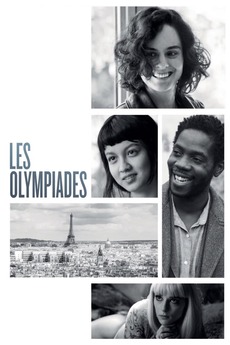
Paris, 13th District (2021). Some interesting insights into life in the eight tower blocks of Les Olympiades.

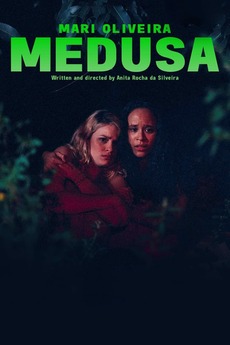
Medusa (2021). A Brazilian feminist horror film. Despite an interesting soundtrack and colour design I struggled to follow the plot in this one.

Compartment No. 6 (2021). A great film showing the common humanity shared between a female Finnish archaeology student and a male Russian mineworker on a long train journey to Murmansk.

The Hand of God (2021). The first half is the hugely entertaining story of a gathering of an extended Italian family, followed by the story of how this and other life experiences have influenced the director’s (Paolo Sorrentino’s) work.

This is but a small taste of the huge range of films on offer. Once again it shows the importance of International Film Festivals in building the  global understanding that we so urgently need.


Bill Walton

Leeds International Film Festival 2021

It’s that time of year again and #LIFF2021 is heading back into venues and also making lots of films available to watch online. Earlier this week committee members Bill Walton and Andy Smith attended the launch of the festival and share their first impressions.

For me one of the delights of the Leeds International Film Festival has been settling into the comfy seats of the Hyde Park Picture House, and watching several films in a row. A pleasure deferred until November next year…

This year we had the usual LIFF launch, with a breathless back to back screening of many short trailers for 55 minutes. This approach does give an impression of the variety of films on offer but is not ideal for decision-making. However I came away with a few clues:

But this is just scratching the surface. I haven’t had time yet to delve into the printed programme yet, so these impressions are very much subject to change. I suggest that you have a look for yourself!

Bill Walton

I always look forward to the LIFF preview so after missing last year it was with a sense of anticipation that I went along to the Vue on Wednesday especially as the venue was bragging about their new seats….I could have happily watched more trailers [and you now can – see below] but was glad that the screening was only 55 minutes as I could not have slouched in those seats for any longer despite having fiddled with the adjustment throughout, there was not a comfortable setting for a back now in its 7th decade….

It was a whirlwind of trailers….

I picked out the same ones as Bill plus:

Our task is now to go through the brochure and working out which films and venues align with work and other commitments with the backstop of the Leeds Film Player [the clashfinder can help with this]

Andy Smith


The festival guides are available from Vue Leeds in The Light, Leeds Town Hall now and more sites around Leeds and Yorkshire soon. For a guide in the post, email your details to leeds.film@leeds.gov.uk.

A PDF version is available online and tickets and passes are on sale now.

A number of festival fans have also put together some things that may help you plan your festival.

  • Clashfinder – see what films are on at the same time, highlight your choices, export to your calendars
  • The Films of #LIFF2021 – a Letterboxd list of most of the films showing at the festival
  • Online films at #LIFF2021 – a Letterboxd lists of most of the films available on the Leeds Film Player during the festival
  • LIFF2021 Trailers – a YouTube playlist of 80+ trailers for films at the festival

Sundance Film Festival

Dr Andy Moore (@andymoore_), long-term Friend of the Picture House and Lecturer in Film, Exhibition and Curation at the University of Edinburgh, has just got back from a digital visit to Sundance Film Festival. Always one to champion the treasures which can be found when you have the opportunity to explore the festival circuit, Andy has been kind enough to write up a blog post for us on some of the films at this years’ festival which he’s most excited about.

One of the most exciting things about the film festival experience is the joy of the new discovery – that rush when you catch something really distinctive and original that feels fresh and new. For the Sundance Film Festival (which took place almost entirely online this year) this emphasis on discovery – and on distinctive, original voices – is baked into the very DNA of the festival itself.

Sundance, and its associated programs of filmmaking and talent development labs, has helped launch the careers of some of the most exciting and influential independent filmmakers of the past 30 years – from the Coen Brothers to Paul Thomas Anderson. And in championing fresh new voices, the festival has played host to the extraordinary debut features of filmmakers as varied as Marielle Heller, Kelly Reichardt, Ryan Coogler and Boots Riley (all unique voices whose work has graced the programme of the Hyde Park Picture House over the years).

Although audiences participating in this year’s fest swapped the freezing streets of Park City, Utah (and their snow boots and parkas) for slippers, dressing gowns and the comfort of their own living rooms, 2021’s virtual edition was no different on the new voices front: 39 out of the 73 features screening at this year’s festival were directorial debuts, providing plenty of opportunities to experience the joyful rush of discovery.

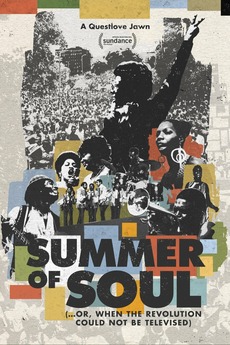
For me the first film to provide that dopamine hit was Summer of Soul (…Or When the Revolution Could Not Be Televised). The directorial debut from musician Ahmir “Questlove” Thompson is a pure unadulterated joy, and a discovery in more ways than one. The film, which picked up both the Grand Jury Prize and the Audience Award for U.S. Documentary, unearths astonishing footage (untouched and unseen for 50 years) of a series of summer concerts that took place in Harlem in 1969. Known as the Harlem Cultural Festival, the concerts featured an array of incredible performances from legendary black musicians including Stevie Wonder, Sly Stone, Mahalia Jackson and Mavis Staples. Thompson’s film skilfully weaves this extraordinary concert footage together with contemporary interviews to tell a vital, generation re-defining and life-affirming story about African American history, music, culture and fashion.

Another film that shines a light on history in a way that forces you to look at the present with fresh eyes is Shaka King’s electrifying sophomore feature, Judas and the Black Messiah. Starring Daniel Kaluuya and LaKeith Stanfield in two of the best performances of the festival, the film tells the story of Black Panther Party chairman and revolutionary activist Fred Hampton (Kaluuya), and the FBI informant (Stanfield) who infiltrated the party and ultimately provided the information that led to Hampton’s assassination at the hands of the Chicago police.

Continue reading