Our Annual General Meeting covering the financial year from April 2023-24 will be taking place in Screen 2 at the Picture House on Sunday 9th June. The AGM will begin promptly at 2pm but doors will be open from around 1:15pm to allow members to talk to each other and the committee whilst enjoying some complimentary refreshments. After the meeting has concluded we will also be showing a short film.
We would be glad to see as many of you as possible there but you will need to be signed up to our Pay What You Decide membership scheme in order to attend. For full details please see the AGM Page of our website which includes the agenda and relevant documents for review.
The next film and food session at Heart is Bride and Prejudice directed by the award winning Gurinder Kaur Chadha.
An update of Jane Austen’s classic tale, in which Mrs. Bakshi is eager to find suitable husbands for her four unmarried daughters. When the rich single gentlemen Balraj and Darcy come to visit, the Bakshis have high hopes, though circumstance and boorish opinions threaten to get in the way of romance…
6.30pm: Food: delicious vegan Indian food from the HEART Assembly Bar and Kitchen
7.15pm: Introduction: Gurj Kang
7.30pm: Film: BRIDE and PREJUDICE
Tickets £12 available from HEART reception and online (includes food and film).
As author Sara Shepard observed “Those who forget the past are doomed to repeat it”.
In “The Damned” director Luchino Visconti takes us back in his portrayal of Nazi Germany in the 1930s. This is a disturbing film of beauty and decay, a heady mixture of sex, violence and intrigue, with a dysfunctional family enriched by arms sales at its core. Something for everyone!
We are so fortunate that the Hyde Park Picture House has worked with Pervert Pictures to bring this powerful tale of decadence to the big screen which will being with a short introduction.
Pervert Pictures is a Leeds-based film club for lovers of the erotic, the disturbing and the provocative, which aims to create a safe and social environment for the viewing of explicit and challenging films.
Herbert Thaliman (Umberto Orsini) says in the film “It does no good to raise one’s voice when it’s too late, not even to save your soul”. A vital lesson for our times? Agree? Disagree? Loved it? Hated it? Let us know. Leave a comment below, contact us with a review or join us in the cafe area after the film for a chat.
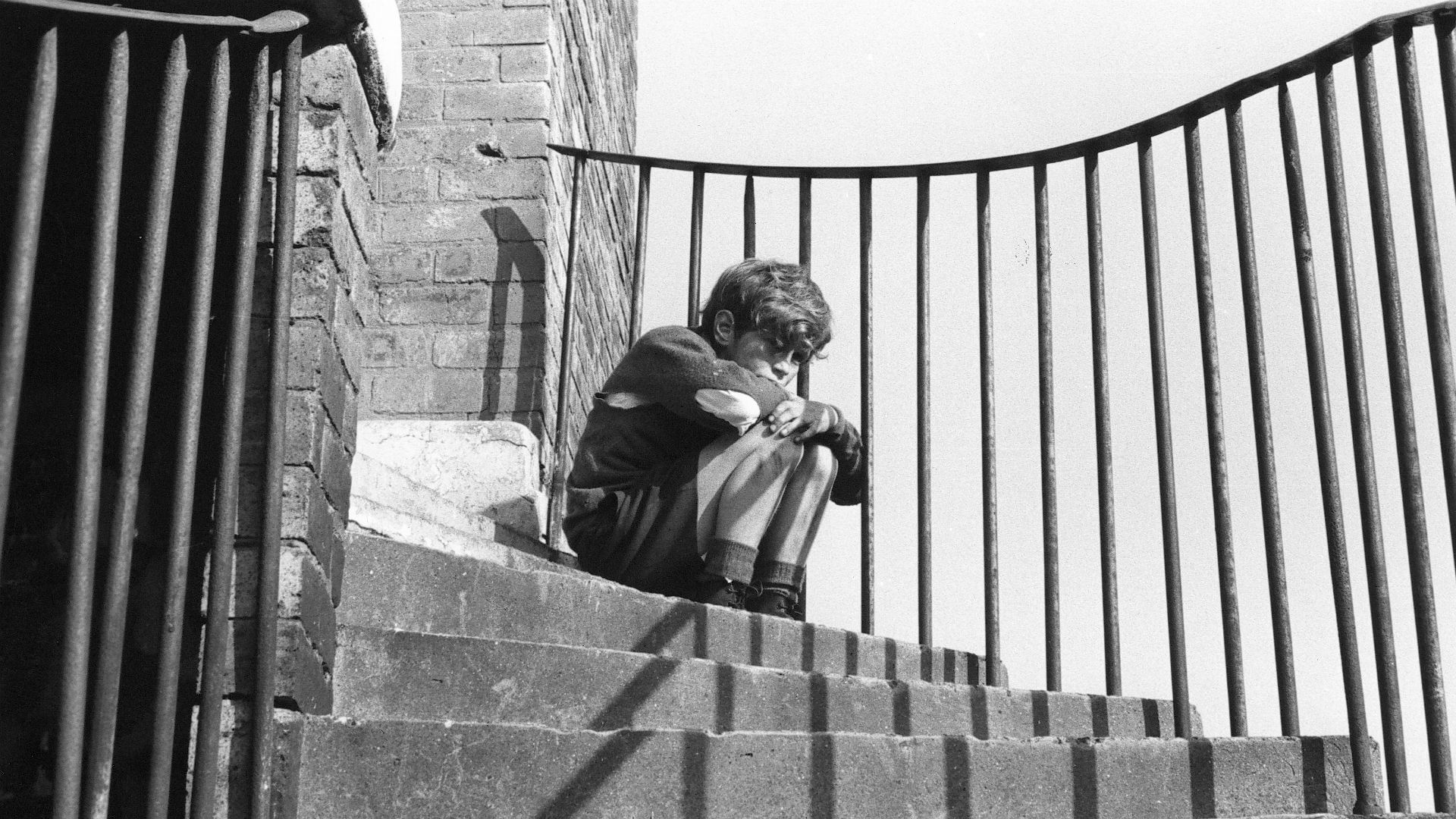
Following the formal business, elections and discussion at our Annual General Meeting on Sunday 24th September, the Friends are putting on a free screening of My Childhood. We are delighted to bring you a rare opportunity to watch this classic on a cinema screen.
My Childhood is a 45 minute film directed by Bill Douglas, made in 1972. Filmed in 16mm, it draws on his experiences as an 8 year old boy in a Scottish mining village as World War 2 comes to an end. My Childhood reflects the austerity of his everyday life through its use of location, non-professional actors and powerful black and white photography. “A harsh, unsentimental, but also intensely felt and moving portrait of childhood”.
We look forward to you joining us to watch this treat from the comfortable seats of the recently opened Hyde Park Picture House Screen 2.
Members will have received the good news email from the Chairperson, Bill Walton:
“At last! News of the upcoming screenings at our wonderful Hyde Park Picture House, which reopens to the public on Friday June 30th. There is a lot of information now on their new website, including announcements of their full programme including the return of favourites like ‘Tuesday Wonders’, ‘Creatures of the Night’, ‘reRUN classics’, ‘Memory Matinees’, ‘Cinema Africa!’, ‘Hyde and Seek’, ‘Philosophy and Film’, ‘BYO Baby’, ‘Hyde Park Film School’ and ‘Pavilion Presents’. On their website there is also news about the improved access and their own Hyde Park Picture House membership scheme (which offers some discounts). ”
Note, the Picture House plans Open Days for people to visit the redeveloped cinema. The ‘second screen’ opens late July which also sees the return of 35mm screenings. Some popular new releases are in the programme as well as titles that other local cinemas do not reach.
Whilst we eagerly await the reopening of the Picture House, we have arranged a joint presentation with Films at Heart of the Golden Bear nominated ‘Return to Dust‘ on Wednesday April 12th.
Films At Heart presents Return To Dust Doors 7pm, film 7.30pm HEART Centre, Bennett Road, LS6 3HN
2022’s Return to Dust is a Chinese drama in which Ma and Cao have been forced into an arranged marriage by their families. They do their best to build a home whilst facing many great challenges together. The unlikely couple form a bond to create an unexpected love story.
This screening forms part of the regular Films at Heart programme, all tickets are £6/£5 and available via the HEART reception and online. Of course very nice refreshments are available too. And we’ll be there for a friendly chat.
“Return to Dust is many things — a vivid portrait of China’s hardscrabble rural north- west, an unexpected victim of state censorship — but it is first and last a love story. ”
Danny Leigh- Financial Times
“It’s a gorgeous, quietly affecting film that finds an unassuming beauty in this simple life in rural China, but which doesn’t shy away from the extreme hardships faced by the very poorest.”
A fascinating docu-romance-drama and critical ethnographic study of a new couple, Yolanda and Mario. The filmmaker assesses the complexities of intersectional, marginalised lives in 1970s Cuba through a factual narrative that contextualises the relationship, the community, and the tensions of life in a new socialist society.
This was the first Cuban feature film directed by a woman and the last directed by Sara Gómez (1942-1974), who died suddenly while De Cierta Manera was being edited. The film was completed with the technical supervision of Tomás Gutiérrez Alea and Julio García Espinosa, who also co-wrote the screenplay.
This screening includes a special live introduction from Lisa Harewood
Lisa is a digital storyteller from Barbados and co-founder of The Twelve30 Collective, a curating partnership that works with cinemas, festivals, universities and community groups to screen Caribbean films for UK audiences. Lisa has written, produced and directed films, virtual and augmented reality works, and is currently developing a multiplatform documentary project about the experiences of Caribbean families separated due to migration.
Members of the Friends committee will be at the screening to answer any queries about membership or other aspects of the Friends and we hope to see some of you there.
Hyde Park Picture House normally opens its doors every year as part of Heritage Open Days but this year, they have decided to use the On the Road programme to take the love of all things heritage out and about across the city through a range of events. Wendy has written about this on the Leeds Heritage Theatre website and there is an overview of some more events happening this September below.
You can find out more about the Heritage Open Days on their website which includes a search to find events all over the country. There is also a booklet of Leeds events available from LCC Libraries, Museums and Galleries or as a PDF download.
The Lost Films of Louis Le Prince
Friday 9th September 2pm – Leeds Becket University
This illustrated lecture from historian Irfan Shah will investigate the work of Leeds-based film pioneer, Louis Le Prince. It will take place in the exciting new cinema space of Leeds School of Arts at Leeds Beckett University.
In the years 1888-89, Louis Le Prince shot at least six continuous motion picture sequences in the city of Leeds, of which only a few seconds of three remain. Researcher, Irfan Shah, tells the story of the lost films of Le Prince and shows how Leeds itself was not merely a location for them but an essential ingredient of the inventor’s work.
Saturday 10th & Sunday 11th September – Leeds Industrial Museum
Nestled amongst the Kalee Projectors and Louis Le Prince’s early cameras, there will be a mixed programme in celebration of our favourite astounding invention: film.
Featuring:
Shorts programme: Cinema Memory (30min) – 12.30pm and 1.15pm
Hyde & Seek Screening: A Grand Day Out (1994, U, 24min) and The Wrong Trousers (1994, U, 30min) – 2.00pm
Minute Bodies: The Intimate Works of F. Percy Smith (2017, U, 53min) – 3.10pm
Before the film there will be a brief update on the upcoming changes to the Friends Membership scheme and how that fits in with the development, changes and reopening of the Picture House in the autumn.
The Friends will be moving to an annual “Pay What You Decide” membership model and focussing more on our charitable aims. Soon, The Hyde Park Picture House will be introducing their own new membership scheme which will include discounted tickets and other benefits.
We’ve made these changes because membership schemes are an important way for cinemas like the Picture House to raise income and grow audiences. The primary motivation for the Friends has always been different, focussing on our charitable objects to support and celebrate the cinema. At this point clearly separating the two so both could thrive felt like a great opportunity.
Back to Billy Liar in which Tom Courtenay plays an irresponsible funeral director’s clerk, who fiddles the petty cash, is at war with his parents, and has become involved with two young women who share the same engagement ring. An incorrigible liar and day dreamer by nature, whenever possible, Billy retreats into a fantasy world where he is the hero: a dictator of an imagined land of Ruritania or a famous novelist. Anything to avoid have to make a decision, grow up, get out.
Filmed on location in Bradford and Leeds, Billy Liar is outlier to the brand of kitchen-sink realism then current in 60s Britain. Director John Schlesinger, with screenwriters Keith Waterhouse (who wrote the 1959 novel the film is based on) and Willis Hall, craft a wonderfully cast and irreverent film that sits somewhere between reverie and reality, cleverly mirroring the modernisation of British society at the time.
I suspect that most of the Friends are familiar with this C19th inventor who, in 1888, produced what is the earliest surviving example of a strip of moving image; scenes shot on a single lens camera of people in a Roundhay garden and then of people and traffic on Leeds Bridge. The second Leeds International Film Festival was, in his centenary year, a celebration of Le Prince’s achievement. And Blue Plaques commemorate his pioneer work on Leeds Bridge and the site of his workshop on Woodhouse Lane. Now a new study has appeared, ‘The Man Who Invented Motion Pictures’ by Paul Fischer, published by Simon & Schuster this month, in 2022, [ ‘The Genius, Secrecy and Disappearance of Louis Le Prince’]. Helpfully, a condensed version of the publication was premiered by BBC’s Radio 4’s ‘Book of the Week’; five episodes of 15 minutes each and available on BBC Sounds.
The book adds to the available studies of this important pioneer of what became cinema. There is Christopher Rawlence’s ‘The Missing Reel’ [Collins 1990): there is Rawlence’s documentary dramatisation of the book, made for Channel 4 in 1990, but not apparently available: David Wilkinson’s 2015 The First Film, more an argument for Le Prince’s recognition that a documentary [available on MUBI]: a detailed Wikipedia page links and detailed references: archive material at Leeds Industrial Museum and at Bradford’s National Media Museum Insight collection: interesting discussion of Prince’s achievement on a blog devoted to William Friese-Greene: and the Louis Prince Leeds Trail. YouTube has transfers of Le Prince’s moving images and a number of short video pieces on him; some have debatable claims.
The title is slightly over the top. The 1880s was a time when a number of pioneers were experimenting with developing photographic technology into a format for moving images. The author does detail the way that Le Prince worked at developing camera and projector for moving images. His descriptions in the BBC extracts are clear and understandable. However, all that survives are examples of what Le Prince filmed and one of his model cameras. As Fischer points out these are the earliest surviving examples of projectable moving images. However, there is no clear evidence that Le Prince successfully projected these. And after his death, when his family attempted to prove his prior claim to the patents of Thomas Edison, they failed; partly because what Le Prince patented did not offer enough detail.