A Season in France/Une Saison en France (France, 2017)

Friday 28th June at 6.15 p.m. and Wednesday 3rd July at 6.15 p.m.

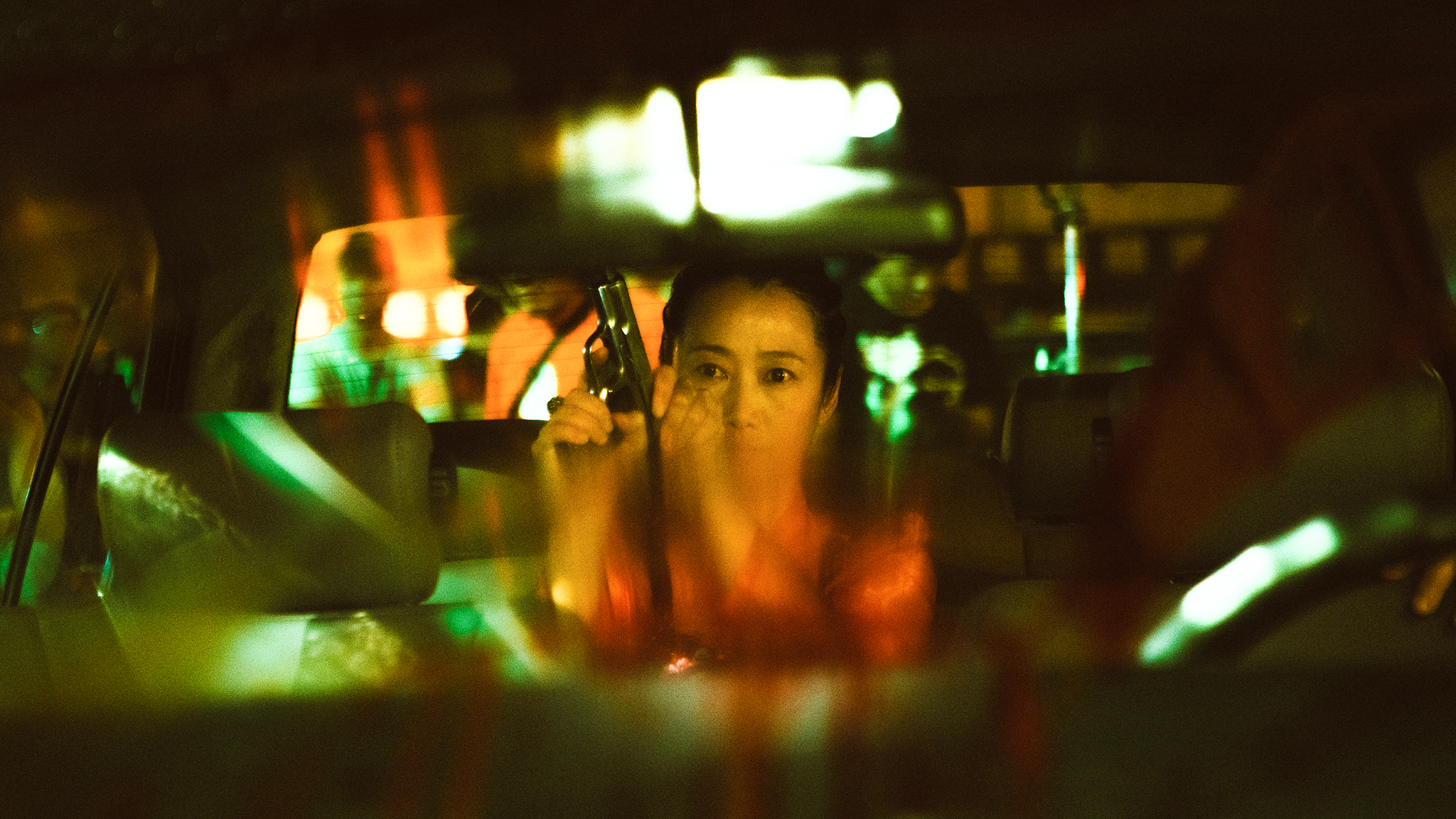
This is the new film by Mahamat-Saleh Haroun, a filmmaker from Chad who has lived and partially worked in France since 1982. His new film deals with the important issue of refugees and migrants and dramatizes the experience of an African widower and his children who  are forced to flee to France from Central African Republic.

Several of Haroun’s earlier films have screened at the Picture house. There was Bye Bye Africa (1999), an unconventional docu-drama in which a slightly fictionalized Haroun visits and films his native country of Chad. It is an ironic and occasionally bitter record of Neo-colonialism in Africa. His next film Abouna (France, Chad 2002) follows two young boys who seek their father across Chad, including in the desert regions. A powerful drama which was beautifully filmed by Abraham Haile Biru, it won the prize for cinematography at The Panafrican Film and Television Festival of Ouagadougou (Festival panafricain du cinéma et de la télévision de Ouagadougou or FESPACO). This Festival is a major forum for African film.

Daratt  (which translates as ‘Dry Season’, was funded by France, Belgium, Chad and Austria in 2006). The film follows a young boy who has suffered in the Civil War [2005 to 2010] but who finds a new life in a bakery. A Screaming Man  / Un homme qui crie  (France, Belgium, Chad 2010)was once again set in the period of the Civil War as a father and son struggle to cope with the adversities of their situation.  Grigris (Chad, France, Belgium 2013) only received a single screening at the London Film Festival but no British-wide distribution.

Haroun’s film dramatize the ill effects of Colonialism and Neo-colonialism in Africa, especially that region once termed ‘Francophone’. His stories also frequently revolve around fathers and sons, making for powerful and emotional dramas. And he has a fine sense of visual presentation and has worked with really talented craft teams. Now his new film is receiving the release [though limited] his work deserves. But the two screenings at the Picture House are likely to be rare opportunities to see the movie in its proper theatrical setting.

If you want a preview:

Red Joan, Britain 2018

Sun 2nd June 3.00 p.m., Wed 5th June 11.00am [BYOBaby] and 1.20pm

This is the story of a fictional character, Joan Stanley, who in the 1940s passed secret information to the Soviet Union. However, it and the novel from which it is adapted, are based on the life of a actual historical character, Melita Norwood. Norwood was exposed publicly in 1999 when information from an ex-Soviet agent and now-defector revealed her past activities.

The film version presents the story in a fairly conventional-style narrative [warning – plot spoilers]. The film opens with the arrest of Joan (Judi Dench) by Special Branch in 1999. Then we view a series of interrogations which are intercut with flashbacks by Joan to the 1930s and 1940s. The interrogations fill out the action in 1999 where information has led to the exposure of a senior Foreign Office official as well as Joan. The flashbacks presents Joan’s personal life and then her spy activities. At Cambridge ‘Young Joan’ (Sophie Cookson) meets glamorous European émigré Sonya Galich (Teresa Srbova) and cousin Leo Galich (Tom Hughes). Both are communist activists.

Continue reading

Two Fine Art Movies

Screening daily from Friday May 17th till Thursday May 23rd.

This Friday the new film directed by Claire Denis, High Life (2018), opens at the Picture House. Claire Denis is undoubtedly one of the really talented and interesting film-makers working in contemporary cinema. In this title she has presented her first film in an English language form; thankfully she has done a better job than a number of her fellow European film-makers. This is a science fiction story that opens on an odd box-like space ship heading far away towards a black hole. Inside we find Monte (Robert Pattinson) whose only companion is a very young child. A series of flashbacks fill in the events prior to this; Monte’s companions have fallen foul of the internal conflicts among the crew. We learn how the baby came to be on the space ship and the unusual social rules that produced the situation. Stylistically the film recalls the Soviet director Andrei Tarkovsky, especially his films Solaris (1971) and Stalker (1979). The plot at times appears to be lifted from the pages of J. G. Ballard and is both violent and a little disturbing: the BBFC have given it an 18 Certificate. The cast, which includes Juliet Binoche, is good. The production, including special effects, is well done. And once more Denis shows her ability to explore social and personal contradictions. The June issue of Sight & Sound has an interview with Claire Denis.

Screening on Saturday, Sunday and Wednesday afternoon this coming week

An equally fine film-maker, Zhangke Jia, has directed Ash Is Purest White / Jiang hu er nü (2018). The film covers several decades in the life of Qiao (Tao Zhao). Much of the film is set in Shanxi province in the north of China but at one point Qiao travels south to the Three Gorges in Hubei province [seen in earlier Jia films]. Qiao is involved with a “jianghu” gangster (Fan Liao). The effects of this relationship and the mob violence affect her life but throughout she remains cool and self-possessed. Tao Zhao is impressive as Qiao. She acts a muse for Zhangke Jia, having appeared in his earlier films including the very fine Mountains May Depart / Shan he gu ren (2015). This film has the same epic quality and it happily screens in Leeds, a city that missed out on the earlier title. The production values in all departments are excellent and both the action and the settings fully engage. The language in this title is Mandarin with English sub-titles.

The movie comments on recent and contemporary China; I thought one point referred back to the coup by capitalist-roaders following the death of Mao Zedong. Tony Rayns has an article in the May issue of Sight & Sound which includes comments by the director and explains some of the distinctive Chinese aspects, including the title rendered in English as ‘Sons and Daughters of the Jiangsu, a word appropriated by the underworld and originally referring to “the parallel world in which martial arts fictions is set.”

Out of Blue, (UK/ USA 2018)

Wed 24th April at11.00 a.m. [BYOBaby], 8.30 p.m. and Thu 25th April at 5.30 p.m.

This movie has received mixed reviews. But Mark Kermode, whose visits to the Picture House have been very popular, was really positive. The drama presented in this title is rather unconventional. The narrative mixes objective scenes [the audience assume we are watching a record of realistic events] and subjective scenes [a character’s internal memories and musings] and it is likely to take time for viewers to be able to clearly distinguish them. The plot also mixes actions by characters with philosophical musings by them.

The latter aspect is exemplified by the opening sequence which commences with the night sky and an astronomer speculating on the cosmos. This would appear to be a homage to the British film masterpiece, ‘A Matter of Life and Death’ (1946). It also sets up a treatment of the characters and their experiences which suggest issues of existential consideration.

On the surface this is a story of a murder investigation shot in a noir manner, with a world of chaos, a ‘seeker’ hero, flashbacks, triangles of relationships and nights and chiaroscuro. The setting is New Orleans and the production makes good use of the varied character of this city, which at times has an exotic tinge. It is though a symbolic city and despite location filming it is not the city seen in contemporary news. Visually the film is treat. The colours are evocative and suggestive, not just the ‘blue’ of the title but a range of tones which match the different facets of the city. The cinematography, in colour and a ratio of 2.35:1, by Conrad Hall is excellent and the title is well served in all production departments.

The other compelling aspect of the film is the performance of Patricia Clarkson as detective Houlihan, the investigator. This is a tour de force. I actually pay little attention to the Academy Awards but this performance deserves a Best Actor trophy. It is also a still rare pleasure to see an older actress with a lead role in a thriller.

This is the latest movie by Carol Morley. Her Dreams of a Life (2011) stood out amongst recent British documentaries. Mark Kermode commented that she was ‘born a film-maker’. I actually think that quality film-makers develop by commitment and hard work, attention to detail and a serious study of cinematic form. Carol Morley seems to have done all of this. And, uncommon among the ‘new auteurs’, she has mastered both the direction of film and script-writing for film.

The film is adapted from a novel by Martin Amis, ‘Night Train’ (1997) though, apparently, changing the tone and the plot. Amis’ novel aimed to be a parody, this is a fairly bleak film noir. It was mainly funded by the BBC and the BFI. This may be part of the reason that it stands out in productions by British directors working on US-based stories. Frequently such films are a disappointment and less satisfying than earlier British-based stories by the same film-maker. Here Carol Morley succeeds with a really effective treatment which also develops some of the themes found in her earlier works.

Definitely a film to see. Mark Kermode suggests it repays seeing more than once; I fully agree. If you do enjoy it there is an article, ‘Under Investigation’, privileging the female protagonist in the April edition of Sight & Sound, and followed by an interview with Carol Morley.

Agnès Varda (1928–2019)

One of the most distinguished and most sympathetic of European film-makers died last week. She enjoyed a film-making career of fifty years and made 54 films including documentary shorts and feature length films. At the revered age of ninety Varda was the doyen of a cinema that harked back to the influential and transforming new waves of the 1960s. Varda was part of what was called ‘the left bank group’ which also concluded Alain Resnais. He edited her first film, La Pointe Courte (1955), screened in a Varda season at the Picture House in 2018. Another colleague was the film essayist Chris Marker. Varda also made film essays and the pair shared a strong affection for cats.

Regulars at the Picture House have had a number of opportunities over the last year to enjoy some of her other films. Cleo from 5 to 7 / Cléo de 5 à 7 (1962) was screened in the Leeds International Film Festival. This film that established Varda’s reputation bought a distinctive content and style to European cinema and remains a film that takes on new aspects when revisited.

The Picture House also screened One Sings, the Other Doesn’t / L’une chante l’autre pas (1977) which dramatises the struggle by French women to win legal access to abortion in that decade. The film demonstrates how Varda’s politics were not just confined to the cinema screen but involved her active participation.

The Beaches of Agnès / Les plages d’Agnès (2008) found Varda in playful mood as she revisited her earlier work and the themes and motifs that really interested her. These included the beaches of the title, cats, mirrors and art works; in the latter area she demonstrated a renaissance style grasp of visual art.

Her most recent film to be screened was Faces Places / Visages villages (2017) in which, with a fellow eccentric artist J. R., she explored rural France through a distinctive form of photography. This also returned her to her first artistic forays in the 1950s when, as a young photographer, she recorded key theatre moments of the decade. The relationships in the film showed Varda’s empathy for ordinary people, something found throughout her long career.

Her final film debuted at the recent Berlinale, Varda by Agnès / Varda par Agnès (2019). The film presents excerpts from a series of illustrated talks that Varda gave about her career. Her talks are intelligent, precise, fascinating and full of charm and occasional irony. The film offers a worthy testament to her impressive career. We can look forward to enjoying this last offering later this year.

Happy as Lazzaro / Lazzaro felice (Italy / France / Switzerland / Germany 2018

Screening on Wednesday April 10th at 8.50 p.m. and on Thursday 11th at 6.15 p.m.

You may have already been to an earlier screening or saw the title at the Leeds International Film Festival; however, if you enjoyed it as much as I did you will surely want a second viewing.

Directed by Alice Rohrwacher, one of her earlier films was The Wonders (2014). This film has been described as magic realist. It combines naturalistic observation with a plot that includes references to myth and folk tales, social exploitation and a touch of fantasy. Lazzaro of the title is a sweet natured and apparently simple minded peasant. He is part of a village cut off from modern Italy and involved in some form of share cropping. Later in the film a migration leads members into a lumpen-proletarian existence. The film shares tone and tropes with recent migrant films. It is fascinating and at times moving. Visually Hèléne Louvart’s cinematography is both beautiful and atmospheric and the overall production is excellent. I thought this the best film I saw at the Festival. A friend commented

I greatly admired The Wonders … and this was even better. This tale of a holy fool in a setting which blurs the borders between realism and the fantastic is not, perhaps, for the literal-minded but should delight most of the rest of us.

The Second Awakening of Christa Klages /Das zweite Erwachen der Christa Klages (West Germany 1978)

6.00p.m. Tuesday March 27th

This is the fourth of the titles from the Independent Cinema Office programme celebrating the films of Margarethe von Trotta. It was her first solo film as director, following on from The Lost Honour of Katharina Blum / Die verlorene Ehre der Katharina Blum (1975), already screened at the Picture House. Christa (Tina Engel) is involved in an alternative child care centre. Its problems lead her into crime and then having to go on the run. At one point, she and her friend are found working in an agricultural collective in Portugal. This demonstrates how von Trotta’s film do not just address female relationships, which they do powerfully, but the surrounding social and political contradictions. The film references indirectly the confrontational political discourse of 1970s Germany. As always the characters are fascinating, the film is engrossing and von Trotta and her team’s command of cinematic techniques is impressive.

This is a welcome screening of an important German film when titles from that territory are rare in British exhibition. It would be good to follow up the excellent ICO programme with an example of some other aspects of von Trotta’s film work. The British film Institute have a 35mm print of Sheer Madness / Heller Wahn (1983), though it seems it is quite worn. There is also von Trotta’s career in film acting before she took up direction. She worked several times with the great German film director Rainer Werner Fassbinder. The British Film Institute have a 35mm print of his Gods of the Plague / Götter der Pest (1970), a drama about an ex-prisoner with Margarethe von Trotta in a leading role.

The Lost Honour of Katharina Blum / Die verlorene Ehre der Katharina Blum (West Germany, 1975)

Tuesday February 26th at 6.00 p.m.

This film also caries a sub-title, ‘How violence develops and where it can lead’. This suggests one of the themes that are central to the story. Set in Germany at the time when the activities of the Red Army Faction led to increasing repressive laws and a campaign approaching hysteria in the mainstream media, this film counterposes individual liberties against powerful state and commercial institutions. The titular heroine is caught up in a web of media and state scrutiny. The tragic developments in her world taken her far from her original situation.

The film was both scripted and directed by the then partners, Volker Schlöndorff and Margarethe von Trotta. Both are key members of the New German Cinema of the period. The story is adapted from a novel by Heinrich Böll, himself a radical leader in the German literary world. The novel has also been adapted as a television film, a radio drama and an opera.

The novel opens with a line that Wikipedia quotes:

“The characters and action in this story are purely fictitious. Should the description of certain journalistic practices result in a resemblance to the practices of Bild-Zeitung, such resemblance is neither intentional, nor fortuitous, but unavoidable.” [Bild-Zeitung is a tabloid daily published by Axel Sprinter A.G.].

A similar but somewhat different line appears in the end credits of the film.

This suggests how closely the film criticises actual German media and institutions. Here it follows the novel after Boll himself suffered as a target by the German press. The film follows the plot of the novel in offering an increasing melodramatic story. But it also offers a sensitive portrayal of the young female victim at it’s heart, played with conviction by Angela Winkler.

Offering stories that have a basis in real life and history is a hall mark of the film work of Margarethe von Trotta. This title is one of four in a retrospective programme distributed by the Independent Cinemas Office. The Picture House has already screened the powerful biopic of Rosa Luxemburg. The other two films in the programme are her first solo feature The Second Awakening of Christa Klages / Das zweite Erwachen der Christa Klages (1978) and The German Sisters / Die bleierne Zeit (1981). The latter is a classic of the New German Cinema. Both will screen at the Picture House, The German Sisters on March 10th.

This title, now transferred to a DCP, runs for 106 minutes and includes English sub-titles.

Rosa Luxemburg, Germany 1986

Tuesday January 15 at 6 p.m.

This is a welcome screening of one of the fine political dramas written and directed by Margarethe von Trotta. Rosa Luxemburg was one of the outstanding revolutionaries of the early C20th. Along with Lenin and the Bolsheviks and the suffragist Sylvia Pankhurst she adhered to the central platform of Marx and Engels’ position on capitalist war. This was the outcome of years of struggle in her native Poland and in the German Social Democratic Party for ‘Revolution’ against ‘reformism’. Her political activity led to numerous spells of imprisonment and finally her murder after the failed Spartacist uprising in 1919.

[see the recent demonstration in her memory].

Red Rosa now has vanished too. (…)

She told the poor what life is about,

And so the rich have rubbed her out.

May she rest in peace. “[Bertolt Brecht].

Von Trotta’s film opens in prison in 1916 and then takes the viewer back to 1906 and a Polish prison. Cutting in time and space between different periods of Rosa’s life and political action the film presents a complex and dramatic biography. Barbara Sukowa, a long-time collaborator with von Trotta gives a compelling characterisation of this committed and steely woman. The film brings out both the importance of Rosa political activity and the rich but demanding personal life she enjoyed.

The production team includes a number of von Trotta’s regular collaborator. Visually this is a tour de force and the team also manages to capture the look and detail of the years before World War I. When the film moves to the later years of the imperialist war and the post-war failed revolution the judicious use of archive footage integrates the personal life with the seismic social events.

This is a engaging and fascinating biopic and treatment of political events that are as relevant today. Rosa’s own ‘Reform or Revolution’ is as an apt a commentary for 2008 as it was for 1900.

Margarethe von Trotta is one of the outstanding German directors of recent decades. Along with fellow women film-makers she will be part of a retrospective at the forthcoming Berlinale. The Independent Cinema Office are distributing this film [in digital versions] with three other titles: The Lost Honour of Katharina Blum / Die verlorene Ehre der Katharina Blum (1975): The Second Awakening of Christa Klages / Das zweite Erwachen der Christa Klages: The German Sisters / Die bleierne Zeit. Let us hope we are able to see these three as well.

2018 at the Hyde Park Picture House.

‘The Wild Pear Tree’

I thought this was a stronger year for new releases than 2017. Two of my favourites screened at the Leeds International Film Festival and then, subsequently, at the Picture House.

Shoplifters / Manbiki kazoku (Japan, 2018). This is a real cinematic treasure. The subject is welcome and a little subversive. The production is excellent in every aspect.

The Wild Pear Tree / Ahlat Agaci, (Turkey | Republic of Macedonia | France / Germany | Bosnia and Herzegovina | Bulgaria | Sweden, 2018. An epic film, certainly in length, but immensely rewarding if you stayed the course.

Then the new titles on general or limited release;

Jupitor’s Moon / Jupiter holdja, (Hungary / Germany / France, 2017). This was a sort of ‘magic realism’ following an illegal migrant trying to survive in an unwelcoming environment.

Sweet Country, (Australia, 2017). A fine ‘outback film’ set in the 1920s. Apart from the excellent characters and plot we had a glimpse a ‘silent film’ screening.

Isle of Dogs, (Germany / USA, 2018). Fine animation and the canine performances of the year.

Zama, (Argentina / Brazil / Spain / Dominican Republic / France / Netherlands / Mexico / Switzerland / USA / Portugal / Lebanon, 2017). I enjoyed this so much that I must find time to read the novel from which it is sourced.

Wajib (Palestine / France / Colombia / Germany / United Arab Emirates / Qatar / Norway, 2017) A master-class in how to make a fascination story out of a drive and delivery of wedding invitations.

‘Wajib’

There were two fine documentaries this year:

The Rape of Recy Taylor, (USA, 2017) Set among African-American women exploited and oppressed in the pre-civil rights era. The use of archive material was so imaginative.

Faces Places / Visages villages (France, 2017) An in idiosyncratic delight.

We also had a lot of classics. The Ida Lupino programme was welcome and mainly on 35mm. High Sierra (USA 1941) and Outrage (USA 1950)stood out.

And we had a good 35mm print of Isaac Julien’s Young Soul Rebels (Britain 1991).

The one serious omission of the year was The Young Karl Marx / Le jeune Karl Marx (France / Belgium / Germany, 2017), a really well done drama of the early years and work of Marx and Friedrich Engels, and with Jenny Marx and Mary Burns.

Friedrich, Jenny, Karl, Mary and family