Alam (France / Saudi Arabia / Tunisia / Qatar / Occupied Palestinian Territory, 2022)

This is the next title being screened at the Picture House as part of the Leeds Palestinian Film Festival. It is a drama set among the Palestinian Arabs who live in the part of occupied Palestine known as Israel. The drama centres round the celebration of the founding day of Israel, usually in early May. Dispossessed Palestinians mourn their lost country on Land Day, later in May.

For Palestinians who stayed on the land that became Israel, Israel’s day of founding is also the Palestinian’s day of Catastrophe [Al-Nakba]. For their exams, high school students have to learn Israel’s version of history, with the stories of dispossessed former Palestinians being suppressed.

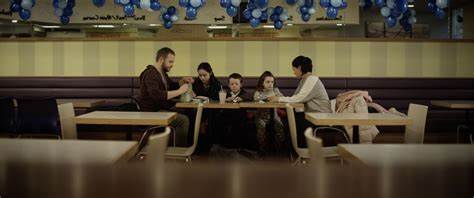
Tamer (Mahmood Bakri) is drawn to a new high school student Maysaá (Sereen Khass) and through her becomes involved in an act of defiance of the occupiers’ celebrations. These centre on the Israeli flag; one meaning of ‘Alam’ is ‘flag’. Tamer ‘s family already have the experience of Israeli repression which leads to tensions within his family.

This feature is written and directed by Firas Khoury; he has already made some short movies. He is also involved in organising screenings and cinematic events throughout Palestine. This feature is a multi-territory production involving both European and Arab funding. It is shot in colour and anamorphic wide screen, 2.39:1. The running time is 109 minutes. The dialogue is in Arabic and Hebrew with English sub-titles.

This feature won the Golden Pyramid Award and the Audience Award at the Cairo International Film Festival. The experience of Palestinians living in Israel is often overlooked in the media. Given the repression taking place in Israel of Palestinian expression and opposition to the war, this is a welcome opportunity to get a sense of this Palestinian world.

Showing in Screen 1 on Wednesday 29th November at 6pm

Leeds Palestinian Film Festival 2023

This is now a regular event in Yorkshire though this year it comes against a backdrop of a criminal violence and destruction across occupied Palestine. Thus it offers an opportunity to deepen our knowledge and understanding of the experience of the Palestinian people since the British Empire sold away their land for a mess of pottage.

There are a further eleven events in the Festival programme. And two of these are featured at the Hyde Park Picture House,

On Tuesday November 21st at 6 p.m. there is,

Cinema Palestine – Tim Schwab, Canada/Israel/Jordan/Palestine, 2014, 78 minutes. English, Arabic with English subtitles. This is a documentary about Palestinian film and film-makers and how this connects with |Palestinian identity. Some of the work of these film-makers is airing on Al Jazeera channels and on their web pages.

On Wednesday 29th November at 6 p.m.

Alam – Firas Khoury, 2022, France/Tunisia/Palestine/ Qatar/UAE, 109 minutes. Arabic with English sub-titles. This feature offers a narrative about political awakening for a young Arab living in Galilee.

Given the context for this year’s Festival the organisers have published a statement on their web pages;

The Leeds Palestinian Film Festival Team are filled with horror, grief and sadness at the current violent loss of life across Palestine/Israel.

We are motivated by a strong belief in justice, respect and dignity for all people, which is why we have selected the films for this festival carefully.

The intentions of our 13 outstanding and thought-provoking events are:

  • to shine a light on hidden stories of Palestinians, their history, culture and politics
  • to challenge stereotypes and one-dimensional views
  • to portray a people in all their diversity

We believe our programme provides invaluable context which can help to illuminate the root causes of the present violence, and to develop responses grounded in understanding and care for others.

All our events constitute safe spaces for constructive and respectful dialogue, with no place for racism, xenophobia or aggression. [LPFF]

And hopefully Friends  were also able to catch the title screened during the Leeds International Film Festival.

Al-Makhdu’un (The Dupes, Syria 1972), this is a feature adapted from the novella  Rijāl Fi Al-Shams / Men of the Sun by  Ghassan Kanafani in 1963. The film version was scripted and  directed by Tewfik  Saleh, an Egyptian who made a number of films that can be counted as part of Third Cinema. He suffered censorship in  Egypt and left in the 1970s and this film was produced by the Syrian National Film Organisation.  The film was shot in black and white academy, running for 107 minutes in Arabic; English sub-titles provided.

The director made these comments in an interview for a French Film Dossier;

I worked on the adaptation of Men in the Sun by Ghassan Kanafani – a militant of the Popular Front for the Liberation of Palestine assassinated on 9 July 1972 in Beirut by the Zionist secret service (Mossad) – from 1954 to 1971. My intentions and my interpretation of the novel and its characters changed in light of the tragic events that took place in the region in June 1967 and September 1970. In the latest version, I wanted to emphasises the element of escape that characterise the Middle East at this time. Three characters from three different generations, representing three phases of the same collective problem, decide to flee their situation in search of what each considers or hopes to be their individual salvation. But the end is very different from their expectations; there is no individual salvation from a collective tragedy. And this is the lesson that history teaches us every day.

Saleh here refers to the seizure of Palestinian lands and the further expulsion of Palestinians during and after the six-day war in 1967; and the expulsion of the Palestine Liberation Organisation from Jordan in 1970, including the massacre of Palestinian militants and civilians. The film’s central characters are victims of the earlier Al-Nakba (Palestinian catastrophe) of 1947 and 1948. Set in the 1950s in the Iraqi desert; three dispossessed Palestinians  attempt  to journey to a new life in Kuwait.

The Bill Douglas Trilogy

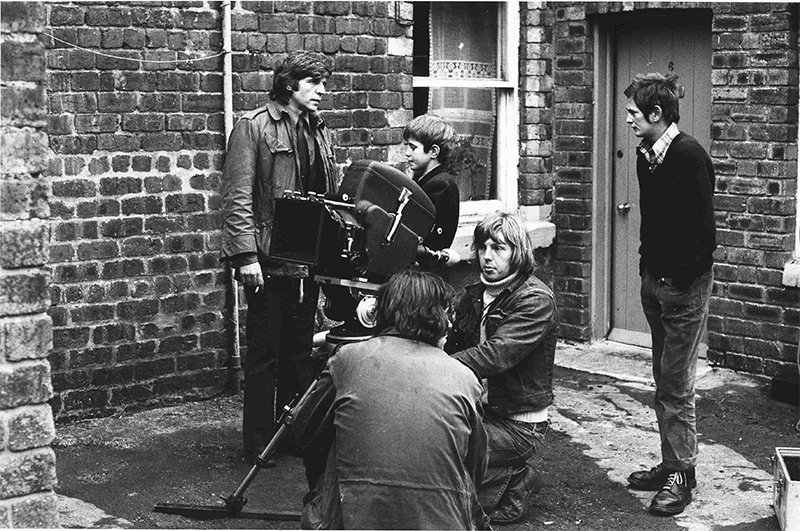
Douglas and crew filming a scene

This first part of this film trilogy was screened for members following the Friends’ Annual General Meeting. This was in the new Screen 2 of the redeveloped Picture House and was screened from a good quality 16mm print.

Scottish film-maker Bill Douglas was born in a small mining village close to Edinburgh in 1934. He was, sadly, lost to British film having only made, [apart from student films], the trilogy and a one feature film. Douglas came late to film; it was only in 1969 that he enrolled at the London School of Film Technique. This is actually the oldest school for film-making study in Britain, founded in 1956 and sited now in the Convent Garden area. Douglas made four short films while a student. However, on completing his studies he faced the usual barriers for independent film-makers.

Finally in 1972 he secured support from the British Film Institute’s production fund for three interrelated films. The first, at time with the title of ‘Jamie’, had been turned down by Films of Scotland because of the bleak view it provides of war-time Scotland. The film is based on experiences of Douglas’s own upbringing in the 1930s and 1940s. It became My Childhood, shot in black and white, academy and running 46 minutes.

The film is set in 1945, as World War II draws to a close. Jamie (Stephen Archibald) and Tommy (Hughie Restorick) live with their grandmother (Jean Taylor Smith). Their housing, diet and clothing all show the deprivation given the poverty of the family. The boys have pets which suffer from their situation. Jamie’s one outside relationship is with a German prisoner of war working locally on the land; Helmuth (Karl Fieseler). We see a celebratory bonfire at the end of the war and then Helmuth returns to Germany. There are also times when the boys (and the audience) see their father, who co-habits nearby, (Bernard McKenna). His mother is confined on some sort of mental institution. The bleakness of their lives is almost unparalleled in British film. It does have a moment of change; with a long shot of a departing figure on a train. The latter a familiar trope in films concerning children and rites of passage.

The cinematography was by Mick Campbell: the editing by Brad Thumin: and there were additional craft people on sound and a second unit. The imagery is stark but effective: the sound track is sparse, especially the dialogue, but it contributes to the overall impact: and the exteriors provide both a comparison and contrast to the central setting. The craft team, like the writer and director, seem to have a small number of credits. The quality should have led to a far greater output.

The second film of the trilogy is My Ain Folk (1973). This film picks up where My Childhood finished. The characters are the same, with the addition of other family members, as Jamie goes to live with them. Tommy is taken into welfare so this film concentrates on the experiences of Jamie. This is as harsh as his earlier life but with greater isolation. There is a brief moment of colour earlier in the film. It is in black and white and academy, running for fifty five minutes.

The final Part of the trilogy, My Way Home (1978) is also in black and white and academy but runs for 79 minutes. The film takes Jamie’s story into adulthood, entering work and then National Service. Jamie is again played by Stephen Archibald. The film takes the narrative outside of Scotland and Britain for the first time. It also presents a full and continuing friendship that leads to a change in Jamie’s life.

The National Film Archive has 35mm prints of both the second and third parts of the trilogy. It would be good if the Friends could cooperate with the Picture House to arrange screenings so that members and the public can see the rest of this outstanding work. The Archive also has a 35mm print of Douglas’ final film, Comrades (1987). The presents the story of The Tolpuddle Martyrs, agricultural labourers in the early C19th criminalised and then transported for daring to form a Trade Union. This is an important film on working class history in Britain and a fine representation in colour and widescreen which makes interesting use of early picture technologies.

L’immensitá, Italy / France 2022

Adri and Clara

This is a recent movie directed by Emanuele Crialese; one of his earlier films was the very fine Nuovomondo /Golden  Door  (2006). That feature followed Italian migrants at the start of the C20th journeying to the USA. And, as in this new title, it featured fantasy scenes to express the emotional state of the characters. The new title has been translated as ‘The Immensity’, but ‘intensity’ would be a better sense. In this new feature it is the intensity of the leading characters emotions and relationships that are the focus of the movie.

This new feature is set in the Rome of the 1970s. Penelope Cruz, in the main role of Clara, is the Spanish wife of an Italian business man with three children.  Her character uses the style, especially in her hair, of the major contemporary star, Sophia Loran. The three children are Adri (Luana Giuliani): Gino (Patrizio Francioni): and Diana (María Chiara Goretti). They form a group somewhat apart from the husband  Felice (Vincenzo Amato), who has problems adhering to marital fidelity. Adri, together with Clara, is the heart of the movie and she is experiencing difficulties with her identity.

The drama uses popular songs from the 1970s as one way to express the emotion and intensity of the characters. This is especially true of Clara and Adri, both of whom have fantasy sequences involving  performances of a popular song. The style here appears to be an amalgam of Michael Jackson and that found on Berlusconi’s television channels. The emotion flows from Clara to her children, but meets little response from the husband. Several key moments later in the movie are ambiguous which means the audience may be surprised at certain moments. Along with intense emotion the drama has humour, creating a bitter-sweet atmosphere.

Penelope Cruz is really fine as is Luana Giuliani in her first screen role. The two siblings are also played well and the supporting cast are fine in what are less sympathetic roles. Across the class divide, symbolised not by a railway track but a bamboo thicket, we find Sara (Penelope Nieto Conti), who befriends Adri.

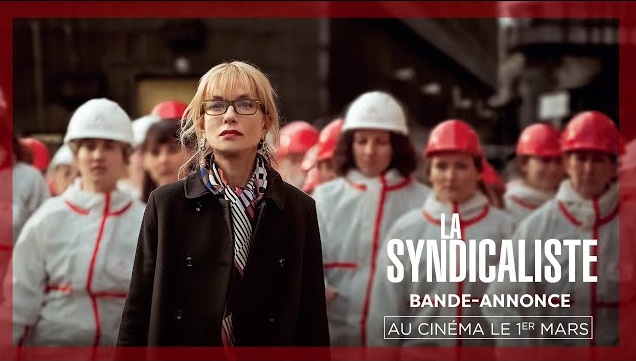
This is definitely a movie to catch: it is in colour and full widescreen with English sub-titles: and has more screenings this week. Nearly all  are in the remodelled original auditorium, now Screen 1. I was impressed with the quality of the image and sound here. I had the same feeling when I viewed an earlier screening of La syndicaliste (2022), a French political thriller set in the nuclear industry and with a fine performance from another major European actor, Isabelle Hubert.

The remodelled Screen I auditorium has a number of improvements. There is now only a single entrance but the doors are automatic and really cut out extraneous noise. The gas lighting remains though not always in use; but the aisle light snow have LEDs which are less distracting. There is a new screen; slightly smaller I think but flat, with a pristine surface and proper masking; [and the auditorium is slightly smaller due to developing the foyer].. However, the best addition is a new Barco 2K laser projector. This is the first time that I have seen one in action. It definitely provides a brighter image: the colour spectrum is improved: and the contrast also seems to be improved. I am curious as to how the digital transfers of actual film titles will look; the two French titles originated on digital equipment and software.

I had one small reservation; whilst the web pages request switching off mobile phones there is not an on-screen warning to this effect. So please, switch them off before you enter the auditorium and please do not use them as torches to find you seat; that is distracting.

Welcome News

Members will have received the good news email from the Chairperson, Bill Walton:    

At last! News of the upcoming screenings at our wonderful Hyde Park Picture House, which reopens to the public on Friday June 30th. There is a lot of information now on their new website, including announcements of their full programme including the return of favourites like ‘Tuesday Wonders’, ‘Creatures of the Night’, ‘reRUN classics’, ‘Memory Matinees’, ‘Cinema Africa!’, ‘Hyde and Seek’, ‘Philosophy and Film’, ‘BYO Baby’, ‘Hyde Park Film School’ and ‘Pavilion Presents’.  On their website there is also news about the improved access and their own Hyde Park Picture House membership scheme (which offers some discounts). ”                                                                                         

Note, the Picture House plans Open Days for people to visit the redeveloped cinema. The ‘second screen’ opens late July which also sees the return of 35mm screenings. Some popular new releases are in the programme as well as titles that other local cinemas do not reach.

Suggested films for the reopening Hyde Park Picture House

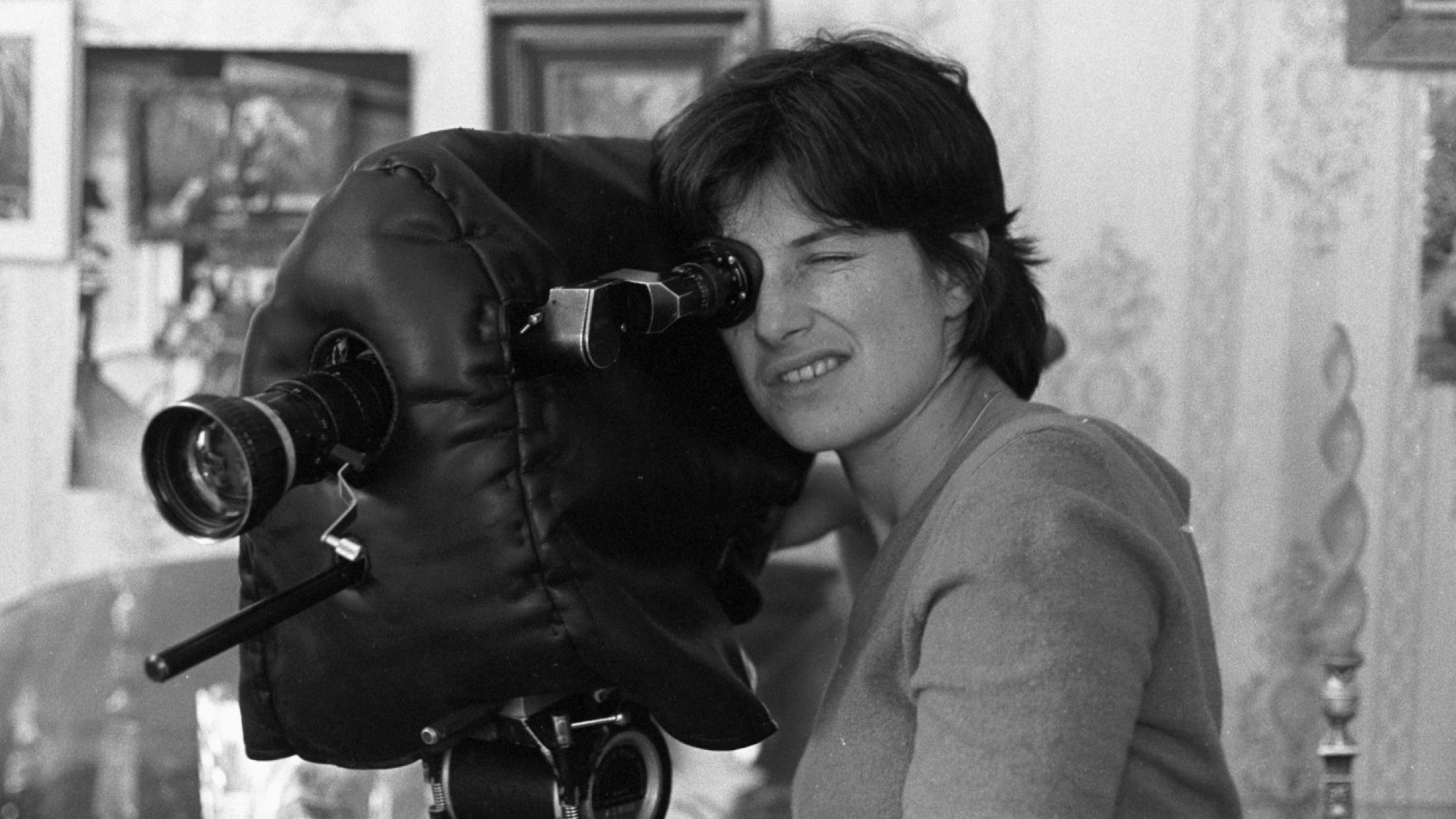
Chantal Ackerman

Readers are likely to have noted of the welcome surprise when in the Sight & Sound decennial poll for 2022 a little known Belgium film garnered the highest number of votes among contributing critics. Jeanne Dielman, 23 quai du Commerce, 1080 Bruxelles is a 1975 feature written and directed by the then young film-maker Chantal Ackerman. It is long, over three hours, has an essentially minimalist style and fits into what is often called counter-cinema. It pipped three previous poll-winners, all closer to the mainstream film and all by directed by men: Ladri di biciclette: Citizen Kane: and Vertigo.

The film follows three days in the life of the titular character. She is a single mother with a teenage son and offers a challenging role for the fine French actress Delphine Seyrig. Apart from the mother and son, the only other characters are a neighbour and three gentlemen callers. It is for most of its running time a low-key drama finally disrupted by a fairly shocking sequence.

Fortunate Friends will have seen the feature during the 2013 Leeds International Film Festival with a good quality 35mm print screening at the Picture House. Given its success in the S&S poll and its important place in European cinema this would be a fine film to screen when the Picture House reopens. Unfortunately there does not seem to be a 35mm print in the country. In 2013 the Festival obtained its print from the Brussels Archive. Perhaps, a number of independent cinemas could band together to obtain a print for British audiences.

Jean-Luc Godard

Counter-cinema itself lost one of its luminaries in 2022, Jean-Luc Godard. Over the years many of his films have been seen on the Picture House screen: often challenging: frequently with fine visuals and sound: sometimes more insouciance than dramatic: always searching out new ground for cinema. His first film, A Bout de Soufflé (1960) made young audiences in particular sit up and take notice. His most recent, The Image Book (2018), broke new ground with colour and digital formats. To date there does not seem to have been a retrospective of Godard’s work; nothing at the Leeds Film Festival was a missed opportunity. So a series of films when the Picture House reopens would be welcome. The National Film Archive has 21 film prints of Godard’s titles, mainly on 35mm. These are predominantly from his earlier career: A bout de soufflé  but only on 16mm: Vivre sa vie (1962): Alphaville (1965): also Weekend and Le Mepris, both 1967. There are some titles on other formats but neither Film Socialisme (2010) or The Image Book. Even so, the prints available would offer a remarkable cinematic programme.

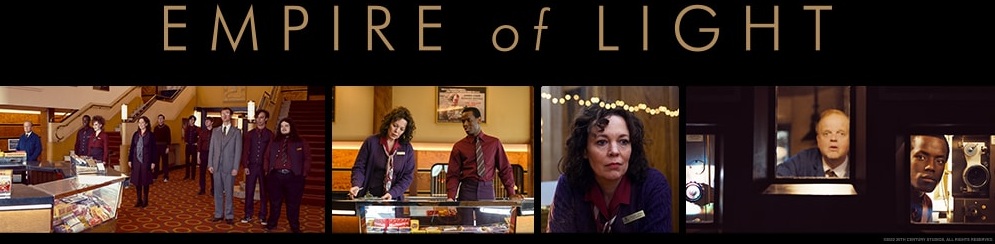
A much more recent movie that would also be a treat is Empire of Light (2022). The title was shot on a digital camera and format but there are several 35mm prints of the movie available; though the nearest screenings to Leeds have been Barnsley and Sheffield. The drama is set in a cinema in Margate in the early 1980s. The cinema has 35mm carbon arc projectors which we briefly see in action; presumably one reason why there are 35mm prints.

The film deals with relationships among the staff working at the cinema and the affect on these of the conflicts of the period. There include sexual activity and violence. The latter arises with sudden and unexpected power.

We see inside the projection box in three brief scenes and only once do we see someone watching a film in the auditorium. These are interesting sequences and also feed in to the themes of the drama. The film was written and directed by Sam Mendes; not every aspect of the script works successfully. The cinematography of the title are one of its virtues and were directed by the very fine cinematographer Roger Deakins. Think Fargo (1996): The Assassination of Jesse James by the Coward Robert Ford (2007): Sicario (2015).

In one scene Norman (Toby Jones) the Empire projectionist, tells a colleague that the projectors are K.18s; provided by the Projected Picture Trust. These are Kaylee Projectors, a firm that operated in Leeds from 1942 until 1958, during which time the company was taken over by Gaumont. Some Friends will have seen Kaylee projectors operating in a local cinema; a large number used Kaylee equipment at one time. Some fortunate members will have seen them at an event organised by the Pavilion in 2011. The old Lyric cinema, disused, still had Kaylee projectors in situ. Some skilled projectionists, including Allan at the Picture House, repaired the projectors for a series of screenings of a new 35m print. The Picture House staff organised a special tour of the venue and the event. Friends climbed up the old metal staircase to the projection box to see the projectors close up and have the carbon arc technology demonstrated. And extra treat was that, after the main screening, we watched a 35mm print of a short film, which was one of the early ventures filmed by Roger Deakins.

Leeds Palestinian Film Festival 2022

The Unreported Occupation

We pull the curtains back on the illegal occupation Israel wants the world to forget
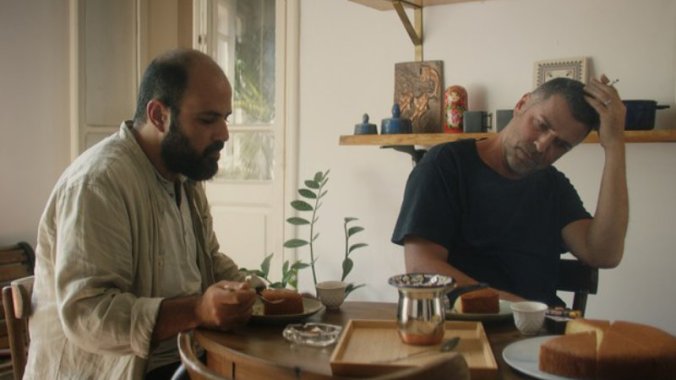
‘Mediterranean Fever’

This year’s Festival opens, as usual, with a title screening the Leeds International Film festival. This and the complete programme can be found, with all details, on the Festival WebPages.

Mediterranean Fever, Palestine/Germany/France/Cyprus/Qatar / 2022 / 108 minutes Arabic with English subtitles – Director Maha Haj. LIFF screening at the Vue in the Light on November 16th and 17th.

This subtly tender film tackles the dynamics of male friendship and the strain of living under occupation. It focuses on the daily struggles of Haifa’s Arab community, as two middle-aged frenemies develop an unexpected relationship and are drawn together by a series of terrifying events. Premiered at the 2022 Cannes Film Festival in the Un Certain regard section, and won the Prize for Best Screenplay.

Following the International festival the programme of Palestinian titles offers screenings at a number of venues up until early December. There will be speakers at some events: a musical event: and an evening which includes Middle eastern food.

Fadia’s Tree, Sarah Beddington / UK / 2022 / 68 minutes / Arabic, English, English subtitles. Seven Arts Friday November 18 2022 7:00pm

Sarah Beddington’s film is a compelling documentary account of the director’s friendship with Fadia, a charismatic Palestinian woman and teacher who lives in a refugee camp in Lebanon but yearns to reconnect with her ancestral village in Palestine.

The film spans 15 years, during which time Beddington agreed to make the journey that Fadia was prevented from taking to the home village she has never seen – to find the mulberry tree that has taken on a totemic significance for generations of her displaced family.. Speaker: Susan Simnett, producer of Fadia’s Tree

Love and Resistance in the Films of Mai Masri

Double-bill – Q&A with Victoria Britain – delicious Middle Eastern buffet. Wheeler Hall Saint Anne’s Street – Monday 21 November 2022 4-7.15pm

Frontiers of Dreams & Fears, Mai Masri / Palestine / 2001 / 56 minutes

A tender insight into the lives of Palestinian children growing up in refugee camps. Although Mona and Manar live in camps miles apart, a friendship is forged through barbed wire and walls of concrete.

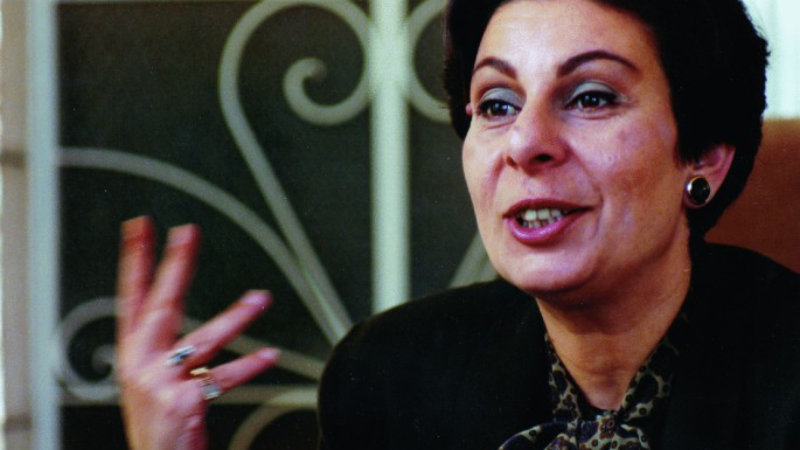
Hanan Ashrawi: A Woman of her Time, Mai Masri / Palestine / 1996 / 50 minutes

An intimate portrait of a formidable political activist and former spokesperson for the PLO who rejected a position in government in favour of human rights advocacy.

Roadmap to Apartheid, Ana Nogueira & Eron Davidson / South Africa/Israel / 2012 / 94 minutes. Slung Low at The Holbeck – Friday November 25 2022 7:30pm

The analogy of the Palestinian experience under Israeli occupation as apartheid is dissected in a forensic comparison with the history of apartheid in South Africa. Eye-witness accounts and unseen archive material are included. Speaker / Q&A with Robert Cohen.

Tantura, Alon Schwarz / Israel / 2022 / 85 minutes. THE HEART – Sunday November 27 2022 1:30pm

In the late 1990s, a graduate student conducted research into an alleged massacre at Tantura. His work later came under attack and his reputation was ruined, but 140 hours of audio testimonies remain. Israelis insist that the massacre never happened, while Palestinians view it as a hell that can’t be forgotten.. Speaker: Dr Kholoud Al-Ajarma.

Boycott, Julia Bacha / USA / 2021 / 70 minutes / English. Otley Courthouse – Sunday 27 November 7.30 p.m.:  Wheeler Hall – December 9th 6.30 p.m.

When a news publisher in Arkansas, an attorney in Arizona, and a speech therapist in Texas are told they must choose between their jobs and their political beliefs, they launch legal battles that expose an attack on freedom of speech across 33 states in America.. Speakers. Jenny Lynn – Ben Jamal
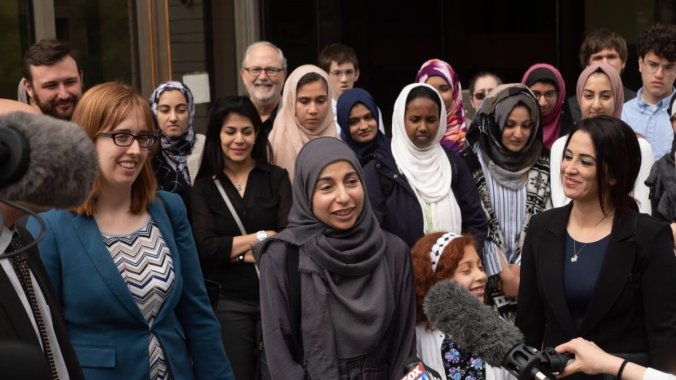
‘Boycott’

Eye Witness – singing, film and food. Chapel FM Arts Centre – Sunday 4 December 2022 3pm – 5pm

We are delighted to offer you two eye-witness accounts of life under occupation, both reflecting the power of solidarity. The singing and film will be followed by refreshments. Tadhamon Choir- The singers are fresh from a solidarity visit from Sheffield to Palestine in October. They travelled around the West Bank, visited projects and met many community activists, witnessing first-hand the brutality of life under Israeli occupation. They will share their songs and discuss what they learnt.

Tour Wadi Hilweh, Silwan  18minutes

Sahar Abassi is a community activist and Deputy Director of the Madaa-Silwan Creative Centre She gives us a personal tour of the Silwan neighbourhood of East Jerusalem, where an art project with Art Forces from the USA reinforces local resistance to the ethnic cleansing of the neighbourhood.

And running throughout the Festival is an exhibition of photographs.

Humans of Palestine – Unique exhibition showcasing top Palestinian photographers. Otley Courthouse, 1st – 28th November

Rosie, Ireland 2018

This movie was screened at the Hyde Park Picture House in 2019; now it is transmitted this coming Sunday evening at 8.40 p.m. on the new BBC Three channel [Freeview 109 – also on the BBC iPlayer) . The Picture House screening was accompanied by presentations from members of the production, including  the director;  which added a welcome dimension to the event. I was impressed and included the title in my ‘best of the year’ selection . Rotten Tomatoes had very positive reviews and commented:

“Equal parts empathy and outrage, Rosie offers a heartbreaking glimpse of economic insecurity that will hit many viewers uncomfortably close to home.”

A day in the life of a family whose lose their rented home and find that the city [Dublin] is no place to be homeless. The key character is the mother, Rosie Davis (Sarah Greene); critics generally had high praise for her performance. But the whole family cast are really good with her partner John Paul Brady (Moe Dunford) and their four children, Kayleigh (Ellie O’Halloran) and three younger children Millie (Ruby Dunne), Alfie (Darragh McKenzie) and Madison (Molly McCann) equally convincing.

The day is a bleak procession of failures and lack of provision. The parents desperately seek a shelter, even for one night, as the children suffer from their poverty and insecurity. Much of the day is spent in their car as they search the city: this offers distinctive variation on the road movie: perhaps influenced by some of the also distinctive but different variants in Iranian cinema. This is the bleak landscape for the homeless in Ireland’s capital, but this is a story that could equally be filmed in British cities and in those of North America.

The screenplay is by the noted Irish writer Roddy Doyle. And the script was developed from real-life experiences  of people caught in the trap of homelessness. Filmed on location in Dublin the cinematography by Cathal Watters  uses frequent hand-held camera and large close-ups to present the emotional problems for the family.  The director Paddy Breathnach handles the production extremely well and achieves a documentary feel to the drama.

The film was likely shot in colour on a digital format in colour, it circulated on a DCP. It should show up well on the BBC HD channel though the widescreen 2.35:1 ratio may be slightly cropped. The title runs for 86 minutes. If you missed the Hyde Park screening the title was hard to see; the fate of many independent but really worthwhile movies. So it is a definite must on Sunday; be prepared for an emotional and powerful drama.

Louis Le Prince – moving image pioneer – 1841 to 1890

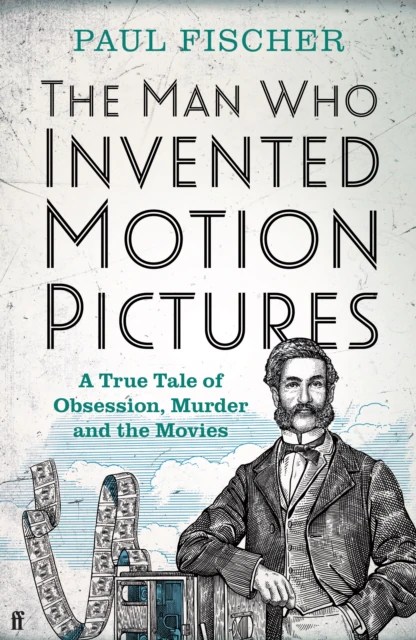
I suspect that most of the Friends are familiar with this C19th inventor who, in 1888, produced what is the earliest surviving example of a strip of moving image; scenes shot on a single lens camera of people in a Roundhay garden and then of people and traffic on Leeds Bridge. The second Leeds International Film Festival was, in his centenary year, a celebration of Le Prince’s achievement. And Blue Plaques commemorate his pioneer work on Leeds Bridge and the site of his workshop on Woodhouse Lane. Now a new study has appeared, ‘The Man Who Invented Motion Pictures’ by Paul Fischer, published by Simon & Schuster this month, in 2022, [ ‘The Genius, Secrecy and Disappearance of Louis Le Prince’]. Helpfully, a condensed version of the publication was premiered by BBC’s Radio 4’s ‘Book of the Week’; five episodes of 15 minutes each and available on BBC Sounds.

The book adds to the available studies of this important pioneer of what became cinema. There is Christopher Rawlence’s ‘The Missing Reel’ [Collins 1990): there is Rawlence’s documentary dramatisation of the book, made for Channel 4 in 1990, but not apparently available: David Wilkinson’s 2015 The First Film, more an argument for Le Prince’s recognition that a documentary [available on MUBI]: a detailed Wikipedia page links and detailed references: archive material at Leeds Industrial Museum and at Bradford’s National Media Museum Insight collection: interesting discussion of Prince’s achievement on a blog devoted to William Friese-Greene: and the Louis Prince Leeds Trail. YouTube has transfers of Le Prince’s moving images and a number of short video pieces on him; some have debatable claims.

The title is slightly over the top. The 1880s was a time when a number of pioneers were experimenting with developing photographic technology into a format for moving images. The author does detail the way that Le Prince worked at developing camera and projector for moving images. His descriptions in the BBC extracts are clear and understandable. However, all that survives are examples of what Le Prince filmed and one of his model cameras. As Fischer points out these are the earliest surviving examples of projectable moving images. However, there is no clear evidence that Le Prince successfully projected these. And after his death, when his family attempted to prove his prior claim to the patents of Thomas Edison, they failed; partly because what Le Prince patented did not offer enough detail.

Continue reading

Stan & Ollie (Britain, Canada, USA 2018)

This is a portrait of two icons of film comedy, Stan Laurel and Oliver Hardy. However, most of the film deals with their later years, an eight month tour of Ireland and Britain in 1953, presenting performances on stage in music halls based on their famous routines. It was a success at the time and now offers a combination of celebration, humour and nostalgia. The film is screening this Wednesday [April 6th] at 9 p.m. on BBC 2. Since it is, in part, a BBC production it should be featured on the iPlayer for some time.

The film is well put together and has a fairly straightforward narrative. The stand out aspect are the performances as Stan / Steve Coogan and Ollie / John C. Reilly. For fans like myself it was as if watching the duo once again. The supporting cast is excellent, especially their two partners: Ida Laurel / Nina Arianda: Lucille Hardy / Shirley Henderson. In fact the actual tour, organised by impresario Bernard Delfont (Rufus Jones), is more or less played in reverse. At the opening the audiences are small and lukewarm; the reverse of actuality. The intention it would seem is to develop a rising narrative ending with a highly successful performance and a delighted audience.

It is not all humour. The tour ended when Oliver suffered a heart attack and following the tour they were unable to work again. So there is also a disconsolate note at the conclusion. The film also shows in flashback how Stan and Ollie ended their association with Hal Roach (Danny Huston). Continue reading