The Leeds Palestinian Film Festival 2025

This year’s Festival runs from November 12th until December 6th, including two titles appearing in the Leeds International Film Festival. The complete programme is presented on the LPFF webpages. There are twelve events, both feature titles and documentaries, and art/activity events.
Happily, several of the screenings are at the Hyde Park Picture House. These include two much anticipated new works from Palestinian and Arab film-makers.

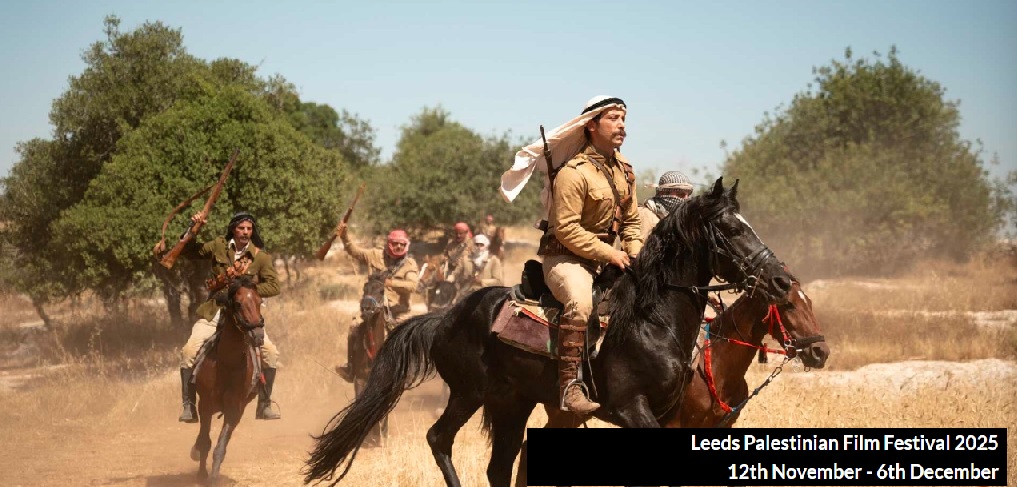
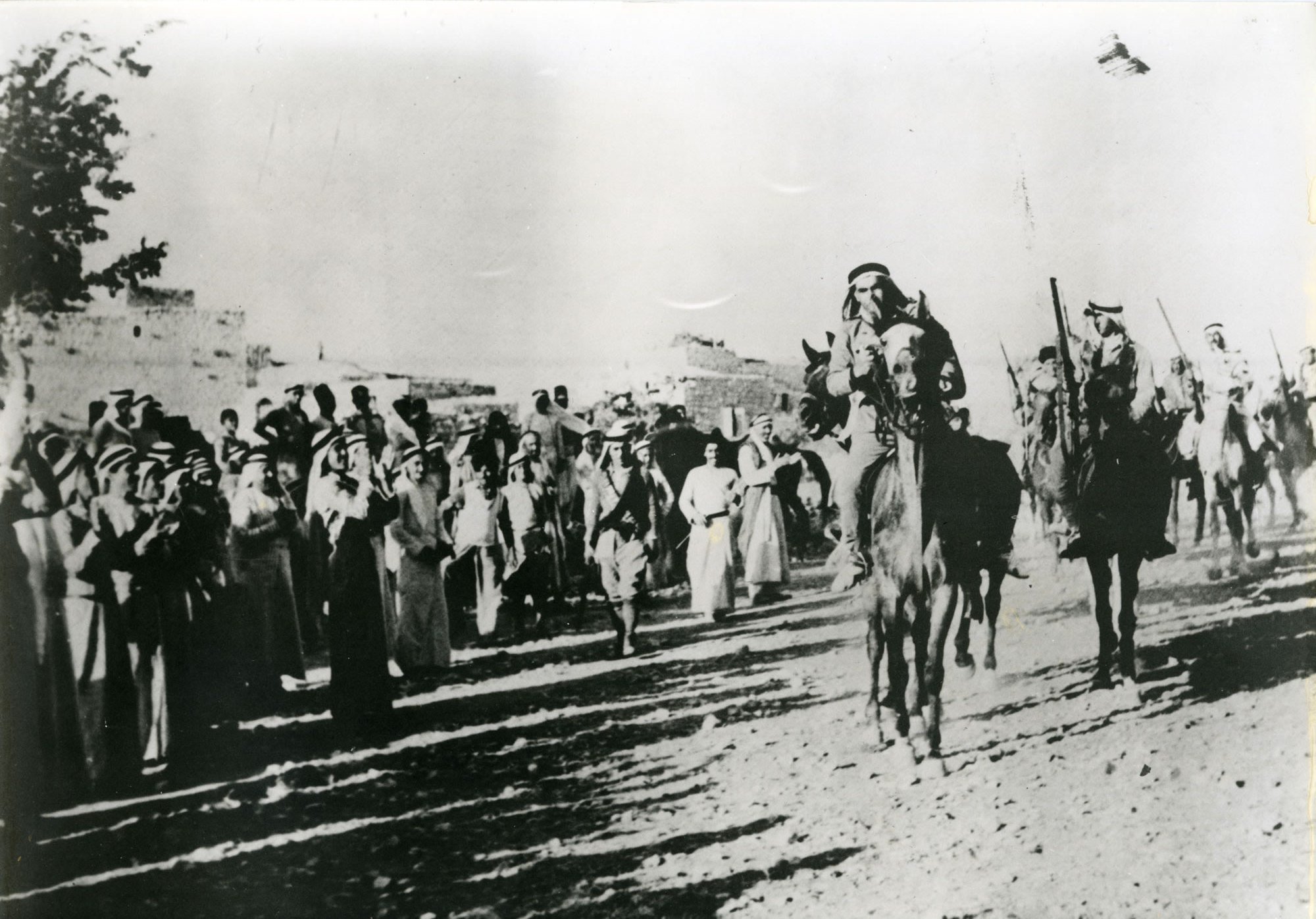
The Great Arab Revolt 1936 -1939

In the coming week there is a screening of Palestine 36 (2025); it is already sold out but there are further screenings of the feature in December. This is the latest feature from Annemarie Jacir and the screening on the 20th includes an introduction with a recorded video from the director. Her two previous productions are among the most interesting of recent Palestinian movies. Wajib ( 2017) is set in contemporary Nazareth and explores the Palestinian community as a father and son hand out invitations to a wedding. When I Saw You (2012) is set in Jordan in 1967 as another Nakba forces more Palestinians into exile while Fedayeen develop the armed resistance to Zionist occupation and aggression. Now with Palestine 36, Jacir returns to the Great Palestinian Revolt against British occupation from 1936 to 1939. A rebellion by the dispossessed Palestinian people against British colonial rule, it was brutally suppressed by the British military, aided by the armed Zionist militia. The defeat of the rebellion laid the ground for the 1947/8 Nakba. Yet it has been over-looked in much of the discussion of the settler colonial occupation in the west. Note, Wikipedia has a detailed page on the rebellion.


Then there is The Voice of Hind Rajab (2025), a drama-documentary that recreates the ordeal and death of a five-year old child under fire from the Zionist military; it is harrowing viewing. The case was widely publicised in the media and the details of the atrocity are given on a Wikipedia page. The feature is directed by the Tunisian film-maker Kaouther Ben Hania. Her previous feature, 4 Daughters (2023) was a really distinctive drama-documentary exploring women’s situation in Tunisian society. This title also has further screenings at the Picture House in December.
There has already been a screening of Yalla Parkour (2024) and there will be Put Your Soul on Your Hand and Walk (2025). These and other presentations in the Festival explore Palestinian resistance and their support across the world. As well as offering varied examples of fine film-making and supporting activities the Festival continues to present the the resistance of the Palestinian People to the ongoing Zionist genocide and ethnic-cleansing. As has been the case for decades the ruling classes in Europe and North America continue to support Zionist war crimes, though among the oppressed peoples support for the Palestinians is strong. So the Festival is an important part of the ongoing support for Palestine and for the Boycott, Divestment and Sanctions Campaign.

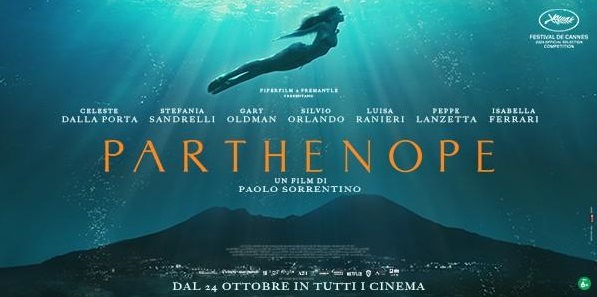
Parthenope, Italy / France 2024.

This new film from Paolo Sorrentino is screening at the Picture House over the coming days. His earlier films have been really impressive with great style but also a heart at the centre. I found this film a little disappointing because it did seem to lack heart to a degree. However, the visual and aural quality is very fine and Sorrentino is clearly working with a very talented group of craft people.

Parthe [for short] is the central character and at her birth in 1950, in the wealthy suburb of Naples, she is christened after a mythical Greek siren. Legend has it that the original Parthenope drowned in the waters off Naples and gave her name to an early settlement there. So Parthe is a reflection of the city, birthplace of the director.

From her birth the movie cuts to 1968 when Parthe is eighteen and is part of a triangle of her older brother Raimondo and the son of the family housekeeper, Sandrino. As in The Great Beauty events in this period mark both Parthe and her family for years to come.

The movie follows Parthe’s career as a student of anthropology and then as an academic who specialises in the study of miracles. She briefly toys with becoming an actor but settles for University life. She also has a number of relationships and affairs. The theme of miracles in reflected in several episodes.

She leaves Naples in later life but this is covered by an ellipsis in the narrative and the movie ends back in Naples. The narrative is absorbing, the characters and setting are finely presented, as are the sets and costumes. It is a visual feast and the soundtrack of sound and music is also excellent. The cast are very good though the script does not develop all the characters sufficiently; Gary Oldman is wasted in a cameo. I found some scenes and/or dialogue humorous and witty.

The title is in colour, with black and white, and 2.39:1; with the dialogue, Italian, Neapolitan and English, translated in subtitles. It runs 147 minutes but did not seem overlong. The production was made on digital formats and mastered at 4K. The DCP is also in 4K which does proper justice to the cinematography and music. The screening on May 25th at the Picture House is in auditorium one and the laser projector there will present the title to proper effect.

The Japan Foundation Touring Film Programme 2025

Takemine Hideko in ‘Carmen Comes Home’

This is an annual event and the good news this year is that titles will be screening at the Hyde Park Picture House. In all the programme will be visiting 33 venues across Britain. There are 24 contemporary titles, released since 2018 and there are two ‘classics’ from the last century. The programme offers a variety of genres and themes whilst the title,

Am I Right? Justice, Justification and Judgement in Japanese Cinema

suggests a strong social element. The Programme web pages provide links to all the participating venues, with lists of the titles screening there and links to individual title pages.

The Hyde Park is screening four titles from mid-February to early March. One of these is a ‘classic’, though unlike in earlier years, we will not enjoy a 35mm print.

Carmen Comes Home / Karumen kokyô ni kaeru, (1951) is a comedy starring Takemine Hideko. Okin has left her rural home town in Nagano prefecture to work in Tokyo as a stripper, stage name Lily Carmen. She returns to the town with a friend where the local people are both fascinated and scandalised by this entertainer from the capital. Takemine Hideko was one of the major stars of Japanese cinema in a long career from late silent period (1929) until the 1970s. She worked with many of Japan’s most celebrated film-makers. This film was directed by Kinoshita Keisuke, whose very fine Snow Flurry / Kazabana (1959) was the classic film in the 2024 programme. Carmen was the first film to be made in colour in Japan, in Fujicolor and academy ratio. It was produced at the Shochiku Studio and the digital restoration was completed in 2012.

‘Ghost Cat Ansu’

The other titles at the Picture House are all recent. Ghost Cat Anzu / Bakeneko Anzu-chan is a colour animation released in 2024. Anzu of the title is a Ghost Cat or Bakeneko; a supernatural entity found in a number of Japanese folk tales. In this quirky drama Anzu takes eleven-year-old Karin on a magical journey. In the Wake / Mamorarenakatta mono-tachi e (2021) is a social thriller with serial killings but set in the city of Sendai (on the east coast of central Japan), struck in 2011 by the earthquake and subsequent tsunami, raising the wider problems of life there. Sakura / Kuchinai Sakura (2024) is another type of policier, here an investigation delves into the murky world of police and the national intelligence agency.

Oddly, it appears that none of the titles will be screening in Bradford at the Media Museum. But York’s City Screen and the Sheffield Showroom are screening some of the other titles, seven not in the Picture House programme. The Showroom will include the other classic in the Foundation programme, The Inugami Family / Inugami-ke no ichizoku (1976). The film was directed by Ichikawa Kon, a prolific film-maker whose best known works in the west are The Burmese Harp / Biruma no tategoto (1956, and remade in 1985) and An Actor’s Revenge / Yukinojô henge (1963). This film is reckoned to be an example of Japanese noir. The titular family come together for the will of the rich deceased family patriarch. The beneficiaries of the will and its surprising requirements lead to family dissensions. Then a murder occurs and a detective has to come in and solve the crime. Surprises abound right through the movie. It runs over two hours in colour and an unusual widescreen format.

‘The Inugami Family’

In past years the programmes have offered a rich and varied menu from one of the world’s most interesting and rewarding cinemas; so these screenings promise to be a cinephiles’ treat.

Revisiting 2024

The Picture House staff have produced a list of their top 50 films of the last year. There is a top ten on which regulars and friends can vote for a film to be re-screened in the coming days. However the film I would most like re-screened is in the top fifty but not the top ten. I suspect some readers may face the same issue. So I thought it was worth posting on my choice. It will be interesting to see if any other readers share this choice or indeed if they have other choices from the list.

Mine is Nuri Bilge Ceylan’s About Dry Grasses / Kuru Otlar Üstüne, (2023), listed at 14. As with most of his features this is scripted by Nuri with his partner Ebru. The feature runs for 197 minutes, in wide screen and colour; shot using digital formats. Set in the Turkish region of Anatolia, like most of Ceylan’s dramas, it focuses on a young teacher working in a remote village.

Ceylan’s movies are always worth watching; he is one of the finest film-maker working today. And in widescreen and colour it deserves to be seen in a cinematic forum, preferably on the laser projector in screen one.

There were [as I remember] several screenings at the Picture House but I was away and missed them. And there has not been an opportunity since to catch the title at a cinema.

Wedding in Galilee / Urs al-Jalil, Palestine, France, Belgium 1987

This film is screening on Sunday at the Picture House as part of the Leeds Palestinian Film Festival. It was the first feature film shot by a Palestinian film-maker, Michel Khleifi, in occupied Palestine. Galilee is in what passes for the Israeli state and this drama is set before the 1967 war and the extension of the occupation to the Gaza, West Bank,and territory in Lebanon and Syria.

This a different world from that when the film was produced, just before the First Intifada; and very different from the Zionist campaign of genocide, ethnic cleansing and assaults on neighbouring peoples.

The wedding of the title is of the son of a village Mukhtar [head man]. His village is under martial law and he has to seek permission from the local Military Governor who agrees on condition that he and his aides can attend the ceremony.

Most of the film is taken up with the ceremony; a rich tapestry of Palestinian traditions, both Christian and Muslim. But the tensions caused by the presence of the occupiers exacerbates divisions within the Palestinian community. As the day progresses both personal and communal conflicts reach a climax.

This is a fine piece of film-making, actually shot in villages around Nazareth and the nearby West Bank. The complex narrative not only explores the contradictions of the occupation but also presents the import of the land to Palestinians and the important role that women play in resistance.

There is an excellent article on the film by Ella Shohat in the Middle East Information and Research Project from 1988. And two guests will be illuminating the film after the screening. The film is being projected from a 16mm print in colour, widescreen and with English sub-titles. There is also a review with much of the film’s plot discussed.

Mirch Masala, India 1987

This title is part of a retrospective of films featuring Smita Patil. She was an important and successful actress in the sub-continent from the mid 1970s until the late 1980s; she died only aged 31 in 1987.

Many of her best films were part of India’s parallel cinema; a counter cinema to the mainstream cinemas of which the Mumbai / ‘Bollywood’ is the best known. These films were closer to art cinema, often consciously critical and even revolutionary and eschewing the melodrama, songs and dances that epitomize the dominant film mode. Patil worked with a number of major parallel cinema directors, including the best-known Shyam Benegal and Mrinal Sen.

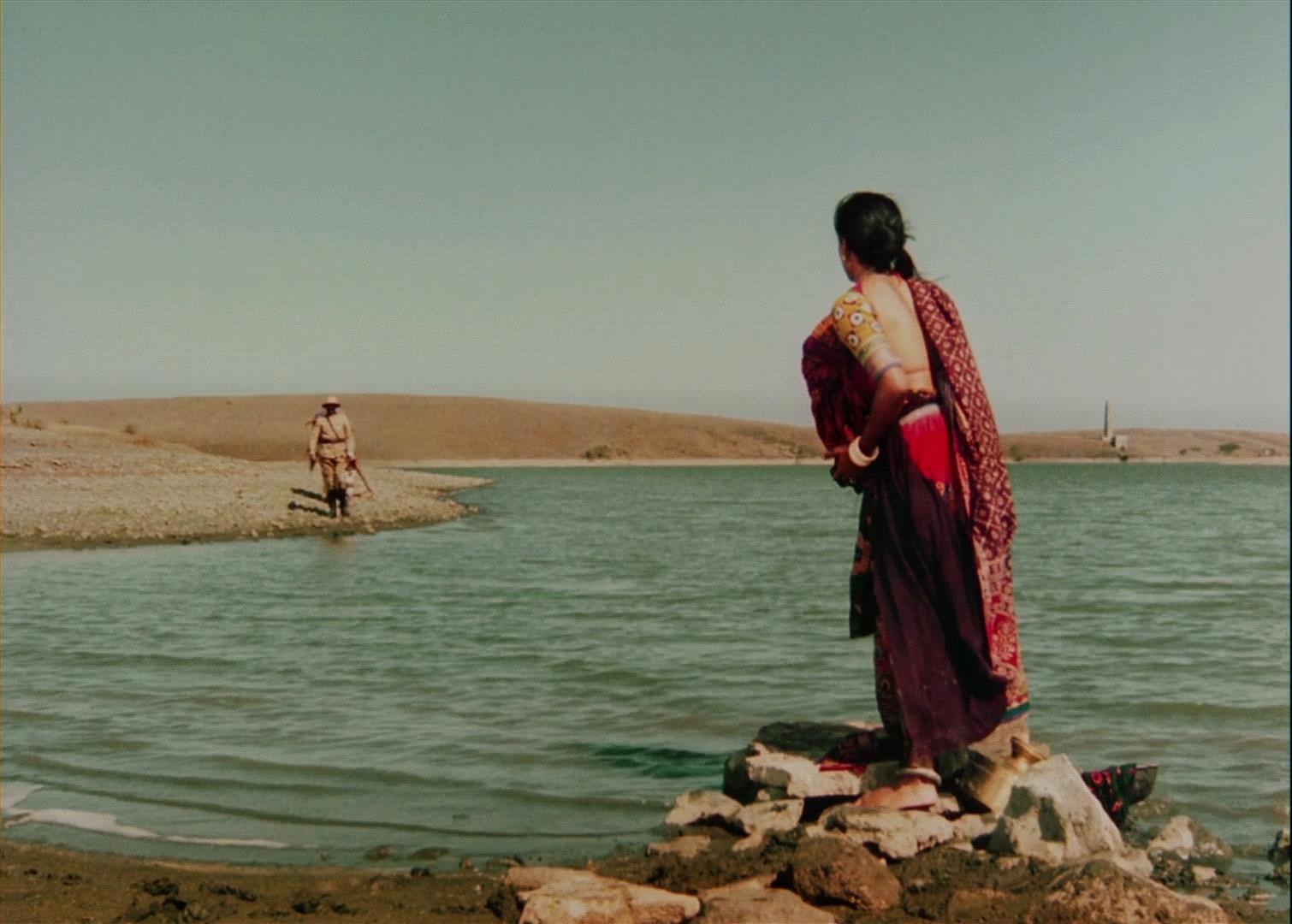
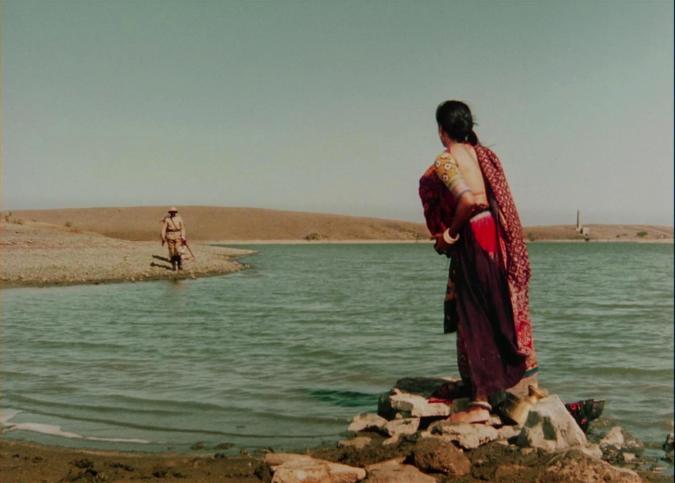
This movie was directed by Ketan Mehta and co-written with Chunilal Madia, adapted from one of his Gujarat short stories. The story is set in a small village in 1930s British colonial India. It is not clear if this is an area directly ruled by the British or is a part of one of the supposedly independent kingdom’s or principalities.

The village is visited by a Subedar [tax collector] with his accompanying troop of armed horsemen.

Such tax collectors were noted not just for the brutal way they enforced collection but in addition taking village valuables, resources and even women for their own use. In this case the visiting Subedar (Naseeruddin Shah) is taken with Sonbai (Smita Patil), the wife of Shankar who leaves the village to work on the Railway, that iconic network in the subcontinent and Indian Cinema. The village is divided by caste and the village Mukhi (leader – Suresh Oberoi) seems to have exploited and stolen the land of the poorer members through usury.

The women from poorer households work nearby sorting and processing red peppers, a site known as the factory. The title of the film translates as ‘Hot Spice’ and the peppers function as an actual and symbolic prop in the drama. Indeed the movie is saturated with the colour red. There is little sign of the men of the village involving in work and they clearly dominate and restrict the women.

Two sub-plots in the narrative involve the wife of the Mukhi, Saraswati (Deepti Naval) attempting to enrol her daughter Munni in the local school. The school master (Benjamin Gilani) is a lone follower of Gandhi in the village. Meanwhile the Mukhi’s younger brother (Mohan Gokhale) wants to elope with Radhu (Supriya Pathak) but her lower caste stands in their way.

The Subedar threatens the village men with reprisals if he cannot lay hands on Sonbai. The only resistance is by the school master: Abu, the watchman at the factory: and some of the fellow women of Sonbai in the village.

This is a powerful drama which dramatises both the sexist structure of the society and the repressive weight of the colonial occupation; though we never see or hear the British colonial authority. Patil is excellent as are her fellow actresses as the village women. The players of the male characters have minor roles, except for Om Puri as Abu and with the Subedar larger than anyone or even life. The film follows the style associated with the spaghetti western, which was very influential in Indian film in the 1970s and 1980s: as with the star vehicles of Amitabh Bachchan like Sholay (1975).

This was a screening of a digital transfer; there do not seem to be any 35mm prints, either in this programme of in the Festival itself. The quality was good and the important colours looked fine. It was shot in 1.66:1, in Hindi and has English sub-titles. The running time was given as 128 minutes, but I thought it was more like 120 minutes: Movie Database gives 121 minutes.

Unfortunately this is the only title of the five in the retrospective screening at the Picture House. Indeed, the number of Festival titles here seems down on 2023 and that year was lower than the pre-pandemic era. Given that the Festival originally started at the cinema, along with the development of the Friends, I find this disappointing.
Lee, Britain / USA / Norway / Australia / Ireland / Singapore – 2023.

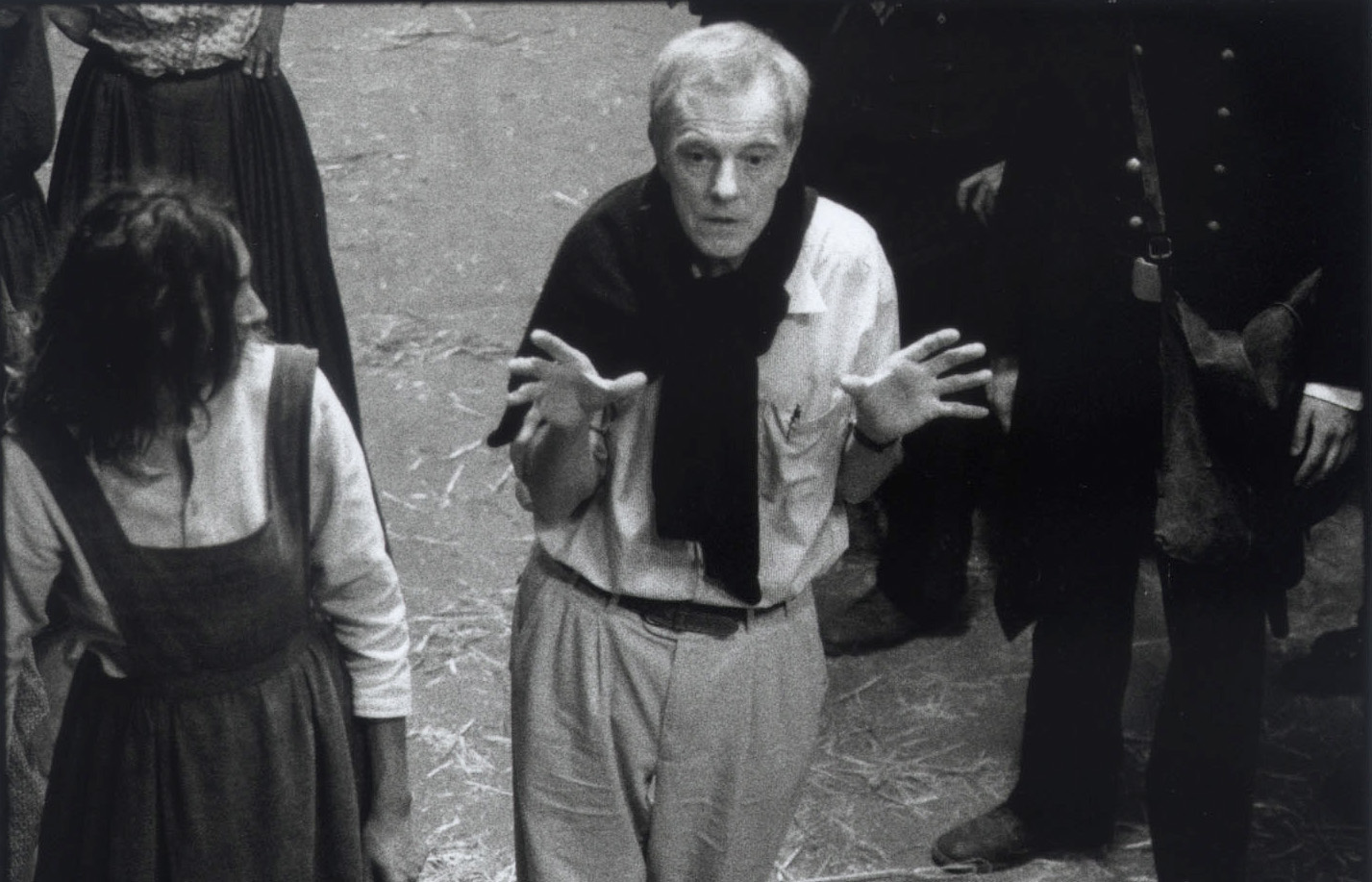
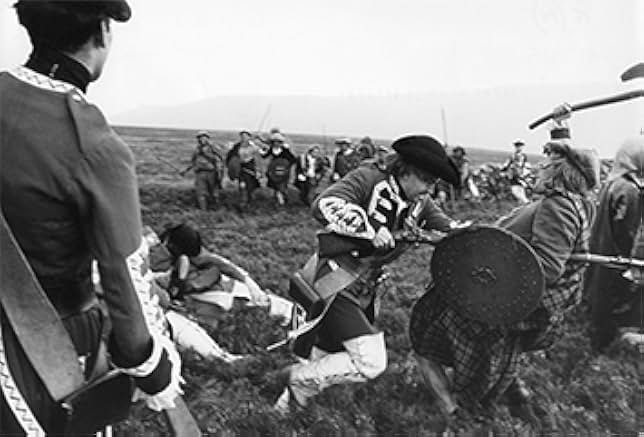
This is a biopic of the photo-journalist Lee Miller, [full biography on Wikipedia]. In this feature she is played in a fine performance by Kate Winslet. Winslet is also the co-producer and worked closely with the writers and first-time-director Ellen Kuras, previously known for her work as a cinematographer. The movie enjoys a fine production with a strong supporting cast.

The film opens in the 1930s when Lee Miller was transitioning from a model to a photographer. She collaborated for a time with Man Ray and was also his lover. We see and hear some of the surrealist circle though who is who is unclear, [unless you watch the captioned version]. Lee Miller was a ‘free spirit’ but this and her relationships are only partly presented.

The movie concentrates on the World War II period when Lee worked for the British edition of Vogue. She usually worked with a Rolleiflex camera, a larger format and less compact than the Leica camera many other photographer used: one of these being the U.S. Dick Scherman (Andy Sandberg). After distinctive work on the British home front Lee was able to accompany U.S. Forces in the campaign in Europe after D-Day. As with the British her gender restricted her access but she firmly resisted this. Her most famous works were the photographs she took of the camps and victims of the Third Reich’s holocaust. These were censured in Britain but finally appeared in the U.S. edition of Vogue. The form of the narrative is an interview where particular and famous photographs by Lee provide references for a series of flashbacks. The interview and the use of photographs works well.

However, the writers have also attempted to make the interview a quest, not just for Lee’s career, but also her character and motivation and I found this aspect a little unsatisfactory.

Still it is a fine and powerful study. The production design, cinematography and editing are all excellent. The features is in colour and 1.85.1, running just under two hours. The dialogue is in English and French with appropriate sub-titles. This is definitely worth seeing and Lee’s biography is an fascinating study of a pioneering women and a period.

The Afterlight (UK 2021)

This is a compilation film of film fragments on a 35mm black and white and academy ratio print. There are hundreds of brief sequences: some repeated: some silent: some with sound: in fourteen or so different languages: mostly with English subtitles: and featuring stars and actors from nearly all the substantive cinemas. It runs 82 minutes. This is the only 35mm print, so it will gradually acquire the scars of projection; there are no other prints or alternative versions.

This is the idea of Charlie Shackleton, who researched, produced, directed and edited the film. His earlier titles include Beyond Clueless (2014) which features over 200 extracts from ‘teen movies’ and the extremely unusual Paint Drying (2023), a ten hour salvo at the BBFC. Robbie Ryan contributed on cinematography and Jeremy Warmsley provided a musical accompaniment. To date there have been 44 screenings. Nitrate and safety film stock have a shelf life of over a hundred years; far longer than more recent moving image formats. But the screenings have taken place in numerous and different venues. So the screening may have acquired some of the familiar features of older 35mm prints, such as scratches and other marks. But the print will retain the characteristics of the original format of the films featured.

The extracts in the film range across nearly all the territories of world cinema. They include familiar faces and rather rarer characters. All the extracts are from earlier than 1960, so all the visible participants are dead. The extracts are arranged by genres, themes and tropes.

Viewing the film is rather like a visit to a museum, perhaps a set of ghostly encounters, or an elegiac journey through cinema. Many of the extracts are recognisable but some will likely only be recognised by cinephiles with a extensive range of international film viewing. One can puzzle over the extracts, their order and their sources. One can watch the changing palettes with some extracts in pretty good condition and some showing the wear and tear of long screening journeys.

Whichever response this is a welcome and impressive selection. It is constantly of interest and pleasure and occasional mystery. Since the print will gradually  succumb to age and running through various projectors it is worth seeing at the earliest opportunity. Happily it screens at the Hyde Park Picture House on May 12th, with the director present.

Io Capitano (2023)

Multiple screenings until Thursday 18th April

This is a joint co-production from Italy, France and Belgium. Starting in Africa it follows the trail taken by African migrants attempting to reach Europe and the ‘better life’ it seems to offer. It was written and directed by Matteo Garrone. His previous movies include Gomorrah (2008) and Dogman (2018). Both these dramas were set in Italy and presented powerful but often violent stories. For this new project Garrone worked with several scriptwriters: utilised stories by African writers: and accounts of Africans who had made the journey across the Mediterranean.

The movie opens in Dakar in Senegal where two teenage boys, Seydou (Seydou Sarr) and Moussa (Moustapha Fall), still officially at school, secretly plan to attempt this odyssey. More than one critic has described the cinematic journey as ‘Homeric’. Obtaining forged passports they travel though Mali, Niger, across the Sahara and into Libya. They are exploited by the smugglers and border military. They are violently abused both by criminal gangs and the soldiers. What little help they receive comes from fellow travelers on the illegal trail.

Once in Libya they have to find a way across the Mediterranean sea. This is is an old dilapidated vessel, crammed with would-be migrants: with no proper crew or engineers: and the sole aid a mobile device with GPS and a telephone number to ring: the latter apparently that of some refugee or migrant aid organisation. The Italian title translates literally as ‘Me Captain’.

The movie is well served by the locations [mainly in Morocco]: the cinematography: the editing: and a fine music track. Whilst predominately realist it also contains two sequences more like magical realism. The cast, including actual migrants, and the two leads who are non-professional, are excellent. The movie is in standard widescreen and colour and the dialogue is in Wolof / French / Arabic / English and with English subtitles. The only characters we see are Africans. Europeans are absent apart from a voice on the telephone; otherwise they only appear on the small screen of a mobile device with the images of the ‘better life’: behind the exteriors of oil rigs: inside an overhead helicopter.

This dramatic movie has received widespread critical acclaim and a standing ovation at the Venice Film Festival. It presents that part of the migrant experience that is little seen on the European screens. There are still several opportunities to catch screenings at the Picture House. At times harrowing it is still impressive drama to view; running just over two hours.

Another movie worth watching is Michael Winterbottom’s In this World (2005) which follows the journey of two even younger Afghan boys attempting to travel from their home territory to Britain. This is currently available on the BBC iPlayer.

Two Scandinavian Films on 35mm

Sunday 10th December at 12 & 5pm

Girl with Hyacinths / Flicka och hyacinter
(Sweden, 1950, black and white, 99 minutes)

The film is an investigation of the suicide of a young woman, she of the title. The investigation is pursued by a neighbour played by Ulf Palme, who later appeared in the very fine Miss Julie (1951). The film relies on an interesting use of flashbacks. The cinematographer, Göran Strindberg, also worked on Miss Julie, directed by director Alf Sjöberg. Dialogue in Swedish.

The director Hasse Ekman worked as a writer and film-maker from the 1940s to the start of the 1960s; he was a contemporary and overshadowed by Ingmar Bergman. However, he was a successful and popular film-maker in Sweden.

Cross of Love / Rakkauden risti
(Finland, 1946, black and white, 89 minutes)

The film is based on a story by Alexander Pushkin. A young woman runs away to the city where she suffers exploitation before becoming a painter’s model., There are some relatively explicit scenes which, apparently, were censored in a Swedish language version.

Teuvo Tulio was a director who worked from the late 1930s through to the 1960s. His films are both very melodramatic and have an intensity of emotion that can sometime seem over the top. He often uses expressionist techniques. He is also reckoned to be an influence of the contemporary director Aki Kaurismaki. The leading player Regina Linnanheimo was a popular actress who worked on a number of occasions with Tulio and at times contributed to the script. The film dialogue includes Finnish, English and Russian.

Both films are screening from 35 mm archive prints, in the academy ratio and with English subtitles. So two ‘reel’ films on the same day is a treat. Unfortunately there is a three hours break between the screenings. Maybe visit the Hyde Park Book Club or Oxfam book shop?