Review: Eternity and a Day

Friends member Rob Baker reviews Eternity and a Day which screened recently as part of a small season of films in conjunction with Amnesty International Leeds.
1-eternity-and-a-day

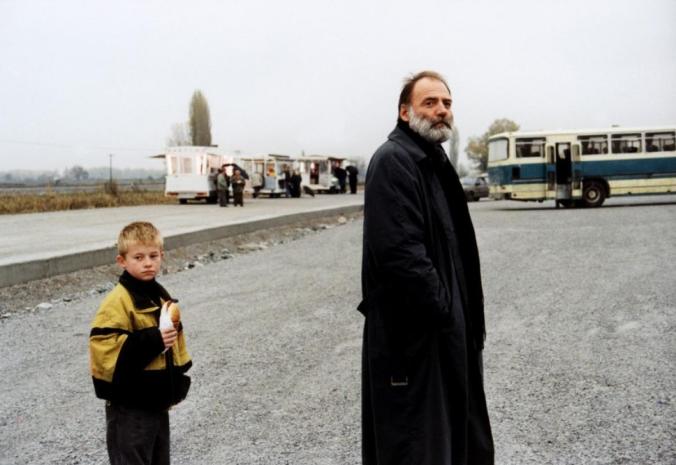
After Arrival (2016) we have another film playing with concepts of time. Eternity and a Day (1998) is the second of three screenings at the Picture House organised by the local Amnesty group’s Refugee and Asylum Seeker Sub-Group.

Alexander (Bruno Ganz) is an aging Greek poet who believes he is facing his last day on earth. An unnamed medical intervention is planned for the next day, and he does not expect to recover – we almost get an impression of voluntary euthanasia. He starts the day trying to find a home for the dog he knows he must leave behind.

Alexander time-shifts through the day, re-living encounters with his parents (only his ailing mother now survives), his young wife (deceased), and his daughter both as a child and grown up (bringing us to current time).  With the exception of a couple of scenes showing him as a child, playing on the beach with other children, with his Mother off-screen calling him to come in for dinner, Alexander appears in most of these scenes as his current late middle-aged self. We are even taken back to the mid 19th century with the appearance aboard a Thessaloniki night-bus of a long dead poet, whose key unfinished work  Alexander  has set himself the task of finishing, though of course he hasn’t – “Nothing is finished” he laments.

Powerful symbols of “passing on” intrude on the scene, with buses and ships, even a trio of cyclists in yellow oilskins, hoving into view behind the protagonists. The constant leitmotif of the film is the Aegean shoreline where nearly all the family encounters of the past and present play out. The sea, the final frontier for us all to cross, sparkles in the sunshine.

Continue reading

Our LIFF30 Highlights

The film festival is over for another year and once again has provided Leeds with a fantastic selection of films. Below we share five of our highlights from the festival and would love to see yours in the comments:

Bill

Bill's Top 5There are so many films being made around the world!  The Leeds Film Festival programme is just a small sample, and the thirty or so films I saw are just a small sample of what the Festival had to offer. Here are 5 films that I enjoyed, in no particular order:

  • Sieranevada  – a beautifully directed and acted glimpse of a Romanian
    family’s memorial commemoration, which also says something about wider
    Eastern European society.
  • Chi-raq – Spike Lee’s theatrical exploration of the issues around Black
    Lives Matter, made with the involvement of people living in Chicago’s
    Southside.
  • Lonesome – a love story, with live organ accompaniment, mostly set in
    Coney Island, and made at a time when silent films were giving way to
    the new ‘talkies’
  • The Handmaiden – an exciting and beautiful Korean/Japanese story, with
    different perspectives challenging us to work out what is really going
    on
  • Fukushima, Mon Amour – the aftermath of the earthquake, tsunami, and
    nuclear reactor meltdown, is the setting for this film about the lives
    of people 5 years later, as seen through the eyes of a German woman who
    wants to bring some pleasure to their lives

I could have added another 5 quite easily.

Keith

Keith's Top 5

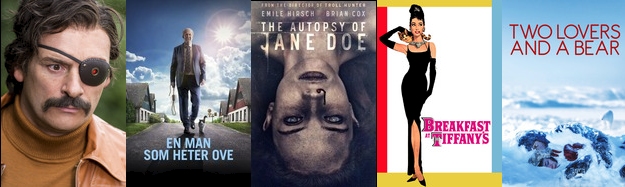
  • The Art of Negative Thinking – Scandinavian filmmakers excel at combining disability and humour.
  • Certain Women –Three well crafted stories, four excellent performances.
  • Mimosas – Very fine visually but the story requires careful thought and study.
  • Old Stone – A good Samaritan suffers under Chinese capitalism.
  • Woman of the Dunes – A black and white classic in a good 35mm print.

Stephen

Stephen's Top 5

  • Mindhorn – The funniest film since What We Do In The Shadows. I’d forgotten how fantastic it is to see an incredibly funny film in a packed cinema. We laughed so hard we probably missed half the jokes. Followed by a brilliant surreal Q&A.
  • A Man Called Ove – Perfectly combining humour and humanity, everything comes together to remind you there is some good in the world.
  • The Autopsy of Jane Doe – The best horror film I’ve seen in some time. Delivers intelligent thrills and never outstays it’s welcome by becoming too silly.
  • Breakfast at Tiffany’s – Seeing this projected (from 35mm) gave me a new appreciation and managed to completely charm me where I’d previously been underwhelmed.
  • Two Lovers and a Bear – A complete surprise, I knew nothing about this film and found it all completely delightful.

This was the strongest festival I remember and I’d recommend nearly all the films I saw. My next 5 films were Pet, The Birth of A Nation,  The First, The Last, Life Animated and Paterson.

Jake

Jake's Top 5

  • Certain Women – Kelly Reichardt’s most fully realised film to date. Maile Meloy’s short stories perfectly compliment each other, providing a perfect counterpart to Reichardt’s earlier adaptations of Jon Raymond. Great performances from the central cast, especially Laura Dern and relative newcomer, Lily Gladstone.
  • Mister Universo – Tizza Covi and Rainer Frimmel’s simple fiction played out by real life members of the Italian circus community. A beautiful intersection between fact and fiction, that functions as both a road movie and an affectionate family portrait.
  • The Woman of the Dunes – Teshigahara/Abe’s Sisyphusian nightmare. A classic. So glad I got to see this on a big screen on 35mm.
  • Graduation – Doting father, Romeo, walks moral tightropes in this austere drama from Cristian Mungiu. Shades of Haneke’s Hidden in it’s creeping sense of dread.
  • Mimosas – Ecstatic fiction, quasi-western with the Atlas mountains as a backdrop. Shakib Ben Omar is a wild, charismatic lead. A natural heir to Ninetto Davoli.

A History of Leeds Film Festival

LIFF30

It is the 30th edition of the Leeds International Film Festival this November. From its instigation in 1987 by members of the Friends of Hyde Park Picture House the festival has consistently presented a wide-ranging programme of films and film based events annually, across a shifting landscape of city venues.

Laura Ager, a volunteer at the Hyde Park Picture House who has worked with the film festival in various roles over the last 10 years, recalls how she first became interested in the history of the festival and, in the course of her research, has tracked down some of its former directors and supporters to ask them what the festival meant to them.

Two typed documents, discovered by chance in the office of the Leeds International Film Festival at Leeds Town Hall, announced the coming of The Leeds International Film Festival.

In November 1987, the Leisure Services department at Leeds City Council proclaimed that in 1988:

Leeds, the birthplace of the film industry, will celebrate the centenary of the moving image by holding a major international film festival.[1]

This film festival would celebrate 100 years since Louis le Prince filmed the people and traffic in ‘Leeds Bridge Scene’ at a spot now marked with a Leeds Civic Trust blue plaque.

The Leeds International Film Festival took place from 13th – 29th October 1988. On the first day, the famous traffic scene was reconstructed on Leeds Bridge at 2pm, later on that day a ‘black & white ball’ was held in the Town Hall. The film programme addressed eight themes that year: comedy, horror, war, music in films, images of England, animation, women and film and documentary[2]. Continue reading

In the Mood for Love, Hong Kong 2000

24th September – 2.30 PM

02

Bill Walton takes a look at In The Mood For Love ahead of Saturday’s 35mm screening and panel discussion on the Chinese film industry.

He remembers those vanished years. As though looking through a dusty window pane, the past is something he could see, but not touch. And everything he sees is blurred and indistinct.”

The magic of cinema offers many tantalising glimpses into other cultures, other times, other ways of seeing. Whether it’s transgender sex workers in California (Tangerine, 2015), censorship in Iran (Taxi Tehran, 2015), the self-justification by Indonesian death squads (The Act of Killing, 2012), corrupt officials in Russia (Leviathan, 2013), or life on a council estate in Bradford, Yorkshire (The Selfish Giant, 2013) … we can always gain from such different ways of seeing the world.

In the Mood for Love brings to life Hong Kong in the ‘60s. While there is a powerful code of propriety it cannot completely crush the intense desires for intimacy between a man and women whose marriages are not going well. The film subtly explores loneliness and hope, love and betrayal. The cultural context is integral to the story. I found that Wong Kar-wai’s attempts to tackle such themes in the United States (My Blueberry Nights, 2007) did not work nearly as well.

Chow Mo-wan (Tony Leung): “Feelings can creep up just like that.thought I was in control.”

Everything about this film is beautiful, from the acting, the photography (Christopher Doyle), and the haunting music, to the design of the credits. No wonder it was recently voted by critics to be one of the greatest films of the 21st Century. This screening has been arranged with the Business Confucius Institute and will be preceded by a panel discussion examining the state of contemporary Chinese cinema.

Su Li-zhen (Maggie Cheung): You notice things if you pay attention.

Charity News

On Yorkshire Day (August 1st) a Special General Meeting of our members approved changes to our constitution so that we could become a Registered Charity. The Charity Commission were satisfied with our application and we have now been officially entered on the Register of Charities with the Registered Charity Number 1168835.

The timing is good. Charity status can only help us in our support for the exciting developments at the cinema, following their success in gaining Heritage Lottery funding.

Thelma and Louise 25th Anniversary Screening

Saturday 20th August 5:30pm – Creatures of The Early Evening

 The early evening slot for Creatures of The Night continues with Ridley Scott’s Thelma and Louise, Bill Walton takes a look at the film on its 25th anniversary.
Thelma: “You said you ’n’ me was gonna get out of town and for once just really let our hair down. Well darlin’, look out ‘cause my hair is comin’ down!”

No shit, as they say.

Released to great controversy in 1991. Revolutionary? YES. Dated? NO, still fresh, sharp and funny. Not just that, it smashed through the Bechdel Test (2 women who talk to each about something besides a man). And a woman writer too (Callie Khouri).

Susan Sarandon and Geena Davis are hot. The waitress and the housewife are takin’ to the road … crude truck drivers, mean cops, and rapists look out!! The sisterhood is gloriously defiant… Harvey Keitel, Michael Masden, Brad Pitt and the rest will not be untouched. The personal and political intertwine.

Great soundtrack (blues and reggae). Director, Ridley Scott. Enjoy it on the big screen, darlin’s.

Special General Meeting: Monday 1st August 7:30pm

We would like to invite all members to attend a Special General Meeting on Monday 1st August 2016 at 7.30pm to be held at the Hyde Park Picture House.

The only items of business will be two Special Resolutions (details below) proposed by the Committee of the Friends of the Hyde Park Picture House.

To come into effect, these resolutions must be passed by not less than two thirds of the members present and voting at the meeting, so it is important that you come and vote.

Never one to let a meeting be too much business we have arranged this Special General Meeting to coincide with our annual Yorkshire Day screening which is free to members. Our film this year is SOUTH RIDING (1938) which will screen at 8.30pm.

While the meeting must be members only the screening is open to all and remember that members can invite up to three guests at members prices for any screening up until the end of August.

Appropriately Yorkshire themed refreshments will be provided!

Continue reading

Makiko Futaki

Jordan Scott remembers Studio Ghibli artist Makiko Futaki, who passed away last month at 57 years old.
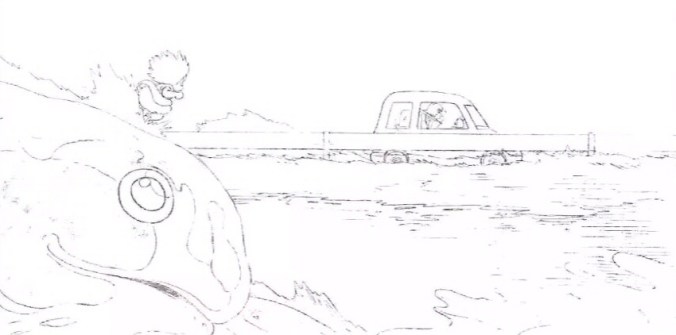
ponyo

View animation at sakuga.yshi.org 

A few weeks ago I learnt belatedly, and from the surprising source of a relative’s Twitter feed, of the extremely sad news of the death of animator and illustrator FUTAKI Makiko (二木真希子), which was announced on the 16th of May.

An independent, amateur filmmaker in her own right before being recruited by Telecom Animation Film (where she first worked with TAKAHATA Isao, MIYAZAKI Hayao and such other future Ghibli regulars as TANAKA Atsuko), her subsequent freelance career has encompassed such films as Sugii’s Night on the Galactic Railroad, Oshii’s Angel’s Egg and Ōtomo’s AKIRA but I’m sure will be forever defined by her work on Studio Ghibli’s productions – and them by it.

She became their go-to person for sequences in which the human characters take a back seat to foliage, birds, minibeasts, water and wind – and the impact of that last one on all the previous, the studio’s only feature-length theatrical releases without her distinctive rendering of these (Grave of the Fireflies, The Cat Returns, The Tale of The Princess Kaguya) being from when she was particularly heavily involved in a simultaneously-produced Miyazaki project (My Neighbour Totoro, Mei and the Kitten Bus, The Wind Rises).

Extremely sad that there will be no further sequences from the mind and hands that wrought some of the most iconic (most of all probably being a draw between inside the camphor tree and the tree-growing in Totoro) and some personal favourites (my top single moment being the wild geese catching a gust of wind in Kiki) of the last 30 plus years of cinema. Very heartening news, considering those outside the industry have to glean what they can from mentions in books and production blogs to identify animators’ work, that this is being reported on beyond the rarified confines of animator-reverence.

Sources and further reading and viewing

Proposed Constitution Changes

Our Annual General Meeting in May 2014 agreed, without any objections, a new Constitution. That meeting also agreed that the Friends of the Hyde Park Picture House should start the formal process of registering as a charity.

The previous Constitution which dated from 1997 was no longer appropriate. Our present Constitution closely follows a Charity Commission model constitution.

Our present Objects (which also feature in our accounts) are

1. To promote, support and participate in the cultural landscape of Hyde Park, Leeds and Yorkshire, particularly through an appreciation and understanding of the art of cinema
2. To celebrate the heritage of the Hyde Park Picture House and ensure its preservation and continued use for cinema and related arts by and for all sections of the community.

The Charity Commission advised us that to comply with the current Charities Act, the wording should be:

To advance the arts, in particular film and associated arts for the benefit of the public, in particular but not exclusively by supporting the Hyde Park Picture House as part of the Leeds Grand Theatre and Opera House Ltd by such means as the trustees think fit including by:

– promoting, supporting and participating in the cultural landscape of Hyde Park, Leeds and Yorkshire, particularly through an appreciation and understanding of the art of cinema

– celebrating the heritage of the Hyde Park Picture House and ensuring its preservation and continued use for cinema and related arts.

The Committee accepts this advice from the Charity Commission. The Committee’s plan is that, when we have confirmation that the Charity Commission is happy with the whole of the Constitution, we will take this new draft to the next Members’ meeting for approval and then with your agreement formally register as a Charity.

To find out more about these changes please come along to our AGM on Sunday 22nd May from 1pm where members can also enjoy a free buffet and screening of Our Man In Havana.

Philosophy and Film: Eternal Sunshine Of The Spotless Mind

Tuesday 26th April 6:15pm

Eternal Sunshine Of The Spotless Mind

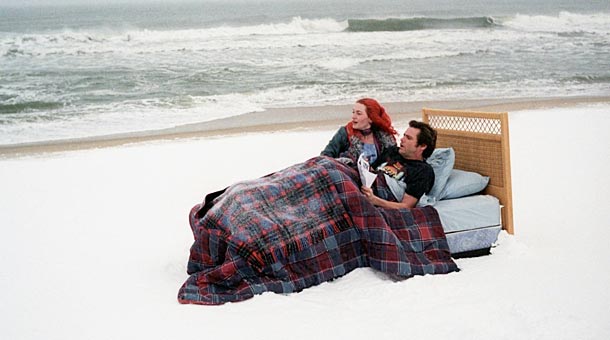
The second session of the Philosophy and Film series at the Hyde Park Picture House will show Eternal Sunshine of the Spotless Mind (2004), directed by Michel Gondry, with a screenplay by Charlie Kaufman.  Eternal Sunshine is about an unhappy estranged couple, Clementine (Kate Winslet) and Joel (Jim Carrey), who separately decide to have their tormented memories of their failed affair deleted by a professional service, Lacuna Inc. Then they accidentally meet again, not knowing who they are.

Here’s one idea. We’ve all had bad experiences, and bad memories of those experiences. They can make us feel defeated, depressed, even paralyzed. Wouldn’t we be better off without them? Here’s another idea. Our memories naturally decay. By and large, we don’t think this is a tragedy. It protects us against being entombed in the past, and leaves us free to live in the present, and to plan for the future. But if this forgetting doesn’t ruin us, and may even benefit us, then why would it be a bad idea, if we could, to take deliberate steps to erase these memories? And, if it turns out that it would be a bad idea to deliberately erase our memories, then should we try to fight against the natural processes of decay? The film obliquely explores ideas like these in a variety of ways, and from a variety of angles. Dr. Gerald Lang (University of Leeds) will be talking about them after the screening of the film.