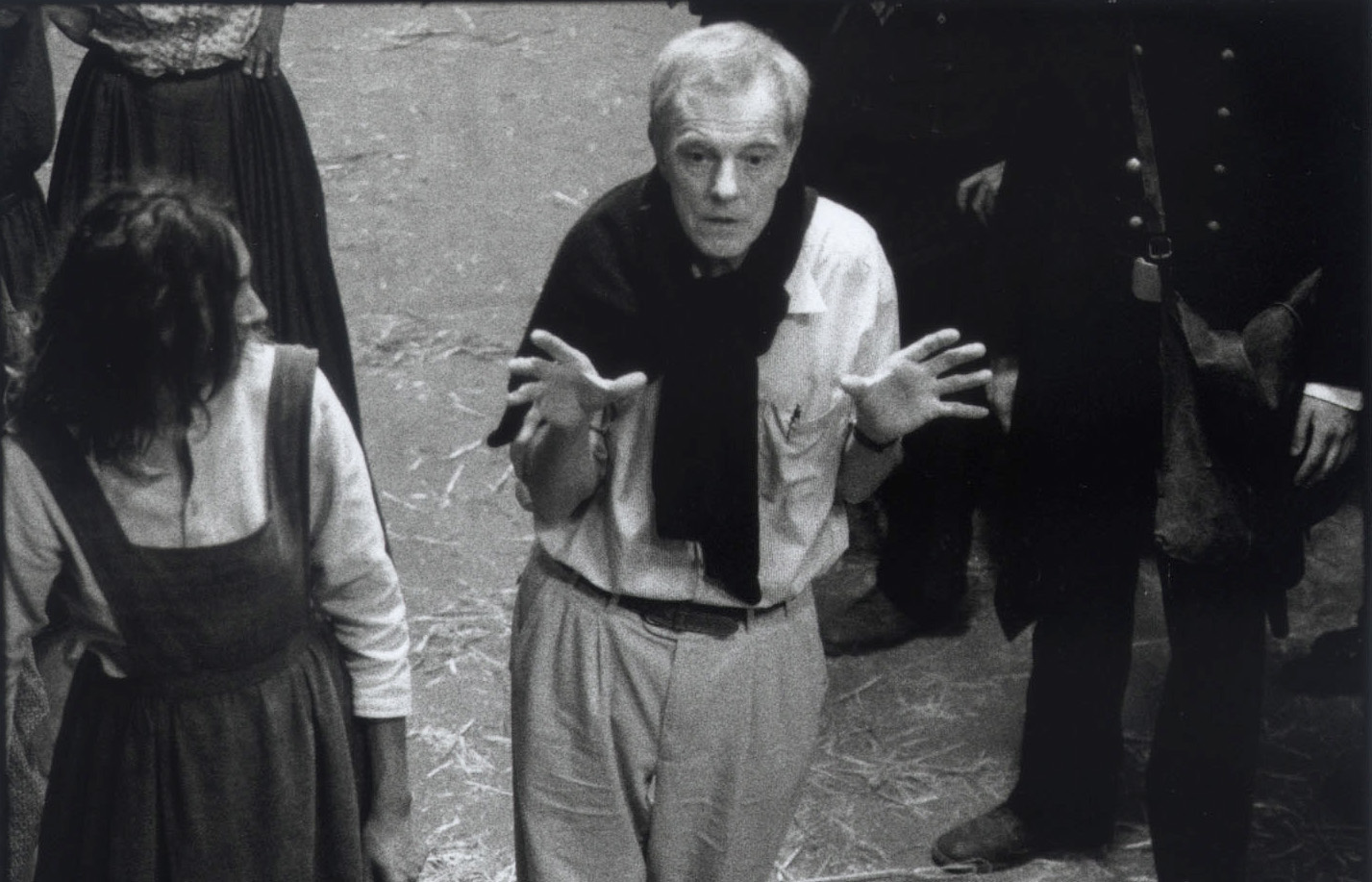
Peter Watkins on the set of ‘La Commune’
This British-born director who became an important international film-maker died in October last year, aged 90. He made a number of important films categorised as docudramas, though alternative documentaries would cover his varied work better. His distinctive approach was to present historic, contemporary or possible future events in a newsreel or TV style, highlighting both political narratives but also thee treatment of these by the media. His uncompromising approach did not fit with the dominant values of the mainstream media and his work was censored, banned or just difficult for audiences to access.
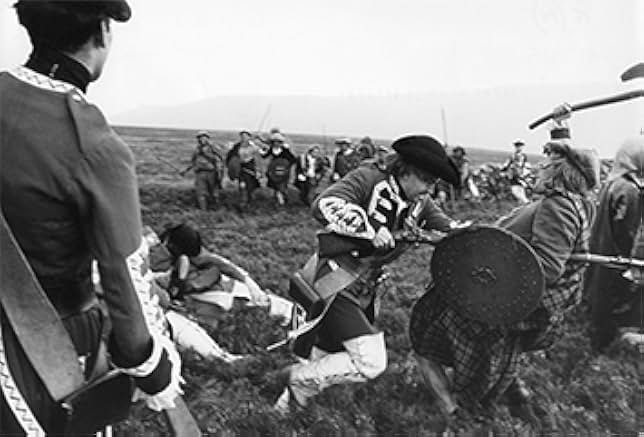
In the early 1960s he was working at the BBC. He first made a docu-drama about the battle of Culloden, 1745. His innovation was to present the battle through the eyes of a C20th reporter and film crew, with the reporter interviewing participant from the Highland and British armies during the battle. This radical presentation met with critical and audience praise.
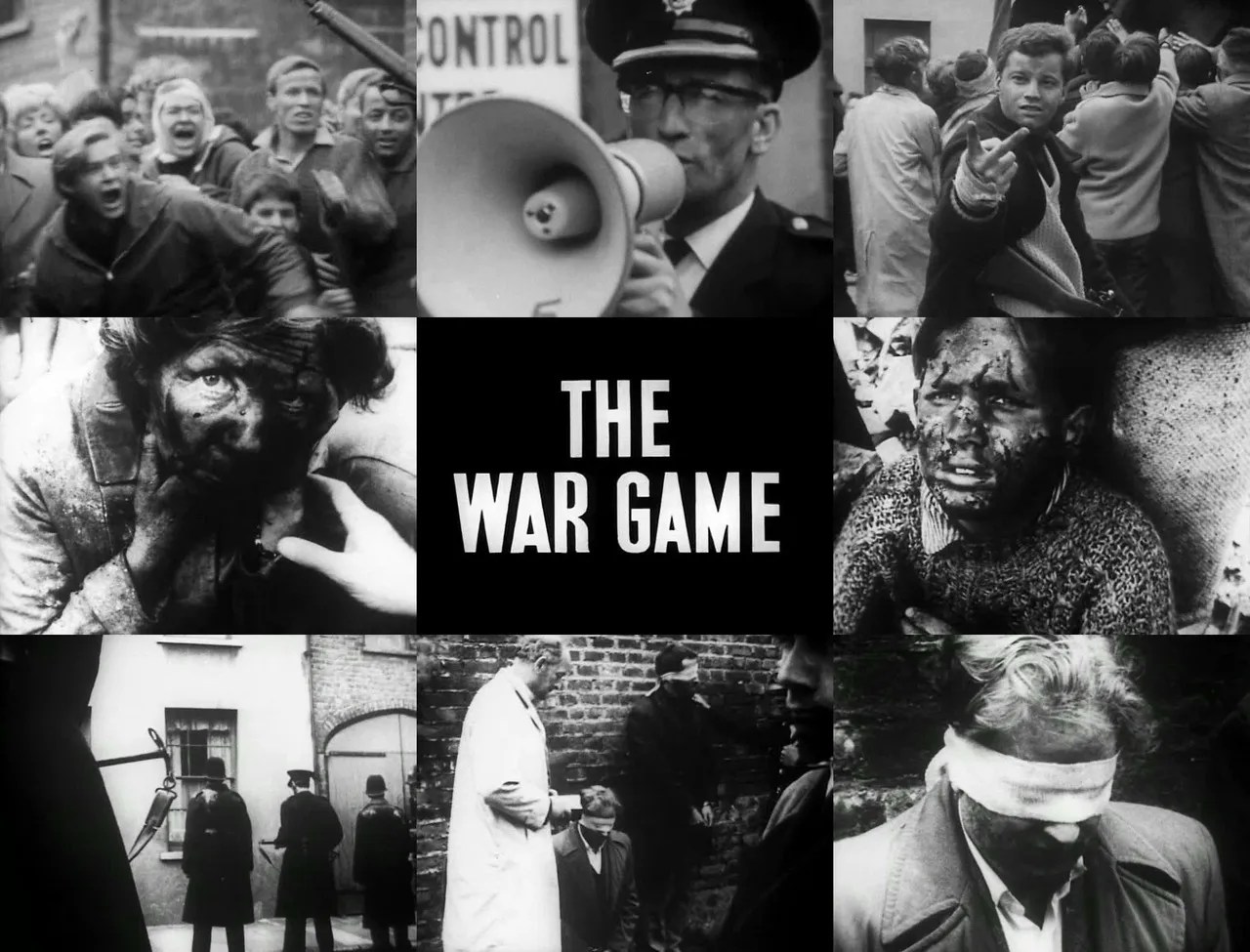
The BBC then commissioned Watkins to direct a documentary about the effects of a nuclear attack; at a time when disquiet and opposition to nuclear weapons was a central issue in Britain. The finished film, The War Game, presented a dystopian vision of a post-nuclear attack in Kent, likely to shock viewers. It certainly shocked the BBC and the Government; the film was banned from Television though ‘selected audiences’ were able to view it in the cinema. In one of those ironies in the transatlantic alliance the Hollywood Academy awarded the film Best Documentary.
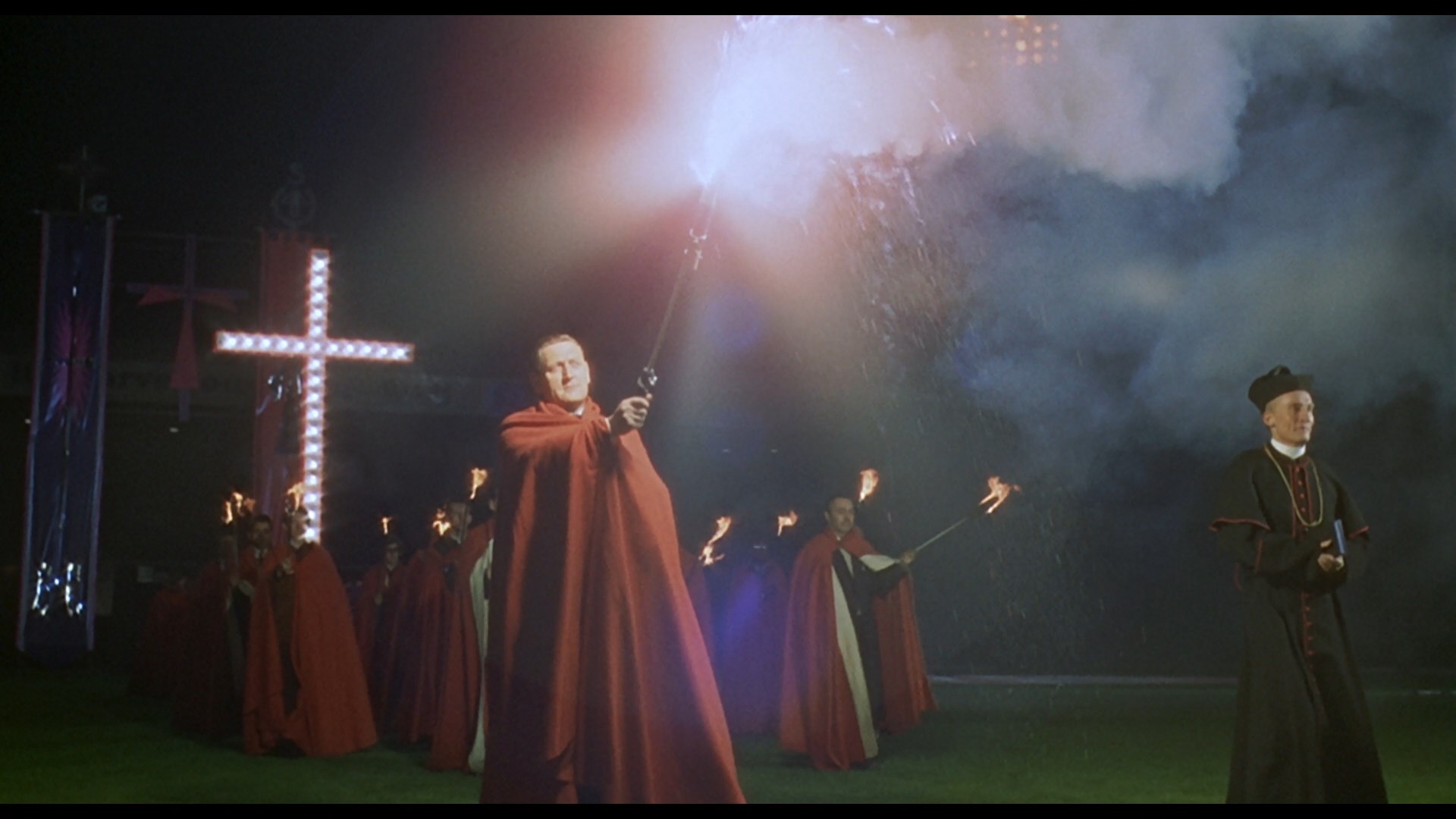
Leaving the BBC Watkins now directed a commercial film set in the world of pop music, Privilege. This relied on professional performers in a narrative about government and media manipulation of a pop star. The film has major flaws; both in the script and among the professional performers. But it does have some fine set pieces: with a Birmingham-based US ticker-tape style welcome: a pop concert in Birmingham Town hall: and a ‘Festival Light’ style religious conversion at a Brummy stadium.
Watkins now began a life-long odyssey away from Britain, making films both in North America and in Europe. Punishment Park presents another dystopian narrative as Anti-Vietnam war activists [actual people performing in a fictional narrative] are tried in military-style courts and then forced to attempt to gain freedom by the travails of said Park: where they have to elude armed security, without food or shelter, across a deathly desert terrain in appalling high temperatures. Whilst a fine achievement the film suffered from bans or restricted exhibition.
For much of this life Watkins lived and worked in Scandinavia. He made a number of films there, all commissioned by Scandinavian television stations. Details of these are on his webpages where he describes the production and reception. of individual titles. Two that stand out include Edvard Munch, a biopic of the Norwegian downbeat and expressionist painter. Watkins bought a particular stance to his portrait, relating Munch’s personal life and diaries to his public painting. The film relied on non-professional performers and presented Munch’s life and work seen in the context of the present day and the present day media.
The Journey was fourteen and half hours in nineteen chapters about the nuclear arms issue. By now Watkins had developed a media critique of what he termed the Monoform. A style of programming based on fast editing, commanding commentary with little space for audiences to consider and react; ‘talking heads documentaries are a prime example. The film presented groups of anti-nuclear activists: families from a number of different countries: dramatic rendering of likely events like mass evacuation or the experience of fall-our shelters: and examples of media coverage, both mainstream and independent. As well as addressing the nuclear arms race and low awareness of many populations the film critically examined the role of the media.
Watkins’ final film was La Commune (2000). This was the revolutionary collective set up in Paris in 1871 by the armed proletariat. The Commune only lasted two months before being suppressed in bloody fashion by the Frenchy ruling class. But Marx and Engels were fulsome in their praise of what they saw as a model for a socialist revolution. Watkins worked with over 200 non-professional Parisians to recreate the Commune, a presentation full of energy, commitment and radicalism. The cast and crew also presented the relationship to their current world: to the role of the mass media: and to their involvement in this actual film. In some ways this film is a summation of Watkins work over the years and a major political art work.
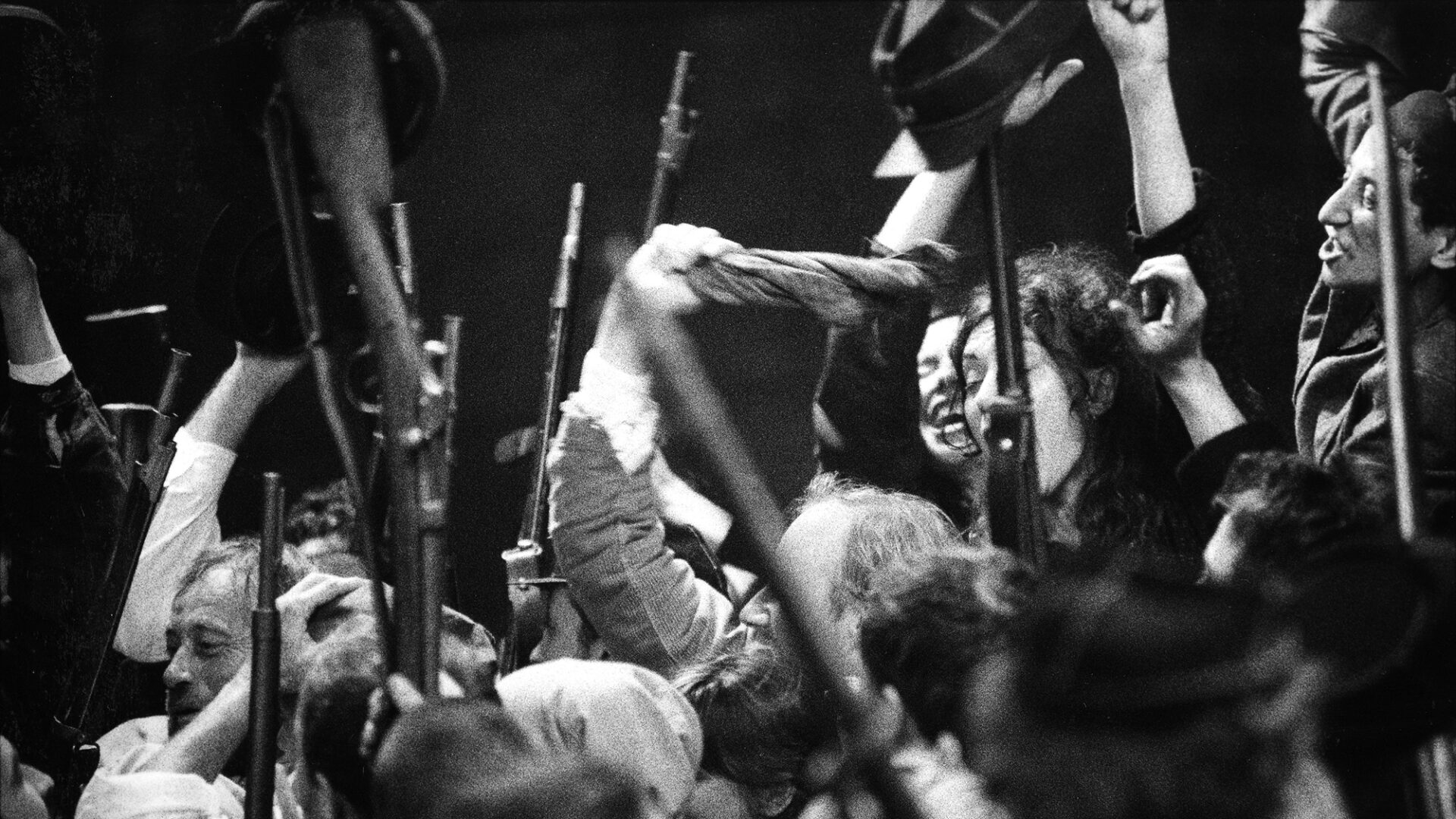
La Commune
Watkins leaves behind a number of key political films addressing major social issues and providing a radical critique of the establishments and their supporters in the mass media. The ICA in London has already screened some of Watkins earlier works and one expects that the National Film Theatre will mount retrospective. Hopefully we in the regions will be able to see some of these works. The BFI has 16mm prints of both Culloden and Punishment Park: there is a 16mm print of Privilege but it sounds in a poor state: and The War Game in both 16mm and 35mm prints, the latter the better of the two: and Edvard Munch in 35mm.
One can read more on Watkins films and his media critique on these webpages; and there is a longer discussion of his work here.
 Friends of Hyde Park Picture House